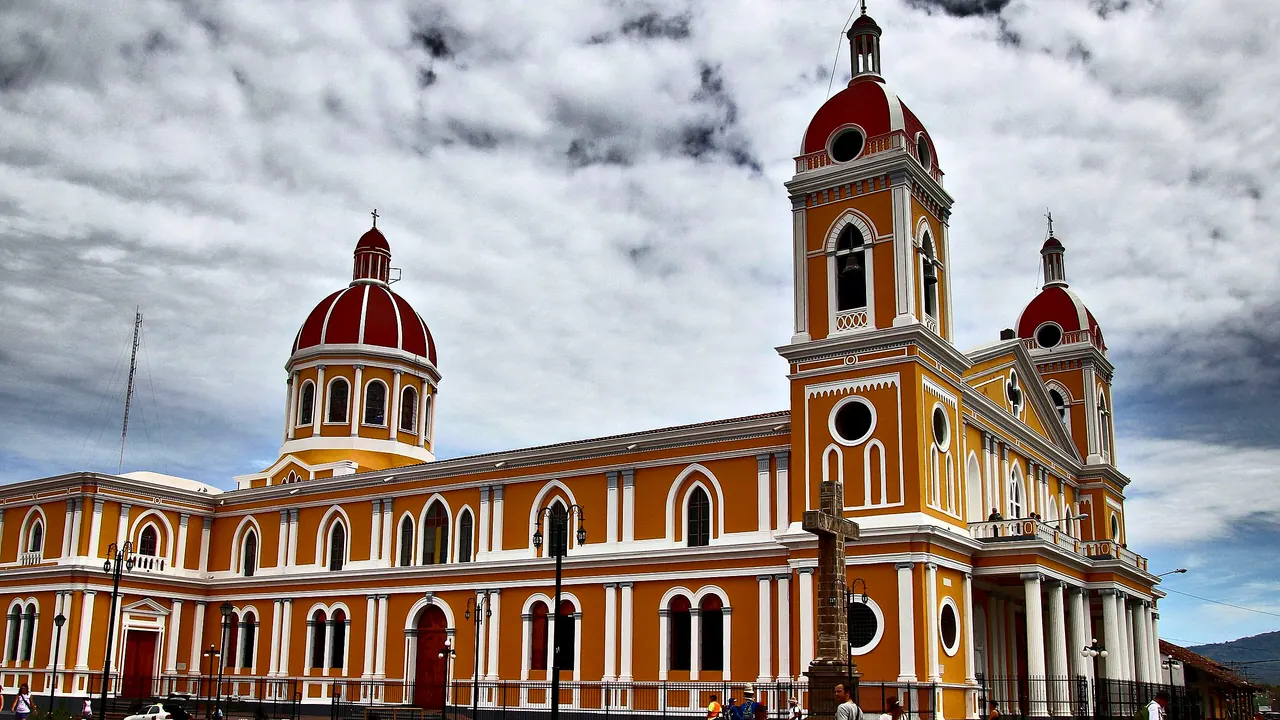
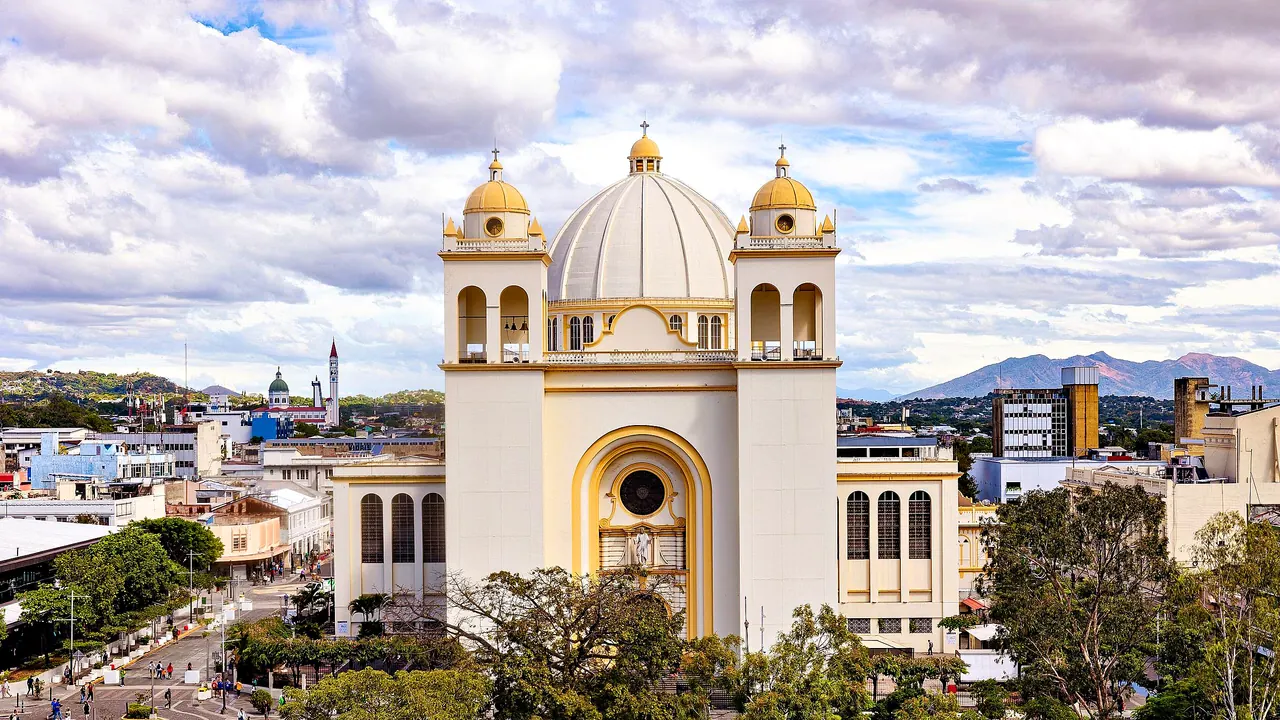
Photos: Granada, Nicaragua by Guillaume Baviere from Uppsala, Sweden, CC BY-SA 2.0, cropped; San Salvador by Arne Müseler, CC BY-SA 3.0 DE, cropped.
Granada, Nicaragua or San Salvador?
Our verdict in twelve categories, each scored against the same fixed benchmark cities, and the climate month by month, so you can choose for your trip.
Choose Granada, Nicaragua for
- getting around
- prices
- culture and sights
Granada suits a slower, cheaper trip built around one beautiful town. Its colonial grid of painted houses and churches is easy to walk, everyday costs are very low, and Mombacho, Las Isletas and Laguna de Apoyo are close enough for half-day outings. Choose it if you want atmosphere, courtyard hotels and volcanoes without much planning.
Choose San Salvador for
- beaches
- live music and the arts
- day trips
San Salvador makes more sense as a base for seeing a whole country. The Maya sites at Joya de Cerén and Tazumal, colonial Suchitoto, the Ruta de las Flores and the surf coast are all within a day. The city itself has better coffee, more choice of evenings out and a real theatre. You will rely on taxis and drivers, though, and the city is less of a pleasure to wander.
Scoreboard
Twelve categories on one fixed scale from 0 to 100. The shaded stretch is the gap between the two.
Your match
Pick a travel style or drag the sliders, and both match scores follow your weighting.
Too close to call, level with your weighting
Wins on getting around and prices with your weighting.
Wins on beaches and live music and the arts with your weighting.
What matters to you?
Category by category
What the scores mean for a trip.
Beaches & swimming
Neither city has a beach of its own. Granada's lakefront is for strolling, and the best swimming is in the clear, calm water of Laguna de Apoyo, a crater lake half an hour away. The Pacific at San Juan del Sur is a separate two-hour journey.
San Salvador is better placed for the sea. The dark-sand surf beaches of La Libertad are under an hour away, and the gentler Costa del Sol is not much further. Strong waves and rip currents mean you have to choose where you swim, and many people stay a night on the coast rather than going back and forth.
Food & drink
San Salvador eats a little better. Pupuserías are everywhere, Olocuilta's rice pupusas are worth a stop on the road to the coast, and the cafés of San Benito and Escalón serve the highland coffee properly. Granada's strength is cheap street food, such as vigorón on a banana leaf at the park kiosks and the evening fritanga grills, while the restaurants of La Calzada are uneven and its coffee is better taken home than drunk in town.
Culture & sights
Granada is the more rewarding city to look at. Its whole centre is a colonial townscape of colourful single-storey houses and courtyards, and the cathedral, La Merced, Xalteva and the San Francisco convent are all a short walk apart.
San Salvador lost most of its old buildings to earthquakes, so its sights are spread out: Romero's tomb in the cathedral, the National Palace, the concrete arch of El Rosario, and good museums such as MUNA in the western districts. Its bigger heritage, the Maya sites and Suchitoto, lies outside the city.
Nightlife
Neither is a place to go for nightlife, but San Salvador has a little more range. Cocktail bars, lounges and a few clubs in Zona Rosa and San Benito, plus the weekend terraces of Paseo El Carmen in Santa Tecla, draw a well-dressed local crowd, mostly by taxi.
In Granada, evenings happen on one street. There is cheap rum and beer at the pavement tables of La Calzada, hostel bars, and a couple of salsa and reggaeton clubs at weekends. It is easy and sociable, and you can walk home, but a couple of nights cover it.
Nature & outdoors
Both cities sit among volcanoes, and the outdoors is a strong reason to visit either. Granada's landscape is greener and closer to town, with cloud forest trails on Mombacho, kayaking among Las Isletas past herons and fishing villages, and Masaya, where you can drive to the rim of an active crater.
San Salvador offers more serious hiking. El Boquerón's crater is on the city's edge, the blue crater lake of Coatepeque is under an hour away, and the guided climb up Santa Ana to its turquoise crater lake is the country's best walk. Surfers also get point breaks on the coast.
Day trips
San Salvador has the better day trips, because El Salvador is small enough to cross in a morning. Joya de Cerén's ash-buried Maya village, the pyramid at Tazumal, cobbled Suchitoto and the mural-painted coffee villages of the Ruta de las Flores give real variety, including archaeology that Granada cannot match.
Outings from Granada are gentler: Masaya's craft market and Monimbó quarter, the pottery town of San Juan de Oriente, the Catarina lookout and Managua's ruined cathedral. Ometepe and León need overnight stays.
Good for families
San Salvador has a bit more that is built for children: the Tin Marín museum with its old aircraft, the national zoo, the playgrounds of Parque Cuscatlán and air-conditioned malls for the hottest hours. Granada has nothing of that kind, but older children will remember a carriage ride, the monkey island in Las Isletas, a swim at Apoyo and a look into Masaya's steaming crater.
Both are hard going with toddlers, given the heat and the broken pavements. For swimming with small children, the calm crater lakes, Apoyo near Granada and Coatepeque near San Salvador, are safer than the surf coast.
Getting around
Granada is far easier on foot. Its compact grid puts the cathedral, the lakefront and Xalteva a few minutes apart, with taxis and horse carriages for the midday heat. Getting out to the volcanoes usually means a shuttle or a driver.
San Salvador sprawls along busy avenues, and you need a taxi or ride-hailing app to get between the walkable historic centre and the western districts where most visitors stay. Buses are confusing and crowded, rush-hour traffic is heavy, and day trips generally need a hired car or driver.
Shopping & style
Both are better for crafts than for shopping in general, but San Salvador adds large modern malls with international chains, which Granada does not have at all. Its national crafts market brings together painted wood from La Palma, ceramics from Ilobasco and indigo textiles from across the country.
Granada's shops on La Calzada sell hammocks, Pueblos Blancos pottery, rocking chairs, rum and cigars, and the market in nearby Masaya has a wider choice. In both cities, local coffee is the easiest thing to carry home.
Affordability
Granada is the cheaper of the two at every level. Even its boutique hotels in restored mansions feel inexpensive, and tours to the volcanoes and islands fit a modest budget easily.
San Salvador is cheap only if you live locally, on pupusas, buses and simple guesthouses. Business hotels and restaurants in Escalón and San Benito are priced like those in any capital, and the drivers you need for day trips add up.
Live music & performing arts
San Salvador has a proper stage. The National Theatre, with its painted ceiling, hosts the symphony orchestra, ballet and touring shows, though programmes are irregular, and bands play rock and cumbia in San Benito and Santa Tecla at weekends. Granada offers marimba players and folk dancers performing for diners, dance evenings in hotels and the music of its religious processions, which is charming but nothing you can plan a trip around.
Wellness & relaxation
Granada is the easier place to unwind. Its pace is naturally slow, with shaded courtyards, hotel pools and quiet evening walks, and the lodges at Laguna de Apoyo offer yoga and massage a short drive away.
San Salvador is a working capital, so relaxing means a hotel spa in the western districts or leaving for the lodges of Lake Coatepeque or the cooler coffee highlands. The hot springs near Ahuachapán are about two hours away.
When should you go?
Pick your month. The climate figures are measured averages, not a forecast.
Granada, Nicaragua in July
San Salvador in July
Daytime high, °C
Rainfall in the month, mm
Where the figures come from
Granada, Nicaragua's temperatures are measured 34 km from the centre, at Managua A. C. Sandino.
Granada, Nicaragua has no rain gauge within 25 km of the centre, so its rainfall comes from a gridded climate dataset read at the destination rather than from a gauge further away.
Temperature and rainfall are climate normals, averaged over the years shown. Granada, Nicaragua: 1961-1990 (sunshine 1991-2020, rainfall 1991-2020) normals, Managua A. C. Sandino (33.7 km from centre). San Salvador: 1994-2020 (rainfall 1961-1990) normals, San Salvador / Ilopango (8.1 km from centre).
Both cities follow the same rhythm: a dry season from December to April, heavy rain from May to October, and heat all year. Granada is the hotter of the two. Highs reach 35°C in April, when walking the streets after mid-morning is hard work. Its sunniest weather runs from December to April, and the rains build to a peak of 329mm in October. January and February, hot but clear, are its most comfortable months.
San Salvador's altitude takes a little off the heat, with highs between 30°C and 33°C through the year. Its wet season peaks earlier, in midsummer, and eases sooner, so November is already largely dry. The Pacific stays warm enough to swim in every month, but the dry months from late November to April are best for both the beaches and the volcano hikes.
Which traveller are you?
For a culture and arts trip, Granada is the better pick. Its colonial centre, with the yellow cathedral, the bell tower of La Merced and the basalt statues in the San Francisco convent, is the attraction in itself. Earthquakes have left San Salvador only scattered monuments.
On a trip on a tight budget, Granada makes your money go further. Guesthouses, vigorón from the park kiosks, taxis and volcano tours all cost little. In San Salvador, comfortable hotels and the drivers you need for day trips push costs up quickly.
For a beach and sun trip, San Salvador has the edge. The warm Pacific at El Tunco and El Zonte is under an hour away, with calmer sand on the Costa del Sol. From Granada, the nearest sea, at San Juan del Sur, is two hours south.
Before you go
| Measure | Granada, Nicaragua | San Salvador |
|---|---|---|
| Official language | Spanish | Spanish |
| Currency | Cordoba Oro (NIO) | US Dollar (USD) |
| Sockets | AB120 V, 60 Hz | AB115 V, 60 Hz |
| Driving side | Right | Right |
| Time zone | UTC-6 | UTC-6 |
| Emergency number | Police 118, ambulance 128, fire 115/120 | Police 911, ambulance 911, fire 911/913 |
| Elevation | 73 m | 670 m |
| Main airport | Augusto C. Sandino (Managua) International Airport (MGA)33 km from centre11 non-stop destinations | El Salvador International Airport Saint Óscar Arnulfo Romero y Galdámez (SAL)32 km from centre34 non-stop destinations |
| Public holidays this year | 12 days | 13 days |
By the numbers
| Measure | Granada, Nicaragua | San Salvador |
|---|---|---|
| Population | 105,171 | 330,543 |
| People per km² | 178 | 4,572 |
| Museums within 10 km | 1 | 9 |
| UNESCO World Heritage sites within 50 km | 0 | 1 |
| Swim season, months above 21 °C | 12 months | 12 months |
Where else could you go?
Every comparison below shares a destination with this one, so you can follow Granada, Nicaragua or San Salvador somewhere new.
- San Juan del Survs Granada, Nicaragua
- Leon, Nicaraguavs Granada, Nicaragua
- Tamarindovs Granada, Nicaragua
- Antigua Guatemalavs San Salvador
- La Fortunavs Granada, Nicaragua
- Monteverdevs Granada, Nicaragua