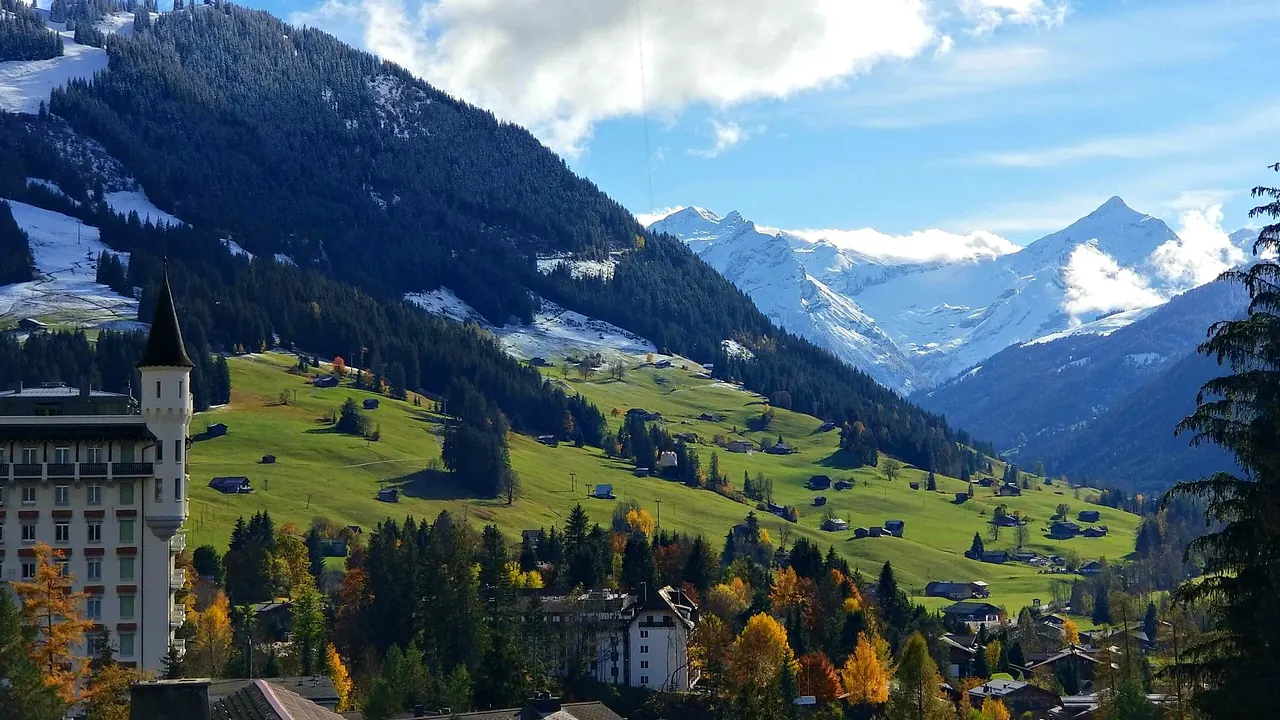
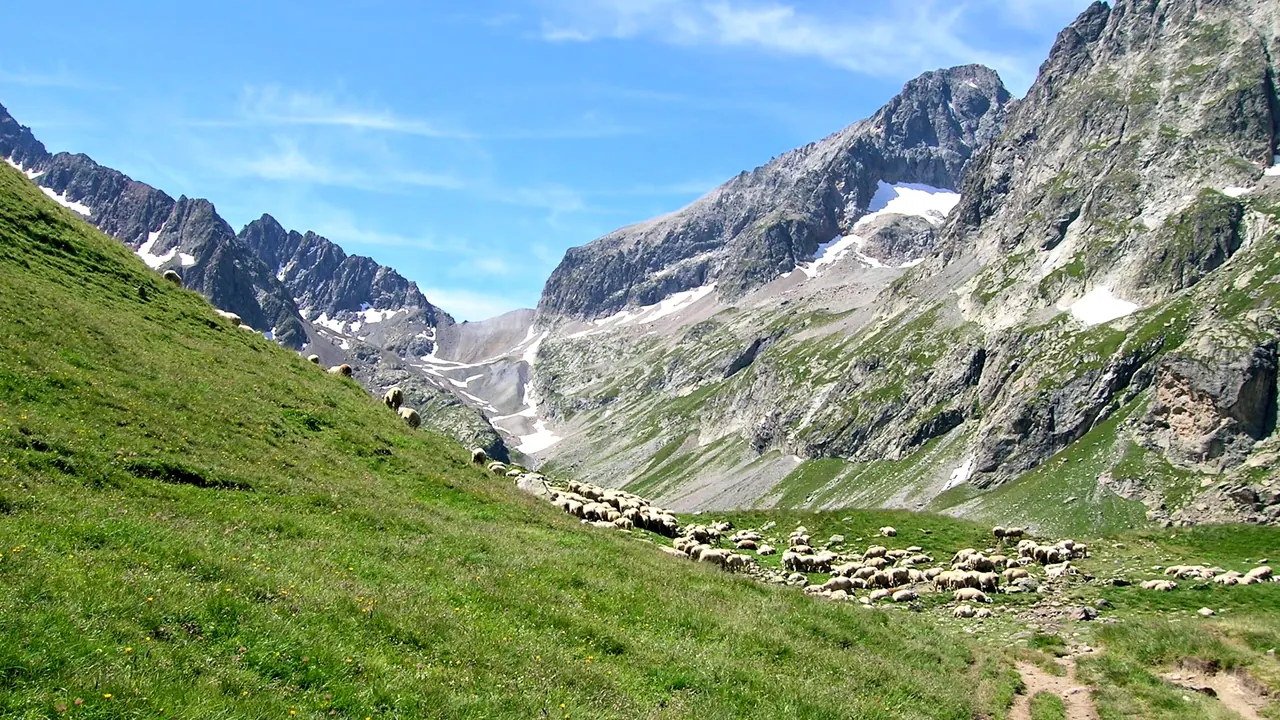
Photos: Gstaad by Samuel Barlow, CC BY-SA 4.0, cropped; Les Deux Alpes by Zarelia Choutime, CC BY-SA 3.0, cropped.
Gstaad or Les Deux Alpes?
Our verdict in twelve categories, each scored against the same fixed benchmark cities, and the climate month by month, so you can choose for your trip.
Choose Gstaad for
- live music and the arts
- shopping
- day trips
Gstaad suits travellers who want a polished, quiet mountain stay with plenty of comfort around it: lavish hotel spas, serious hotel dining, a luxury shopping street and, in summer, a classical music festival held in village churches. It is also far better connected, with a panoramic railway down to Lake Geneva and on towards Bern, so a week can mix gentle walks with lake towns and castles. The catch is the cost, which is about as steep as anywhere in the Alps.
Choose Les Deux Alpes for
- prices
- nightlife
- families
Les Deux Alpes is the pick for an active, sociable trip at altitude. Its glacier, big vertical drop and summer bike park give it a harder mountain edge, the après-ski along the main street is loud and young, and ski schools and childcare make it easy for families. It is expensive too, but self-catering and summer rates bring it within reach of budgets that Gstaad would not stretch to.
Scoreboard
Twelve categories on one fixed scale from 0 to 100. The shaded stretch is the gap between the two.
Your match
Pick a travel style or drag the sliders, and both match scores follow your weighting.
Wins on live music and the arts and shopping with your weighting.
Wins on prices and nightlife with your weighting.
What matters to you?
Category by category
What the scores mean for a trip.
Beaches & swimming
Neither is a swimming destination, and both come down to a heated outdoor pool and a chilly mountain lake. Gstaad has a slight edge in kind: Lauenensee and Arnensee have grassy shores for a summer dip, and the train down to Montreux puts proper lakeside bathing on Lake Geneva within a day's outing. At Les Deux Alpes the Oisans lakes are small and cold, and there is no larger water within easy reach.
Food & drink
Gstaad eats better. Several grand hotels run serious gourmet kitchens, the slope huts serve rösti and fondue in the sun, and the valley's own cheeses, the long-aged Saanen Hobelkäse and fire-made L'Etivaz, are sold straight from small dairies and cellars.
Les Deux Alpes feeds skiers well enough with tartiflette, regional ravioles, gratin dauphinois and plenty of pizza, burgers and crêpes from the brasseries on the main street. What it lacks is any fine dining worth travelling for or a local product to seek out.
Culture & sights
Both are thin on sights, and neither will fill a day. Gstaad's heritage is architectural: dark-timbered Saanenland chalets with carved fronts, the late-Gothic church in Saanen with its medieval wall paintings, and the old church at Rougemont. Les Deux Alpes offers a novelty rather than history, the ice cave with blue sculptures at the top of the lifts, plus an hour among the stone houses and cobbles of Venosc in the valley below.
Nightlife
Les Deux Alpes is the livelier place after dark. In winter après-ski spills from the foot of the slopes into pubs and bars along the main street, a couple of clubs run into the small hours, and the crowd is young, international and casual.
Gstaad's evenings are smaller and dressier: hotel bars, a couple of exclusive cellar clubs under the grand hotels and a good deal of private chalet entertaining, mostly between Christmas and February. Out of those weeks, both resorts go quiet, Gstaad more so.
Nature & outdoors
Both are outstanding mountain bases, but the landscapes differ sharply. Gstaad is pastoral, with green valleys, gentle linked ski areas such as Wispile and Eggli, and summer walks to Lauenensee and the Geltental waterfalls; for high snow it borrows Glacier 3000, about half an hour away.
Les Deux Alpes is wilder and higher, with its own glacier at about 3,600m, La Meije and the Écrins peaks on the skyline, a long vertical drop and skiing into summer. Its summer draw is the big lift-served bike park and hiking among ibex and marmots in the Écrins national park.
Day trips
Gstaad has far more within reach, and without a car. The GoldenPass railway runs down to Montreux, the Castle of Chillon and the Lavaux vineyard terraces, Gruyères and its castle are under an hour by road, and the line east leads to Lake Thun and Bern's arcaded old town.
From Les Deux Alpes the outings mean winding roads: Grenoble with its museums and cable car, Vauban's fortified Briançon over the Col du Lautaret via La Grave, and the Château de Vizille. They are worthwhile, but fewer, and winter driving can slow them.
Good for families
Les Deux Alpes is the more organised choice for children. Ski schools take them from a young age, childcare and a heated pool are on hand, and the glacier ice cave, the summer toboggan run and mountain-bike lessons give days a shape. The high, cold upper slopes suit older children better than toddlers.
Gstaad works for families who want calm rather than a programme: gentle beginner slopes, sleigh rides, sledging, and summer walks past cows and goats. Like its rival, it has nothing indoors for a wet day.
Getting around
Gstaad is the easier place to move around without a car. Trains on the GoldenPass line stop in Gstaad and its neighbouring villages, PostBuses climb the side valleys and reach the Glacier 3000 cable car, and the centre is a short car-free promenade, though connections thin out in the quiet months.
Les Deux Alpes is simple once you are there, with shuttles along the long main street and lifts straight onto the slopes. Reaching it is the hard part: there is no railway, only a coach or a drive up hairpins from Grenoble, and any outing really needs a car.
Shopping & style
Gstaad is in another league here. Its short chalet Promenade packs in watchmakers, jewellers, international fashion labels, cashmere and interiors, with carved wood and Pays-d'Enhaut papercut art for something local, though nothing for a modest budget.
Shopping in Les Deux Alpes is practical: ski rental and technical clothing, supermarkets, and regional cheese, charcuterie and Génépi to take home.
Affordability
Les Deux Alpes is the cheaper of the two, though a ski week there still adds up quickly. Self-catering apartments cut costs a good deal, January and late March are gentler than the French school vacation weeks, and summer brings lower room rates and a walkers' and bikers' lift pass.
Gstaad sits at the very top of Alpine prices, with grand hotels and chalets, few mid-range rooms and Swiss rates for everything. The usual workaround is to stay in Saanen or Zweisimmen and come in for the day, ideally outside the Christmas and February peak.
Live music & performing arts
Gstaad wins outright thanks to the Menuhin Festival. For several summer weeks leading orchestras and soloists play in a large tent and in the intimate churches of Saanen, Rougemont and Lauenen, and winter adds chamber music and New Year concerts, though between seasons the stage goes dark.
Les Deux Alpes offers cover bands in après-ski bars and the odd outdoor concert; for opera or theatre the nearest option is Grenoble.
Wellness & relaxation
The two resorts offer different kinds of rest. In Gstaad, calm is the point of the stay: an unusual number of grand hotel spas, with indoor and outdoor pools, sauna landscapes and treatment rooms facing the mountains, in a village whose nights are dark and still. Most of these spas are aimed mainly at their own guests.
At Les Deux Alpes, rest is something you earn on the slopes. The aquatic centre's outdoor pool, saunas and steam rooms and a few small hotel spas ease tired legs. Winter there is noisy, though, and real quiet only comes in late summer.
When should you go?
Pick your month. The climate figures are measured averages, not a forecast.
Gstaad in July
Les Deux Alpes in July
Daytime high, °C
Rainfall in the month, mm
Where the figures come from
Gstaad's temperatures are measured 78 km from the centre, at Les Eplatures.
Gstaad has no rain gauge within 25 km of the centre, so its rainfall comes from a gridded climate dataset read at the destination rather than from a gauge further away.
Les Deux Alpes has no weather station within reach, so its figures come from a gridded climate model rather than a measured record, and read a broad area rather than one spot.
Temperature and rainfall are climate normals, averaged over the years shown. Gstaad: 2010-2020 (rainfall 1991-2020) normals, Les Eplatures (77.5 km from centre). Les Deux Alpes: 2001-2020 normals, NASA POWER reanalysis grid, no weather station within 90 km.
Both are mountain resorts with two seasons, but Les Deux Alpes sits higher and colder. Its winter days stay below freezing, around -3°C in January, while Gstaad hovers just above, so snow is surer on the French side and Gstaad's low home slopes can be thin early in the winter. In high summer Gstaad reaches about 21°C against 18°C at Les Deux Alpes, both pleasant for walking and far too cool for lake swimming to be more than a quick dip.
Gstaad is the wetter of the two all year, with rain heaviest in December at around 125mm and a damp run from May to August, so summer walks often meet showers. Les Deux Alpes is noticeably drier, with July and August among its driest months at under 60mm, which makes late summer its most settled time. For both, May and November are the quietest and least rewarding months.
Which traveller are you?
On a culture and arts trip, Gstaad is the only real contender, as long as you come in summer when the music is on. Plan the stay around concerts and short walks between villages; Les Deux Alpes has nothing comparable in any season.
For a trip on a tight budget, Gstaad is hard to make work at all, and Les Deux Alpes is the one to aim for. It is never cheap, but a summer week cooking for yourself is within reach.
On a family trip with children, Gstaad will please parents who are happy to make their own fun in quiet surroundings. Les Deux Alpes takes far more of the organising off your hands, and is best for children old enough to join a ski class.
Before you go
| Measure | Gstaad | Les Deux Alpes |
|---|---|---|
| Official language | French, German, Italian, Romansh | French |
| Currency | Swiss Franc (CHF) | Euro (EUR) |
| Sockets | CJ230 V, 50 Hz | CE230 V, 50 Hz |
| Driving side | Right | Right |
| Time zone | UTC+1, UTC+2 in summer | UTC+1, UTC+2 in summer |
| Emergency number | 112 | 112 |
| Elevation | 1,050 m | 1,650 m |
| Main airport | Geneva International Airport (GVA)94 km from centre150 non-stop destinations | Grenoble Alpes Isère Airport (GNB)74 km from centre16 non-stop destinations |
| Public holidays this year | 10 days | 11 days |
By the numbers
| Measure | Gstaad | Les Deux Alpes |
|---|---|---|
| Population | 2,960 | - |
| Museums within 10 km | 0 | 0 |
| UNESCO World Heritage sites within 50 km | 4 | 1 |
Where else could you go?
Every comparison below shares a destination with this one, so you can follow Gstaad or Les Deux Alpes somewhere new.
- Alpe d'Huezvs Les Deux Alpes
- Adelbodenvs Gstaad
- Crans-Montanavs Gstaad
- Leukerbadvs Gstaad
- Serre Chevaliervs Les Deux Alpes
- Châtelvs Gstaad