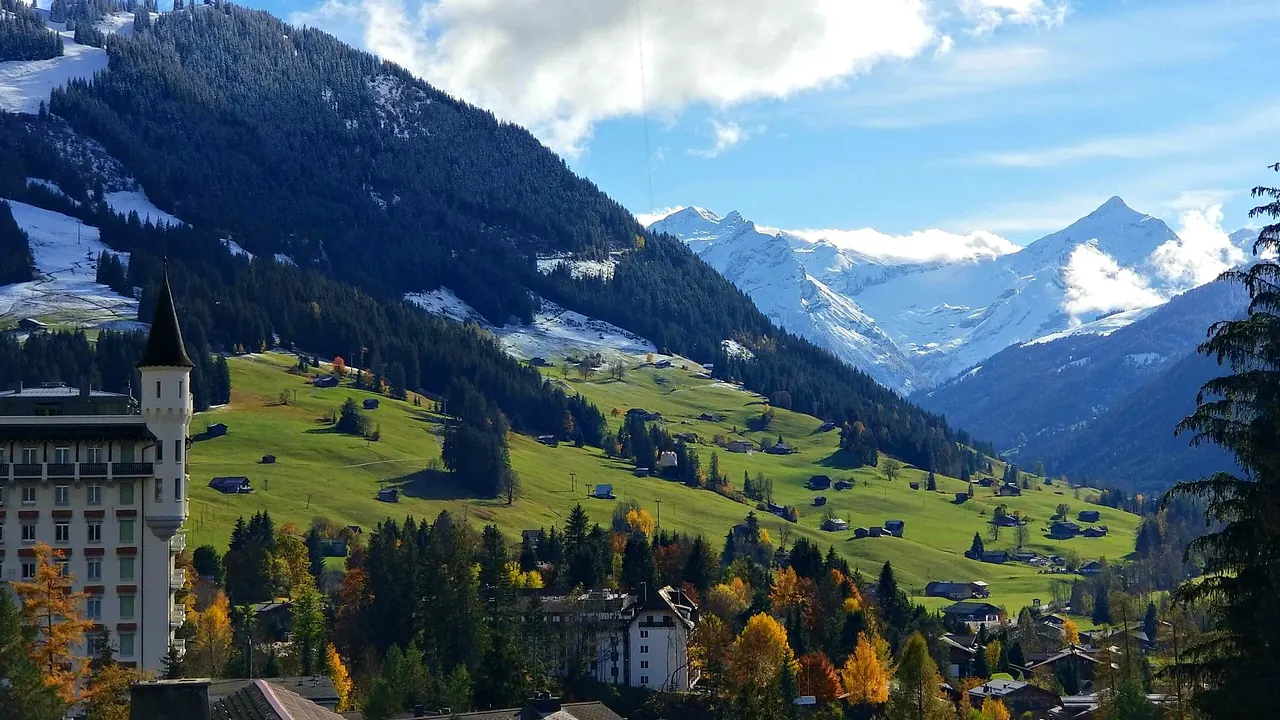
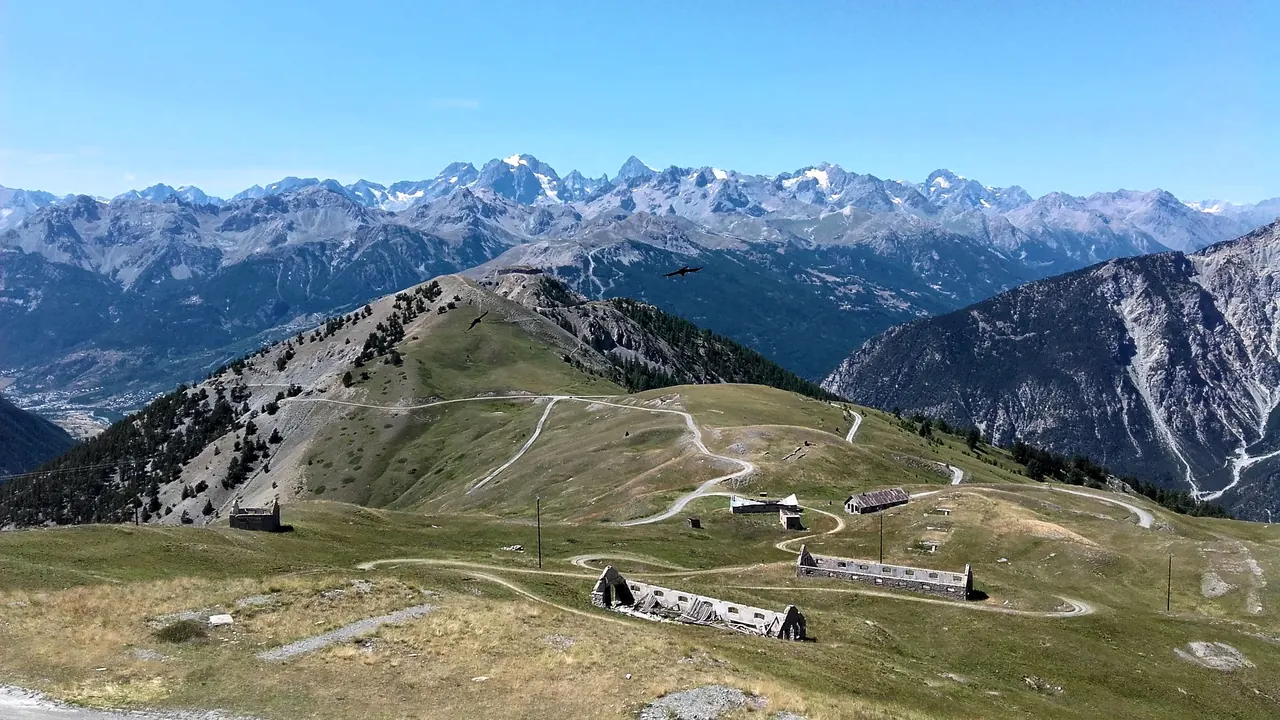
Photos: Gstaad by Samuel Barlow, CC BY-SA 4.0, cropped; Montgenèvre by Jonathan Queutois, CC0.
Gstaad or Montgenèvre?
Our verdict in twelve categories, each scored against the same fixed benchmark cities, and the climate month by month, so you can choose for your trip.
Choose Gstaad for
- shopping
- live music and the arts
- getting around
Gstaad suits travellers who want a polished Alpine village with a bit of social life around it. You get grand-hotel dining rooms and spas, a luxury shopping street and the Menuhin Festival in summer, and the GoldenPass trains make it easy to get about without a car. It is for people who are happy to pay for comfort and style, and it works as well for a summer of walks and concerts as for a winter ski stay.
Choose Montgenèvre for
- prices
- families
- nature and the outdoors
Montgenèvre is the better pick for a simple, active mountain week at a far gentler cost. It sits high on the French-Italian pass with the huge Milky Way ski area at the door, and families find it easy, with sunny nursery slopes, self-catering apartments and a leisure pool for bad-weather days. Expect little in the evenings beyond après-ski, and plan on a car for exploring the valleys.
Scoreboard
Twelve categories on one fixed scale from 0 to 100. The shaded stretch is the gap between the two.
Your match
Pick a travel style or drag the sliders, and both match scores follow your weighting.
Wins on shopping and live music and the arts with your weighting.
Wins on prices and families with your weighting.
What matters to you?
Category by category
What the scores mean for a trip.
Beaches & swimming
Neither village is a swimming destination, and both leave you with cold alpine lakes and heated pools. Gstaad has the grassy shores of Lauenensee and Arnensee for a quick summer dip, and Lake Geneva at Montreux is reachable by train for proper lakeside bathing. From Montgenèvre, the nearest warm water is the sandy reservoir at Serre-Ponçon, more than an hour's drive away.
Food & drink
Gstaad has the better table. Several of its grand hotels run serious gourmet kitchens, the slope huts serve rösti and fondue in the sun, and the valley dairies sell Saanen Hobelkäse and L'Etivaz cheese to take home. The range is narrow, though, and many kitchens close in the shoulder seasons.
Montgenèvre eats like a ski resort: tartiflette, crêpes and pizza, mostly aimed at hungry skiers. Its one advantage is the border. A few minutes away in Claviere there are Italian bars and trattorias with proper espresso, but a memorable meal usually means driving down to Briançon or into the Susa valley.
Culture & sights
Neither village will fill a sightseeing day, but what little each has is different. Gstaad's heritage is in its carved and painted Saanenland chalets and the medieval wall paintings of Saanen church. Montgenèvre's is the history of the pass itself, an obelisk from Napoleonic times and old stone houses on a route used since the Romans. For real history, Montgenèvre has the advantage of Briançon's fortified old town just down the hill.
Nightlife
Gstaad has a little more going on after dark, though only in the peak winter weeks. Between Christmas and February there are hotel bars, a couple of exclusive cellar clubs and private chalet parties, and the crowd dresses up.
Montgenèvre's evenings belong to skiers in boots at the bottom of the slopes, with a few pubs and one small club in peak weeks. Most of the crowd is families and groups of friends who head to bed early. Out of the ski season, both villages are quiet after dinner.
Nature & outdoors
Both are excellent mountain bases, and the difference is in character. Gstaad is pastoral: green valleys, several linked ski areas that are mostly gentle and fairly low, and Glacier 3000 nearby for high snow. Its summer is arguably the better season, with lake walks, the Geltental waterfalls and rafting on the Saane.
Montgenèvre is higher and wilder. It sits on the vast cross-border Milky Way, where snow storms from the Italian side are reliable. In summer, the Clarée valley, the Écrins and the Queyras offer high hiking, climbing and via ferrata among larch forest.
Day trips
Gstaad's outings mostly run on rails. The GoldenPass panoramic line winds down to Montreux in about an hour and a half, for the lakeside promenade, the Castle of Chillon and the Lavaux vineyard terraces. Eastward, the same line runs via Spiez and Thun to Bern's arcaded old town in about two hours, and hilltop Gruyères, with its castle and cheese dairies, is under an hour by car. Each of these takes up a good part of the day.\n\nMontgenèvre's day trips are mostly forts and fortified towns, and they are easier with a car.
The best is also the closest: Briançon's Vauban walls are just down the hill, and further down the Durance, Mont-Dauphin and Embrun make a good day together. Over the border in Italy, the Susa valley leads to the Exilles fort and the Sacra di San Michele, and a separate road over Sestriere drops to the Fenestrelle fortress. Turin's royal palaces are about an hour and a half away.
Good for families
Montgenèvre is the easier family resort. You stay on the slopes, the nursery areas are broad and sunny, and huskies, snowshoeing and an indoor leisure pool with a toddler lagoon fill the gaps. The high altitude does mean taking care with sun and cold.
Gstaad is quiet and safe too, with gentle beginner slopes, sleigh rides and summer walks past cows and goats. It has no indoor fallback for a wet day, though, and it suits families who want calm rather than activities.
Getting around
Gstaad is easier to get around without a car. GoldenPass trains stop at Gstaad, Saanen, Schönried and Saanenmöser, and PostBuses climb the side valleys to Lauenen and the Glacier 3000 cable car. The service thins out in the quiet months, though.
In Montgenèvre, the village is walkable and the lifts carry you across to Italy, but the nearest stations are down at Briançon and Oulx. Beyond the resort you need a car, and in winter it needs winter tyres or chains.
Shopping & style
Gstaad is in a different league here. For a village its size, its short Promenade has a remarkable concentration of luxury watchmakers, jewellers, fashion labels and interior design, plus papercut art and carved wood from the Pays-d'Enhaut. There is nothing there for a modest budget.
Montgenèvre covers the practical needs, with ski hire, outdoor clothing and some cheese and charcuterie. For a weekly market you go down to Briançon, and for food shopping you cross into Italy.
Affordability
This is the widest gap between the two. Gstaad charges top Swiss prices for everything, from rooms to lift passes, and mid-range beds are scarce. The usual way to save is to sleep in Saanen or Zweisimmen and come in for the day.
Montgenèvre costs what an ordinary French ski week costs, and its self-catering apartments and chalets let families keep meal costs down. Eating on the Italian side is often cheaper. In summer, both places get noticeably easier on the wallet.
Live music & performing arts
Gstaad has a real reason to come for music. The Gstaad Menuhin Festival brings leading soloists and orchestras each summer to a festival tent and the intimate churches of Saanen, Rougemont and Lauenen, and in winter there is a chamber-music festival. Between these seasons there is little else.
Montgenèvre offers only occasional outdoor events and après-ski bands. Theatre or concerts mean a drive to Briançon or Turin.
Wellness & relaxation
Gstaad's wellness is private. For so small a village it has an unusual number of grand-hotel spas, large and lavish, with pools, sauna landscapes and treatment rooms looking out over the mountains. A few sell day passes, but they are built for hotel guests, and the quiet centre and still nights add to the calm.\n\nMontgenèvre's offer is public and suits tired legs after skiing. The resort's balneo centre has warm indoor and outdoor pools, a sauna and a hammam. About 40 minutes away by car, natural hot springs feed the thermal baths at Le Monêtier-les-Bains, and Gstaad has nothing like them. Peak ski weeks do bring crowds and early starts.
When should you go?
Pick your month. The climate figures are measured averages, not a forecast.
Gstaad in July
Montgenèvre in July
Daytime high, °C
Rainfall in the month, mm
Where the figures come from
Gstaad's temperatures are measured 78 km from the centre, at Les Eplatures.
Gstaad has no rain gauge within 25 km of the centre, so its rainfall comes from a gridded climate dataset read at the destination rather than from a gauge further away.
Montgenèvre has no weather station within reach, so its figures come from a gridded climate model rather than a measured record, and read a broad area rather than one spot.
Temperature and rainfall are climate normals, averaged over the years shown. Gstaad: 2010-2020 (rainfall 1991-2020) normals, Les Eplatures (77.5 km from centre). Montgenèvre: 2001-2020 normals, NASA POWER reanalysis grid, no weather station within 90 km.
The two villages follow the same Alpine calendar, but Montgenèvre sits about 800m higher and is a good deal colder. From December to February its daytime highs stay below freezing, around -3°C in January. That cold keeps the snow in good condition, so the ski season there is steadier. Gstaad's winter days hover just above freezing and its home slopes are lower, so early-season snow can be thin. Gstaad is also much the wetter of the two, with December the dampest month at around 125mm. Montgenèvre's driest months are in winter and are roughly half as wet.
For walking, hiking and lake picnics, both are at their best from late June to early September, when highs reach about 21°C in Gstaad and 19°C at the pass. Neither gets warm enough for a beach trip. Spring arrives earlier in Gstaad, where May is already mild, while Montgenèvre is still cool and snowy through April. Late autumn turns chilly and wet in both, and November is one of Montgenèvre's rainiest months.
Which traveller are you?
On a trip with a tight budget, Montgenèvre is the clear choice. Its apartments let you cook for yourself, and meals on the Italian side cost less. Gstaad is among the most expensive places in the Alps, and even staying down the valley only softens the bill.
On a family trip with children, Montgenèvre makes things simpler. You stay right on the slopes, with broad beginner areas, ski classes for very young children, husky rides and a toddler lagoon in the leisure pool. Gstaad is calm and safe but has little built for children.
For a shopping trip, Gstaad is the only real option. Its chalet-lined Promenade packs in watchmakers, jewellers, fashion houses and cashmere, with local papercuts and cheese on the side. Montgenèvre offers ski hire, outdoor gear and a small supermarket.
Before you go
| Measure | Gstaad | Montgenèvre |
|---|---|---|
| Official language | French, German, Italian, Romansh | French |
| Currency | Swiss Franc (CHF) | Euro (EUR) |
| Sockets | CJ230 V, 50 Hz | CE230 V, 50 Hz |
| Driving side | Right | Right |
| Time zone | UTC+1, UTC+2 in summer | UTC+1, UTC+2 in summer |
| Emergency number | 112 | 112 |
| Elevation | 1,050 m | 1,360 m |
| Main airport | Geneva International Airport (GVA)94 km from centre150 non-stop destinations | Turin Airport (TRN)79 km from centre65 non-stop destinations |
| Public holidays this year | 10 days | 11 days |
By the numbers
| Measure | Gstaad | Montgenèvre |
|---|---|---|
| Population | 2,960 | 461 |
| People per km² | - | 11 |
| Museums within 10 km | 0 | 3 |
| UNESCO World Heritage sites within 50 km | 4 | 1 |
Where else could you go?
Every comparison below shares a destination with this one, so you can follow Gstaad or Montgenèvre somewhere new.
- Serre Chevaliervs Montgenèvre
- Adelbodenvs Gstaad
- Crans-Montanavs Gstaad
- Leukerbadvs Gstaad
- Val Cenisvs Montgenèvre
- Châtelvs Gstaad