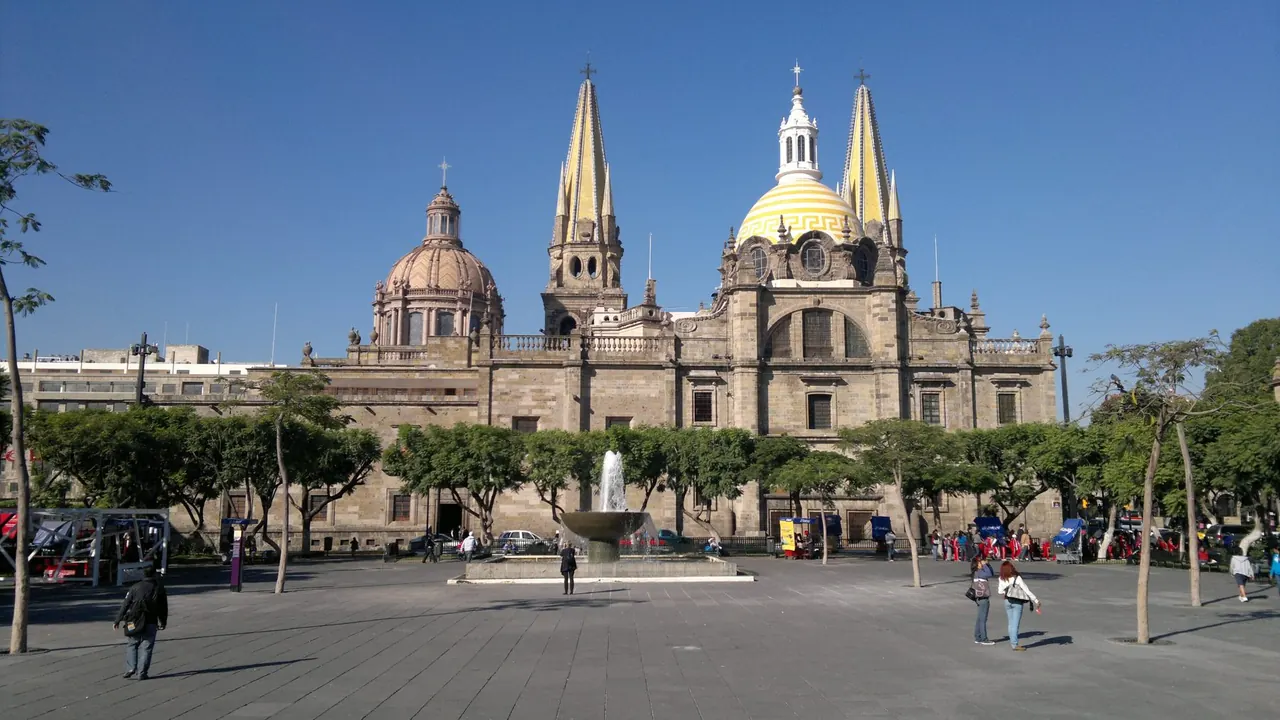
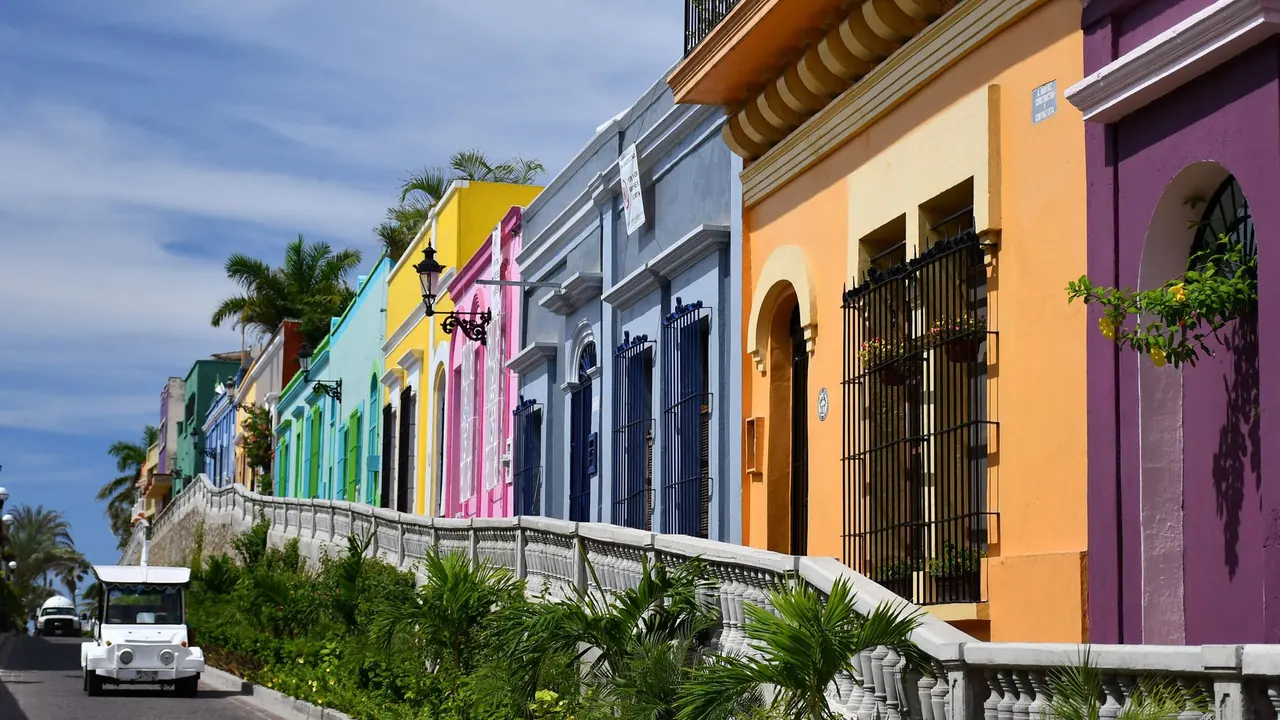
Photos: Guadalajara by Ponchomx, CC BY-SA 3.0, cropped; Mazatlan by Gzzz, CC BY-SA 4.0, cropped.
Guadalajara or Mazatlan?
Our verdict in twelve categories, each scored against the same fixed benchmark cities, and the climate month by month, so you can choose for your trip.
Choose Guadalajara for
- shopping
- day trips
- culture and sights
Guadalajara suits travellers who want a big Mexican city with a strong character of its own. You come for birria at breakfast and tortas ahogadas at lunch, Orozco's murals in the Hospicio Cabañas, mariachi in the plazas and late nights in Colonia Americana. The agave fields of Tequila and the shore of Lake Chapala are easy days out. It is also the cheaper of the two and the better place to shop for crafts. The one thing it cannot give you is a beach.
Choose Mazatlan for
- beaches
- nature and the outdoors
- families
Mazatlan is the choice if the Pacific is the point of the trip. It has a long run of sand from the old town to Cerritos, boats out to the island coves, and seafood eaten at beach shacks with a cold beer. In winter you can go whale-watching or fishing offshore. Its painted old centre makes a pleasant evening or two, but culture, shopping and day trips are thinner, so treat it as a coastal stay rather than a city break.
Scoreboard
Twelve categories on one fixed scale from 0 to 100. The shaded stretch is the gap between the two.
Your match
Pick a travel style or drag the sliders, and both match scores follow your weighting.
Wins on shopping and day trips with your weighting.
Wins on beaches and nature and the outdoors with your weighting.
What matters to you?
Category by category
What the scores mean for a trip.
Beaches & swimming
This is the widest gap between the two. Guadalajara is a plateau city with no coast. Lake Chapala is shallow and murky, so a swim there means a hotel pool or a spring-fed balneario, and anyone who wants sand ends up adding days around Puerto Vallarta.
Mazatlan is that sand. You can choose between the small rocky bays of Olas Altas, the fishing beach at Playa Norte, the hotel strip of the Zona Dorada and the wider, quieter Cerritos, or take a short boat ride to Isla de la Piedra. Because this is open Pacific, the island coves are the place for calm water.
Food & drink
Both cities eat very well, but Guadalajara has the richer table. It is the home of birria, the torta ahogada, carne en su jugo and jericalla, and tequila and clay-cup cantaritos come from the surrounding state. Colonia Americana and Providencia add chefs reworking local produce and good coffee.
Mazatlan is a seafood specialist. Aguachile, smoked marlin tacos, whole fish grilled zarandeado-style and shrimp cocktails from morning carts are excellent and very fresh. Away from the sea, though, the choice thins out quickly, and serious dining is scarce.
Culture & sights
Guadalajara carries far more weight here. The Hospicio Cabañas, a UNESCO site with Orozco's Man of Fire in its chapel dome, is a sight of international rank. Around it are the cathedral, the Palacio de Gobierno and the Teatro Degollado, and Tlaquepaque's colonial streets and Colonia Americana's mansions can fill another day.
Mazatlan's culture lies mostly in atmosphere. You get painted 19th-century port houses around the Plazuela Machado, cliff divers along the malecón and the climb to El Faro. The museums are small, and most visitors treat the centre as a break from the beach.
Nightlife
Guadalajara is a large university city, and it gives you more nights out and more variety. Mezcal and craft-beer bars and cantinas line the streets around Avenida Chapultepec. One of Mexico's best-known LGBTQ+ scenes is based in the centre and Americana, and dressier clubs in Providencia and Zapopan stay open past 3am.
Mazatlan's evenings divide between the loud, open-fronted bars of the Zona Dorada, where students crowd in during spring break, and quiet tables around the Plazuela Machado, with banda playing in both. Carnaval is spectacular, but out of season the town goes to bed early.
Nature & outdoors
Mazatlan has the edge because so much of its outdoor life is on the water. You can kayak and snorkel around Isla de Venados, watch humpback whales in winter, fish for marlin and surf the point breaks. The mangrove estuaries are full of frigatebirds, and on nearby beaches turtle hatchlings are released in late summer.
Guadalajara's outdoors is on land and quieter. You can take the oak and pine trails and mountain-bike routes of Bosque La Primavera, the hard hike down the Huentitán canyon, or go birdwatching on the hills above Lake Chapala.
Day trips
Guadalajara gives you a much fuller list of day trips. The best is Tequila, whose blue agave fields are a UNESCO landscape, with distilleries to visit. Then there are painted Ajijic on Lake Chapala, the unusual round pyramids of the Guachimontones, and the cool pine villages of Tapalpa and Mazamitla.
Mazatlan has one good direction, inland to the Sierra Madre foothills. Concordia's baroque church, the cobbled silver-mining lanes of Copala and El Rosario's gilded mission make a pleasant day. Most visitors go once and then return to the coast.
Good for families
Both welcome children warmly, and the difference is in the kind of fun on offer. Guadalajara has the big attractions: a large zoo above the canyon, the rides of Selva Mágica and the Trompo Mágico children's museum. They are spread far apart, though, so expect taxi rides between them. In return, the mild climate is kind to small children.
Mazatlan is a classic family beach town, with a seafront aquarium, boat trips to calm island coves and hotel pools with kids' clubs. The surf on the open beaches can be rough for little ones, and summer is uncomfortably hot.
Getting around
Neither is easy to get around, and each falls short in its own way. Guadalajara is a sprawling metropolis. It has walkable plazas and pedestrian streets at its heart, and light rail and Mi Macro buses serve some routes, but most visitors use ride-hailing between neighbourhoods and run into heavy rush-hour traffic.
Mazatlan is long and thin. The roughly 20km malecón ties the old centre to the Zona Dorada and is good for walking or cycling stretches of it, coast-road buses run along it, and the open-air pulmonía taxis make short hops fun.
Shopping & style
Guadalajara is the far better place to shop, especially for crafts. Tlaquepaque's galleries sell ceramics, blown glass and furniture, Tonalá has its street market of hand-painted pottery, and Mercado San Juan de Dios is packed with leather and boots. For brands, there are the malls of Andares.
In Mazatlan, shopping is mostly souvenirs from a beach vacation. You will find silver, hammocks and beachwear in the Zona Dorada, a few artists' studios in the old streets, and the Pino Suárez market for local sweets.
Affordability
Both are kind to a budget, and Guadalajara is the cheaper of the two. Central hotels carry few tourist premiums, street and market meals cost very little, and ride-hailing across the city is inexpensive. Only Providencia and Andares push costs up.
Mazatlan is also priced mainly for Mexican families, and seafood carts and local buses are cheap. The beachfront hotel is where the money goes, and rooms cost more at Carnaval, Easter and Christmas. Staying near the old centre keeps it modest.
Live music & performing arts
Guadalajara is the home of mariachi, and you hear it as part of daily life. Groups play in the Plaza de los Mariachis and around the bandstand of Tlaquepaque's El Parián. The Teatro Degollado adds the Jalisco Philharmonic and the Ballet Folclórico's regional dances.
Mazatlan has one fine stage, the restored Teatro Ángela Peralta, which hosts concerts, opera and an autumn festival. Most of its music, though, is banda sinaloense, the brass bands playing in beach restaurants and along the malecón.
Wellness & relaxation
Neither is a spa destination, but they relax you in different ways. Guadalajara's volcanic ground gives it thermal balnearios near La Primavera and on Lake Chapala's north shore, and some retreats have temazcal steam lodges. Slow, lakeside Ajijic is the place to unwind.
Mazatlan has no bathing tradition. Rest there means hammock afternoons, sunsets and quiet stays at Cerritos or on Isla de la Piedra.
When should you go?
Pick your month. The climate figures are measured averages, not a forecast.
Guadalajara in July
Mazatlan in July
Daytime high, °C
Rainfall in the month, mm
Where the figures come from
Guadalajara has no weather station within reach, so its figures come from a gridded climate model rather than a measured record, and read a broad area rather than the city itself.
Temperature and rainfall are climate normals, averaged over the years shown. Guadalajara: 2001-2020 normals, NASA POWER reanalysis grid, no weather station within 90 km. Mazatlan: 1991-2020 normals, Colonia Juan Carras-Co Mazatlan, Sin. (2 km from centre).
Both cities follow the same pattern through the year: dry from about November to May, then summer rains that run into early autumn. Guadalajara, high on its plateau, is mild and dry from November to February, the best time for walking the plazas and taking day trips to Tequila or Lake Chapala. From March to May it is the hotter of the two cities, peaking around 33°C in May, before the rains break in June. July is the wettest month at about 205mm, mostly as afternoon storms, and from July to November the days settle back into the mid-twenties. There is no beach season here at any time of year.
Mazatlan is the warmer city from June through January, and from June to October it is hot and humid, around 34°C. Its most comfortable months are winter and spring, which are dry and very sunny, with the sunniest days in April and May while Guadalajara is at its hottest inland. The sea is fresh at about 23°C from January to April and warms through May and June. The rain falls from July to October and is heaviest in August and September, when the sea is also at its warmest, about 30°C. For comfortable days on the sand and in the old town, go between November and May. Go in late summer only if warm swimming matters more to you than heat and storms.
Which traveller are you?
On a beach and sun trip, choose Mazatlan without hesitation. It has kilometres of Pacific sand, calm coves on the offshore islands and seafood eaten by the water. Guadalajara is inland, its lake is not for swimming, and the nearest beach means another journey.
For a culture and arts trip, Guadalajara is the clear pick. It has the Hospicio Cabañas and its Orozco murals, a cathedral centre laid out as a cross of plazas, mariachi at its source and the Ballet Folclórico at the Teatro Degollado. Mazatlan's old port quarter fills only a day.
On a shopping trip, go to Guadalajara. You can spend whole days among the ceramics and glass of Tlaquepaque, at Tonalá's street market of painted pottery and on the three floors of San Juan de Dios, and leather boots are a regional speciality. Mazatlan offers little beyond silver, hammocks and souvenirs.
Before you go
| Measure | Guadalajara | Mazatlan |
|---|---|---|
| Official language | Spanish, Nahuatl, Yucatec Maya | Spanish, Nahuatl, Yucatec Maya |
| Currency | Mexican Peso (MXN) | Mexican Peso (MXN) |
| Sockets | AB127 V, 60 Hz | AB127 V, 60 Hz |
| Driving side | Right | Right |
| Time zone | UTC-6 | UTC-7 |
| Emergency number | 911 | 911 |
| Elevation | 1,536 m | 139 m |
| Main airport | Guadalajara International Airport (GDL)17 km from centre68 non-stop destinations | General Rafael Buelna International Airport (MZT)16 km from centre23 non-stop destinations |
| Public holidays this year | 9 days | 9 days |
By the numbers
| Measure | Guadalajara | Mazatlan |
|---|---|---|
| City population | 1,385,621 | 441,975 |
| People per km² | 9,556 | - |
| Museums within 10 km | 17 | 3 |
| UNESCO World Heritage sites within 50 km | 2 | 0 |
| Swim season, months above 21 °C | - | 12 months |
Where else could you go?
Every comparison below shares a destination with this one, so you can follow Guadalajara or Mazatlan somewhere new.