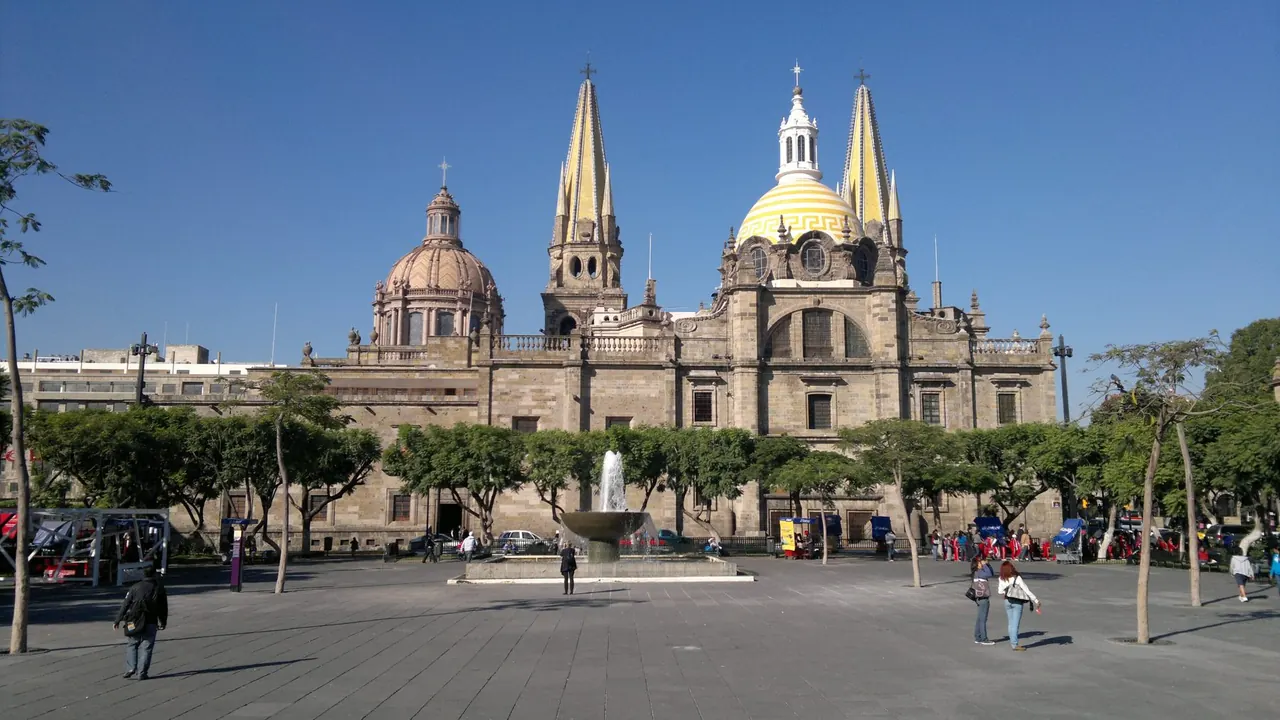
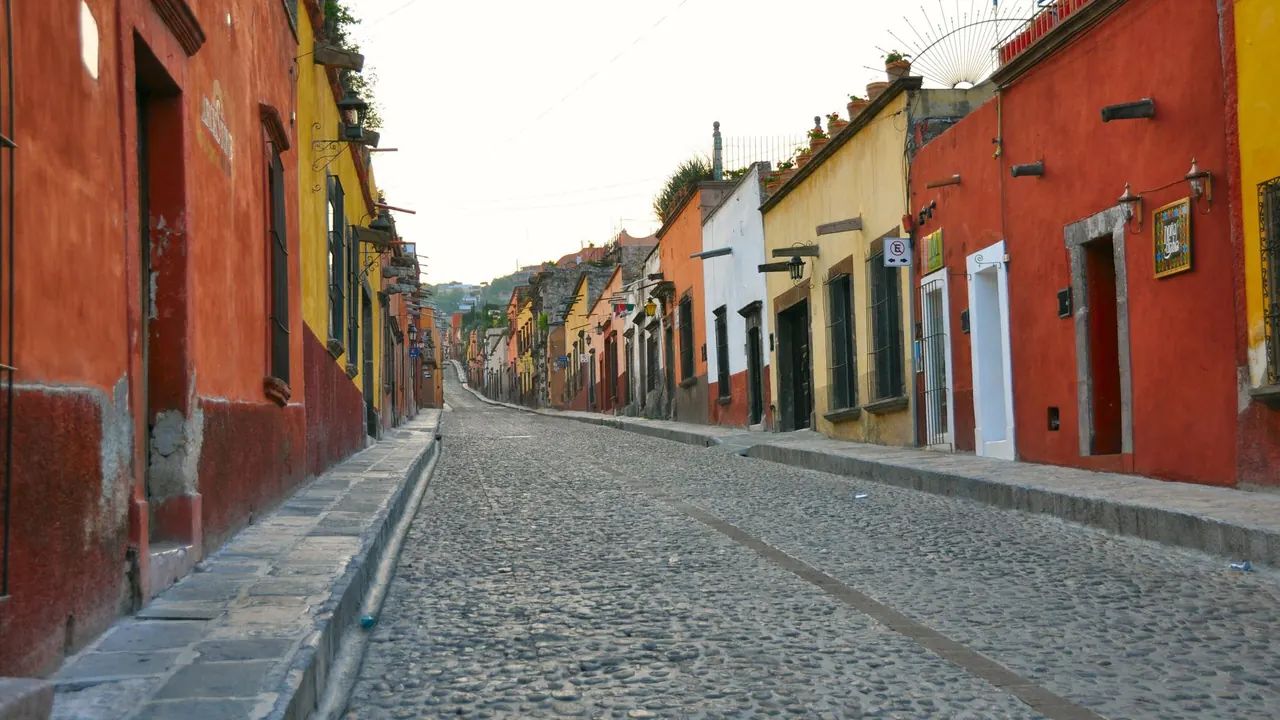
Photos: Guadalajara by Ponchomx, CC BY-SA 3.0, cropped; San Miguel de Allende by Russ Bowling, CC BY 2.0, cropped.
Guadalajara or San Miguel de Allende?
Our verdict in twelve categories, each scored against the same fixed benchmark cities, and the climate month by month, so you can choose for your trip.
Choose Guadalajara for
- nightlife
- prices
- families
Guadalajara suits travellers who want a big Mexican city at full strength: birria and tortas ahogadas for breakfast, mariachi in the plazas where it was born, late nights around Avenida Chapultepec and costs that stay low throughout. It is also the easier choice with children, thanks to its zoo, aquarium and children's museum, and the forest of La Primavera puts real green space within reach.
Choose San Miguel de Allende for
- wellness
- day trips
- getting around
For a slower, more polished stay, San Miguel de Allende is the better pick. Its cobbled hillside centre is the sight in itself, the hot springs towards Atotonilco and long courtyard mornings make rest easy, and Guanajuato, Querétaro and the wine country are all within an easy drive. Expect to pay more, and expect quiet evenings outside the weekend.
Scoreboard
Twelve categories on one fixed scale from 0 to 100. The shaded stretch is the gap between the two.
Your match
Pick a travel style or drag the sliders, and both match scores follow your weighting.
Wins on nightlife and prices with your weighting.
Wins on wellness and day trips with your weighting.
What matters to you?
Category by category
What the scores mean for a trip.
Beaches & swimming
Neither city has a beach, because both sit on the high plateau many hours from the sea. Guadalajara does have the Pacific coast around Puerto Vallarta a short flight away, and its spring-fed balnearios are proper swimming pools. San Miguel's warm springs are more for soaking than for swimming lengths.
Food & drink
Guadalajara's food has far more depth. It is the home of birria, the torta ahogada and carne en su jugo, served at neighbourhood stands and the upstairs stalls of Mercado San Juan de Dios. Jalisco's tequila and cantaritos in clay cups come with the territory.
San Miguel eats well for a small town, with rooftop terraces over the Parroquia, Bajío ingredients such as nopal and mesquite, and local wines on the lists. Much of it is aimed at foreign residents and weekend visitors, though, and after a while the menus start to look alike in a way Guadalajara's regional cooking does not.
Culture & sights
Each rewards two or three days, but in different ways. Guadalajara's culture is concentrated in its monuments: the cross of plazas around the cathedral and, above all, Orozco's murals in the Hospicio Cabañas, a sight of real international standing.
In San Miguel the whole town is the attraction, a UNESCO-listed hillside of cobbled streets and ochre façades led by the pink spires of the Parroquia. It has no single masterpiece to match the Cabañas, but its art schools, its galleries and the Siqueiros mural at Bellas Artes give it a lived-in artistic character.
Nightlife
Guadalajara is a university city that goes out late and often. It has mezcal and craft-beer bars around Avenida Chapultepec, one of Mexico's best-known LGBTQ+ scenes, and dressy clubs in Providencia and Zapopan that run into the small hours.
San Miguel's evenings are gentler: a rooftop drink as the Parroquia lights up, then mezcal bars and cantinas near the Jardín. The town livens up when weekenders arrive, but on weeknights it mostly goes quiet after dinner, and there is no real club scene.
Nature & outdoors
Guadalajara has more varied country on its doorstep. There is the oak and pine forest of Bosque La Primavera, with trails and warm streams, and the steep Huentitán canyon down to the Río Santiago. Lake Chapala is good for birdwatching, and the forests around Tapalpa lie further out.
Around San Miguel the land is dry Bajío scrub and cactus. El Charco del Ingenio, riding on the ranches and dawn balloon flights make good mornings, but there are no forests or mountains to fill longer days.
Day trips
San Miguel is the better base for excursions. Guanajuato's painted ravine, Querétaro's aqueduct and baroque centre, and the murals of Atotonilco are all within about an hour. Dolores Hidalgo, Bernal, Mineral de Pozos and the wine country add more good days than most visitors have time for.
Guadalajara has one outstanding outing, the agave landscape and distilleries of Tequila. It also has easy days at Ajijic on Lake Chapala, the circular Guachimontones pyramids and the mountain villages of Tapalpa and Mazamitla. That is a good choice, but it cannot match San Miguel's cluster of colonial cities nearby.
Good for families
Guadalajara is far easier with children. The large zoo with Selva Mágica beside it, the Acuario Michin, the hands-on Trompo Mágico and the car-free avenues on Sundays give them real things to do, although these are spread out and you will need taxis.
San Miguel has almost nothing built for children, and its steep cobbles are hard work with a pushchair. Evenings on the Jardín, the hot spring pools and the fiesta fireworks please older children, but younger ones soon run out of things to do.
Getting around
San Miguel is simpler once you are there, because everything worth seeing lies within a walk of the Jardín. The catch is the effort: steep, uneven cobbles at about 1,900m mean good shoes matter. There is no airport in town, so arrival means a shuttle from Querétaro or León.
Guadalajara's centre and Colonia Americana are good on foot, but the city sprawls along broad avenues that the light rail and Mi Macro buses only partly cover. Most visitors use ride-hailing between districts, which works well, though heavy rush-hour traffic eats into the day.
Shopping & style
Both are craft shopping places at heart, with a different emphasis. Guadalajara offers more range: Tlaquepaque's galleries, Tonalá's pottery market, the three floors of Mercado San Juan de Dios, regional leather and boots, and big malls in Zapopan for the brands.
San Miguel is about art and the home. It has tin lanterns and textiles in the Mercado de Artesanías, high-quality décor shops and artists' studios in a former textile mill, but no fashion brands at all.
Affordability
Guadalajara is cheaper by a clear margin, with street food, ride-hailing and comfortable hotels in the centre and Americana all costing little. Only Providencia and Andares cost noticeably more.
San Miguel is one of the pricier places to visit in Mexico. Boutique hotels in colonial houses and the restaurants around the Jardín are priced for foreign residents, and rooms cost more at weekends and during festivals. Street food, cantinas and churches that are free to visit help travellers who eat and spend away from the centre.
Live music & performing arts
Guadalajara is the home of mariachi, and you hear it at its source in the Plaza de los Mariachis and in El Parián in Tlaquepaque. The Teatro Degollado adds the Jalisco Philharmonic and the university's Ballet Folclórico.
San Miguel has plenty of music for a town its size: mariachi on the Jardín, the Teatro Ángela Peralta, and chamber music and jazz festivals in their seasons. Outside those festivals the formal programme is thin.
Wellness & relaxation
Rest takes some planning in Guadalajara and almost none in San Miguel de Allende, which is the clear choice for a restful trip. In the big city, unwinding means a hotel spa or a slow lunch. The thermal pools are out at the edge of La Primavera or along Lake Chapala, so a soak and the traffic either way can take up most of a day.
San Miguel's hot springs are in the valley just outside town. You can take a short taxi ride there and be back before lunch, and the small, unhurried centre is restful in itself. Yoga, temazcal and massage are easy to find because many people live in the town year-round. In Guadalajara, the quieter option is to leave the city and spend a few days in Ajijic.
When should you go?
Pick your month. The climate figures are measured averages, not a forecast.
Guadalajara in July
San Miguel de Allende in July
Daytime high, °C
Rainfall in the month, mm
Where the figures come from
Guadalajara has no weather station within reach, so its figures come from a gridded climate model rather than a measured record, and read a broad area rather than the city itself.
San Miguel de Allende's temperatures are measured 54 km from the centre, at Guanajuato, Gto..
San Miguel de Allende has no rain gauge within 25 km of the centre, so its rainfall comes from a gridded climate dataset read at the city rather than from a gauge further away.
Temperature and rainfall are climate normals, averaged over the years shown. Guadalajara: 2001-2020 normals, NASA POWER reanalysis grid, no weather station within 90 km. San Miguel de Allende: 1991-2020 normals, Guanajuato, Gto. (53.7 km from centre).
Both cities sit high on the central plateau and follow the same pattern: a dry winter and spring, then a summer rainy season. From November to March daytime highs in both run from about 23°C to 29°C with almost no rain, which is ideal for walking streets and plazas. April and May are the hottest months, with Guadalajara reaching 33°C in May, so midday sightseeing gets tiring in either place. San Miguel has long hours of sunshine right through this dry stretch, most of all in March and April.
The rains arrive in June and last into September, usually as afternoon storms. They are heavier in Guadalajara, which gets about 205mm in July, while San Miguel's wettest month brings roughly 130mm. October is a good in-between month in both, as the rain tails off and the hills are still green.
Which traveller are you?
For a food and nightlife trip, Guadalajara gives each day a shape: birria for breakfast, a torta ahogada at lunch, then cantaritos and a night that runs well past midnight at weekends. In San Miguel de Allende, evenings mostly wind down after dinner.
On a relaxing and wellness trip, Guadalajara's size and traffic work against you, so San Miguel de Allende is the better base. The days can be slow on purpose: a morning soak in hot water, an afternoon reading on a rooftop and an early night.
On a tight budget, Guadalajara asks for few compromises. Its best cooking is market and street food, and its plazas and murals cost nothing to see. San Miguel can be done cheaply, but only by sleeping and eating away from the centre you came to see.
Before you go
| Measure | Guadalajara | San Miguel de Allende |
|---|---|---|
| Official language | Spanish, Nahuatl, Yucatec Maya | Spanish, Nahuatl, Yucatec Maya |
| Currency | Mexican Peso (MXN) | Mexican Peso (MXN) |
| Sockets | AB127 V, 60 Hz | AB127 V, 60 Hz |
| Driving side | Right | Right |
| Time zone | UTC-6 | UTC-6 |
| Emergency number | 911 | 911 |
| Elevation | 1,536 m | 1,900 m |
| Main airport | Guadalajara International Airport (GDL)17 km from centre70 non-stop destinations | Guanajuato International Airport (BJX)77 km from centre22 non-stop destinations |
| Public holidays this year | 9 days | 9 days |
By the numbers
| Measure | Guadalajara | San Miguel de Allende |
|---|---|---|
| City population | 1,385,621 | 69,811 |
| People per km² | 9,556 | - |
| Museums within 10 km | 17 | 2 |
| UNESCO World Heritage sites within 50 km | 2 | 2 |
Where else could you go?
Every comparison below shares a destination with this one, so you can follow Guadalajara or San Miguel de Allende somewhere new.