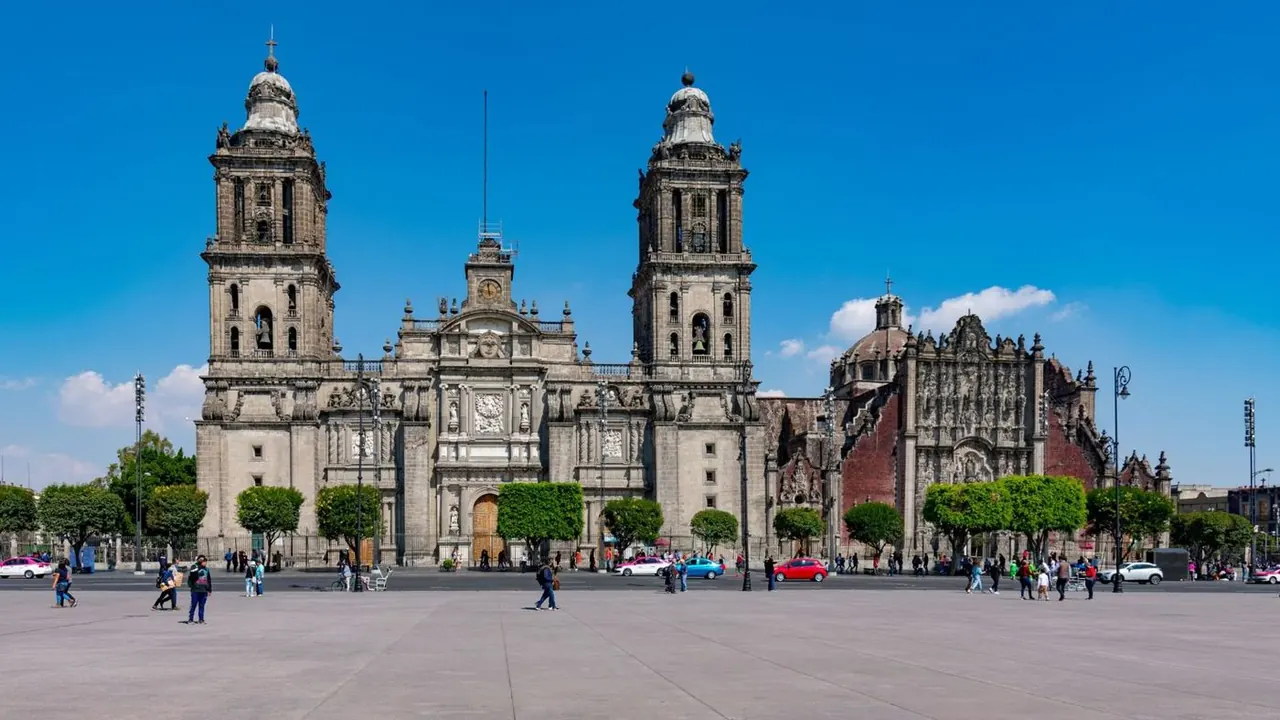
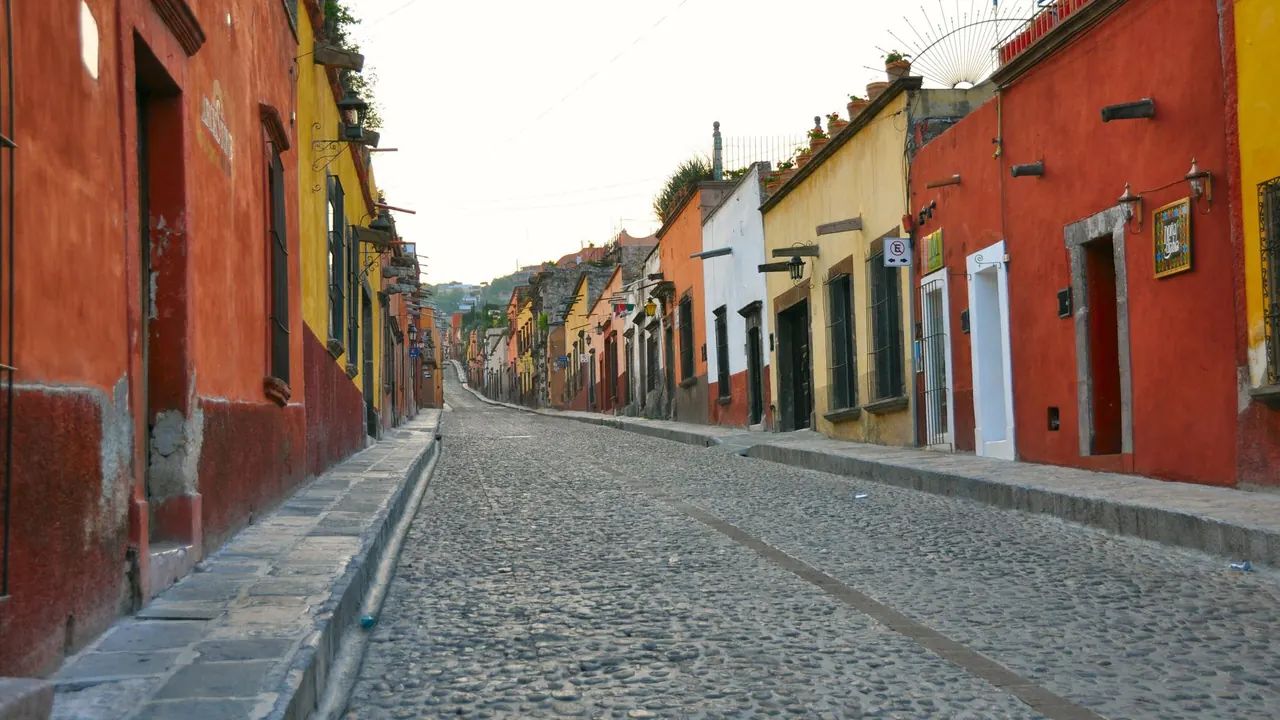
Photos: Mexico City by Oscar Dominguez, Pexels License; San Miguel de Allende by Russ Bowling, CC BY 2.0, cropped.
Mexico City or San Miguel de Allende?
Our verdict in twelve categories, each scored against the same fixed benchmark cities, and the climate month by month, so you can choose for your trip.
Choose Mexico City for
- nightlife
- live music and the arts
- food and drink
Mexico City is the choice for a trip built around appetite and energy. It is one of the great eating cities of the world, from taco stands to tasting menus, and it has the deeper museums, the long nights in Roma and Condesa, and a real programme of opera, ballet and concerts. It also costs less day to day, and families will find far more to keep children busy. The price is size: long rides, heavy traffic and very little calm.
Choose San Miguel de Allende for
- wellness
- day trips
San Miguel de Allende suits travellers who want a slower, smaller trip in one beautiful place. Its cobbled colonial centre is the sight in itself, mornings pass in courtyards and afternoons on rooftops, and the hot springs near Atotonilco make it far easier to unwind. It works best for adults happy with quiet evenings, and as a base for Guanajuato and Querétaro, rather than for anyone after big museums, clubs or a cheap stay.
Scoreboard
Twelve categories on one fixed scale from 0 to 100. The shaded stretch is the gap between the two.
Your match
Pick a travel style or drag the sliders, and both match scores follow your weighting.
Wins on nightlife and live music and the arts with your weighting.
Wins on wellness and day trips with your weighting.
What matters to you?
Category by category
What the scores mean for a trip.
Beaches & swimming
Neither has a beach. Both sit high on the central plateau, many hours from the sea, so the coast has to be a separate leg of the trip. The small difference is the water close by. In Mexico City swimming means a hotel pool or a sports centre, while San Miguel has warm spring-fed pools in the countryside, better for a long soak than for laps.
Food & drink
Mexico City is the far stronger place to eat. Breakfast tamales from carts, blue-corn quesadillas, al pastor late at night and counter lunches in markets such as Medellín and La Merced are only the start, with Roma, Condesa and Polanco adding cantinas, seafood bars and some of the most respected tasting menus in the Americas. The only drawback is that the best places are spread across a vast city.
San Miguel eats well for its size, with rooftop terraces facing the Parroquia, chefs working with Bajío nopal and mesquite, and Guanajuato wines on the lists. There are cheap gorditas, evening taco carts and the Mercado Ignacio Ramírez too. Much of it is aimed at foreign residents, though, and after a few days the menus begin to repeat.
Culture & sights
In Mexico City the sights are on a different scale. The Templo Mayor's Aztec ruins sit beside the cathedral and the National Palace with its Rivera murals, and the National Museum of Anthropology is one of the world's great archaeological collections. Add the Frida Kahlo house in Coyoacán and the Bellas Artes murals, and a week is barely enough.
San Miguel's appeal is the whole town rather than any one building. The UNESCO-listed hillside of ochre façades and carved doorways rises to the pink spires of the Parroquia, with an unfinished Siqueiros mural and art schools nearby. There are no major museums, and two unhurried days cover the main sights.
Nightlife
Mexico City is the place for a real night out. In Roma and Condesa a night means walking between cocktail bars, mezcalerías and small dance floors, and later there are electronic clubs that go on until dawn, salsa and cumbia halls and the big LGBTQ scene of the Zona Rosa. Old Centro cantinas with free snacks give a more traditional evening.
San Miguel's evenings are gentler: a drink as the Parroquia lights up, then mezcal bars around the Jardín. Weekend visitors keep a few dance bars going late on Fridays and Saturdays, but midweek the town is mostly quiet soon after dinner.
Nature & outdoors
For bigger landscapes, Mexico City is the stronger base. On its southern and western edges there is real hiking at altitude in the pine forests of Desierto de los Leones and on the slopes of Ajusco. About two hours out are the Paso de Cortés between the volcanoes Iztaccíhuatl and Popocatépetl, and the crater lakes of Nevado de Toluca, and in winter the monarch butterfly reserves make a long day. The catch is getting there: traffic takes up much of each outing, and the air can be poor in the dry season.
San Miguel's outdoors is smaller but much closer to hand. The cactus and mesquite of the Bajío begin at the edge of town, where the canyon trails of El Charco del Ingenio look over the Allende reservoir. A horse ride on a ranch or a dawn balloon flight over the valley fits easily into a morning, but there are no mountains, forests or water sports.
Day trips
Both make excellent bases, and the difference is in what lies around them. From Mexico City the highlights are ancient and grand: the pyramids of Teotihuacan an hour away, Puebla's tiled centre and Cholula's great pyramid, and the silver town of Taxco. Escaping the city traffic means early starts.
From San Miguel the trips are shorter and mostly colonial: Guanajuato's ravine of painted houses, Querétaro's aqueduct, the murals of Atotonilco and the pottery of Dolores Hidalgo, plus the wine country and Bernal's monolith. Buses cover the cities, but the smaller places need a car or a driver.
Good for families
Mexico City has much more for children. Chapultepec alone holds the zoo, boating lakes and the hands-on Papalote museum, and there is an aquarium, a roller-coaster park, trajinera boats at Xochimilco and lucha libre. The strain comes from the long rides and crowded trains.
San Miguel has little made for children, and its steep cobbles are hard going with a pushchair. Evenings on the Jardín, with balloon sellers and local families, are relaxed, and older children may enjoy the spring pools, a horse ride or the fiesta fireworks.
Getting around
Both are manageable, in different ways. Mexico City is a set of walkable districts, the Centro, Roma, Condesa, Polanco and Coyoacán, spread far apart and linked by a cheap but crowded metro, the Metrobús and ride-hailing cars. Distances and traffic are the problem.
In San Miguel everything is a walk from the Jardín, but the walks are steep, the stones uneven and the altitude makes itself felt. Cheap taxis handle the climbs. The town has no airport, so arrival means a shuttle from Querétaro or León.
Shopping & style
Crafts, fashion and flea markets in one city, things for the home in the other. In Mexico City, La Ciudadela gathers textiles, pottery and silver from all over the country, while the Lagunilla flea market and San Ángel's Saturday bazaar are good for long browsing. Avenida Presidente Masaryk and the grand department stores cover fashion, and Roma and Condesa add Mexican designers.
San Miguel's range is narrower but strong on décor: punched-tin lanterns and blown glass in the Mercado de Artesanías, fine furniture and tile shops, and a former textile mill full of studios and antique dealers. Anyone after big brands will find none.
Affordability
Day to day, the capital costs noticeably less. Metro rides, street tacos and market lunches are cheap, and many museums are inexpensive or free on certain days. Only in Roma, Condesa and Polanco do hotels and restaurants approach European prices.
San Miguel ranks among the dearer places to visit in Mexico. Boutique hotels in colonial houses and restaurants around the Jardín charge with foreign residents and weekenders in mind, and rooms cost most at weekends and during festivals. Its churches and streets cost nothing to enjoy, though, and market food stays cheap.
Live music & performing arts
A capital's formal season meets a small town's festival calendar here. In Mexico City the Palacio de Bellas Artes holds the national opera and symphony seasons and the Ballet Folklórico, which visitors enjoy without any Spanish, while Sala Nezahualcóyotl and the Auditorio Nacional add concerts. Lucha libre at Arena México and the mariachis of Plaza Garibaldi make livelier nights.
San Miguel has plenty of music for its size: the nineteenth-century Teatro Ángela Peralta, chamber and jazz festivals in their seasons, mariachis on the Jardín and the street dancing of the Alborada. Between festivals the formal programme is thin.
Wellness & relaxation
San Miguel is the place to slow down. The open-air pools and domed grottoes of the hot springs towards Atotonilco are fifteen minutes away, and town has yoga classes, massage studios and temazcal sweat lodges, all at the town's easy pace.
Mexico City offers good hotel spas and temazcal rituals in Polanco, Roma and Condesa, and quiet hours in Coyoacán's plazas. Noise and traffic set the tone, though, and for a real retreat people leave for Cuernavaca or Tepoztlán.
When should you go?
Pick your month. The climate figures are measured averages, not a forecast.
Mexico City in July
San Miguel de Allende in July
Daytime high, °C
Rainfall in the month, mm
Where the figures come from
San Miguel de Allende's temperatures are measured 54 km from the centre, at Guanajuato, Gto..
San Miguel de Allende has no rain gauge within 25 km of the centre, so its rainfall comes from a gridded climate dataset read at the city rather than from a gauge further away.
Temperature and rainfall are climate normals, averaged over the years shown. Mexico City: 1991-2020 normals, Mexico Central, D. F. (7.9 km from centre). San Miguel de Allende: 1991-2020 normals, Guanajuato, Gto. (53.7 km from centre).
Both cities follow the same pattern. A dry, sunny season runs from about November to April, and summer rain sets in from June to September, usually as afternoon storms. Mexico City stays mild all year, with days rarely warmer than 28°C, so walking the streets is comfortable in any month. Its wet season is the heavier of the two, with August bringing about 186mm.
San Miguel has a hotter spring. Days reach 32°C in April and May, which makes midday climbs on the steep cobbles hard work. Winter is its best season, with clear, sunny days around 23°C from December to January, and the same months are pleasant in the capital too. September is the dullest month in both. Neither city has beach weather to speak of.
Which traveller are you?
For a food and nightlife trip, Mexico City is the clear pick. Market counters, late taco stands, pulquerías and serious tasting menus lead into nights of mezcal bars, salsa halls and clubs that run until morning, far beyond San Miguel's rooftop drinks.
On a relaxing and wellness trip, San Miguel de Allende suits better. The pace is slow, the climate is dry and mild, and the warm spring pools towards Atotonilco are fifteen minutes away. Mexico City's noise and traffic make real rest hard to find.
On a family trip with children, Mexico City has much more to offer: the Papalote museum, the zoo and lakes in Chapultepec, trajinera boats at Xochimilco and lucha libre. San Miguel is an adult town of galleries and bars with steep, pushchair-unfriendly streets.
Before you go
| Measure | Mexico City | San Miguel de Allende |
|---|---|---|
| Official language | Spanish, Nahuatl, Yucatec Maya | Spanish, Nahuatl, Yucatec Maya |
| Currency | Mexican Peso (MXN) | Mexican Peso (MXN) |
| Sockets | AB127 V, 60 Hz | AB127 V, 60 Hz |
| Driving side | Right | Right |
| Time zone | UTC-6 | UTC-6 |
| Emergency number | 911 | 911 |
| Elevation | 2,240 m | 1,900 m |
| Main airport | Mexico City Benito Juárez International Airport (MEX)7 km from centre109 non-stop destinations | Guanajuato International Airport (BJX)77 km from centre22 non-stop destinations |
| Public holidays this year | 9 days | 9 days |
By the numbers
| Measure | Mexico City | San Miguel de Allende |
|---|---|---|
| City population | 9,209,944 | 69,811 |
| People per km² | 6,202 | - |
| Museums within 10 km | 108 | 2 |
| UNESCO World Heritage sites within 50 km | 6 | 2 |
Where else could you go?
Every comparison below shares a destination with this one, so you can follow Mexico City or San Miguel de Allende somewhere new.