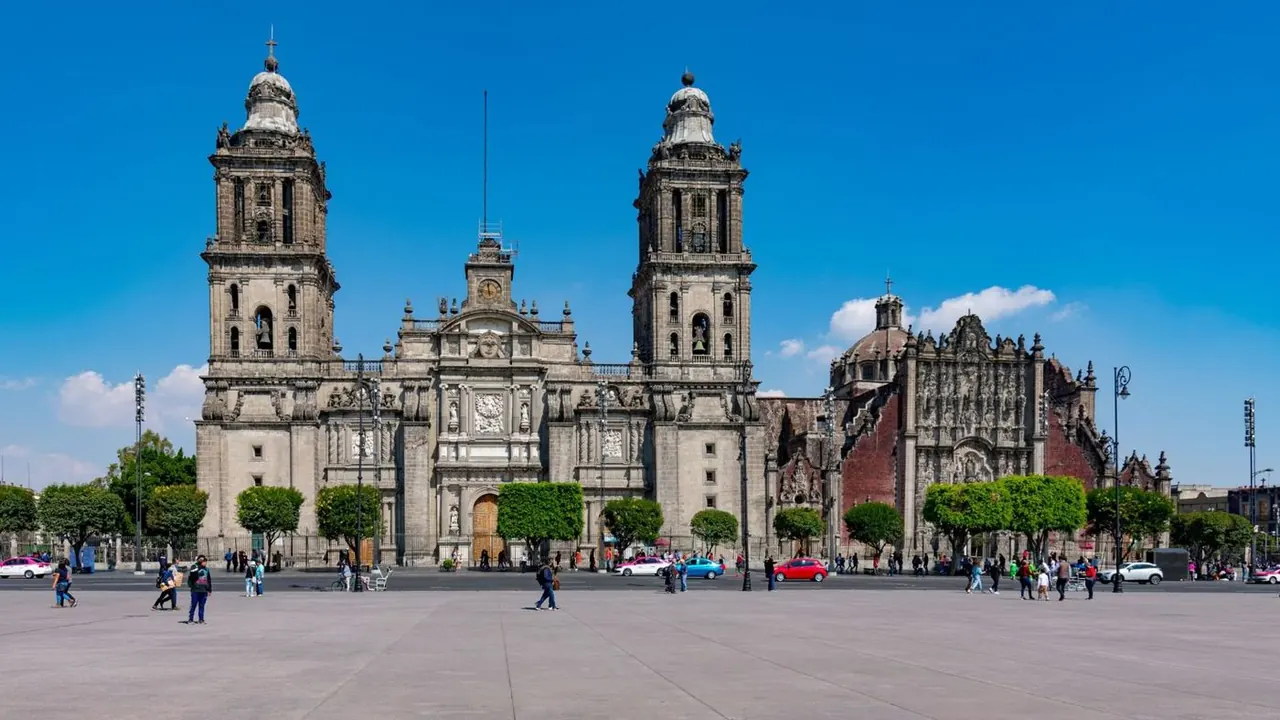
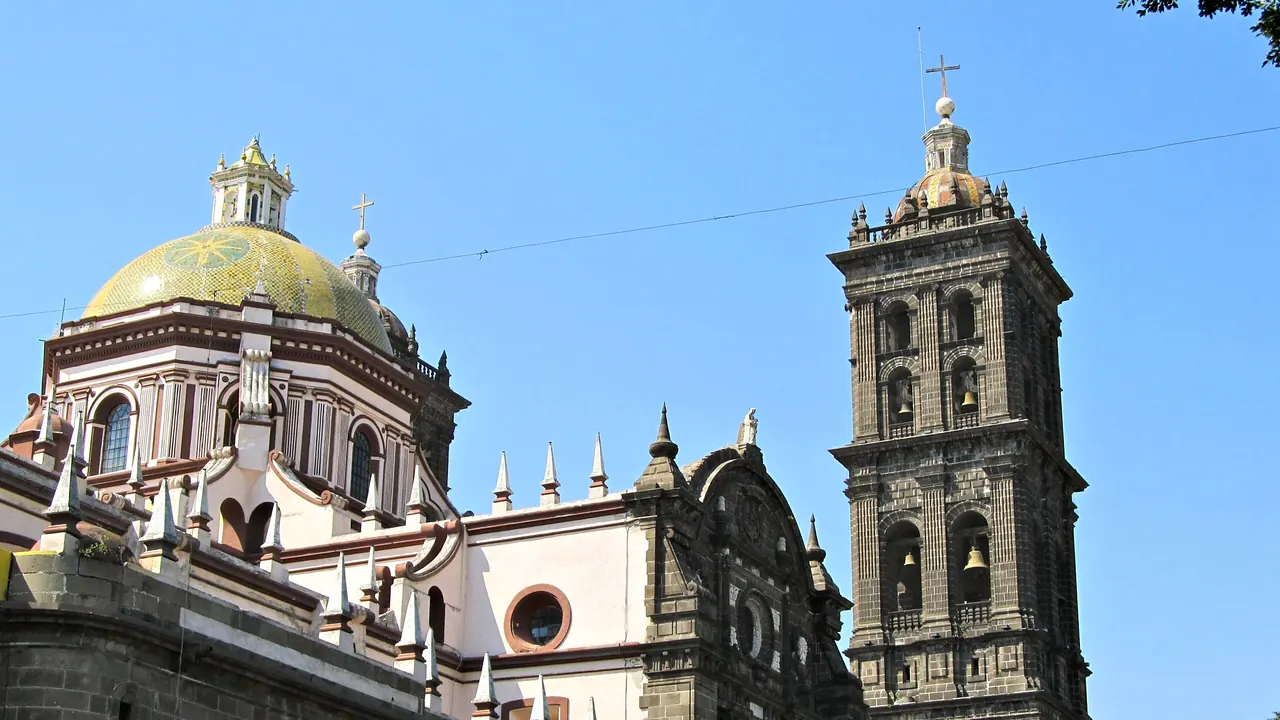
Photos: Mexico City by Oscar Dominguez, Pexels License; Puebla by Octavio Alonso Maya …, CC BY-SA 3.0, cropped.
Mexico City or Puebla?
Our verdict in twelve categories, each scored against the same fixed benchmark cities, and the climate month by month, so you can choose for your trip.
Choose Mexico City for
- nightlife
- live music and the arts
- shopping
Mexico City suits the traveller who wants a capital's full range in one stay. Its food runs from late-night taco stands to tasting menus, its museums and ruins fill a week, and its nights out, concerts and craft markets go far beyond anything Puebla offers. It asks more in return: long distances, heavy traffic and a slower start while you get used to the altitude.
Choose Puebla for
- nature and the outdoors
- prices
- day trips
Puebla is the better pick for a slower, cheaper and more compact trip. Its tiled colonial centre can be walked in a few unhurried days, comfortable rooms in old houses cost far less, and the volcano country of La Malinche and Izta-Popo starts much closer. It also makes sense for anyone who travels mainly to eat the dishes Mexican cooking grew from, without needing a big night out afterwards.
Scoreboard
Twelve categories on one fixed scale from 0 to 100. The shaded stretch is the gap between the two.
Your match
Pick a travel style or drag the sliders, and both match scores follow your weighting.
Wins on nightlife and live music and the arts with your weighting.
Wins on nature and the outdoors and prices with your weighting.
What matters to you?
Category by category
What the scores mean for a trip.
Beaches & swimming
Neither city has a beach. Both sit more than 2,000m up and are hours from the sea, so the coast is a separate trip either way.
What differs is the direction and what you can do in town. From Mexico City the nearest beaches are on the Pacific around Acapulco, and swimming at home means a hotel pool or a sports centre. Puebla is closer to the Gulf coast at Veracruz, and its spring-fed balnearios on the edge of town give it an outdoor swim the capital lacks.
Food & drink
Puebla has the stronger claim to origins, since mole poblano and chiles en nogada were born there, but Mexico City has the greater range. In the capital you can start with tamales from a cart at breakfast, eat lunch at a counter in Medellín or La Merced, and finish at one of the respected tasting menus in Roma or Polanco, with pulquerías, mezcal bars and good coffee along the way.
Puebla's eating is narrower and very local: cemitas, chalupas, tacos árabes and convent sweets from the Calle de los Dulces, with cheap set lunches in the fondas. It rewards a food-minded visitor for a few days. For international cooking or a run of high-end dinners, though, the capital is well ahead.
Culture & sights
Mexico City works on a much larger scale. The Zócalo has the Aztec Templo Mayor dug out right next to the cathedral and the National Palace murals, and the National Museum of Anthropology is one of the world's great collections. Add Coyoacán's Frida Kahlo house and the Xochimilco canals and a week is barely enough.
Puebla's appeal is denser and more focused on the Baroque: Talavera-fronted streets, the gilded Capilla del Rosario, the seventeenth-century Biblioteca Palafoxiana and the Museo Amparo, all within a short walk of each other. It is a richer two or three days than many expect, but it has no match for the capital's pre-Hispanic heritage or its museums.
Nightlife
The gap here is wide. In Mexico City a night out in Roma and Condesa means walking between cocktail bars, mezcalerías and rooftops on tree-lined streets, and it can carry on into electronic clubs until dawn, salsa and cumbia halls, the Zona Rosa's LGBTQ scene or a classic cantina in the Centro.
Puebla's centre is quieter: mezcal bars, cantinas and terraces looking at the cathedral, mostly around the Callejón de los Sapos. Students go out in neighbouring Cholula from Thursday to Saturday, and club life sits out in Angelópolis. It is a friendly scene for an evening or two, not a reason to come.
Nature & outdoors
Puebla has the edge, mainly because the mountains are closer. On clear dry-season mornings Popocatépetl and Iztaccíhuatl stand on its skyline, La Malinche's long climb through pine forest to over 4,400m is a little over an hour away, and the Izta-Popo trails are close by too. Its town parks are modest, and you still need a car, a tour or an early bus.
Mexico City has better green space within the city, with Chapultepec's woods and lakes and the chinampa canals of Xochimilco, plus hiking at Desierto de los Leones and Ajusco. Its larger landscapes, the Paso de Cortés and Nevado de Toluca, take about two hours through traffic, and dry-season smog can spoil the views.
Day trips
Both are excellent bases, and each counts the other as a day out. The difference is in what lies around them. From Mexico City the highlight is Teotihuacan's Avenue of the Dead, and to the south lie leafy Cuernavaca, Tepoztlán under its cliff-top temple and silver-working Taxco. The catch is the long drive out through the city's traffic.
Puebla's excursions are shorter and more about churches. Cholula's Great Pyramid is barely half an hour away, the folk-Baroque interiors of Tonantzintla and Acatepec are close by, and Tlaxcala with the Cacaxtla murals makes an easy pairing. Visiting the capital from Puebla is possible but makes a long day.
Good for families
Mexico City gives children more variety. Chapultepec alone has the zoo, boating lakes and the hands-on Papalote museum, and there are also the Polanco aquarium, a theme park, a trajinera ride at Xochimilco and lucha libre. The downside is the size of the city: long rides and crowded trains wear children out.
Puebla relies on one major draw, the drive-through Africam Safari, along with the observation wheel at Angelópolis and the tunnels under Cholula's pyramid. Its flat centre is easier to manage with a pushchair, but beyond the sweet shops most sights are churches and museums meant for adults.
Getting around
Neither is effortless, and they are difficult in different ways. Mexico City has a large, cheap metro with Metrobús lanes and bike-share on top. Even so, its sights are far apart, the trains are packed at rush hour and pickpockets work them, so most visitors also rely on ride-hailing cars, especially at night.
Puebla has no metro. Its advantage is size: almost everything worth seeing lies on a flat, logical grid within twenty minutes' walk of the zócalo. Once you leave the centre for Cholula, Angelópolis or Africam, you depend on taxis, apps or tours.
Shopping & style
Mexico City is far better for shopping. La Ciudadela collects crafts from all over the country, the Lagunilla flea market and the San Ángel Saturday bazaar make good browsing, and the city also has luxury houses on Masaryk, the grand department stores and Mexican designers in Roma and Condesa.
Puebla is where you go for one thing: Talavera, ideally bought from a workshop where you can watch it being painted. El Parián, the weekend antiques stalls on the Callejón de los Sapos and boxed sweets add some variety, but for fashion you would have to head out to the Angelópolis malls.
Affordability
Both cities are cheap at street level, with tacos, market lunches and rides that cost little. Puebla goes further mainly on where you sleep. A comfortable room in a restored colonial house near the zócalo costs much less than the equivalent in the capital, and only its smartest addresses reach international prices.
In Mexico City the cost depends on the neighbourhood. If you stay and eat in Roma, Condesa or Polanco, hotels and cocktail bars cost close to what you would pay in a European capital. Staying in the Centro and eating where locals eat brings the bill well down.
Live music & performing arts
Mexico City is much the stronger for performance. Bellas Artes hosts the national opera and symphony and the Ballet Folklórico, which needs no Spanish. The modernist Sala Nezahualcóyotl, the Auditorio Nacional, jazz and son clubs, the mariachis in Plaza Garibaldi and a loud night of lucha libre at Arena México give you something different every evening.
In Puebla the historic Teatro Principal and the university complex stage plays, dance and orchestral evenings, and the 5 de Mayo festivities bring folk dance into the streets. On most nights, though, live music means trios and mariachis in the restaurants.
Wellness & relaxation
Neither is a place for a restful break, but Mexico City has more to offer. It has a wider range of hotel and day spas in Polanco, Roma and Condesa, temazcal steam rituals in its wellness centres, and the spa towns around Cuernavaca and Tepoztlán within reach for a proper retreat.
Puebla offers a few small temazcal spas around the city and Cholula, and the sulphurous public pools at the Agua Azul balneario. Its real calm is the old town itself, with shaded courtyards and quiet plazas in the morning, while the thermal springs further out take most of a day.
When should you go?
Pick your month. The climate figures are measured averages, not a forecast.
Mexico City in July
Puebla in July
Daytime high, °C
Rainfall in the month, mm
Temperature and rainfall are climate normals, averaged over the years shown. Mexico City: 1991-2020 (rainfall 1961-1990) normals, Mexico Central, D. F. (7.9 km from centre). Puebla: 1991-2020 normals, Puebla, Pue. (5.4 km from centre).
Both cities sit high on the central plateau and share the same pattern: mild, dry and sunny from November to April, then a rainy season from June to September when afternoon storms are normal. Neither ever gets too hot or too cold for walking. Daytime highs stay in the low to mid twenties all year and peak in April, at about 28°C in Mexico City and 29°C in Puebla. Neither has a beach, so the seasons matter only for sightseeing and the outdoors.
The differences are small. Puebla gets more sunshine in every month, close to 300 hours in March, which helps on clear mornings when the volcanoes are in view. Its rains come a little earlier in May and last longer, peaking at about 190mm in September, while Mexico City's wettest stretch is July and August. For either city, November to March is the most comfortable time to visit, with dry streets and clear skies.
Which traveller are you?
On a culture and arts trip, choose Mexico City. The Anthropology Museum, Templo Mayor and Rivera's murals give it the stronger sights, and Bellas Artes, the Ballet Folklórico and its concert halls fill the evenings in a way Puebla's few stages cannot.
For a food and nightlife trip, Mexico City is the clear choice. Its markets, cantinas and tasting menus cover far more ground, and after dinner Roma and Condesa have bar walks, salsa halls and clubs open until morning, while Puebla sends its young crowd to Cholula.
On a tight budget, Puebla goes further. Street food and taxis are cheap in both cities, but a restored colonial hotel near Puebla's zócalo costs much less than a room in Roma or Condesa, and its compact centre means you rarely need to pay for transport.
Before you go
| Measure | Mexico City | Puebla |
|---|---|---|
| Official language | Spanish, Nahuatl, Yucatec Maya | Spanish, Nahuatl, Yucatec Maya |
| Currency | Mexican Peso (MXN) | Mexican Peso (MXN) |
| Sockets | AB127 V, 60 Hz | AB127 V, 60 Hz |
| Driving side | Right | Right |
| Time zone | UTC-6 | UTC-6 |
| Emergency number | 911 | 911 |
| Elevation | 2,240 m | 2,153 m |
| Main airport | Mexico City Benito Juárez International Airport (MEX)7 km from centre109 non-stop destinations | Hermanos Serdán International Airport (PBC)20 km from centre14 non-stop destinations |
| Public holidays this year | 9 days | 9 days |
By the numbers
| Measure | Mexico City | Puebla |
|---|---|---|
| City population | 9,209,944 | 1,542,232 |
| People per km² | 6,202 | 2,825 |
| Museums within 10 km | 108 | 17 |
| UNESCO World Heritage sites within 50 km | 6 | 2 |
Where else could you go?
Every comparison below shares a destination with this one, so you can follow Mexico City or Puebla somewhere new.
- San Miguel de Allendevs Mexico City
- Oaxacavs Puebla
- Guanajuatovs Mexico City
- Acapulcovs Mexico City
- Acapulcovs Puebla
- Zihuatanejovs Mexico City