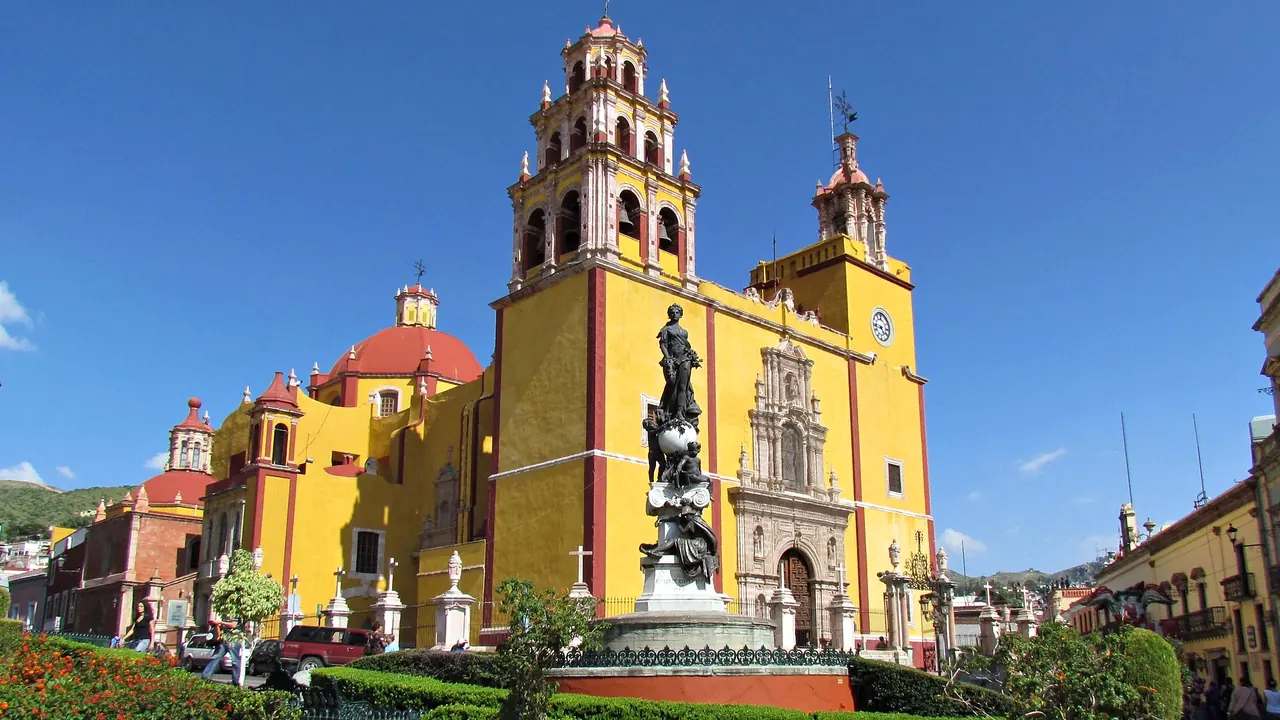
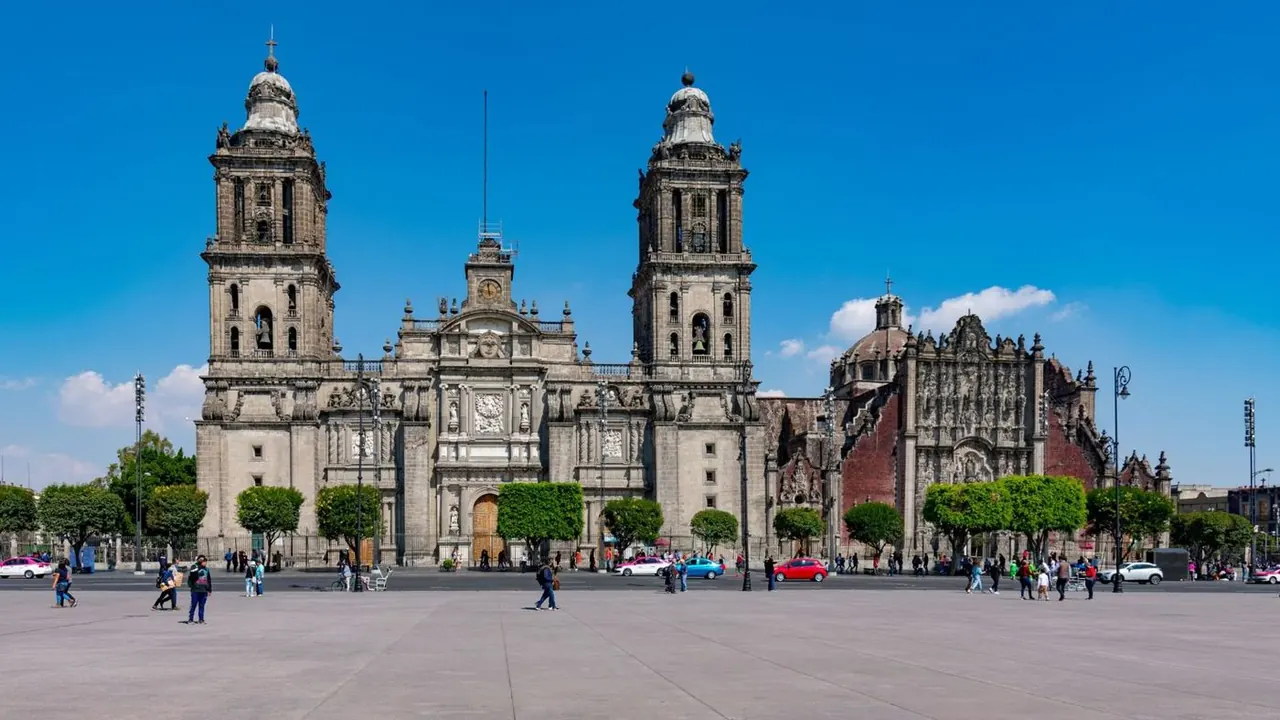
Photos: Guanajuato by Sandra Dominic Saldaña Garcia, CC BY-SA 3.0, cropped; Mexico City by Oscar Dominguez, Pexels License.
Guanajuato or Mexico City?
Our verdict in twelve categories, each scored against the same fixed benchmark cities, and the climate month by month, so you can choose for your trip.
Choose Guanajuato for
- getting around
- prices
Guanajuato suits travellers who want one beautiful, contained place and the time to wander it. The painted ravine, its churches and alleys form a town you can learn in a few days on foot, with no metro maps or long rides between sights. It is also a better base for the colonial towns of the Bajío, San Miguel de Allende above all. Choose it for a slower trip built around architecture, history and an evening stroll through the plazas, and accept that eating, shopping and going out are simple.
Choose Mexico City for
- food and drink
- shopping
- nightlife
Mexico City is for travellers who want depth and range. Its food is a reason to travel in itself, from taco stands to tasting menus, and its museums, Aztec ruins and murals would fill a week without repeating. Nights out, markets, designer shops and formal performance at Bellas Artes all run at a scale Guanajuato cannot approach. The cost is effort: long distances, heavy traffic and a city that has to be planned by neighbourhood.
Scoreboard
Twelve categories on one fixed scale from 0 to 100. The shaded stretch is the gap between the two.
Your match
Pick a travel style or drag the sliders, and both match scores follow your weighting.
Wins on getting around and prices with your weighting.
Wins on food and drink and shopping with your weighting.
What matters to you?
Category by category
What the scores mean for a trip.
Beaches & swimming
Neither city is a beach destination. Both sit high on the central plateau, and swimming means a hotel pool. Around Guanajuato you can try the warm-water balnearios in the countryside, while from Mexico City the Pacific at Acapulco is several hours away and best added as a separate stay on the coast.
Food & drink
This is one of the widest gaps between the two. Guanajuato eats simply and cheaply: enchiladas mineras, gorditas from street vendors, and the food counters and cajeta stalls at Mercado Hidalgo. The best meals are in small family places off the main square, but after a few days the choice starts to repeat.
Mexico City is a food destination in its own right. Al pastor at late-night stands, blue-corn quesadillas and markets such as Medellín and La Merced lead on to the cantinas, bakeries and highly regarded tasting menus of Roma, Condesa and Polanco, with pulquerías and good Mexican coffee as well. The only drawback is how spread out it all is.
Culture & sights
In Guanajuato the town itself is the sight: a UNESCO-listed ravine of ochre, pink and blue houses, the baroque Templo de la Valenciana, the Teatro Juárez and the Alhóndiga de Granaditas, the granary stormed in the opening battle of the War of Independence, which now holds the regional museum. Add the Quijote museum and the mummies and you have a rich but compact set, covered in two or three days.
Mexico City works on another scale and goes much deeper. The Templo Mayor beside the cathedral shows the Aztec capital beneath the colonial one, and the National Museum of Anthropology is a world-class collection in its own right. Kahlo's house in Coyoacán and the Xochimilco canals add more, enough to fill a week. Both cities claim Diego Rivera: Guanajuato has his birthplace, and the capital has his great murals at the National Palace.
Nightlife
Guanajuato's evenings revolve around its university: terraces on the Jardín de la Unión and Plaza San Fernando, then small bars and mezcal spots in the alleys from Thursday to Saturday. It is sociable and easy, but you will not find much clubbing.
Mexico City offers a full night out. Roma and Condesa let you walk between cocktail bars and rooftops, the Centro keeps its old cantinas, and there are electronic clubs until dawn, salsa and cumbia halls and a large LGBTQ scene in the Zona Rosa. Expect to take a ride-hailing car home.
Nature & outdoors
The two are broadly level, but the outdoors works differently. In Guanajuato you walk straight out of town: up to the Pípila or the rocks of La Bufa for views over the rooftops, with the oak forest trails of the Sierra de Santa Rosa a little further out.
From Mexico City the landscapes are bigger and harder to reach. The volcanoes at Paso de Cortés, the crater lakes of Nevado de Toluca and the winter monarch reserves are all real highlights, but getting through the traffic uses up much of the day. Air quality also suffers in the dry season.
Day trips
Both make excellent bases, but the outings are of different kinds. From Guanajuato the trips are mostly colonial towns: San Miguel de Allende, Dolores Hidalgo with its Talavera workshops, Querétaro's aqueduct and the ghostly mining town of Mineral de Pozos, all easy by bus.
Mexico City adds the ancient world. Teotihuacan's pyramids lie about an hour away, and Cholula's church-topped pyramid sits beside tiled Puebla, while Taxco and Tepoztlán lie to the south. Here an early start matters, because leaving the city is slow.
Good for families
Mexico City is the better choice with children. Chapultepec has the zoo, boating lakes and the hands-on Papalote museum, and there is an aquarium in Polanco, a theme park on the southern edge, trajinera boats at Xochimilco and lucha libre. The trade-off is long journeys and crowded trains.
Guanajuato suits older children who enjoy the funicular, the tunnels under the town and perhaps the mummies. It has little else aimed at families, and the stairways rule out a pushchair.
Getting around
Guanajuato is easier to manage. Almost everything is a short walk from the Jardín de la Unión, and cars and buses run through tunnels below the streets. The catch is the gradient: steep lanes and stairways at about 2000m make walking slow, though cheap taxis and the funicular help.
Mexico City's favourite districts are pleasant on foot, but they are far apart. You will combine the metro, the Metrobús and ride-hailing cars, while dealing with rush-hour crushes, pickpockets on trains and heavy traffic.
Shopping & style
Guanajuato's shopping is modest: majolica-style ceramics, silver, wooden toys and Cervantes keepsakes, plus sweets and leather at Mercado Hidalgo. For serious leather, people go to León.
Mexico City gathers crafts from the whole country at La Ciudadela, and adds a Saturday art bazaar in San Ángel, antiques at La Lagunilla and the herb and piñata stalls of the Sonora market. It also has the fashion Guanajuato lacks, from the luxury houses of Masaryk to Mexican designers and concept stores in Roma and Condesa.
Affordability
Both are inexpensive, with cheap street food, market meals and transport, so the difference lies in where costs rise. In Guanajuato that means boutique hotels in colonial mansions, the terraces on the main plazas and especially October, when the Cervantino makes rooms scarce.
In Mexico City it depends more on the neighbourhood. Staying and eating in Roma, Condesa or Polanco can feel like a European capital, while the Centro and local eateries keep a trip cheap all year.
Live music & performing arts
Guanajuato's performing life is concentrated in October, when the Festival Internacional Cervantino fills the Teatro Juárez, plazas and university courtyards with international theatre, dance and orchestras. Through the rest of the year, there are the nightly student callejoneadas and a modest programme in the theatre.
Mexico City offers a full calendar all year. Bellas Artes hosts the national opera, symphony and the Ballet Folklórico, which works well even without Spanish, and Sala Nezahualcóyotl and the Auditorio Nacional add concerts. There are also mariachis in Plaza Garibaldi and lucha libre at Arena México.
Wellness & relaxation
Neither city is restful, but Mexico City has more on offer. The pre-Hispanic temazcal steam bath and good day spas in Polanco, Roma and Condesa are within reach, and Cuernavaca and Tepoztlán work well as a quiet retreat to the south. Guanajuato relies on hotel spas and the thermal balnearios near León, such as Comanjilla. Its weekend crowds and street music late into the night rule out real calm.
When should you go?
Pick your month. The climate figures are measured averages, not a forecast.
Guanajuato in July
Mexico City in July
Daytime high, °C
Rainfall in the month, mm
Temperature and rainfall are climate normals, averaged over the years shown. Guanajuato: 1991-2020 normals, Guanajuato, Gto. (0.7 km from centre). Mexico City: 1991-2020 (rainfall 1961-1990) normals, Mexico Central, D. F. (7.9 km from centre).
Both cities share the same pattern: dry, sunny winters and springs, then a rainy season from June to September with afternoon storms. The difference is heat. Guanajuato warms up sharply in April and May, reaching around 32°C, which makes its steep stairways hard work in the middle of the day. Mexico City stays milder all year, peaking near 28°C, so it is more comfortable for long days of walking in spring.
Rain peaks in July in Guanajuato at about 186mm and stays heavy in Mexico City through August, when it receives about 183mm, and September is the dullest month in both. The most comfortable time for either is from late October to March, with clear skies and pleasant days. Neither city has a beach season to plan around.
Which traveller are you?
For a short city break, Guanajuato is the easier choice. Its main sights sit within a short walk of the Jardín de la Unión and can be seen properly in two or three days. Mexico City's distances mean a few days only scratches the surface.
On a food and nightlife trip, Mexico City is far ahead. Late taco stands, markets, cantinas and tasting menus fill the days, then Roma and Condesa offer cocktail bars, mezcalerías, salsa halls and clubs open until morning. Guanajuato's student bar scene is friendly but small.
On a shopping trip, Mexico City has the range. Crafts from across Mexico at La Ciudadela, antiques at La Lagunilla, luxury on Masaryk and young designers in Roma give it far more depth. Guanajuato mostly offers ceramics, sweets and souvenirs.
Before you go
| Measure | Guanajuato | Mexico City |
|---|---|---|
| Official language | Spanish, Nahuatl, Yucatec Maya | Spanish, Nahuatl, Yucatec Maya |
| Currency | Mexican Peso (MXN) | Mexican Peso (MXN) |
| Sockets | AB127 V, 60 Hz | AB127 V, 60 Hz |
| Driving side | Right | Right |
| Time zone | UTC-6 | UTC-6 |
| Emergency number | 911 | 911 |
| Elevation | 2,045 m | 2,240 m |
| Main airport | Guanajuato International Airport (BJX)23 km from centre22 non-stop destinations | Mexico City Benito Juárez International Airport (MEX)7 km from centre109 non-stop destinations |
| Public holidays this year | 9 days | 9 days |
By the numbers
| Measure | Guanajuato | Mexico City |
|---|---|---|
| City population | 70,068 | 9,209,944 |
| People per km² | - | 6,202 |
| Museums within 10 km | 8 | 108 |
| UNESCO World Heritage sites within 50 km | 3 | 6 |
Where else could you go?
Every comparison below shares a destination with this one, so you can follow Guanajuato or Mexico City somewhere new.
- San Miguel de Allendevs Guanajuato
- Pueblavs Mexico City
- Guadalajaravs Guanajuato
- San Miguel de Allendevs Mexico City
- Acapulcovs Mexico City
- Zihuatanejovs Mexico City