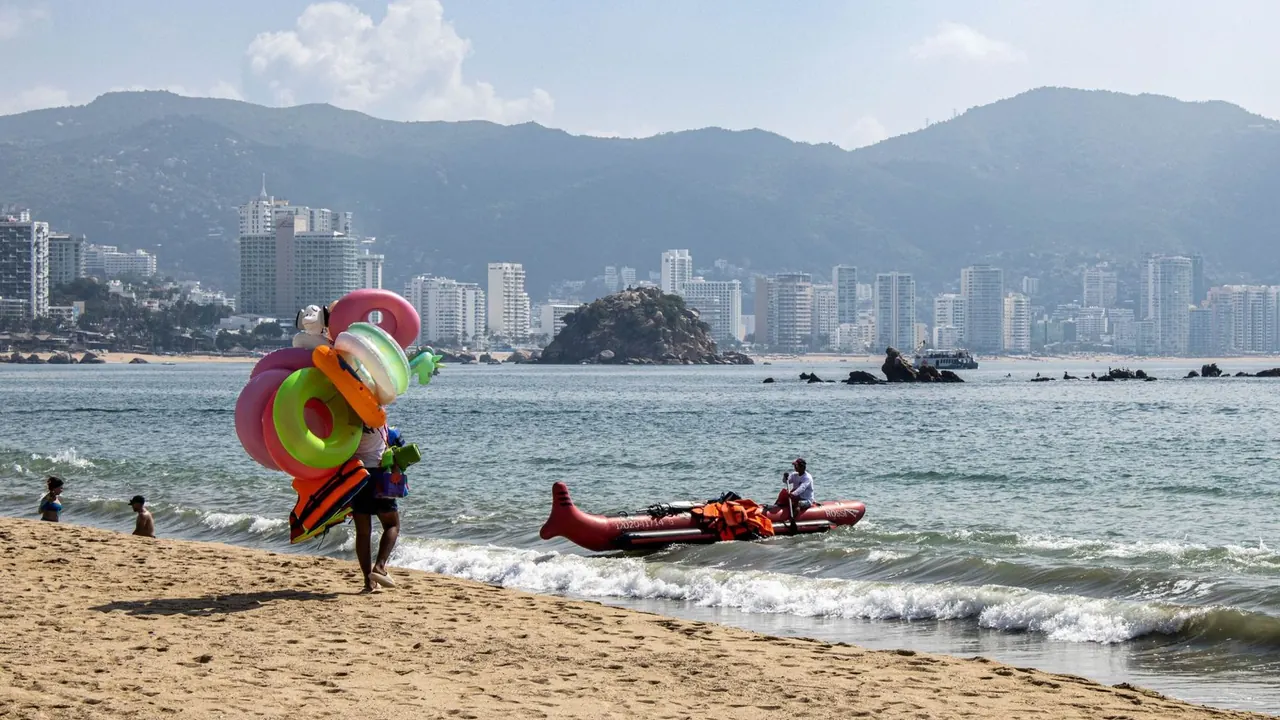
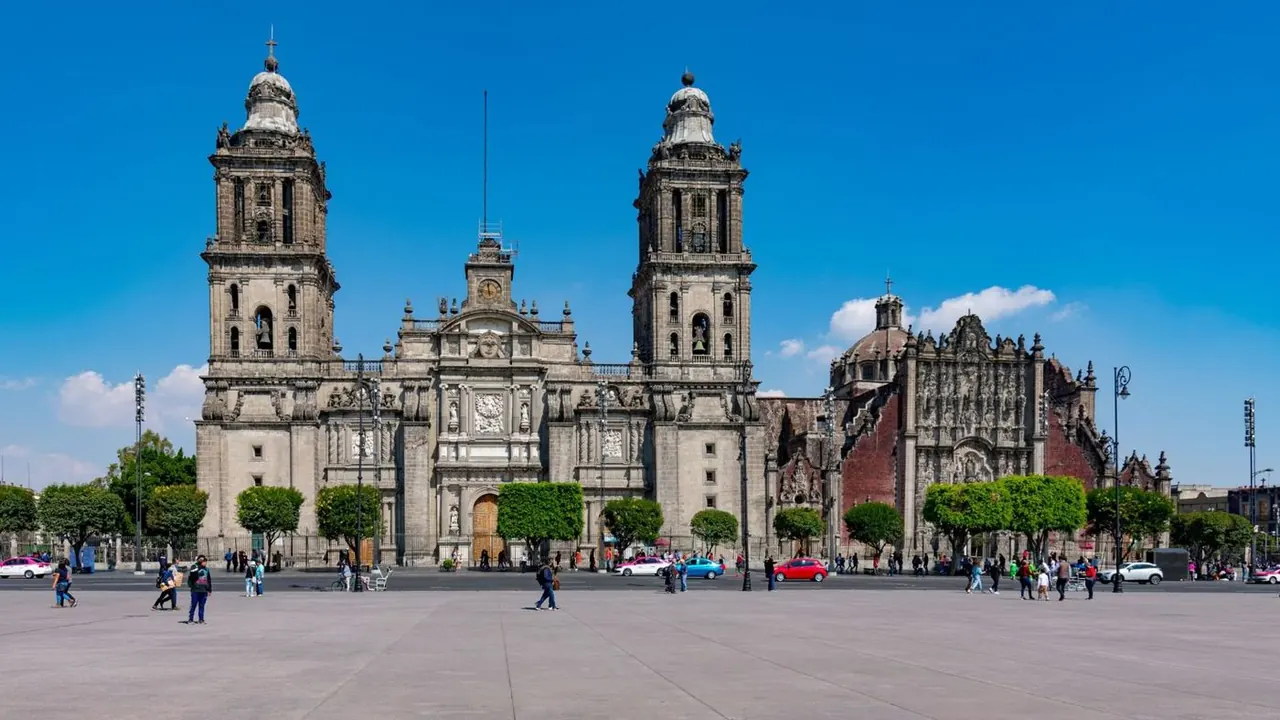
Photos: Acapulco by Felicia Navarrete, Pexels License; Mexico City by Oscar Dominguez, Pexels License.
Acapulco or Mexico City?
Our verdict in twelve categories, each scored against the same fixed benchmark cities, and the climate month by month, so you can choose for your trip.
Choose Acapulco for
- beaches
Acapulco is the choice for a trip built around sea and sun. The water is warm all year, the sheltered coves at Caleta, Caletilla and Puerto Marqués are good for swimming, and the Costera supplies loud, late evenings. It suits travellers who want to swim, eat grilled fish by a lagoon and not think hard about sightseeing, since the city's history fills a day at most.
Choose Mexico City for
- culture and sights
- day trips
- live music and the arts
Anyone who wants a city to explore should pick Mexico City. Its Aztec ruins, murals and great museums, its street food and markets, and outings to Teotihuacan, Puebla and Taxco give a week or more of things to do. There is no sea within easy reach, though, and the size of the place takes some planning.
Scoreboard
Twelve categories on one fixed scale from 0 to 100. The shaded stretch is the gap between the two.
Your match
Pick a travel style or drag the sliders, and both match scores follow your weighting.
Wins on beaches with your weighting.
Wins on culture and sights and day trips with your weighting.
What matters to you?
Category by category
What the scores mean for a trip.
Beaches & swimming
There is no contest here. Acapulco's bay has sand along its whole curve, with calm swimming at Caleta, Caletilla, Roqueta Island and Puerto Marqués. The long surf beaches of Revolcadero and Pie de la Cuesta are for watching sunsets, not for swimming.
Mexico City sits inland at altitude, so swimming there means a hotel pool. Visitors who want both usually pair the two cities and add a few days on the coast at the start or end of the trip.
Food & drink
Acapulco has a few dishes worth seeking out: pescado a la talla grilled over wood at Barra Vieja, its tomato-based ceviche, and green pozole on Thursdays. Beyond those, the Costera is mostly chains and tourist seafood places.
Mexico City is one of the main reasons to travel in Mexico for food. It has al pastor stands, breakfast tamales, the markets of Medellín, San Juan and La Merced, cantinas and pulquerías, and highly regarded tasting menus in Roma, Condesa and Polanco. The catch is that the best places are spread across a huge city.
Culture & sights
Acapulco's history fits into a day. The main sights are the star-shaped Fuerte de San Diego, which guarded the Manila galleons, the divers at La Quebrada, Rivera's mosaic on the Casa de los Vientos and the cathedral with its unusual domes. The city's real character is its mid-century resort glamour.
Mexico City could fill a week with museums and monuments alone. It has the Templo Mayor beside the Zócalo, Rivera's murals in the National Palace, the Anthropology Museum with its Sun Stone, Bellas Artes, and the Kahlo and Rivera houses in Coyoacán and San Ángel. Rivera's work appears in both cities, but on very different scales.
Nightlife
Acapulco's nights are big and mainstream. Beach bars and hillside clubs along the Costera stay open until dawn and are fullest when crowds from the capital drive down for long weekends, Easter and Christmas. Midweek in the quieter months, the strip can feel half empty.
Mexico City has more variety and busy nights all year. In Roma and Condesa you can walk between cocktail bars, mezcalerías and rooftop terraces, the Centro has old cantinas, and there are salsa halls, electronic clubs and the large LGBTQ scene of the Zona Rosa. In both cities, take a car home late at night.
Nature & outdoors
Both cities have a fair amount of outdoors, but of opposite kinds. Acapulco's is mostly about water: the horseshoe bay seen from the Scenic Highway, snorkelling off Roqueta, sailfishing, mangrove boat rides on Coyuca Lagoon and turtle releases at Barra Vieja. The heat makes hiking hard work.
Mexico City's is mostly about altitude. There are pine forests at Desierto de los Leones, the slopes of Ajusco, the pass between Iztaccíhuatl and Popocatépetl and, in winter, the monarch butterfly reserves. Getting out of the city through traffic takes time, and air quality can be poor in the dry season.
Day trips
Acapulco's outings stay close to town: half days at Pie de la Cuesta for the lagoon and Barra Vieja for grilled fish. Taxco is around three hours away and works better as an overnight trip.
Mexico City is a far better base. Teotihuacan is about an hour away, and Puebla and Cholula about two. Cuernavaca, Tepoztlán, the Xochicalco ruins and Taxco all lie to the south. Leave early to beat the traffic out of the city.
Good for families
Acapulco gives children calm, shallow water at Caleta and Caletilla, boat rides to Roqueta, the CICI water park and resort kids' clubs. However, the heat, the traffic and the dangerous surf on the open beaches mean most families stay inside their resort.
Mexico City has more to fill the days. There is the zoo, the boating lakes and the Papalote museum in Chapultepec, an aquarium in Polanco, trajinera boats at Xochimilco, lucha libre and the pyramids. Long journeys and the altitude can tire children, so plan the city one neighbourhood at a time.
Getting around
Neither city is easy to get around, but Mexico City is easier. Acapulco is one long boulevard served by buses and taxis, with no rail. The hills are steep, and the old town, the strip and Diamante are too far apart to walk between.
In the capital, the districts visitors use most (the Centro, Roma, Condesa, Polanco and Coyoacán) are good on foot. A cheap metro, the Metrobús and a bike-share system link them, and ride-hailing cars fill the gaps. The downsides of its size are crowded trains at rush hour, pickpockets and heavy traffic.
Shopping & style
Acapulco's best buy is silver from Taxco. You can find it in the artisan market near the old town, alongside Olinalá lacquerware, hammocks and masks, and there are chain malls in Diamante.
Mexico City brings together crafts from the whole country at La Ciudadela. It also has the Saturday bazaar in San Ángel and the Sunday flea market at La Lagunilla, luxury shops on Masaryk and Mexican designers in Roma and Condesa.
Affordability
Both cities are inexpensive by international standards, and in both the cost depends on where you stay. In Acapulco, the older Costera hotels, seafood lunches and buses are cheap, while Diamante, Las Brisas and the busy weeks of Easter, Christmas and long weekends cost more.
In Mexico City, prices rise in Roma, Condesa and Polanco, where hotels and restaurants approach European levels. The Centro, street food, the metro and free museum days keep a stay cheap. In short, the coast costs more at certain times of year, and the capital costs more in certain districts.
Live music & performing arts
Live performance in Acapulco is informal. There are mariachis and trios at dinner, folk dance shows in hotels, touring pop stars in Diamante and occasional concerts by the Acapulco Philharmonic, but no regular theatre or opera.
Mexico City has full opera and symphony seasons at Bellas Artes and the Ballet Folklórico, which works well for visitors without Spanish. It also has the university orchestra at Sala Nezahualcóyotl, jazz and son clubs, the mariachis of Plaza Garibaldi, and lucha libre at Arena México.
Wellness & relaxation
Acapulco's beaches are less restful than they look, and for a calm stay the noisy capital edges it. On the coast, quiet mostly means paying a resort for it: the spas of Diamante and Las Brisas, or a clifftop hotel with its pool above the bay. Otherwise, stay out at Pie de la Cuesta, away from the music and traffic of the Costera.
Mexico City has the temazcal, a pre-Hispanic steam bath ritual, good day spas in Polanco, Roma and Condesa, and slow mornings on the shaded plazas of Coyoacán. For a proper retreat, the warmer towns of Cuernavaca and Tepoztlán, south of the city, have spas and temazcales of their own.
When should you go?
Pick your month. The climate figures are measured averages, not a forecast.
Acapulco in July
Mexico City in July
Daytime high, °C
Rainfall in the month, mm
Temperature and rainfall are climate normals, averaged over the years shown. Acapulco: 1991-2020 normals, Acapulco, Gro. (5.9 km from centre). Mexico City: 1991-2020 normals, Mexico Central, D. F. (7.9 km from centre).
Acapulco is hot every month, with afternoons around 33°C and a sea near 29°C, so the beach is always warm enough. The difference through the year is rain. November to May is almost dry and very sunny, while June to October brings heavy tropical rain, peaking near 290mm in September, and the bay can turn murky afterwards. Walking around town in the middle of the day is sticky at any time of year.
Mexico City, up on its plateau, is far milder. Highs run from 22°C in December and January to about 28°C in April, so the streets are comfortable to walk most of the year. Its wet season covers the same months as the coast's, with most rain between June and September, and October to May is the drier, sunnier stretch. Spring is the warmest time in the capital, and in Acapulco it is the driest and sunniest.
Which traveller are you?
On a beach and sun trip, Acapulco wins outright. The Pacific stays warm all year, and the coves of Caleta and Puerto Marqués are calm enough to swim in. Mexico City's nearest sand is Acapulco itself, several hours away by road.
For a culture and arts trip, Mexico City is the clear pick. The Anthropology Museum, the Templo Mayor, Rivera's murals and the Ballet Folklórico at Bellas Artes fill both days and evenings, while Acapulco's fort, cliff divers and cathedral take a single day.
On a food and nightlife trip, Mexico City again pulls ahead. Taco stands, markets, cantinas and tasting menus cover every meal, and in Roma and Condesa you can walk between mezcal bars and cocktail bars. Acapulco's pozole and Costera clubs are fun but offer much less choice.
Before you go
| Measure | Acapulco | Mexico City |
|---|---|---|
| Official language | Spanish, Nahuatl, Yucatec Maya | Spanish, Nahuatl, Yucatec Maya |
| Currency | Mexican Peso (MXN) | Mexican Peso (MXN) |
| Sockets | AB127 V, 60 Hz | AB127 V, 60 Hz |
| Driving side | Right | Right |
| Time zone | UTC-6 | UTC-6 |
| Emergency number | 911 | 911 |
| Elevation | 18 m | 2,240 m |
| Main airport | General Juan N. Álvarez International Airport (ACA)18 km from centre10 non-stop destinations | Mexico City Benito Juárez International Airport (MEX)7 km from centre109 non-stop destinations |
| Public holidays this year | 9 days | 9 days |
By the numbers
| Measure | Acapulco | Mexico City |
|---|---|---|
| City population | 658,609 | 9,209,944 |
| People per km² | 350 | 6,202 |
| Museums within 10 km | 3 | 108 |
| UNESCO World Heritage sites within 50 km | 0 | 6 |
| Swim season, months above 21 °C | 12 months | - |
Where else could you go?
Every comparison below shares a destination with this one, so you can follow Acapulco or Mexico City somewhere new.