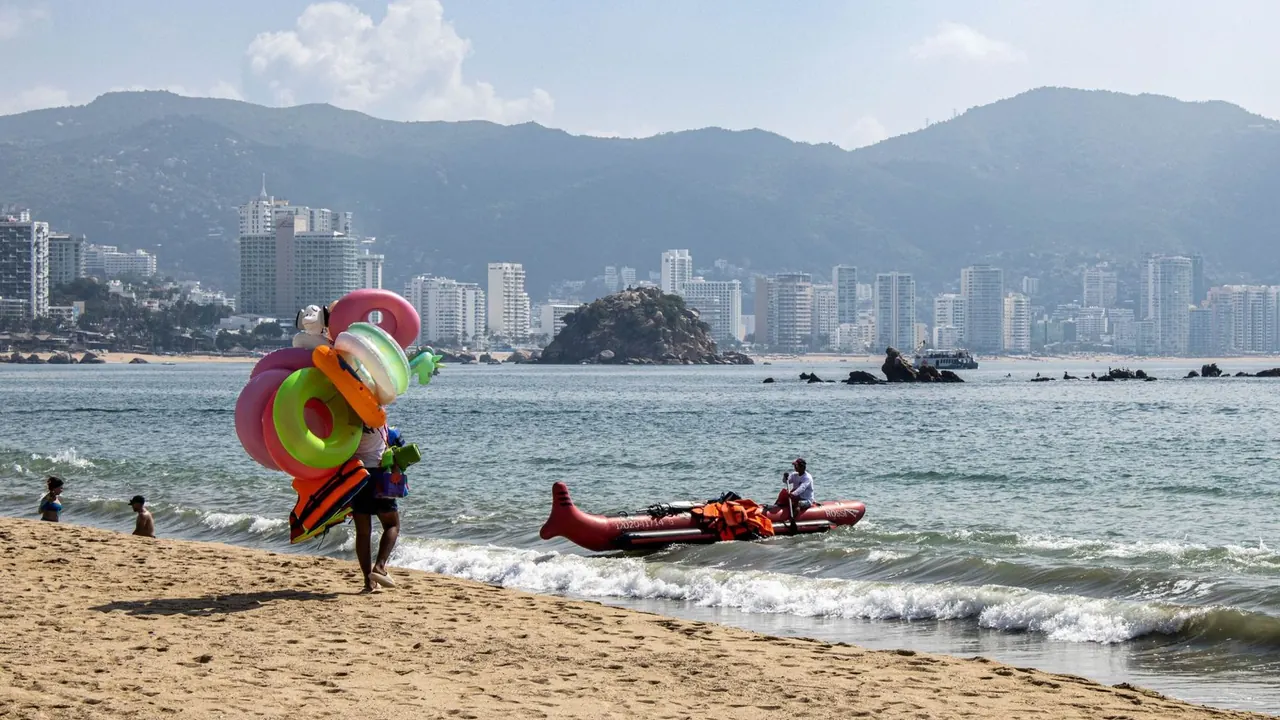
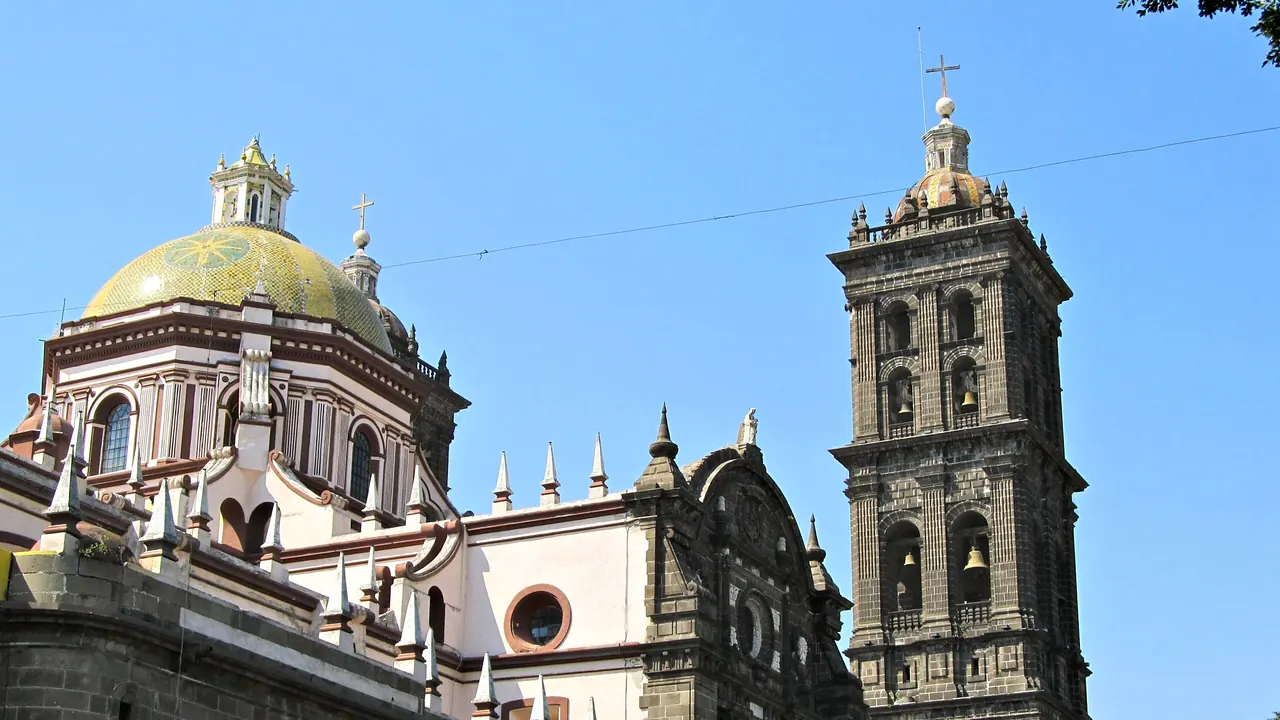
Photos: Acapulco by Felicia Navarrete, Pexels License; Puebla by Octavio Alonso Maya …, CC BY-SA 3.0, cropped.
Acapulco or Puebla?
Our verdict in twelve categories, each scored against the same fixed benchmark cities, and the climate month by month, so you can choose for your trip.
Choose Acapulco for
- beaches
- nightlife
- wellness
Acapulco is the one to pick when the trip is about warm water and long nights. Its bay has sandy coves to swim from, lagoon villages where fish is grilled over wood, and a strip of clubs along the Costera that stays open until dawn. It suits travellers who want sun every day and a resort that runs itself, and who are happy to see the history in a single morning at the fort.
Choose Puebla for
- day trips
- culture and sights
- food and drink
Puebla rewards people who travel to look and to eat rather than to lie on the sand. The colonial centre, with its Talavera house fronts and gilded Baroque chapels, fills two or three days on foot. The kitchens that gave Mexico mole are on every street, and Cholula, Tlaxcala and the volcano monasteries are all close enough for easy outings. There is no beach and the evenings are quieter, but a stay costs even less.
Scoreboard
Twelve categories on one fixed scale from 0 to 100. The shaded stretch is the gap between the two.
Your match
Pick a travel style or drag the sliders, and both match scores follow your weighting.
Wins on beaches and nightlife with your weighting.
Wins on day trips and culture and sights with your weighting.
What matters to you?
Category by category
What the scores mean for a trip.
Beaches & swimming
Here the gap is as wide as it gets. Acapulco's whole life faces its bay, with sandy beaches along the hotel strip, calm family coves at Caleta and Caletilla, and Puerto Marqués for sheltered swimming. The surf on the open-ocean beaches is dangerous, so swimmers stay inside the bays.
Puebla sits on a plateau more than 2,000m up, with the Gulf coast hours away. Swimming there means a hotel pool or a spring-fed balneario on the edge of town.
Food & drink
Puebla is the stronger place to eat, because it is one of the places Mexican cooking began. Mole poblano came out of its convent kitchens, and alongside it come chiles en nogada in late summer, cemitas, chalupas and tacos árabes, with the convent sweets of the Calle de los Dulces for afterwards.
Acapulco has a narrower but real coastal repertoire: pescado a la talla at the lagoon palapas of Barra Vieja, tomato-based ceviche and the Thursday pozole verde. Outside those dishes, the Costera is mostly chain and tourist seafood restaurants.
Culture & sights
Puebla has far more to see. Its colonial grid of tiled façades and churches, the towering cathedral, the gilded Capilla del Rosario and the Palafoxiana library could fill several slow days before you even reach the Amparo and Baroque museums.
Acapulco's sights are few: the star-shaped Fuerte de San Diego with its museum on the Manila galleons, Diego Rivera's mosaics on the Casa de los Vientos, and the divers at La Quebrada. Much of its character lies in its jet-set hotels and villas, and one day covers it.
Nightlife
Acapulco is built for a long night out. Beach bars, open-air terraces and big hillside clubs above the Costera run until dawn, and on long weekends and in Easter and Christmas weeks, crowds from Mexico City turn the strip into one long party. The music is loud and mainstream, and midweek outside those peaks it can feel half empty.
Puebla's evenings are gentler: mezcal bars, cantinas and rooftop terraces facing the cathedral around the Callejón de los Sapos. From Thursday to Saturday the students go out in Cholula, where bars and small clubs line the streets near the university, and the city's own clubs are out in Angelópolis.
Nature & outdoors
Puebla has the edge for time on land. Popocatépetl and Iztaccíhuatl dominate the skyline, La Malinche is a full day's climb through pine forest to above 4,400m, and the Izta-Popo park has high trails. Nearly every outing needs a car, a tour or an early bus.
Acapulco's nature is mostly on the water. You can snorkel and dive off Roqueta, fish for sailfish and marlin, take a boat through the mangroves of Coyuca Lagoon and watch turtles being released at Barra Vieja. The heat makes hiking in the hills behind the bay hard going.
Day trips
Puebla is a far better base. Cholula's Great Pyramid and the tiled village churches of Tonantzintla and Acatepec are about half an hour away, with the Huejotzingo convent, Tlaxcala and the Cacaxtla murals, and even Mexico City, all within a day's reach.
Acapulco's easy outings are the half-day trips to Pie de la Cuesta and Barra Vieja on its edges. Taxco, the obvious cultural excursion, is about three hours inland and is better done with an overnight stay.
Good for families
Puebla gives children slightly more to do. Africam Safari, where animals walk up to the cars, the tunnels inside Cholula's pyramid, the observation wheel at Angelópolis and the open grounds of the hilltop forts make a varied few days in a milder climate. The many churches and museums are meant for adults, though.
Acapulco's family appeal is simpler: shallow water at Caleta and Caletilla, boats to Roqueta, the CICI water park and resort kids' clubs. Strong heat, traffic and dangerous surf on the open beaches mean most families stay inside the hotel.
Getting around
Puebla is easier to explore, at least in the centre. The flat colonial grid puts almost every sight within a short walk of the zócalo. Beyond it, taxis or ride-hailing are the practical choice, as buses are hard to read.
Acapulco stretches for kilometres along the Costera Miguel Alemán. Buses and taxis run its whole length, but the gaps between the old town, the hotel strip and Diamante are too long to walk, and taxis are the norm after dark. Neither city has a rail system.
Shopping & style
Puebla has a clear thing to buy, Talavera pottery, and you can watch it being painted in long-established workshops. El Parián sells crafts and onyx, and the Callejón de los Sapos fills with antiques stalls at the weekend.
In Acapulco, the best finds are brought in from elsewhere in Guerrero. The artisan market near the old town has Taxco silver and Olinalá lacquerware, though quality varies and bargaining is expected. Beyond that, shopping means beachwear and the chain malls of Diamante.
Affordability
Both cities are inexpensive, but Puebla is cheaper, even by Mexican standards. Its market lunches, short taxi rides and modest museum entry fees cost very little, as do rooms in restored colonial houses.
Acapulco is also good value, mainly because most of its visitors are Mexican. Room rates climb at Easter, Christmas and on long weekends, and the resorts of Diamante and Las Brisas cost far more than the older hotels on the Costera.
Live music & performing arts
Everyday live music is much the same in both cities: mariachis and guitar trios playing for diners and on the main square. Beyond that, Acapulco has folk dance shows in the hotels and touring Latin pop stars at the large Diamante venue in the peak seasons. Its Philharmonic plays only now and then between tours of Guerrero, and there is no theatre or classical season to plan an evening around.
Puebla has more to buy a ticket for. The Teatro Principal, among the oldest theatres in the Americas, still puts on plays and concerts, and the university's large cultural complex hosts touring productions, dance and orchestral evenings. Around the 5 de Mayo anniversary, concerts and folk dance spill into the streets. Few people come for the stage alone, but here an evening out can be more than a band playing over dinner.
Wellness & relaxation
Neither city has a bathing tradition, and they are about equal here, but rest means different things in each. In Acapulco it is a resort spa in Diamante or Las Brisas, or a clifftop hotel pool far from the noise of the Costera.
Puebla offers older rituals: temazcal sweat lodges around Cholula and the sulphurous pools of the Agua Azul balneario. Beyond those, it is mostly about quiet courtyards and long lunches in the old town.
When should you go?
Pick your month. The climate figures are measured averages, not a forecast.
Acapulco in July
Puebla in July
Daytime high, °C
Rainfall in the month, mm
Temperature and rainfall are climate normals, averaged over the years shown. Acapulco: 1991-2020 normals, Acapulco, Gro. (5.9 km from centre). Puebla: 1991-2020 normals, Puebla, Pue. (5.4 km from centre).
Acapulco is hot all year, with daytime highs close to 34°C in every month. From November to May it hardly rains, the sky is mostly clear and the sea stays near 30°C, so this is the beach season. From June to October the rains arrive, peaking at about 293mm in September, and short, heavy downpours can muddy the water in the bay. Because of the heat, a walk through the old town at midday is hard work in any month.
Puebla stands high on the plateau and is mild instead, with highs from about 23°C in December and January to 29°C in April. Its dry season matches Acapulco's, from November to April, with sunny days and the clearest views of the snow-capped volcanoes. From June to September, afternoon storms build most days, but the mornings are still good for walking. For a trip combining both cities, the winter and early spring months suit both.
Which traveller are you?
On a beach and sun trip, Acapulco wins outright. It has a warm Pacific bay, the sheltered swimming at Puerto Marqués and Roqueta Island, and sunsets at Pie de la Cuesta. Puebla is several hours from any coast and offers only pools.
For a culture and arts trip, Puebla is the clear choice. A UNESCO-listed centre, the Capilla del Rosario, the Palafoxiana library and the Museo Amparo give it days of sights, and Cholula's pyramid is close by. Acapulco's history fits into one morning.
For a short city break, Puebla works far better. Nearly everything lies within a twenty-minute walk of the zócalo, the food alone justifies a long weekend, and there is no need for taxis. Acapulco's long, spread-out bay is built for a resort stay, not for wandering the streets.
Before you go
| Measure | Acapulco | Puebla |
|---|---|---|
| Official language | Spanish, Nahuatl, Yucatec Maya | Spanish, Nahuatl, Yucatec Maya |
| Currency | Mexican Peso (MXN) | Mexican Peso (MXN) |
| Sockets | AB127 V, 60 Hz | AB127 V, 60 Hz |
| Driving side | Right | Right |
| Time zone | UTC-6 | UTC-6 |
| Emergency number | 911 | 911 |
| Elevation | 18 m | 2,153 m |
| Main airport | General Juan N. Álvarez International Airport (ACA)18 km from centre10 non-stop destinations | Hermanos Serdán International Airport (PBC)20 km from centre14 non-stop destinations |
| Public holidays this year | 9 days | 9 days |
By the numbers
| Measure | Acapulco | Puebla |
|---|---|---|
| City population | 658,609 | 1,542,232 |
| People per km² | 350 | 2,825 |
| Museums within 10 km | 3 | 17 |
| UNESCO World Heritage sites within 50 km | 0 | 2 |
| Swim season, months above 21 °C | 12 months | - |
Where else could you go?
Every comparison below shares a destination with this one, so you can follow Acapulco or Puebla somewhere new.
- Mexico Cityvs Puebla
- Zihuatanejovs Acapulco
- Oaxacavs Puebla
- Mexico Cityvs Acapulco
- Puerto Escondidovs Acapulco
- San Miguel de Allendevs Puebla