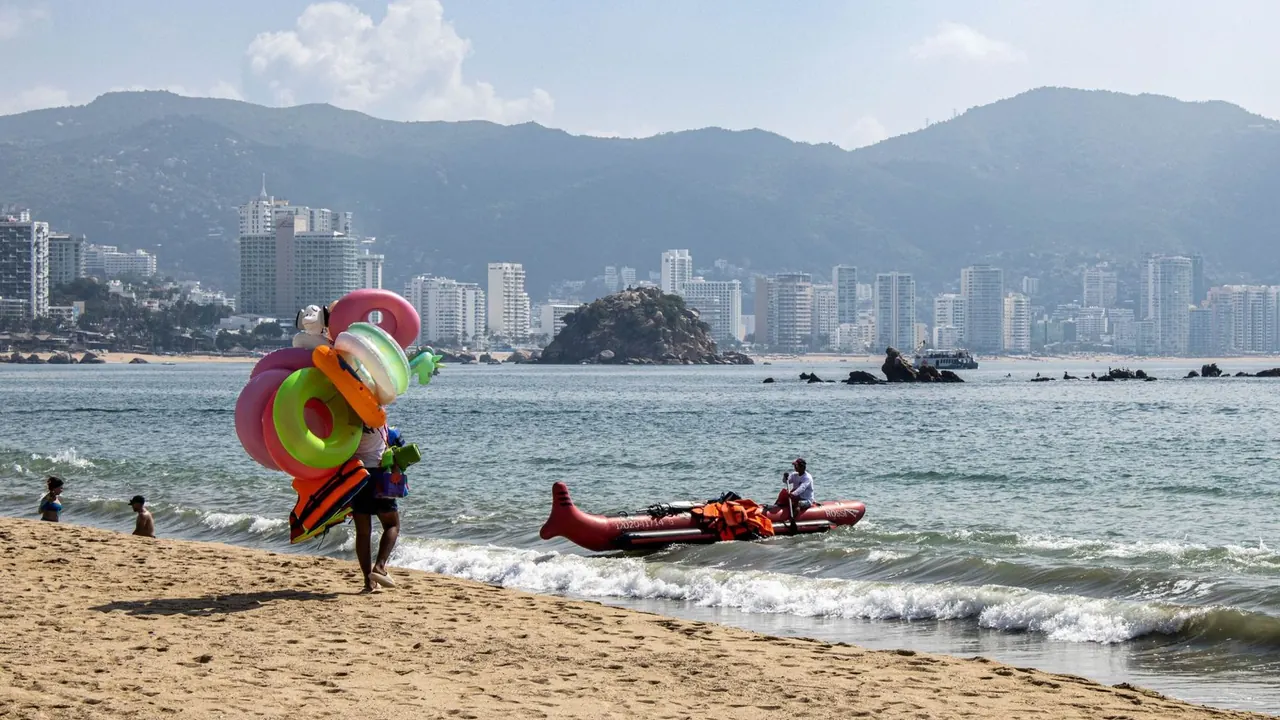
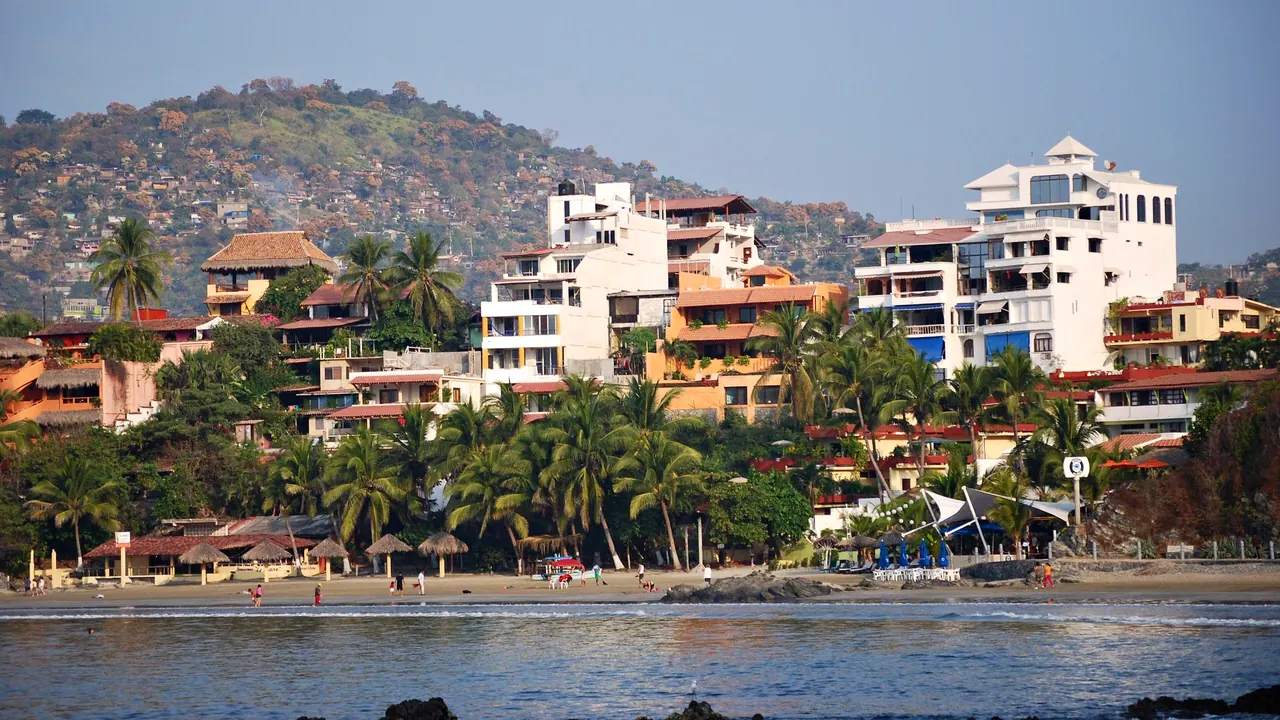
Photos: Acapulco by Felicia Navarrete, Pexels License; Zihuatanejo by AlejandroLinaresGarcia, CC BY-SA 4.0, cropped.
Acapulco or Zihuatanejo?
Our verdict in twelve categories, each scored against the same fixed benchmark cities, and the climate month by month, so you can choose for your trip.
Choose Acapulco for
- nightlife
- culture and sights
- live music and the arts
Acapulco suits travellers who want a beach vacation with a big city attached. After a day on the sand there are clifftop dinners, the divers at La Quebrada, a fortress museum and a strip of clubs that stays open until dawn. Day to day it is also a little cheaper. Choose it if you want energy and entertainment in the evenings, and you don't mind taxis, traffic and a spread-out resort.
Choose Zihuatanejo for
- wellness
- getting around
- nature and the outdoors
Zihuatanejo is the quieter choice: a working fishing town on a sheltered bay, with clearer water at Las Gatas, whales offshore in winter and a centre you can walk around. It is better for families with small children, for anyone who wants to slow right down, and for days spent on the water rather than nights out. The trade-off is a short list of sights and very little going on after dinner.
Scoreboard
Twelve categories on one fixed scale from 0 to 100. The shaded stretch is the gap between the two.
Your match
Pick a travel style or drag the sliders, and both match scores follow your weighting.
Too close to call, 1 point apart
Wins on nightlife and culture and sights with your weighting.
Wins on wellness and getting around with your weighting.
What matters to you?
Category by category
What the scores mean for a trip.
Beaches & swimming
Both are true beach destinations with warm Pacific water all year, so here the difference is one of character rather than quality. Acapulco's beaches are city beaches. Condesa and Icacos lie in front of the hotel towers, and the family coves of Caleta and Caletilla sit on the old peninsula. For the cleanest swimming, people often go to Puerto Marqués or Roqueta Island, because the main bay clouds over after rain.
Zihuatanejo feels smaller and calmer. Most people settle on the long crescent of La Ropa, and at Las Gatas an old stone reef keeps the water flat and clear enough to snorkel straight from the sand. Both towns also have open-ocean beaches with dangerous surf, at Revolcadero and Pie de la Cuesta in Acapulco and El Palmar in Ixtapa.
Food & drink
The two towns share the Guerrero coastal kitchen: whole fish grilled a la talla under palm roofs, and pozole on Thursdays. The differences are in the details. Acapulco makes its ceviche in a tomato sauce, its best grilled fish is at Barra Vieja on the lagoons, and it has a few smart clifftop restaurants above the bay, along with many chain restaurants on the Costera.
Zihuatanejo's signature dish is tiritas, strips of raw fish cured in lime. The market is good for breakfasts and juices, and the family kitchens behind the waterfront serve simple, honest food. It feels more like a fishing town and less like a resort, but there is less choice if you want a special dinner.
Culture & sights
Neither town is a culture destination, but Acapulco has enough to fill a day. The star-shaped Fuerte de San Diego tells the story of the Manila galleons, the cliff divers perform at La Quebrada, Diego Rivera's mosaics cover the Casa de los Vientos, and the cathedral has its odd, almost Byzantine domes. The hillside villas also hint at the city's jet-set past.
In Zihuatanejo, the small coastal archaeology museum on the waterfront and a walk around the whitewashed streets and fishermen's pier take an hour or two. Its appeal is the working town itself.
Nightlife
This is the biggest difference between the two. Acapulco has a real party strip along the Costera, with beach bars, open-air terraces and large clubs on the hillside that run until dawn, and the whole place fills up when Mexico City drives down for long weekends and the Easter and Christmas weeks. The music is loud and mainstream, and midweek in the off season it can feel half empty.
In Zihuatanejo, a night out means a sunset drink on the sand and a few small bars with a local and long-stay crowd. For dancing you have to go up to Ixtapa, where a handful of clubs only liven up in high season.
Nature & outdoors
Zihuatanejo has more of a wild side, and most of it is on the water. You can snorkel and dive at Las Gatas and Isla Ixtapa or kayak across the calm bay, humpback whales pass in winter, crocodiles lie in the mangroves near Playa Linda, and the lagoon at Barra de Potosí is full of spoonbills and pelicans.
Acapulco's best natural feature is the view: the deep bay and its green hills seen from the Scenic Highway. For more than that you leave the city, for mangrove boat rides on Coyuca Lagoon or turtle releases at Tres Palos. Both towns run sailfish and marlin fishing trips, and in both the heat makes hiking in the hills hard work.
Day trips
Acapulco's easy outings stay on the edge of the city: Pie de la Cuesta for its lagoon and sunsets, and Barra Vieja for an afternoon by the lagoons, each worth about half a day. Its one big cultural trip, the silver town of Taxco, is about three hours inland and works better as an overnight stay.
Zihuatanejo has a few more choices within easy reach, though they are still small in scale. You can spend a beach day in the surf village of Troncones, have lunch on the sand at Barra de Potosí, or drive under an hour to the ball court at Xihuacan and the pilgrimage church at Petatlán.
Good for families
Zihuatanejo is easier with children. The water at La Ropa and Las Gatas is calm and warm enough for toddlers to paddle, the town is small enough to get around without stress, and outings like crocodile spotting, boat rides to Isla Ixtapa and turtle releases suit young children well.
Acapulco offers more organised fun, with the safe coves of Caleta and Caletilla, a large water park and Papagayo Park in the middle of the hotel strip. But the traffic and noise on the Costera mean most families stay inside their resort and take taxis everywhere else.
Getting around
Acapulco is laid out in a long line along the Costera, with steep hills behind it. The old town, the main strip and Diamante are too far apart to walk between. Buses and taxis are cheap and run often, and after dark taxis are the sensible choice.
Zihuatanejo is small by comparison, which makes the days simpler. The centre is compact enough to walk, a waterfront path leads to Playa Madera, colectivos run to La Ropa and Ixtapa, and water taxis cross to Las Gatas. You will rarely need a car.
Shopping & style
The two artisan markets sell much the same things: Taxco silver, Olinalá lacquerware, hammocks and embroidery from across Guerrero. Acapulco's market is bigger, though quality varies and you are expected to bargain, and the open-air malls in Diamante add the usual chain stores.
Zihuatanejo has its artisans' market, a few boutiques with resort wear and folk art, and a small plaza in Ixtapa. It is enough for souvenirs and not much more.
Affordability
Both are inexpensive by international standards, and Acapulco is a little cheaper again because it mainly caters to Mexican visitors. Older hotels on the Costera with beach views, market food and the all-inclusive resorts all give good value. Prices only rise in Diamante, at Las Brisas and at Easter, Christmas and on long weekends.
In Zihuatanejo, simple guesthouses in town and palapa lunches keep costs low. But the boutique hotels above La Ropa and the Ixtapa resorts cost more, and rooms are dearer through the winter high season as well as at Christmas and Easter.
Live music & performing arts
Acapulco has more live music, though most of it is informal. Mariachis and guitar trios play in the seafood restaurants and around the zócalo, hotels put on folk dance evenings, and the concert venue in Diamante brings Latin pop stars in the busy seasons. The Philharmonic gives occasional concerts.
Zihuatanejo's main musical event is its annual international guitar festival. For the rest of the year, live music means a trova singer or band in a restaurant during high season.
Wellness & relaxation
Zihuatanejo is much the better place to rest, because the whole town moves slowly. Days go by in swims and shade, some places offer a temazcal sweat lodge or yoga, and the boutique hotels above La Ropa have quiet spas.
In Acapulco, wellness mostly happens inside the big resort spas of Diamante and Las Brisas, or as a massage on the beach, while the Costera stays loud with traffic and music. For quiet, stay at the east end of the bay or out at Pie de la Cuesta.
When should you go?
Pick your month. The climate figures are measured averages, not a forecast.
Acapulco in July
Zihuatanejo in July
Daytime high, °C
Rainfall in the month, mm
Where the figures come from
Zihuatanejo has no weather station within reach, so its figures come from a gridded climate model rather than a measured record, and read a broad area rather than the city itself.
Temperature and rainfall are climate normals, averaged over the years shown. Acapulco: 1991-2020 normals, Acapulco, Gro. (5.9 km from centre). Zihuatanejo: 1991-2020 normals, TerraClimate 4 km grid at the town, no weather station within 90 km.
Both towns are hot all year, and the sea is always warm enough for a long swim. The real choice is between the dry and wet seasons. From November to May almost no rain falls on either coast. These are the best months for the beach and for sitting out in the evening, and Acapulco has the most sun in March and April, at over 300 hours a month. From June to October the rains arrive. September is the wettest month in both towns, with close to 290mm, and after heavy rain the water inside Acapulco's bay can turn murky.
Acapulco runs slightly hotter, with highs reaching 34°C from May to August, so walking the streets is a job for the early morning or evening. Zihuatanejo stays a degree or so cooler. Its rains are a little lighter in early summer, and its sea dips to about 27°C in spring before both bays warm to 30°C in late summer.
Which traveller are you?
For a food and nightlife trip, Acapulco is the clear pick. The Costera's terraces and hillside clubs fill late and stay open until dawn, and the food ranges from lagoon-side grilled fish to clifftop dining. In Zihuatanejo, evenings mostly end after a long dinner.
On a relaxing and wellness trip, Zihuatanejo works much better. With no sights to rush between, you can read in the shade at La Ropa, and there is temazcal, yoga and spas in the hillside hotels. In Acapulco you have to escape the noise of the strip to find calm.
For an outdoors trip, Zihuatanejo gives you more to do on the water. You can snorkel the reef-sheltered sea at Las Gatas, paddle the calm bay, watch humpback whales in winter and see the birds at Barra de Potosí. Acapulco's lagoons and Roqueta Island offer less.
Before you go
| Measure | Acapulco | Zihuatanejo |
|---|---|---|
| Official language | Spanish, Nahuatl, Yucatec Maya | Spanish, Nahuatl, Yucatec Maya |
| Currency | Mexican Peso (MXN) | Mexican Peso (MXN) |
| Sockets | AB127 V, 60 Hz | AB127 V, 60 Hz |
| Driving side | Right | Right |
| Time zone | UTC-6 | UTC-6 |
| Emergency number | 911 | 911 |
| Elevation | 18 m | 13 m |
| Main airport | General Juan N. Álvarez International Airport (ACA)18 km from centre10 non-stop destinations | Ixtapa-Zihuatanejo International Airport (ZIH)11 km from centre17 non-stop destinations |
| Public holidays this year | 9 days | 9 days |
By the numbers
| Measure | Acapulco | Zihuatanejo |
|---|---|---|
| City population | 658,609 | 70,760 |
| People per km² | 350 | - |
| Museums within 10 km | 3 | 1 |
| UNESCO World Heritage sites within 50 km | 0 | 0 |
| Swim season, months above 21 °C | 12 months | 12 months |
Where else could you go?
Every comparison below shares a destination with this one, so you can follow Acapulco or Zihuatanejo somewhere new.
- Mexico Cityvs Acapulco
- Pueblavs Acapulco
- Puerto Escondidovs Acapulco
- Mexico Cityvs Zihuatanejo
- Oaxacavs Acapulco
- San Miguel de Allendevs Zihuatanejo