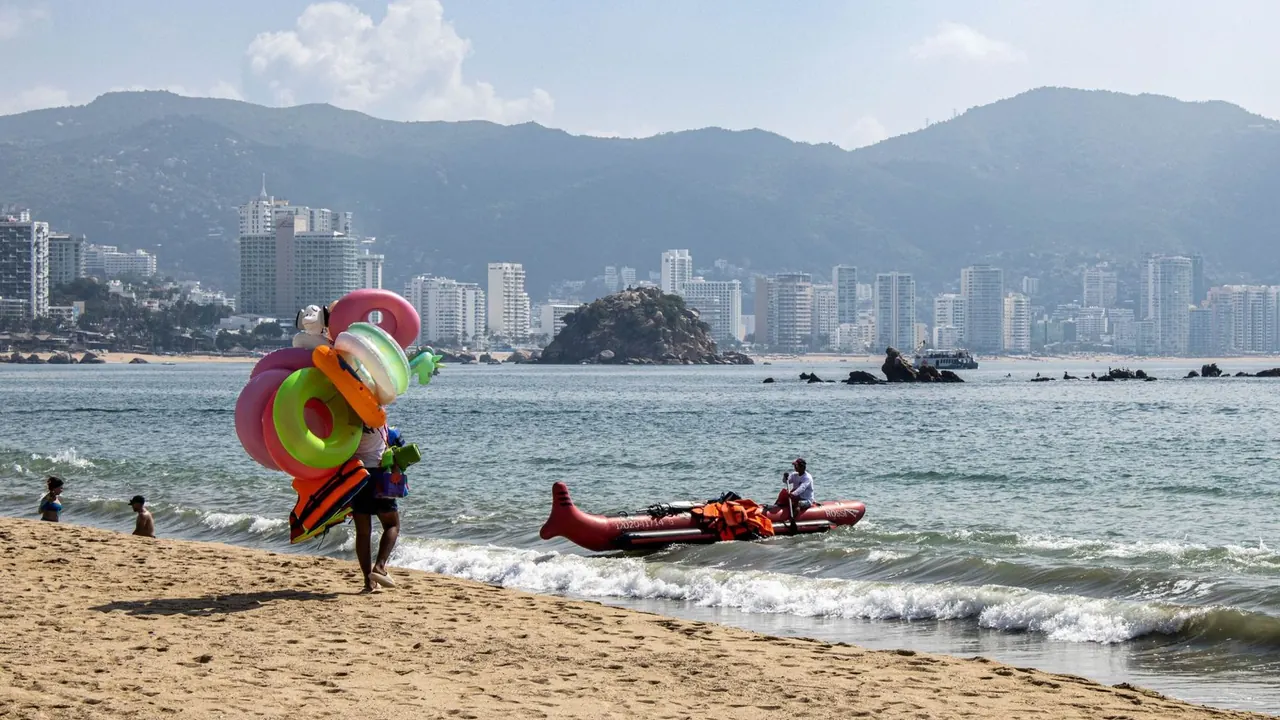
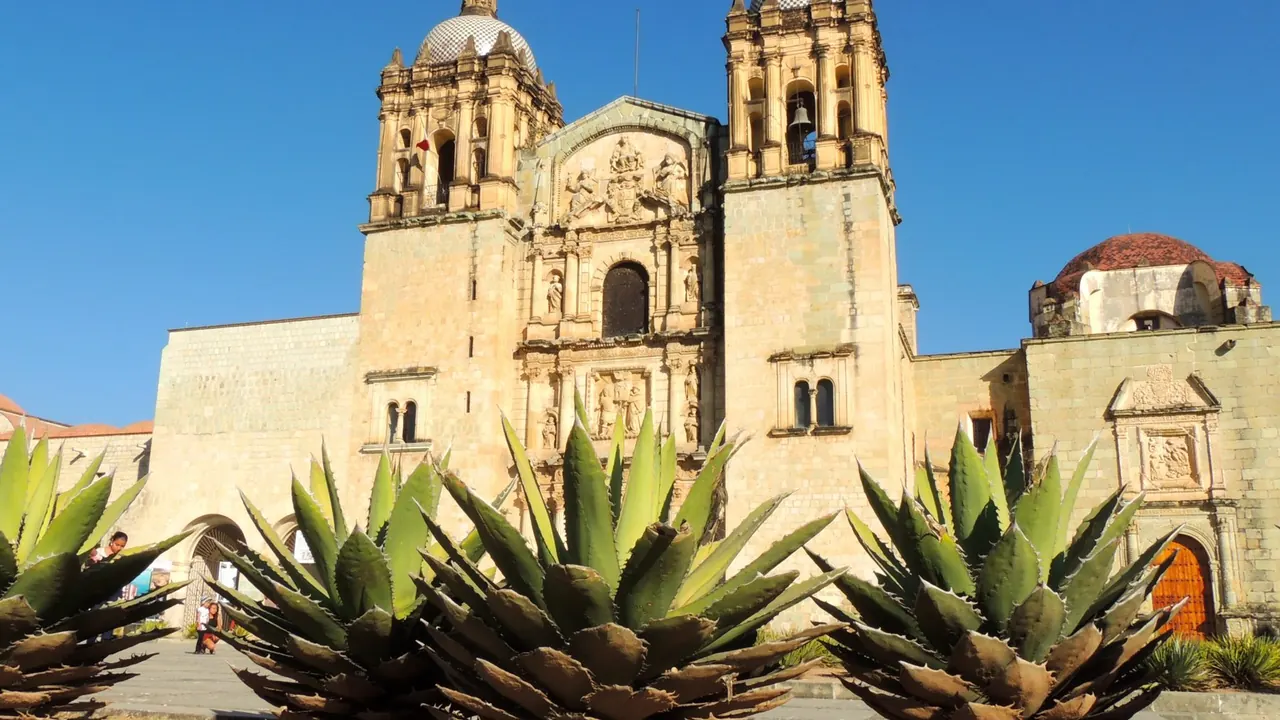
Photos: Acapulco by Felicia Navarrete, Pexels License; Oaxaca by Öskr Rck, CC BY-SA 3.0, cropped.
Acapulco or Oaxaca?
Our verdict in twelve categories, each scored against the same fixed benchmark cities, and the climate month by month, so you can choose for your trip.
Choose Acapulco for
- beaches
- nightlife
- families
Acapulco suits a trip built around the sea: warm Pacific water all year, sheltered coves for swimming, a long hotel strip on the bay and loud late nights along the Costera. It is a resort first and a city second, so it rewards travellers happy to spend their days on the sand and their evenings in beach bars and clubs, with little need to go looking for sights.
Choose Oaxaca for
- day trips
- culture and sights
- shopping
Oaxaca is the choice for anyone who travels to eat, look and buy. Its colonial centre, Monte Albán, the craft villages of the Central Valleys and some of the most celebrated cooking in Mexico fill a week easily, and the centre is compact enough to explore on foot. There is no beach within reach for a day, but there is far more to do away from one.
Scoreboard
Twelve categories on one fixed scale from 0 to 100. The shaded stretch is the gap between the two.
Your match
Pick a travel style or drag the sliders, and both match scores follow your weighting.
Wins on beaches and nightlife with your weighting.
Wins on day trips and culture and sights with your weighting.
What matters to you?
Category by category
What the scores mean for a trip.
Beaches & swimming
This is where Acapulco has the field to itself. Its bay holds a string of sandy beaches in front of the hotels, calm family coves at Caleta and Caletilla, boats out to Roqueta Island and sheltered swimming at Puerto Marqués, though the open-ocean beaches at Revolcadero and Pie de la Cuesta are for sunsets rather than swimming.
Oaxaca sits in the mountains at about 1,550m, and the nearest coast at Puerto Escondido or Huatulco is a separate trip, not an afternoon out. In the city, swimming means a hotel pool.
Food & drink
Acapulco eats well if you know where to look: pescado a la talla grilled over wood at Barra Vieja, tomato-based ceviche and the Thursday pozole verde. Away from those, the Costera is mostly chains and tourist seafood places.
Oaxaca is on another level as a food destination. Its moles, tlayudas, quesillo and chapulines, the grill aisle of the Mercado 20 de Noviembre, village mezcal and morning hot chocolate make eating the centre of a trip, and serious chefs add tasting menus built on local maize.
Culture & sights
Acapulco's sights fit into a day: the star-shaped Fuerte de San Diego with its museum on the Manila galleon trade, the cliff divers at La Quebrada, Diego Rivera's mosaics and the odd domed cathedral on the zócalo. Its real character is mid-century resort glamour, seen in villas and old hotels.
Oaxaca offers several unhurried days of it. The green-stone colonial grid is UNESCO-listed with Monte Albán, Santo Domingo pairs a gilded Baroque church with the museum holding the Tomb 7 gold, and the Tamayo and Textile museums and printmaking workshops show a living art scene.
Nightlife
Acapulco has the bigger night out. Beach bars, terraces and large hillside clubs along the Costera run until dawn, and on long weekends and in Easter and Christmas weeks the strip fills with visitors from Mexico City, though it is mainstream and can feel empty midweek.
Oaxaca's evenings are quieter and built around mezcal, in small tasting bars in the centre and Jalatlaco and on rooftops facing Santo Domingo. A few places have DJs or salsa at weekends, but most nights end well before Acapulco's would.
Nature & outdoors
Acapulco's outdoors are coastal: boat trips round the bay, snorkelling at Roqueta, deep-sea fishing for sailfish and the mangroves of Coyuca Lagoon, with turtle releases at Barra Vieja. Inland hiking is hot and has few trails.
Oaxaca gives more for those who like to walk. The Pueblos Mancomunados in the Sierra Norte run village-to-village trails through pine-oak and cloud forest, Hierve el Agua's mineral cliffs make an easy half-day, and the valley floor suits mountain biking among the agave.
Day trips
From Acapulco the options are thin: half-days at Pie de la Cuesta or Barra Vieja, and Taxco, about three hours away, which is better done with a night there.
Oaxaca is surrounded by short, varied outings. Along the road east lie the great cypress at El Tule, the weavers of Teotitlán, the stone fretwork of Mitla and the mezcal distilleries of Matatlán, while Cuilapan, Zaachila and the carving villages fill another day. Colectivos and tours make two or three stops a day easy.
Good for families
Neither is a natural family city, and the two are broadly level, but they suit different children. Acapulco offers shallow coves at Caleta, boat rides to Roqueta, the CICI water park and resort pools with kids' clubs, at the price of heat, traffic and dangerous surf on the open beaches.
Oaxaca has no water park or zoo, but older children can paint alebrijes, make chocolate or tortillas and watch parades in friendly pedestrian streets. Shadeless ruins and cobbles make it harder going with small ones.
Getting around
Acapulco is a long strip along the Costera Miguel Alemán, from the old town to Diamante, too far to walk, so buses and taxis carry you everywhere, and taxis are the norm after dark.
Oaxaca is the easier place to be without wheels. Most of what visitors want lies within a twenty-minute walk of the zócalo along the Macedonio Alcalá, with cheap taxis and colectivos for the valley villages.
Shopping & style
Acapulco's shopping is mostly souvenirs and beachwear, with an artisan market selling Taxco silver and Olinalá lacquer of mixed quality and chain malls in Diamante.
Oaxaca is a reason to bring an empty bag. Cooperative galleries on the Macedonio Alcalá sell textiles, barro negro and alebrijes, and the best buying is at source, in the rug looms of Teotitlán, the potters of Coyotepec and the Tlacolula market.
Affordability
Both are cheap by international standards, so the difference is in where the money goes. Acapulco is priced for Mexican vacationers, with good-value beach-view rooms and all-inclusives, and costs rise mainly in Diamante and Las Brisas and at Easter, Christmas and on long weekends.
In Oaxaca, markets, fondas and colectivos cost little, while colonial boutique hotels and tasting menus are priced for foreigners and climb steeply at Guelaguetza and the Day of the Dead.
Live music & performing arts
Acapulco's live performance is informal: mariachi and guitar trios at dinner, folk shows in hotels and touring pop stars in Diamante, with only occasional philharmonic concerts.
Oaxaca has more, above all in July's Guelaguetza, when regional dance troupes perform above the city, and at the Day of the Dead. Through the year, marimba and the state band play in the zócalo and the Teatro Macedonio Alcalá stages concerts and dance.
Wellness & relaxation
Rest in Acapulco means a resort spa in Diamante or Las Brisas, a beach massage or a clifftop hotel pool, ideally well away from the noise of the Costera.
Oaxaca offers a tradition of its own in the temazcal, the stone-heated sweat lodge still led by healers in the valley villages. Its slow pace, shaded courtyards and quiet Jalatlaco evenings make the whole stay more restful.
When should you go?
Pick your month. The climate figures are measured averages, not a forecast.
Acapulco in July
Oaxaca in July
Daytime high, °C
Rainfall in the month, mm
Temperature and rainfall are climate normals, averaged over the years shown. Acapulco: 1991-2020 normals, Acapulco, Gro. (5.9 km from centre). Oaxaca: 1961-1990 normals, Oaxaca, Oax. (1.1 km from centre).
Both cities are at their best from November to April, when rain is almost absent in each. Acapulco is hot every month, with daytime highs of 32°C to 34°C and the sea close to 30°C, so the beach is always warm enough; the difference is the rain, which arrives in June and peaks in September at nearly 300mm, with cloudier skies and murky water in the bay. November to April brings the most sunshine and the calmest weather.
Oaxaca, up in its highland valley, is milder for walking most of the year, though March to May turns hot at around 33°C in the afternoons. Its rainy season runs from late May to early October and is much lighter than on the coast, usually showers that turn the hills green rather than days lost indoors. December to February is the easiest time for long days in the streets and at the ruins.
Which traveller are you?
For a beach and sun trip, Acapulco is the obvious pick. Its bay is lined with sandy beaches, the coves at Caleta and Puerto Marqués are calm for swimming, and the sea stays warm all year, while Oaxaca is hours from the coast.
On a culture and arts trip, Oaxaca wins clearly. A UNESCO-listed colonial centre, Santo Domingo and its museum, Monte Albán twenty minutes away and a strong printmaking tradition outweigh Acapulco's fortress, cliff divers and a day of sights.
On a shopping trip, Oaxaca is the place to go. Its galleries, markets and craft villages sell rugs, black pottery, alebrijes and textiles straight from the makers, whereas Acapulco offers one artisan market, beachwear and chain malls.
Before you go
| Measure | Acapulco | Oaxaca |
|---|---|---|
| Official language | Spanish, Nahuatl, Yucatec Maya | Spanish, Nahuatl, Yucatec Maya |
| Currency | Mexican Peso (MXN) | Mexican Peso (MXN) |
| Sockets | AB127 V, 60 Hz | AB127 V, 60 Hz |
| Driving side | Right | Right |
| Time zone | UTC-6 | UTC-6 |
| Emergency number | 911 | 911 |
| Elevation | 18 m | 1,555 m |
| Main airport | General Juan N. Álvarez International Airport (ACA)18 km from centre10 non-stop destinations | Xoxocotlán International Airport (OAX)7 km from centre14 non-stop destinations |
| Public holidays this year | 9 days | 9 days |
By the numbers
| Measure | Acapulco | Oaxaca |
|---|---|---|
| City population | 658,609 | 258,913 |
| People per km² | 350 | 3,028 |
| Museums within 10 km | 3 | 10 |
| UNESCO World Heritage sites within 50 km | 0 | 2 |
| Swim season, months above 21 °C | 12 months | - |
Where else could you go?
Every comparison below shares a destination with this one, so you can follow Acapulco or Oaxaca somewhere new.