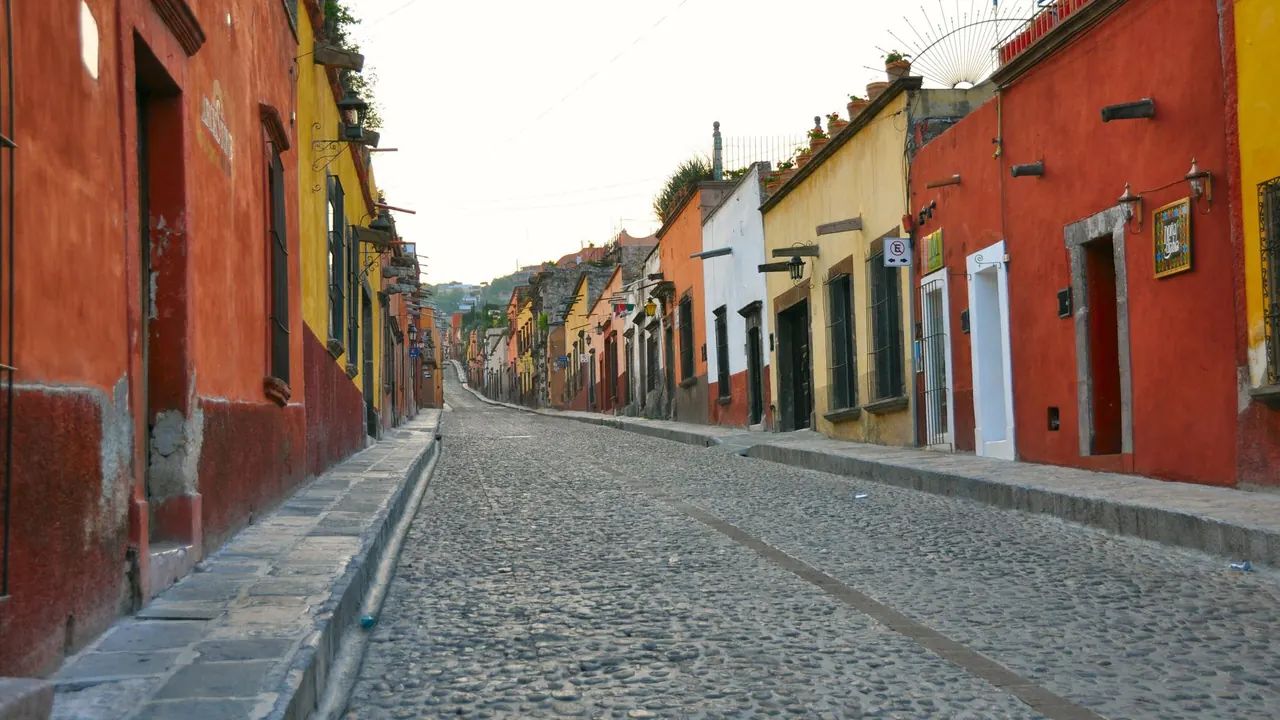
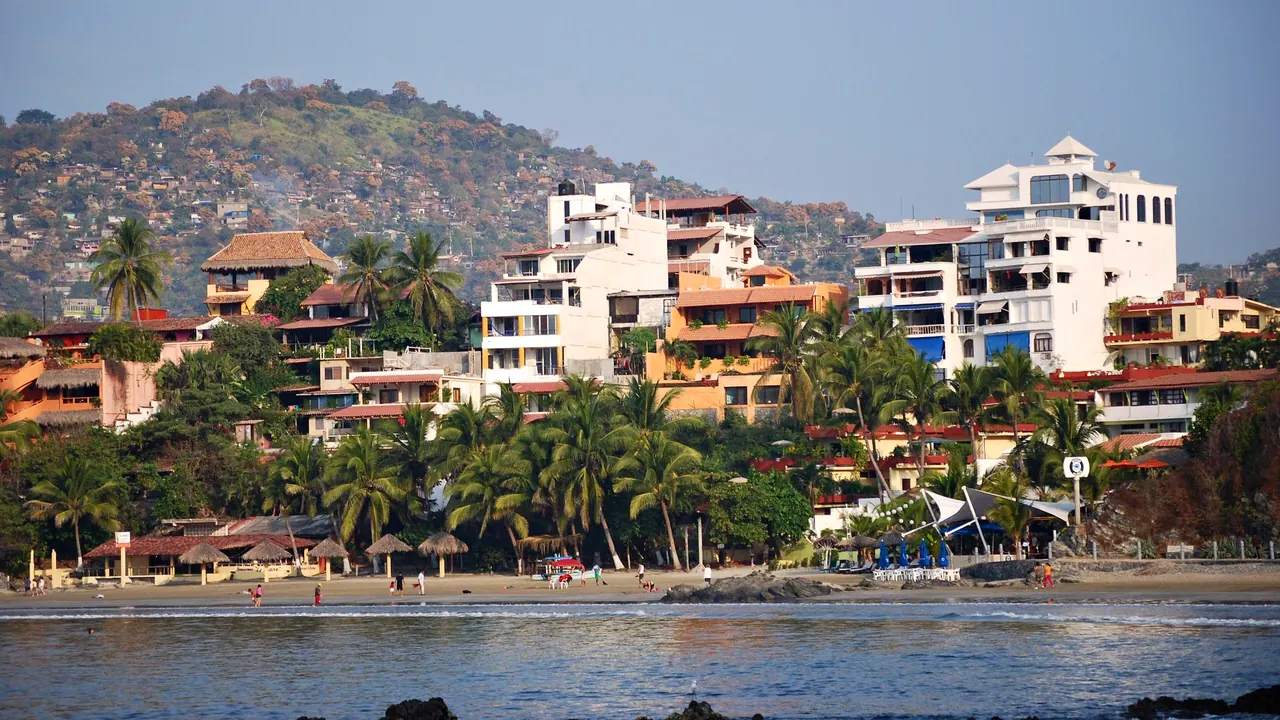
Photos: San Miguel de Allende by Russ Bowling, CC BY 2.0, cropped; Zihuatanejo by AlejandroLinaresGarcia, CC BY-SA 4.0, cropped.
San Miguel de Allende or Zihuatanejo?
Our verdict in twelve categories, each scored against the same fixed benchmark cities, and the climate month by month, so you can choose for your trip.
Choose San Miguel de Allende for
- day trips
- culture and sights
- shopping
San Miguel de Allende suits travellers who want a colonial town to wander, a base for excursions and evenings over mezcal on a rooftop. The UNESCO-listed centre, galleries and craft shops fill two easy days, and Guanajuato, Querétaro and Atotonilco turn a short stay into a tour of the Bajío. It has no sea, though, and young children may tire of it quickly.
Choose Zihuatanejo for
- beaches
- families
- nature and the outdoors
For a vacation built around warm water, Zihuatanejo is the obvious pick. The sheltered bay and calm beaches such as La Ropa and Las Gatas set the pattern of the days, with snorkelling and whale-watching besides, and costs stay low if you eat at the market and the palapas. Sights, shops and nightlife are thin, so it rewards people who are happy to swim, read and watch the sunset rather than go looking for things to do.
Scoreboard
Twelve categories on one fixed scale from 0 to 100. The shaded stretch is the gap between the two.
Your match
Pick a travel style or drag the sliders, and both match scores follow your weighting.
Wins on day trips and culture and sights with your weighting.
Wins on beaches and families with your weighting.
What matters to you?
Category by category
What the scores mean for a trip.
Beaches & swimming
There is no contest here. San Miguel is on the high plateau far from any coast, so water means a hotel pool or a soak in the hot springs towards Atotonilco.
Zihuatanejo is built around its bay. La Ropa has long, calm swimming, Madera is a short walk from town, Las Gatas offers snorkelling behind its stone reef, and Isla Ixtapa's small coves are a boat ride away. Only the open-ocean beaches such as El Palmar need caution because of the surf.
Food & drink
San Miguel has the wider range of food. Courtyard restaurants and rooftop terraces rework Bajío ingredients like nopal and mesquite, the Mercado Ignacio Ramírez and the evening taco carts cover the cheap end, and Guanajuato wines appear on many lists, though the menus start to look alike over a long stay.
Zihuatanejo's cooking is narrower but has a clear identity: tiritas of lime-cured fish, pescado a la talla grilled over coals at palapas on the sand, and Guerrero's Thursday pozole. It is simple coastal food done honestly, not a place for serious dining.
Culture & sights
In San Miguel the centre itself is the sight: cobbled hillside streets, the pink spires of the Parroquia, baroque churches such as San Felipe Neri, the Casa de Allende and the Siqueiros mural at Bellas Artes. Two unhurried days cover it, and there are no major museums.
Zihuatanejo offers much less. There is a small museum of coastal archaeology on the waterfront and a whitewashed fishing town whose appeal lies in daily life around the pier rather than in monuments.
Nightlife
Neither town has a real club scene, but San Miguel gives an evening more to do. Rooftop drinks as the Parroquia lights up lead on to mezcal bars and cantinas, and at weekends, with visitors in from Mexico City, the centre stays busy until late.
In Zihuatanejo the night is a sunset drink, a long dinner and a few small bars with a local crowd. The louder beach bars and the handful of clubs are up the coast in Ixtapa, and they fill mainly in the winter high season.
Nature & outdoors
Zihuatanejo's outdoors is on and around the water. There is snorkelling and diving at Las Gatas and Isla Ixtapa, sport fishing for sailfish, humpback whales in winter and kayaks on the bay, plus birds and crocodiles in the lagoons at Barra de Potosí and Playa Linda, with turtles nesting in the second half of the year.
San Miguel's semi-arid highlands make for gentler mornings out: the canyon trails and cacti of El Charco del Ingenio, horse riding, mountain biking and balloon flights at dawn. It has no forests or water sports, though its mild, dry winters are better for walking than the heat of the coast.
Day trips
This is where San Miguel pulls furthest ahead. Guanajuato's ravine of painted houses and Querétaro's aqueduct and convents are each about an hour away, and the murals of Atotonilco are closer still. Dolores Hidalgo, Mineral de Pozos, Bernal and the wine country fill further days, best reached with a driver.
From Zihuatanejo the outings are small: the surf village of Troncones, lunch on the sand at Barra de Potosí or the ball court at Xihuacan. Acapulco and anything larger are too far for a day.
Good for families
Zihuatanejo is the easier choice with children. The water is calm and warm at La Ropa and Las Gatas, the town is small and manageable, and Ixtapa's resorts add pools and kids' clubs. Boat rides, crocodile spotting and turtle releases keep children busy, though the strong sun needs care.
San Miguel is an adult town of galleries and rooftop bars, and its steep cobbles defeat pushchairs. The Jardín in the evening, the fiestas and a horse ride please older children, but younger ones soon run out of things to do.
Getting around
The two are about as easy as each other, in different ways. In San Miguel almost everything is within a walk of the Jardín, but the walk is steep and uneven at about 1,900m, and with no airport in town, arrival means a shuttle from Querétaro or León.
Zihuatanejo's compact centre and waterfront path are easy on foot, and the town has its own airport close by. Its beaches are spread around the bay over hilly roads without pavements, though, so taxis, colectivos and water taxis take you between them.
Shopping & style
San Miguel is the better place to buy something worth carrying home. The stepped lane of the Mercado de Artesanías sells tin lanterns, blown glass and embroidery, design shops stock talavera, rugs and carved furniture, and a former textile mill houses studios and antique dealers. Fashion is the one thing missing.
Zihuatanejo is fine for souvenirs. Its artisans' market sells hammocks, Olinalá lacquerware and Taxco silver, and a few boutiques sell resort wear.
Affordability
Zihuatanejo is the cheaper stay. Simple guesthouses in town, market meals, palapa lunches and colectivos keep daily costs low. Only the hillside hotels above La Ropa and the Ixtapa resorts push them up, especially in winter.
San Miguel costs more, with boutique hotels in colonial houses and restaurants on the Jardín pitched at foreign residents and weekenders. Street food, cantinas and churches that cost nothing to visit help, but rooms are dearer at weekends and during festivals.
Live music & performing arts
San Miguel has a real music life for a small town. There is the nineteenth-century Teatro Ángela Peralta, chamber music and jazz festivals, mariachis on the Jardín every evening and the street music of the Alborada and Holy Week, though the regular programme is thin.
Zihuatanejo has its annual international guitar festival and some live trova or bands in restaurants during high season, and little else.
Wellness & relaxation
Both are slow places, but San Miguel offers more ways to unwind. The hot mineral pools and domed grottoes towards Atotonilco are about fifteen minutes away, and the town has day spas, temazcal sweat lodges and yoga. The dry, mild climate also suits lazy afternoons on a rooftop.
In Zihuatanejo the rest comes from the heat, the shade and the sea itself. There is no local bathing tradition, and the spas are mainly in the hillside hotels and the Ixtapa resorts.
When should you go?
Pick your month. The climate figures are measured averages, not a forecast.
San Miguel de Allende in July
Zihuatanejo in July
Daytime high, °C
Rainfall in the month, mm
Where the figures come from
San Miguel de Allende's temperatures are measured 54 km from the centre, at Guanajuato, Gto..
San Miguel de Allende has no rain gauge within 25 km of the centre, so its rainfall comes from a gridded climate dataset read at the city rather than from a gauge further away.
Zihuatanejo has no weather station within reach, so its figures come from a gridded climate model rather than a measured record, and read a broad area rather than the city itself.
Temperature and rainfall are climate normals, averaged over the years shown. San Miguel de Allende: 1991-2020 normals, Guanajuato, Gto. (53.7 km from centre). Zihuatanejo: 1991-2020 normals, TerraClimate 4 km grid at the town, no weather station within 90 km.
San Miguel's altitude keeps its winters mild rather than tropical, about 23°C by day in December and January. The dry season runs roughly from November to April, the best time for climbing the cobbled streets. March to May is the sunniest and hottest stretch, with afternoons reaching 32°C, which makes long walks at midday hard going. May brings the first showers, the rains settle in from June to September and turn the hills green, and October eases back towards dry weather.
Zihuatanejo is hot all year, in the low thirties every month, and the sea stays at 27°C or warmer, so any month works for the beach. What changes is the rain. November to May is almost completely dry, while June to October is the wet season, heaviest in September at 285mm. The two towns' dry seasons overlap from November to April, so those are the best months to combine them.
Which traveller are you?
On a beach and sun trip, Zihuatanejo wins outright. San Miguel is hours from any coast, while Zihuatanejo has a sheltered bay with warm water in every month, the long calm crescent of La Ropa and the reef-protected snorkelling of Las Gatas.
For a culture and arts trip, San Miguel is the clear choice. The UNESCO-listed centre, the Parroquia, the Siqueiros mural at Bellas Artes, its galleries and the Teatro Ángela Peralta give it real substance, and Guanajuato and Atotonilco are close enough for day trips.
On a family trip with young children, Zihuatanejo makes life much simpler. The calm, shallow sea keeps everyone happy for hours, and the small town needs little planning. San Miguel's steep cobbles and grown-up rhythm of galleries and late dinners tire small legs and patience quickly.
Before you go
| Measure | San Miguel de Allende | Zihuatanejo |
|---|---|---|
| Official language | Spanish, Nahuatl, Yucatec Maya | Spanish, Nahuatl, Yucatec Maya |
| Currency | Mexican Peso (MXN) | Mexican Peso (MXN) |
| Sockets | AB127 V, 60 Hz | AB127 V, 60 Hz |
| Driving side | Right | Right |
| Time zone | UTC-6 | UTC-6 |
| Emergency number | 911 | 911 |
| Elevation | 1,900 m | 13 m |
| Main airport | Guanajuato International Airport (BJX)77 km from centre22 non-stop destinations | Ixtapa-Zihuatanejo International Airport (ZIH)11 km from centre17 non-stop destinations |
| Public holidays this year | 9 days | 9 days |
By the numbers
| Measure | San Miguel de Allende | Zihuatanejo |
|---|---|---|
| City population | 69,811 | 70,760 |
| Museums within 10 km | 2 | 1 |
| UNESCO World Heritage sites within 50 km | 2 | 0 |
| Swim season, months above 21 °C | - | 12 months |
Where else could you go?
Every comparison below shares a destination with this one, so you can follow San Miguel de Allende or Zihuatanejo somewhere new.
- Guanajuatovs San Miguel de Allende
- Acapulcovs Zihuatanejo
- Mexico Cityvs San Miguel de Allende
- Guadalajaravs San Miguel de Allende
- Mexico Cityvs Zihuatanejo
- Pueblavs San Miguel de Allende