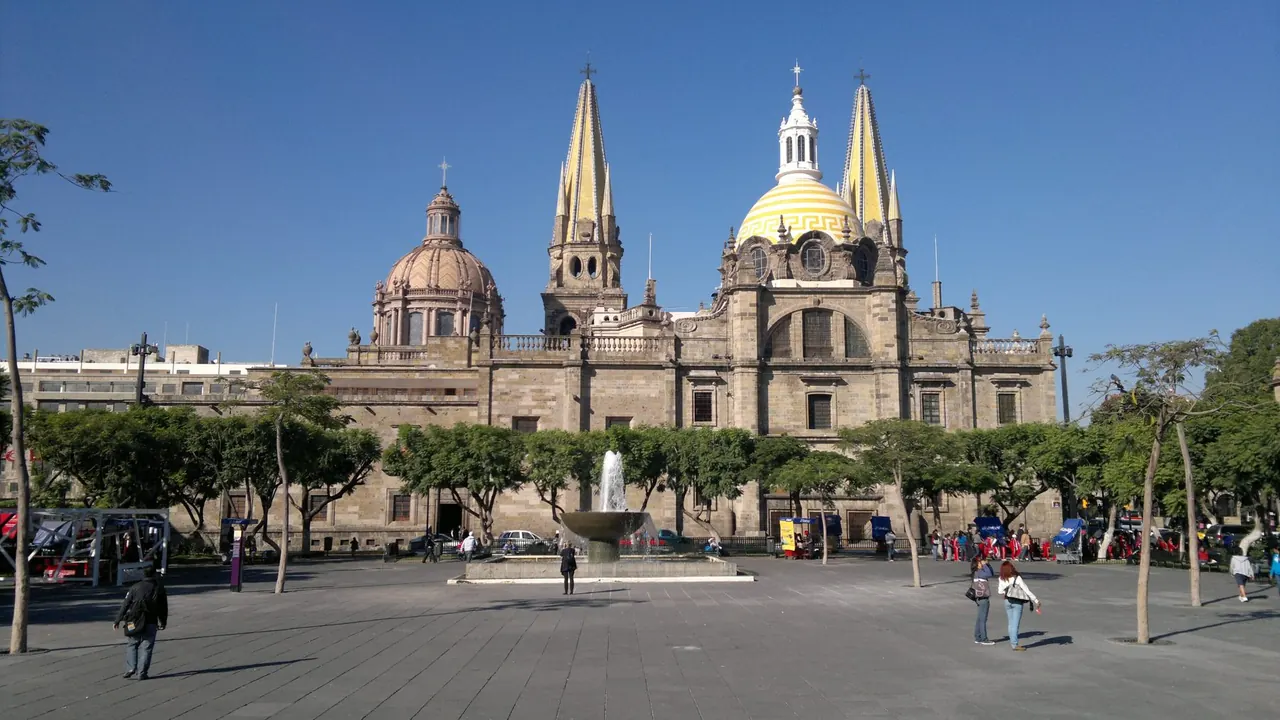
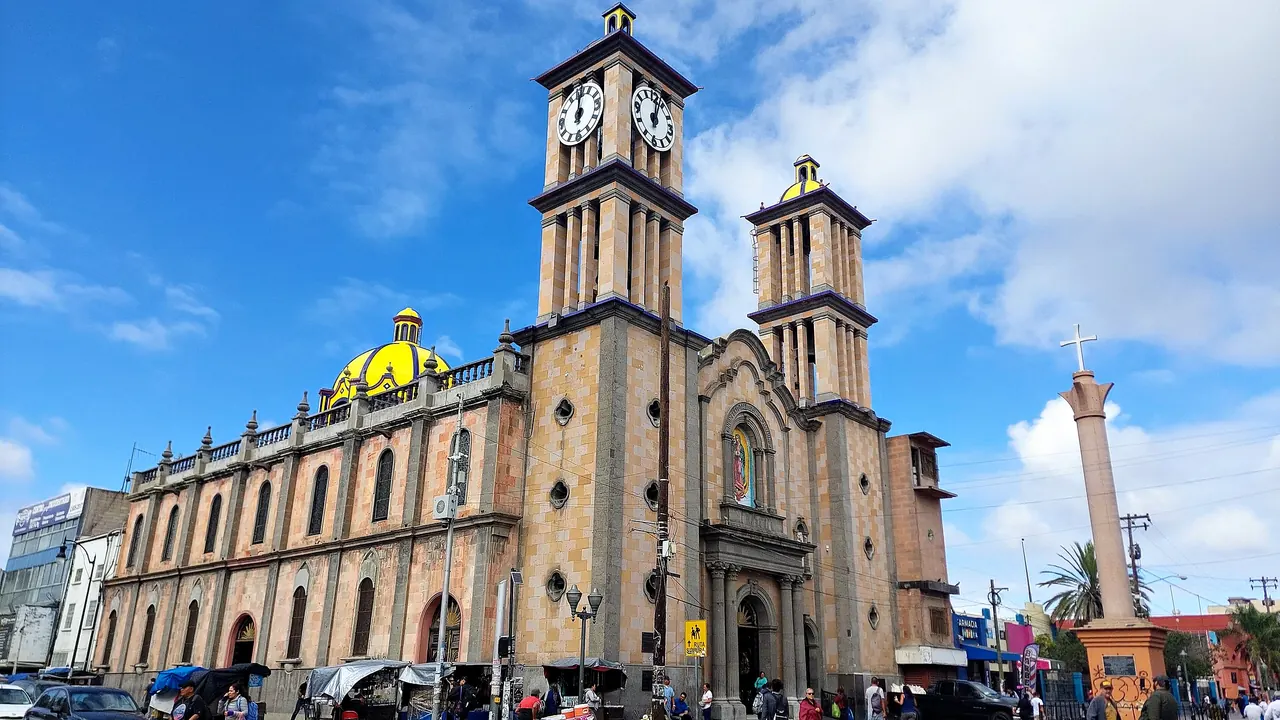
Photos: Guadalajara by Ponchomx, CC BY-SA 3.0, cropped; Tijuana by Exprimidor, CC BY-SA 4.0, cropped.
Guadalajara or Tijuana?
Our verdict in twelve categories, each scored against the same fixed benchmark cities, and the climate month by month, so you can choose for your trip.
Choose Guadalajara for
- culture and sights
- live music and the arts
- families
Guadalajara is the fuller city for a stay of several days. It has Orozco's murals in the Hospicio Cabañas, mariachi played where it was born, craft towns such as Tlaquepaque and Tonalá, and a long late-night scene in Colonia Americana. Its forests, canyon and lake are close by, and the agave country around Tequila is an easy outing. Choose it if you want culture, music, crafts and a city that also works for children.
Choose Tijuana for
- beaches
Tijuana suits a shorter, more focused trip built around eating and the coast. The tacos, seafood carts and Baja Med kitchens are as good a reason to travel as anything in Guadalajara. Rosarito's sand and the Valle de Guadalupe wineries are both within easy reach, and San Diego is on the other side of the border. It works best for travellers coming from the north who want food, wine and the sea, and who don't expect much in the way of sights.
Scoreboard
Twelve categories on one fixed scale from 0 to 100. The shaded stretch is the gap between the two.
Your match
Pick a travel style or drag the sliders, and both match scores follow your weighting.
Wins on culture and sights and live music and the arts with your weighting.
Wins on beaches with your weighting.
What matters to you?
Category by category
What the scores mean for a trip.
Beaches & swimming
Neither city is built for a beach vacation, but only Tijuana is actually on the sea. Playas de Tijuana is a sandy promenade for walking and lunch rather than swimming. Rosarito, half an hour south, gives a proper beach day in cool Pacific water with strong surf.
Guadalajara sits on a plateau far from the coast. Lake Chapala is not for swimming, so a cool-off there means a hotel pool or a spring-fed balneario.
Food & drink
Both are serious places to eat, and each has its own regional character. Guadalajara cooks slow, saucy dishes from Jalisco: birria in the morning, the torta ahogada drowned in chilli sauce, and carne en su jugo. Evenings come with tequila and cantaritos, and Americana and Providencia add a modern scene.
Tijuana is about the taco and the sea: adobada from the spit, Ensenada-style fish tacos, and tostadas loaded with sea urchin and clams. Above that sits Baja Med cooking in Zona Río, and the drinks are craft beer and Valle de Guadalupe wine rather than agave spirits.
Culture & sights
Guadalajara has far more to see. Its historic centre is a cross of plazas around the twin-spired cathedral, leading to the Hospicio Cabañas, where Orozco's Man of Fire fills the chapel dome. Add the mansions of Colonia Americana and colonial Tlaquepaque, and there are two or three rewarding days.
Tijuana is a young border city with little historic fabric. The Museo de las Californias, the Jai Alai palace on Avenida Revolución and the painted border fence at the beach are worth seeing, but they make a day, not a cultural trip.
Nightlife
Both cities stay out late at weekends, but Guadalajara gives you more range. Its university crowd fills the mezcal bars, cantinas and dance spots around Avenida Chapultepec, and the city has one of Mexico's best-known LGBTQ+ scenes. In Providencia and along Avenida Vallarta, the bigger clubs and lounges draw a dressed-up crowd that keeps going well into the small hours.
Tijuana's nights are rougher. Avenida Revolución serves loud, cheap drinks to visitors from the north. The better evenings are a block away on Calle Sexta and in the taprooms of Zona Río, and you need to take care in the streets near Zona Norte.
Nature & outdoors
Green escape starts right at Guadalajara's edges. Bosque La Primavera offers oak and pine trails with warm streams, and the Huentitán canyon makes a steep descent to the Río Santiago. Lake Chapala, with hills for walking and birdwatching, is an hour away.
Tijuana is surrounded by dry, scrubby hills, and its outdoors is along the coast instead: cliff-top drives towards Ensenada, surf breaks near Rosarito and whale watching in winter. Serious hiking is too far away for a day out.
Day trips
Guadalajara has the slightly better spread of outings. Tequila's agave fields are a UNESCO landscape with distilleries. Ajijic's painted lakeside, the round pyramids of the Guachimontones and the cool mountain villages of Tapalpa and Mazamitla are all within about two hours.
Tijuana's appeal is that it gives you two countries. Ensenada and the Valle de Guadalupe wineries lie south, and San Diego and La Jolla lie north. The border crossing back can take hours, though, and that makes trips north harder to plan than anything around Guadalajara.
Good for families
Guadalajara is much easier with children. The large zoo above the Huentitán canyon, the rides at Selva Mágica, the Acuario Michin and the Trompo Mágico museum fill several days, and the mild climate is kind to young visitors. The sights are spread out, so plan on taxis.
Tijuana has El Trompo, the IMAX dome and Parque Morelos, and little else. Its pavements are patchy and its best-known street is aimed at drinkers, so most families stick to food and a day at Rosarito.
Getting around
Both cities sprawl, and in both you will rely on ride-hailing. Guadalajara does have pedestrian streets linking its central plazas, plus light rail and Mi Macro bus corridors out to Zapopan and Tlaquepaque.
Tijuana has no metro. It is hilly, built for cars and spread over several kilometres, so only downtown near the San Ysidro crossing is walkable. Queues at the border add time to any trip by car.
Shopping & style
Guadalajara is a real shopping destination for crafts. Tlaquepaque's galleries sell blown glass and ceramics, Tonalá has its pottery market, and the three floors of Mercado San Juan de Dios are full of leather and boots. Andares adds luxury brands.
Tijuana's shopping is more practical. You will find curio stalls for hard bargaining, spices and vanilla at Mercado Hidalgo, small studios in Pasaje Rodríguez, and pharmacies that draw buyers from across the border, but little fashion.
Affordability
Both are cheap for visitors, and Guadalajara stretches your money a little further. It has fewer tourist premiums, central hotels are reasonably priced, and many of its murals and plazas cost nothing to see.
In Tijuana, the trap is the places that cater to day-trippers. Bars on Revolución, Baja Med dining and wine-country tastings all charge closer to international rates, while neighbourhood taquerías stay inexpensive.
Live music & performing arts
This is Guadalajara's territory. Mariachi is part of everyday life in the Plaza de los Mariachis and around the El Parián bandstand in Tlaquepaque. The Teatro Degollado hosts the Jalisco Philharmonic and the university's Ballet Folclórico.
Tijuana has one main venue, the Centro Cultural, plus a local opera company with an open-air tradition. Otherwise it offers norteño and banda in cantinas and the small Calle Sexta gigs where Nortec began. That makes a good evening, but it is not a reason to travel.
Wellness & relaxation
Neither city is restful, but Guadalajara has the volcanic ground and warm water that Tijuana lacks. Thermal balnearios lie at the edge of La Primavera and along Lake Chapala, temazcal steam lodges can be found at some retreats, and Ajijic suits a few slow days.
Tijuana has no bathing tradition, and its health trade is medical and dental. For quiet, people head to the vineyard stays in the wine valleys.
When should you go?
Pick your month. The climate figures are measured averages, not a forecast.
Guadalajara in July
Tijuana in July
Daytime high, °C
Rainfall in the month, mm
Where the figures come from
Guadalajara has no weather station within reach, so its figures come from a gridded climate model rather than a measured record, and read a broad area rather than the city itself.
Tijuana has no rain gauge within 25 km of the centre, so its rainfall comes from a gridded climate dataset read at the city rather than from a gauge further away.
Temperature and rainfall are climate normals, averaged over the years shown. Guadalajara: 2001-2020 normals, NASA POWER reanalysis grid, no weather station within 90 km. Tijuana: 2006-2020 (rainfall 1991-2020) normals, San Diego / Bandini (6.7 km from centre).
The two cities have opposite climates through the year. Guadalajara is dry and sunny from November to May, and the mild winter months are the most comfortable for walking its plazas. April and May get properly hot, peaking around 33°C. From June to September afternoon storms arrive, with July bringing about 205mm, though mornings are often clear and the hills turn green.
Tijuana stays mild all year. Winter highs are around 19°C, and most of its modest rain falls between December and March. Summer and early autumn are dry and warm without being hot. July to October is the time for the coast, when the sea reaches its peak of about 21°C, which is still cool for swimming. In practice, winter and early spring favour Guadalajara, and late summer favours Tijuana.
Which traveller are you?
On a culture and arts trip, Guadalajara wins easily. Orozco murals in the Palacio de Gobierno, the Expiatorio church and Tlaquepaque's ceramics museum fill the days, and folk ballet or mariachi fill the evenings. Tijuana's sights barely stretch past a day.
On a family trip with young children, Guadalajara is the easier base. Its attractions for children last several days, restaurants welcome them late into the evening, and the dry, mild winters suit young visitors. In Tijuana, the bigger zoos and theme parks lie across the border, behind a crossing that can take hours.
For a beach and sun trip, Tijuana is the one of the two on the coast. Rosarito's wide sand and beach bars are about half an hour south, though the sea stays cool. From Guadalajara, sand means a separate trip to Puerto Vallarta.
Before you go
| Measure | Guadalajara | Tijuana |
|---|---|---|
| Official language | Spanish, Nahuatl, Yucatec Maya | Spanish, Nahuatl, Yucatec Maya |
| Currency | Mexican Peso (MXN) | Mexican Peso (MXN) |
| Sockets | AB127 V, 60 Hz | AB127 V, 60 Hz |
| Driving side | Right | Right |
| Time zone | UTC-6 | UTC-8, UTC-7 in summer |
| Emergency number | 911 | 911 |
| Elevation | 1,536 m | 20 m |
| Main airport | Guadalajara International Airport (GDL)17 km from centre68 non-stop destinations | General Abelardo L. Rodriguez International Airport (TIJ)6 km from centre38 non-stop destinations |
| Public holidays this year | 9 days | 9 days |
By the numbers
| Measure | Guadalajara | Tijuana |
|---|---|---|
| City population | 1,385,621 | 1,810,645 |
| People per km² | 9,556 | 2,842 |
| Museums within 10 km | 17 | 3 |
| UNESCO World Heritage sites within 50 km | 2 | 0 |
| Swim season, months above 21 °C | - | 1 month |
Where else could you go?
Every comparison below shares a destination with this one, so you can follow Guadalajara or Tijuana somewhere new.