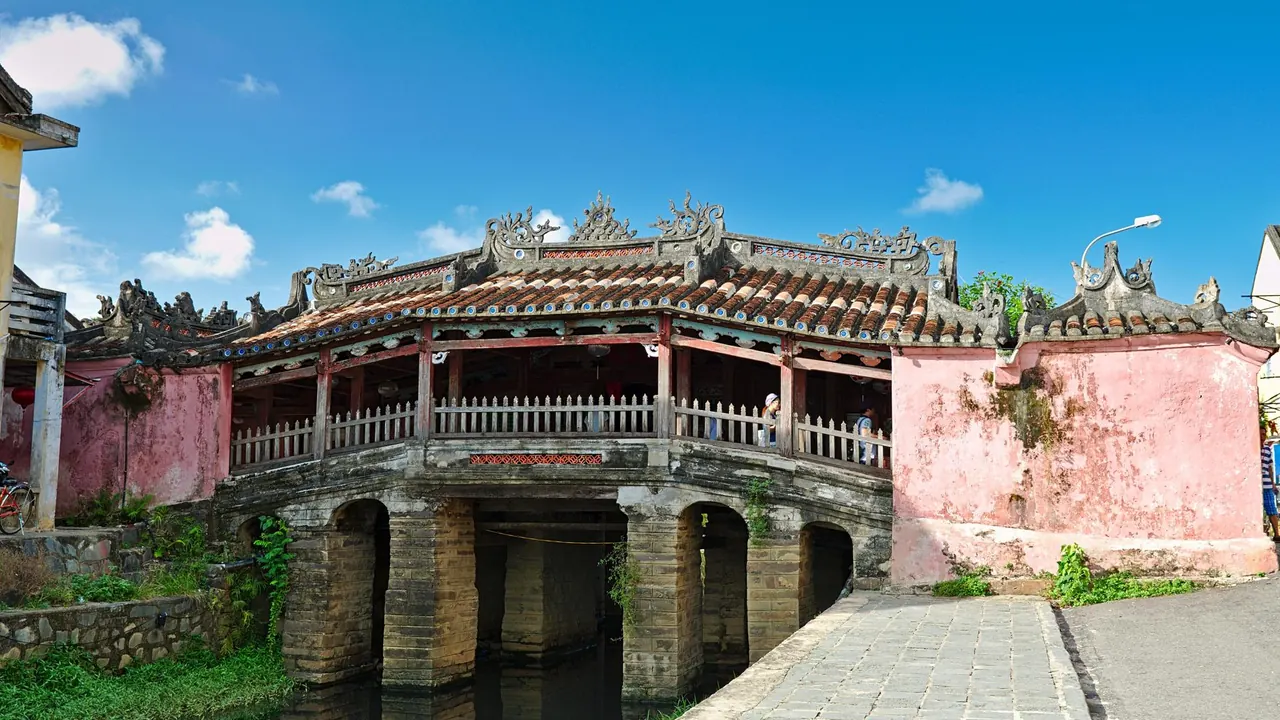

Photos: Hoi An by François Guerraz, CC BY-SA 3.0, cropped; Hue by Valeria Drozdova, Pexels License.
Hoi An or Hue?
Our verdict in twelve categories, each scored against the same fixed benchmark cities, and the climate month by month, so you can choose for your trip.
Choose Hoi An for
- beaches
- shopping
- families
Hoi An is the better pick for a slower, easier stay. It has a sandy beach within cycling distance, tailors and lantern shops in the old town, resorts built for lazing by a pool, and hands-on activities that keep children happy. The heritage is lovely but compact, so it suits travellers who want sightseeing in the mornings and sea, massage and long lunches the rest of the day.
Choose Hue for
- culture and sights
- prices
- live music and the arts
Travellers drawn by history should head to Hue. The Nguyen emperors' citadel, the royal tombs scattered upriver and the former Demilitarised Zone to the north give it far more to explore than Hoi An's single old quarter, and it is even cheaper. It suits curious adults who are happy with quiet evenings and only the odd trip to the coast.
Scoreboard
Twelve categories on one fixed scale from 0 to 100. The shaded stretch is the gap between the two.
Your match
Pick a travel style or drag the sliders, and both match scores follow your weighting.
Wins on beaches and shopping with your weighting.
Wins on culture and sights and prices with your weighting.
What matters to you?
Category by category
What the scores mean for a trip.
Beaches & swimming
For beaches, Hoi An has the clear advantage. An Bang lies about 5km from the old town through the rice fields, and the coast runs almost unbroken north towards Da Nang. Many visitors split their stay between town and sea.
In Hue the river, not the sea, sets the scene. Thuan An is a plain local strip about 15km out, and the pretty curve of sand at Lang Co takes over an hour to reach. Both coasts are swimmable only from late spring to late summer.
Food & drink
The two eat equally well, but they eat differently. Hoi An's short list is found almost nowhere else: cao lau noodles, white rose dumplings and its famous stuffed banh mi. Its morning market and cooking classes at Tra Que make food an activity as well as a meal.
Hue cooks spicier and saltier, from a royal tradition of many small dishes. Bun bo Hue and steamed rice cakes lead the list, and the pagodas have left a strong vegetarian tradition. Neither town offers much foreign food or fine dining.
Culture & sights
Hue has far more to see. The moated citadel encloses the Imperial City and the Forbidden Purple City, partly restored and partly still scarred by 1968. Beyond it, the tombs of Tu Duc, Minh Mang and Khai Dinh each fill half a day, so plan for two or three full days.
Hoi An's appeal is a whole townscape rather than monuments. Its wooden merchant houses, the Japanese Bridge and the Chinese assembly halls make a lovely lantern-lit stroll, but its museums are small and the old town is done in a day or two.
Nightlife
Neither town is for going out, and both are quiet before midnight with no real clubs. In Hoi An the evening is the lantern-lit riverbank and a candle floated on the water, with a few rowdier bars on An Hoi islet and relaxed beach bars at An Bang.
Hue's late crowd gathers in a few backpacker streets on the south bank. Locals prefer street-side beer with ice and grilled snacks. For a proper night out from either town, Da Nang is the answer.
Nature & outdoors
Hoi An has more to offer outdoors, mainly because of the sea. The Cham Islands marine reserve has coral for snorkelling and diving, and the nipa palm channels of Cam Thanh can be explored by basket boat. Son Tra and the Marble Mountains are within reach.
Hue's countryside is greener and hillier, with pine-clad tomb hills and the vast Tam Giang lagoon. Bach Ma National Park climbs to 1,450m for waterfalls and cooler air. In both towns, autumn rains put most of this out of reach.
Day trips
The day trips are broadly level but point in different directions. From Hoi An, the obvious outings are the Cham temple ruins at My Son and the Cham sculpture museum in Da Nang. After those the choice drops to the islands and a hilltop resort.
Hue's list is a little longer and heavier on history. The Vinh Moc tunnels and Khe Sanh in the former Demilitarised Zone make a long guided day, and the Hai Van Pass and Lang Co are a scenic route south. Each town is better reached from the other as a move onwards than as a return trip.
Good for families
Hoi An is the easier base with children, mostly because its old town is small and closed to motor traffic for long stretches of the day, so a family can wander without watching every corner. When a day needs filling, Da Nang is about 45 minutes north and has more to offer children. The catches are the midday heat, heavy motorbike traffic once you leave the pedestrian core, and narrow, broken pavements that make a pushchair hard work. The autumn storm season is best avoided.
Hue's traffic is lighter and its riverside parks are pleasant. Older children usually enjoy a cyclo ride or cycling out through the villages. Most days here, though, are spent at palaces and tombs spread several kilometres apart, which is a lot for small legs in summer heat or months of autumn rain. Hue works better as a short stop on a longer trip than as a family base.
Getting around
Both are flat, compact and best seen by bicycle. Hoi An is slightly easier, because its old town is closed to motor traffic for much of the day and the beach and villages are an easy ride out. For My Son or the airport you still need a car.
Hue's centre spreads across two banks of the river. Its tombs lie several kilometres upriver, so they mean a taxi, a motorbike with driver or a boat, and the pavements are often blocked by parked motorbikes.
Shopping & style
Shopping is far better in Hoi An, mostly thanks to its made-to-measure tailoring. Workshops can make suits, dresses, shoes and bags within a day or two, and silk lanterns, ceramics and the An Hoi night market add to the mix. Leave time for several fittings.
Hue's shopping is practical, centred on the crowded halls of Dong Ba market. Its own specialities are small: poem conical hats, sesame candy and incense from Thuy Xuan.
Affordability
Both are very cheap, but Hue stretches a budget further. Good mid-range hotels and stall food cost next to nothing there, and your main extras are the citadel and tomb tickets.
Hoi An is still easy on a modest budget. Its riverfront restaurants and beachfront resorts, though, charge closer to international rates.
Live music & performing arts
Hue has a bit more live performance, and it comes from its royal past. Nha nhac court music is played in the Citadel, ca Hue singers perform on dragon boats on the Perfume River, and the Hue Festival brings a broader programme in its season.
Hoi An offers sung bai choi card games in the old town, short folk shows and a large outdoor history spectacle on the river. Neither town has a theatre or a regular music scene.
Wellness & relaxation
Hoi An is the better place to unwind. Resorts between town and the beach are built for idle days, and massage rooms and yoga classes are everywhere. Staying among the paddies or by the sea avoids the evening crowds.
Hue's calm comes from its pagodas, the garden houses of Kim Long and quiet evenings rather than from pampering. It does have one thing Hoi An lacks: the Thanh Tan hot springs, an hour away, with pools and mud baths.
When should you go?
Pick your month. The climate figures are measured averages, not a forecast.
Hoi An in July
Hue in July
Daytime high, °C
Rainfall in the month, mm
Temperature and rainfall are climate normals, averaged over the years shown. Hoi An: 1991-2020 normals, Da Nang (23.5 km from centre). Hue: 1991-2020 normals, Hue (13 km from centre).
The two towns share a calendar, but Hue is the wetter and slightly cooler of the pair. In both, February to April is the easiest time for walking, warm without being punishing. From May the sea is warm enough to swim, around 28°C, and calm through the summer. Those are also the hottest months, with afternoons near 35°C that send everyone indoors at midday. Hoi An gets more sunshine in spring and early summer, which makes it the better place for beach days.
The rain begins in earnest in September and peaks in October, when Hoi An gets about 726mm and Hue nearer 979mm. Both seas turn rough and floods are possible until December. Hue stays damper into January and its winter days are a touch cooler, so late winter and spring suit it best, while Hoi An also works well through the summer.
Which traveller are you?
On a beach and sun trip, Hoi An is the clear choice. An Bang and the long sandy coast towards Da Nang are a short bicycle ride from the old town. From Hue, a beach day means driving to Thuan An or out to Lang Co.
For a culture and arts trip, Hue offers far more. You get an imperial citadel, a string of royal tombs, Thien Mu pagoda and court music performed in the old royal theatre. Hoi An's merchant quarter, charming as it is, can be walked in a day or two.
On a family trip with children, Hoi An works much better. Kids can make lanterns, spin in basket boats and take a cooking class, there are resort pools and calm summer swimming, and a theme park is nearby. Hue has nothing built for children.
Before you go
| Measure | Hoi An | Hue |
|---|---|---|
| Official language | Vietnamese | Vietnamese |
| Currency | Dong (VND) | Dong (VND) |
| Sockets | ACFG220 V, 50 Hz | ACFG220 V, 50 Hz |
| Driving side | Right | Right |
| Time zone | UTC+7 | UTC+7 |
| Emergency number | Police 113, ambulance 115, fire 114 | Police 113, ambulance 115, fire 114 |
| Elevation | 13 m | 12 m |
| Main airport | Da Nang International Airport (DAD)23 km from centre47 non-stop destinations | Phu Bai International Airport (HUI)15 km from centre3 non-stop destinations |
By the numbers
| Measure | Hoi An | Hue |
|---|---|---|
| City population | 121,716 | 652,572 |
| People per km² | - | 2,453 |
| Museums within 10 km | 5 | 2 |
| UNESCO World Heritage sites within 50 km | 2 | 1 |
| Swim season, months above 21 °C | 12 months | 12 months |
Where else could you go?
Every comparison below shares a destination with this one, so you can follow Hoi An or Hue somewhere new.