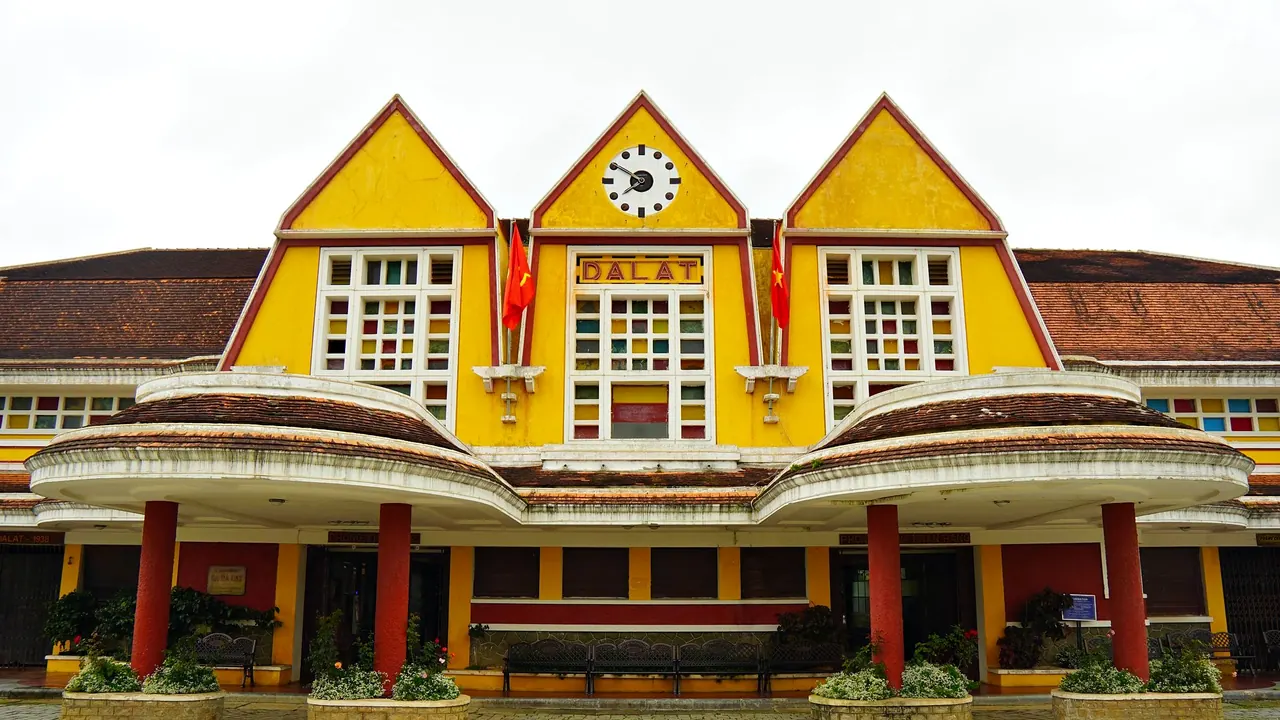
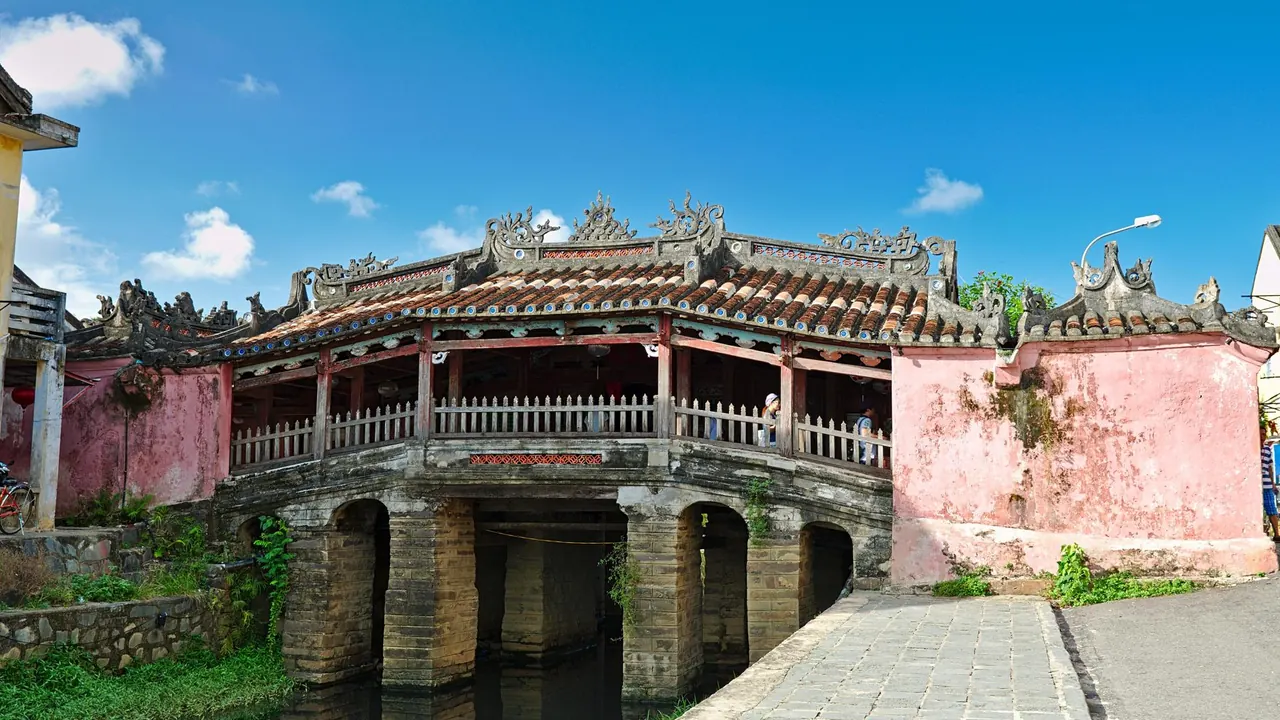
Photos: Da Lat by Pham Huynh Tuan Vy, Pexels License; Hoi An by François Guerraz, CC BY-SA 3.0, cropped.
Da Lat or Hoi An?
Our verdict in twelve categories, each scored against the same fixed benchmark cities, and the climate month by month, so you can choose for your trip.
Choose Da Lat for
- nature and the outdoors
- prices
Da Lat is the pick for travellers who want cool mountain air and something active to do in it. Pine hills, lakes and waterfalls start at the edge of town, and canyoning, mountain biking and treks to minority villages are easy to arrange. It is also among the cheapest places in Vietnam to stay. The cost is distance from everything else: there is no sea and little nightlife, and most of the sights are spread across the hills.
Choose Hoi An for
- beaches
- day trips
- shopping
Hoi An suits nearly every other kind of trip. Its old merchant town is the stronger sight, its noodles and dumplings are found nowhere else, and a flat bike ride takes you to a long sandy beach. Tailors, spas and the Cham ruins at My Son are all close by. It is the better choice for a first trip to Vietnam, for families and for anyone who wants culture and the coast in one stay, as long as the dates avoid the stormy autumn.
Scoreboard
Twelve categories on one fixed scale from 0 to 100. The shaded stretch is the gap between the two.
Your match
Pick a travel style or drag the sliders, and both match scores follow your weighting.
Wins on nature and the outdoors and prices with your weighting.
Wins on beaches and day trips with your weighting.
What matters to you?
Category by category
What the scores mean for a trip.
Beaches & swimming
Da Lat has no beach at all. It sits on a plateau, and the nearest sand, at Ninh Chu Bay or Nha Trang, is a slow drive away down winding passes, too far to go there and back in an afternoon. Its lakes are for pedal boats, not swimming.
Hoi An has the coast on its doorstep. An Bang is about 5km away through rice fields, and the sand runs almost unbroken north towards Da Nang, so quieter stretches are easy to find. Swimming is easy from spring to late summer. In autumn the monsoon brings heavy surf and the beach is for walking only.
Food & drink
Hoi An has a cuisine of its own, and Da Lat does not. Cao lau, white rose dumplings, Hoi An chicken rice and the town's well-stuffed banh mi are worth travelling for. Cooking classes that start at the river market or the Tra Que vegetable gardens are a good way into them.
Da Lat's food is about the highlands themselves: produce from the farm valleys, grilled rice paper and bánh căn at the night market, and hotpot with wild greens on cold evenings. Its strongest point is coffee, arabica grown on nearby slopes and drunk on terraces above the pines. Neither town offers much fine dining or international food.
Culture & sights
Hoi An's old town is a complete historic port. Wooden merchant houses, the covered Japanese Bridge and the Chinese assembly halls show centuries of trade on the Thu Bon river, and the streets are at their best by lantern light.
Da Lat's heritage is newer and more scattered. It is a French hill station of colonial villas, a cathedral, an Art Deco railway station and Bao Dai's Summer Palace. Its most memorable sights are the eccentric ones: the Crazy House and the porcelain-mosaic Linh Phuoc pagoda. It makes a fun stop, but it has less depth than Hoi An.
Nightlife
Both towns go quiet early, and neither has a real club. Hoi An has a little more going on after dark. You can float a candle on the river, and the backpacker bars on An Hoi islet and the beach bars at An Bang stay open a bit later. If you want a big night, Da Nang is close.
Da Lat's evenings centre on the night market, a café and an early night against the cold. There are a few backpacker bars, including one famous for its maze of rooms, and little else.
Nature & outdoors
Da Lat has the more dramatic and active landscape. Pine hills, lakes and waterfalls surround the town, Langbiang mountain rises just to the north, and the montane forest of Bidoup-Nui Ba lies beyond it. Canyoning, abseiling, downhill biking and village treks are all well organised.
Hoi An's nature is gentler and closer to the water. You can cycle through paddy fields, take a basket boat through the nipa palm channels of Cam Thanh, or snorkel over the Cham Islands reef. For something wilder, Son Tra and the Hai Van Pass are about an hour and a half away.
Day trips
Hoi An has far more within an easy day. The temple ruins of My Son are about an hour inland. Da Nang, with the Museum of Cham Sculpture and the Marble Mountains on the way, makes a second good outing.
Da Lat is cut off by its mountains. Most excursions stay in the nearby hills: K'Ho villages, coffee farms and silk workshops. The one big trip is down the Ngoan Muc pass to the Cham towers and craft villages near Phan Rang, which makes a long day.
Good for families
Hoi An is the easier of the two with children. The old town is compact and partly car-free. Lantern making, basket boats and bike rides through the paddies keep children busy, and the beach is gentle for young swimmers in the calm season. Midday heat and the autumn storms are the drawbacks.
Da Lat is built for Vietnamese family trips, with strawberry picking, a mountain coaster down to Datanla falls, a cable car over the pines and cool weather. But the streets are steep, most attractions need a taxi, and teenagers may find the many photo stops twee.
Getting around
In Hoi An, flat ground and a bicycle get you almost everywhere. The old town is closed to motor traffic for much of the day, and the beach, rice fields and villages are all an easy ride away. You only need taxis or a driver for Da Nang, the airport and My Son.
Da Lat is harder to get around. The centre by Xuan Huong Lake is walkable but hilly, and its pavements are taken over by parked scooters. Most of the sights are spread across the hills, so taxis, ride-hailing apps or a hired motorbike driver are part of every day.
Shopping & style
Hoi An is a real shopping stop because of its tailors. You can have a suit, coat or pair of shoes made to measure, with silk lanterns, ceramics and carvings around them, though many shops sell the same things.
In Da Lat, shopping mostly means things to eat and drink: candied fruit, strawberry jam, artichoke tea and local coffee beans from the central market. Its other speciality is the woollen hats and second-hand jackets sold at the night market for the cold evenings.
Affordability
Both are very cheap, but Da Lat makes a budget go further. Guesthouses overlooking the pines, night-market dinners and scooter hire all cost very little, and most sights charge only a small entry fee. Rooms fill up and get more expensive only when domestic visitors arrive for Lunar New Year and the long national breaks around Reunification Day and National Day.
Hoi An comes with a few extra costs. The old town charges an entry fee for its heritage sites, the riverfront restaurants charge more for less, and some beach resorts cost as much as resorts anywhere. Family homestays, street food and free hotel bicycles still keep a comfortable stay cheap.
Live music & performing arts
Neither town has a theatre or concert season, so the difference is in the type of show. Hoi An stages short shows for visitors: the sung card game bai choi in the old town, folk music and dance at a traditional arts house, and a large outdoor history show on a river island.
Da Lat's music is more intimate. It is mostly acoustic evenings in small cafés where local singers perform ballads about the city, with occasional gong music from the Central Highlands.
Wellness & relaxation
Hoi An is better set up for a restful stay. There are spas at every price, from simple foot-massage parlours to resort treatment centres, yoga classes are easy to find, and resorts among the paddies or by the sea are made for lazy days.
Da Lat offers a different kind of rest: cool air, mist over the lakes and long mornings over coffee. Massage in town is cheap, but only a few villa resorts in the pines have proper spas. Neither town has hot springs or a bathing tradition.
When should you go?
Pick your month. The climate figures are measured averages, not a forecast.
Da Lat in July
Hoi An in July
Daytime high, °C
Rainfall in the month, mm
Where the figures come from
Da Lat has no weather station within reach, so its figures come from a gridded climate model rather than a measured record, and read a broad area rather than the city itself.
Temperature and rainfall are climate normals, averaged over the years shown. Da Lat: 1991-2020 normals, TerraClimate 4 km grid at the town, no weather station within 90 km. Hoi An: 1991-2020 normals, Da Nang (23.5 km from centre).
The two climates hardly overlap. Da Lat stays like spring all year, with daytime highs never much above 25°C, so walking is comfortable in every month. What changes is the rain. December to March is dry and clear, which makes it the best time for trekking and canyoning. From April the afternoon downpours build, and they stay heavy until October, which leaves trails muddy and hill roads slick.
Hoi An is a lowland town and much hotter. February to April is the sweet spot: dry, sunny and warm without being draining. From May the sea is warm enough to swim in at around 28°C and the days are long and sunny, but highs of 35°C in June and July make midday sightseeing hard work. September to December is the monsoon. October alone can bring 726mm of rain, along with floods in the old town and red flags on the beach. In those months Da Lat is wet as well, but it is the better of the two.
Which traveller are you?
On a beach and sun trip, Hoi An is the only real choice. An Bang's pale sand is a short cycle from the old town, and the water is warm and calm from spring to late summer. From Da Lat the sea is hours away down mountain passes.
For an outdoors trip, Da Lat comes out ahead. Langbiang mountain, the forests of Bidoup-Nui Ba, canyoning at Datanla and multi-day village treks give it a real mountain playground. Hoi An's countryside is flat paddy fields, better suited to gentle bike rides.
On a shopping trip, choose Hoi An for its tailoring workshops. They make suits, dresses, shoes and bags to measure within days, and there are also silk lanterns and ceramics to take home. Da Lat's market mostly sells jam, coffee, tea and woollen hats.
Before you go
| Measure | Da Lat | Hoi An |
|---|---|---|
| Official language | Vietnamese | Vietnamese |
| Currency | Dong (VND) | Dong (VND) |
| Sockets | ACFG220 V, 50 Hz | ACFG220 V, 50 Hz |
| Driving side | Right | Right |
| Time zone | UTC+7 | UTC+7 |
| Emergency number | Police 113, ambulance 115, fire 114 | Police 113, ambulance 115, fire 114 |
| Elevation | 1,500 m | 13 m |
| Main airport | Lien Khuong Airport (DLI)22 km from centre7 non-stop destinations | Da Nang International Airport (DAD)23 km from centre47 non-stop destinations |
By the numbers
| Measure | Da Lat | Hoi An |
|---|---|---|
| City population | 406,105 | 121,716 |
| People per km² | 1,032 | - |
| Museums within 10 km | 0 | 5 |
| UNESCO World Heritage sites within 50 km | 0 | 2 |
| Swim season, months above 21 °C | - | 12 months |
Where else could you go?
Every comparison below shares a destination with this one, so you can follow Da Lat or Hoi An somewhere new.
- Da Nangvs Hoi An
- Nha Trangvs Da Lat
- Huevs Hoi An
- Ho Chi Minh Cityvs Da Lat
- Phnom Penhvs Da Lat
- Nha Trangvs Hoi An