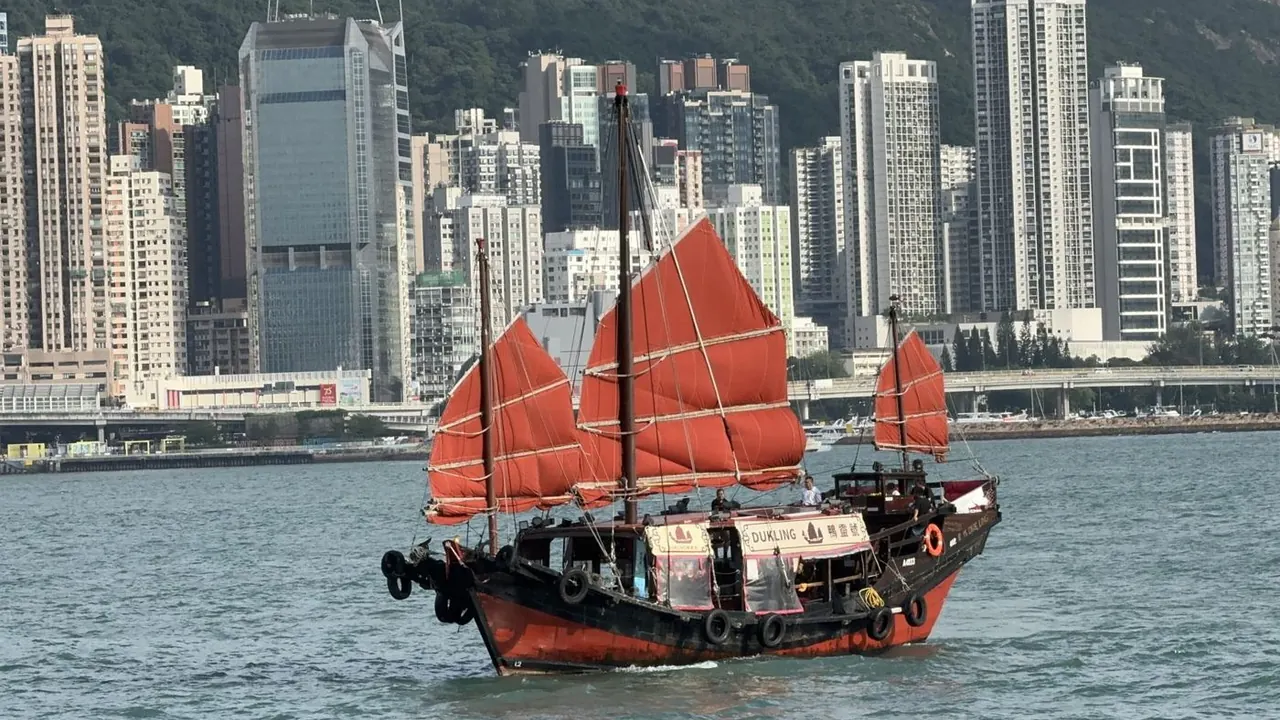
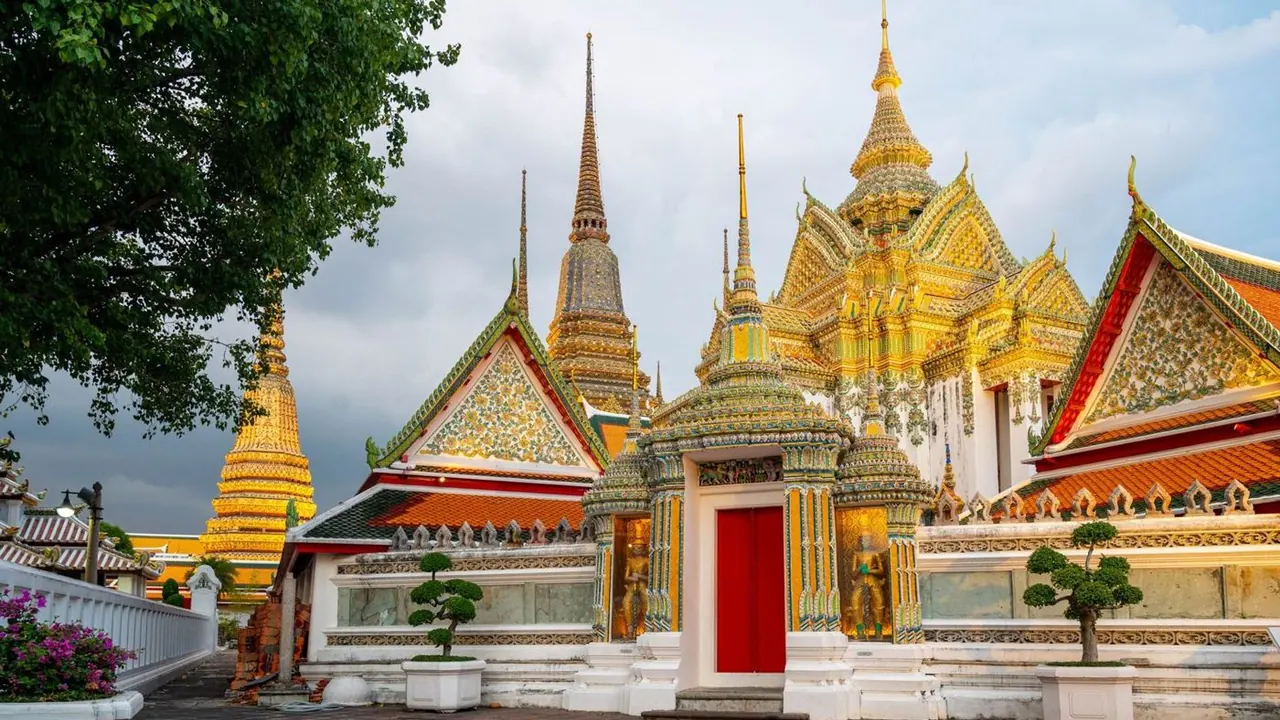
Photos: Hong Kong by LN9267, CC BY-SA 4.0, cropped; Bangkok by Lu Zhao, Pexels License.
Hong Kong or Bangkok?
Our verdict in twelve categories, each scored against the same fixed benchmark cities, and the climate month by month, so you can choose for your trip.
Choose Hong Kong for
- nature and the outdoors
- getting around
- beaches
Choose Hong Kong if you want a city that runs like clockwork with wild country right behind it. The MTR and ferries put ridge walks, island villages and warm beaches within easy reach, children are well looked after, and the shopping goes deeper. The catch is the high cost of hotels and their small rooms, so it rewards a bigger budget or a shorter stay.
Choose Bangkok for
- prices
- wellness
- culture and sights
Bangkok suits travellers who want their money to go further and their days built around eating, temples and late nights. The gilded old city on Rattanakosin Island, a massage parlour on almost every street and evenings that range from backpacker Khao San to polished Thonglor cocktail bars make it the stronger choice for culture and nightlife. The trade-off is heat, slow traffic and pavements that make walking hard work.
Scoreboard
Twelve categories on one fixed scale from 0 to 100. The shaded stretch is the gap between the two.
Your match
Pick a travel style or drag the sliders, and both match scores follow your weighting.
Wins on nature and the outdoors and getting around with your weighting.
Wins on prices and wellness with your weighting.
What matters to you?
Category by category
What the scores mean for a trip.
Beaches & swimming
Neither city is a beach destination, but Hong Kong at least has sand inside its borders. Repulse Bay and Deep Water Bay are a short bus ride from Central, and Shek O and Big Wave Bay feel like village outings. Sai Kung's clearer eastern beaches are worth the boat ride or hike, and in season the gazetted beaches have lifeguards and shark nets.
Bangkok's own shore is mudflat and mangrove, so swimming in the city means a hotel pool, often one on a rooftop. Bang Saen and Pattaya are one and a half to two hours away, which is why most visitors add separate nights on the islands or at Hua Hin.
Food & drink
Both are among Asia's great eating cities, and what separates them is flavour and setting. Bangkok's cooking is spicy, sour and full of chilli, eaten at plastic tables from breakfast until late at night. Yaowarat Road, Banglamphu and the produce halls of Or Tor Kor are the places to graze.
Hong Kong is the home of refined Cantonese cooking, which is subtler: dim sum in teahouses, roast goose, wonton noodles and live seafood in Sai Kung or on Lamma, plus the cha chaan teng diner found nowhere else. At the top end, Central's acclaimed Chinese and French dining rooms compete with Bangkok's ambitious kitchens reworking regional Thai food.
Culture & sights
Bangkok has by far the richer set of historic sights. The Grand Palace and Wat Phra Kaew, the Reclining Buddha at Wat Pho and the porcelain-studded tiers of Wat Arun sit close together on either side of the river, with dozens of working temples beyond. Its museum list is shorter.
In Hong Kong the main sight is the city itself: the skyline from the Tsim Sha Tsui waterfront or Victoria Peak, the trams and the Kowloon tenements, with little old fabric left. Its strength is in museums, with M+ and the Hong Kong Palace Museum in West Kowloon, so it suits gallery-goers better than lovers of historic buildings.
Nightlife
Bangkok's nights are bigger and more varied. There are cocktail bars and clubs in Thonglor and Ekkamai, the cheap, loud strip of Khao San Road, Silom's gay scene and rooftop bars high above the river, and the street food stalls keep feeding people after closing.
Hong Kong concentrates its nights in Lan Kwai Fong's street crowds, the smaller cocktail bars of Soho and Sheung Wan and the later, rougher bars of Wan Chai. There are fewer clubs and drinks cost more, though karaoke and beer at Kowloon's seafood stalls make a more local evening.
Nature & outdoors
Here Hong Kong is in a different league. Country parks cover much of the territory, and the Dragon's Back, Lantau Peak and the MacLehose Trail are often less than an hour away by public transport. Sai Kung adds hexagonal rock columns and sea caves to explore by kayak, and Mai Po draws migratory birds in winter.
Bangkok has Lumphini Park's monitor lizards and cycling on Bang Krachao's raised paths. Khao Yai's forests and Kanchanaburi's limestone country need an overnight stay, and the heat makes long activity in the middle of the day hard going.
Day trips
Both cities have strong day trips, but of different kinds. Bangkok's are about history and canal life: Ayutthaya's ruined temples explored by bicycle, the Amphawa floating market, the Maeklong railway market, and the war sites of Kanchanaburi as a long day out.
Hong Kong's day trips cross a border or a stretch of water. Macau's Portuguese squares are an hour away by ferry and Guangzhou is less than an hour by high-speed train. Car-free Lamma, Cheung Chau and the stilt houses of Tai O are closer still. For any trip into the mainland, check the entry rules first.
Good for families
Hong Kong is the easier city with children. It is safe, clean and simple to move around, with two big theme parks, the pandas and aquarium at Ocean Park, the Peak Tram, the Star Ferry and the science museums in Tsim Sha Tsui. The main drawbacks are cramped hotel rooms and weekend crowds.
Bangkok welcomes children warmly and has Safari World, an aquarium and large play areas in the malls. But heat, broken pavements and slow traffic tire small children out, so days need to be short and planned around the pool.
Getting around
Hong Kong is one of the easiest cities anywhere to get around. The MTR links the airport, both sides of the harbour and the New Territories, one stored-value card covers trams, buses and ferries, and covered walkways and the Mid-Levels escalator help on steep, humid days.
Bangkok's Skytrain, MRT and river boats work well, but the old city is largely off the rail network and road traffic crawls. Walking between stations is a struggle, so it is best to base each day on one district.
Shopping & style
Hong Kong has the edge. Central and Canton Road are lined with luxury flagships, Causeway Bay and Admiralty have huge malls, and there is no sales tax. The markets of Mong Kok and Sham Shui Po and the antique shops of Hollywood Road are as much sightseeing as shopping.
Bangkok comes a close second and is better for bargaining and crafts. Chatuchak Weekend Market has thousands of stalls, Pratunam sells clothing wholesale, and Thai silk, celadon and benjarong porcelain make good things to take home, alongside the linked malls around Siam.
Affordability
The gap here is wide. In Bangkok, meals, transport, massages and even hotels with rooftop pools cost little, and the expensive exceptions are few: imported drinks, rooftop bars and the entry fee at the Grand Palace.
In Hong Kong the hotel room is the biggest cost, often small and among the dearest in Asia, and Western dining in Central costs as much as in a major Western city. Eating in cha chaan teng diners, riding the Star Ferry and hiking the free trails keep daily spending down, but the base cost stays high.
Live music & performing arts
Neither city is a destination for the performing arts, but each has a classical form worth an evening. In Bangkok it is khon, the masked Ramakien dance drama staged at the Sala Chalermkrung Royal Theatre and the National Theatre. Muay Thai at Rajadamnern stadium adds its own ritual music.
Hong Kong has Cantonese opera at the Xiqu Centre and in bamboo theatres in the villages, and two orchestras on the harbourfront, but most local theatre is performed in Cantonese.
Wellness & relaxation
Bangkok makes it easier to fit relaxation into a day. Traditional Thai massage is taught and given at Wat Pho, shopfront parlours stay open late on every street, and the grand hotels have riverside spas. The city itself is not calm, so the rest comes in short doses.
Hong Kong has foot reflexology on almost every block in Kowloon, traditional Chinese medicine and polished hotel spas, but its pace is even faster. For real quiet you have to leave for Chi Lin Nunnery, Ngong Ping or the car-free islands.
When should you go?
Pick your month. The climate figures are measured averages, not a forecast.
Hong Kong in July
Bangkok in July
Daytime high, °C
Rainfall in the month, mm
Temperature and rainfall are climate normals, averaged over the years shown. Hong Kong: 1991-2020 normals, King's Park (4.4 km from centre). Bangkok: 1991-2020 normals, Bangkok (5.7 km from centre).
Bangkok is hot all year, with daytime highs close to 33°C in every month, so the thing to plan around is rain rather than temperature. November to February is dry and sunny, the most comfortable time to walk the old city. March and April build to the hottest weeks, and from May the monsoon sets in, peaking in September at about 330mm. The beaches are a separate trip out of town in any season.
Hong Kong has real seasons. Winter is mild, about 19°C in January, and October to December is dry and clear, the best stretch for walking and hiking. Spring is often grey, and May to September brings very heavy rain, wettest in June, but the sea is warm enough to swim in, around 29°C in high summer. For a trip taking in both cities, November and December suit each of them well.
Which traveller are you?
On a trip on a tight budget, Bangkok makes the money last. Stay in Banglamphu or Silom's side streets rather than Sukhumvit, and save imported drinks for one rooftop evening. In Hong Kong the hotel takes most of the budget, so keep the stay short.
On a relaxing and wellness trip, Bangkok is the easier place to slow down. Sightsee in the cooler morning, book a massage for the hottest hours and end the day by the pool, ideally at a riverside hotel with its own spa. In Hong Kong, rest has to be planned rather than dropped into.
For an outdoors trip, choose Hong Kong. Come in the dry months from October, stay near an MTR station and spend the morning on a trail and the afternoon back in town. From Bangkok, real landscape means a separate overnight trip.
Before you go
| Measure | Hong Kong | Bangkok |
|---|---|---|
| Official language | Standard Chinese | Thai |
| Currency | Hong Kong Dollar (HKD) | Baht (THB) |
| Sockets | G220 V, 50 Hz | ABCF220 V, 50 Hz |
| Driving side | Left | Left |
| Time zone | UTC+8 | UTC+7 |
| Emergency number | 999 | Police 191, ambulance 1669, fire 199 |
| Elevation | 7 m | 2 m |
| Main airport | Hong Kong International Airport (HKG)25 km from centre148 non-stop destinations | Suvarnabhumi Airport (BKK)26 km from centre150 non-stop destinations |
| Public holidays this year | 17 days | - |
By the numbers
| Measure | Hong Kong | Bangkok |
|---|---|---|
| City population | 7,413,070 | 5,676,648 |
| People per km² | - | 3,619 |
| Museums within 10 km | 39 | 59 |
| UNESCO World Heritage sites within 50 km | 0 | 0 |
| Swim season, months above 21 °C | 8 months | 12 months |
Where else could you go?
Every comparison below shares a destination with this one, so you can follow Hong Kong or Bangkok somewhere new.