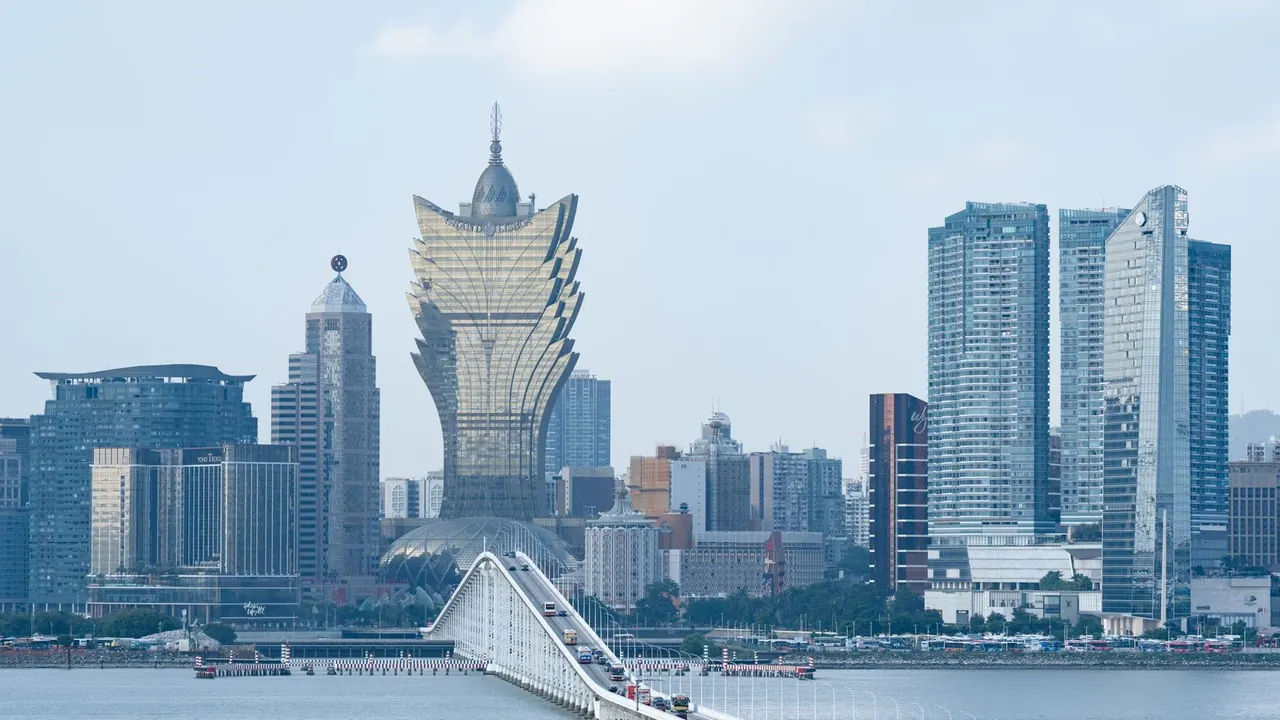
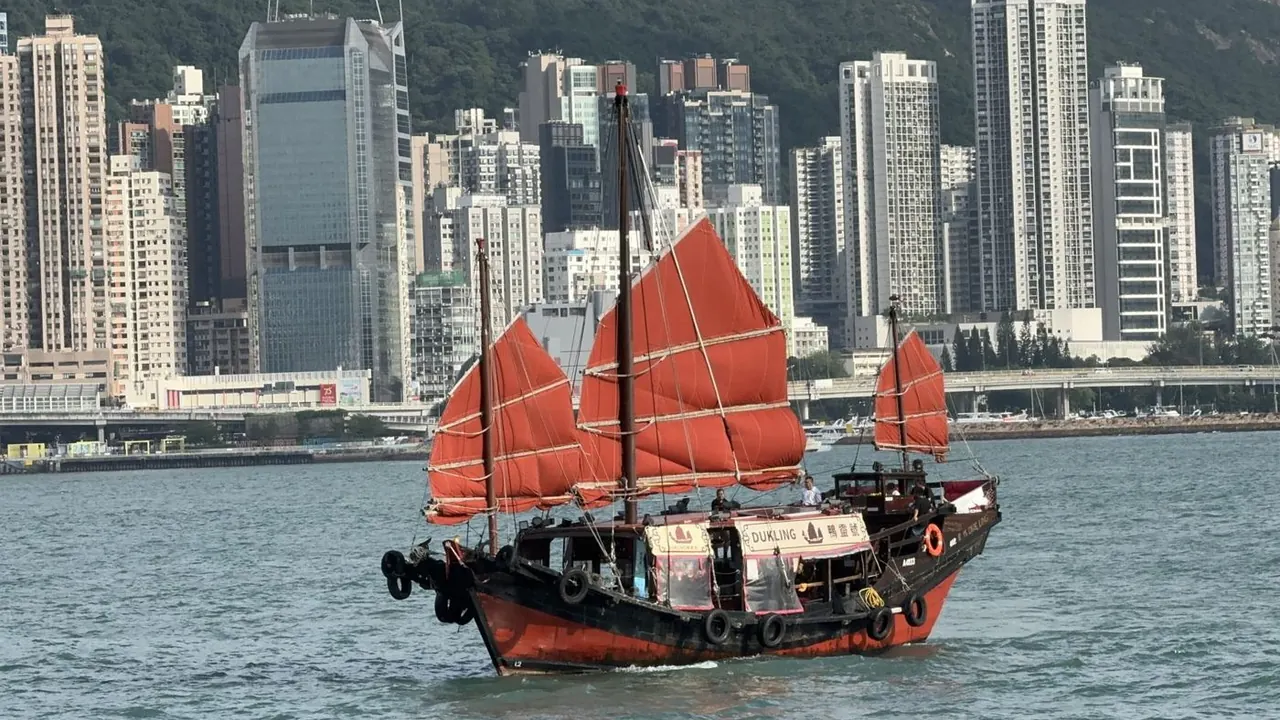
Photos: Macau by tian Jin, Pexels License; Hong Kong by LN9267, CC BY-SA 4.0, cropped.
Macau or Hong Kong?
Our verdict in twelve categories, each scored against the same fixed benchmark cities, and the climate month by month, so you can choose for your trip.
Choose Macau for
- prices
- culture and sights
Macau rewards a narrower, slower visit. Its UNESCO-listed old centre of churches, fortresses and mosaic squares matches anything in Hong Kong for history, Macanese Creole cooking can't really be found anywhere else, and the Cotai resorts make a pool-and-spa stay simple. It suits a couple on a short break, or a traveller watching costs who can come midweek, more than anyone looking for nightlife, beaches or open country.
Choose Hong Kong for
- nature and the outdoors
- getting around
- shopping
Hong Kong is the stronger choice for most trips, and especially for anyone who wants range. It pairs some of the best Cantonese eating anywhere with steep country parks and ridge walks reachable by MTR or bus, a proper bar scene, big street markets and a transport system that makes all of it easy. Families, hikers, shoppers and food lovers all get more out of it, as long as they accept small, expensive hotel rooms.
Scoreboard
Twelve categories on one fixed scale from 0 to 100. The shaded stretch is the gap between the two.
Your match
Pick a travel style or drag the sliders, and both match scores follow your weighting.
Wins on prices and culture and sights with your weighting.
Wins on nature and the outdoors and getting around with your weighting.
What matters to you?
Category by category
What the scores mean for a trip.
Beaches & swimming
Hong Kong is the better choice if swimming matters. Repulse Bay and Deep Water Bay are a short bus ride from Central, Shek O and Big Wave Bay make a village-style outing, and Cheung Sha on Lantau and the clear-water beaches of Sai Kung give you quieter sand, most with lifeguards and shark nets in season.
Macau has only Hac Sa and Cheoc Van on Coloane, and the Pearl River leaves their water brown and silty. They are pleasant for a stroll or a barbecue, but anyone who wants to swim will end up in a Cotai resort pool.
Food & drink
Both are cities you can plan a trip around eating in, but Hong Kong goes deeper. It has Cantonese cooking at its most refined, from morning dim sum in big teahouses and roast goose to wonton noodles and Sai Kung seafood picked from the tank. On top of that come its own cha chaan teng diners, open-air dai pai dong stalls and some of Asia's most acclaimed dining rooms.
Macau's strength is something Hong Kong lacks: Macanese Creole cooking such as minchi, African chicken and curry crab, plus Portuguese bacalhau and wine in old-fashioned dining rooms. The egg tarts and pork chop buns near St Paul's, and a slow seafront lunch in Coloane village, make it a rewarding food stop, though a narrower one.
Culture & sights
The two are level here, but they offer different things. In Hong Kong the main sight is the city itself: the harbour skyline from Tsim Sha Tsui or the Peak, the trams and Kowloon's stacked tenements. Its serious museums are M+ and the Hong Kong Palace Museum, and its older fabric survives only in fragments such as Man Mo Temple and the walled villages.
Macau has the more complete historic townscape. Its UNESCO-listed centre runs from the Ruins of St Paul's across Senado Square to A-Ma Temple, with Monte Fort and Guia Fortress nearby, and it records four centuries of Portuguese and Chinese life side by side. It is compact enough to see in a day or two, with the casino skylines as an odd modern counterpoint.
Nightlife
Hong Kong has a real night out. Lan Kwai Fong's crowds drink in the street, Soho and Sheung Wan have careful cocktail bars, Wan Chai runs into the early hours, and in Kowloon you get beer at seafood stalls and karaoke, even if clubs are few and drinks are dear.
In Macau, evenings revolve around the casinos and the polished lounges inside the resorts. There is no bar district to wander, and the old centre goes quiet by late evening, so it suits a drink with a view more than a night of bar-hopping.
Nature & outdoors
This is where the two differ most. In Hong Kong, country parks cover much of the territory and green hills rise right behind the towers. You can walk the Dragon's Back above Shek O, climb Lantau Peak for sunrise, explore Sai Kung's hexagonal volcanic columns by boat, or watch winter birds at Mai Po.
Macau is almost entirely built up or reclaimed. Coloane's wooded hills, Seac Pai Van Park and the loop around Guia Hill offer a breath of green, but for any real walking, Macau visitors cross to Hong Kong.
Day trips
Hong Kong has more on its doorstep. Macau itself is the classic outing, the high-speed train reaches Guangzhou in under an hour, and Shenzhen is closer still. Its outlying islands, Cheung Chau, Lamma and Tai O's stilt houses, make good days out with no border to cross.
From Macau the best trip by far is Hong Kong, backed up by Zhuhai, Zhongshan and Guangzhou over the land border. Every one of those outings means passport control, and the mainland may need a visa.
Good for families
Hong Kong works far better for a family trip. It has Disneyland on Lantau and Ocean Park on the south side, plus the Ngong Ping cable car, the Star Ferry and the science and space museums. Safe streets and easy transport help too, though weekend crowds and cramped hotel rooms take some patience.
Macau has the Science Center with its planetarium, the Giant Panda Pavilion on Coloane and elaborate resort pools. Even so, children are kept off the casino floors that the city is built around, and the old centre's stairways are a struggle with a pushchair. It works better as a stop on a Hong Kong trip than as a vacation in itself.
Getting around
Hong Kong's transport is among the easiest anywhere. The spotless MTR links the airport, both sides of the harbour and the New Territories, and one stored-value card covers it along with the trams, buses and ferries. The Mid-Levels escalator and covered walkways take the edge off the hills.
Macau is small enough that nothing is more than half an hour away, and the old peninsula is best on foot. Getting between it, Taipa and Cotai, though, means crowded buses with confusing routes, the Taipa light rail, free casino shuttles and taxis that can be hard to find at busy times.
Shopping & style
Hong Kong offers luxury and character together. It has flagships on Canton Road and in Central, huge malls with no sales tax, and street shopping that is a sight in its own right: the Ladies' Market, the goldfish and bird markets, Sham Shui Po's fabric lanes, Hollywood Road's curios and tailors in Tsim Sha Tsui.
Macau's resort malls, some built as mock Venetian canals, are a serious stop for watches, jewellery and luxury labels. Beyond them the choice shrinks to almond cookies, jerky, Portuguese tiles and tinned fish, with few independent boutiques.
Affordability
Macau is the cheaper of the two, though how much cheaper depends heavily on timing. Resort rooms can be reasonable on weeknights but climb steeply at weekends and during mainland festival weeks, and restaurants inside the casinos are expensive. Walking the old centre, the free shuttles and the egg tarts cost little.
Hong Kong is costly mainly because of its hotels, which are tiny and among the dearest in Asia, and because of Western dining and drinks in Central. Day to day it can be frugal: the Star Ferry, noodle shops, neighbourhood dim sum and the hiking trails are all cheap or free.
Live music & performing arts
Hong Kong has the fuller calendar. The Philharmonic and the Sinfonietta play at the waterfront Cultural Centre, and Cantonese opera, with its painted faces and loud percussion, is staged at the Xiqu Centre and in village bamboo theatres. There is also the Hong Kong Arts Festival, plus a few jazz bars in Central to drop into.
Macau has the historic Dom Pedro V Theatre, the Macao Orchestra and an autumn International Music Festival, while the Cotai arenas host Cantonese and Mandarin pop stars. On an ordinary evening there is little going on, so check listings before you go.
Wellness & relaxation
Neither city is restful, and neither has a bathing culture, but they relax you in different ways. In Hong Kong it is part of street life, with foot reflexology parlours on almost every Kowloon block and traditional Chinese medicine and herbal tea shops. For real quiet you go out to Chi Lin Nunnery or car-free Lamma.
Macau's strength is the cluster of large resort spas with pools and saunas in Cotai, which makes a lazy pool-and-treatment day easy. Away from them, its calm is in Coloane village and the old streets of Taipa.
When should you go?
Pick your month. The climate figures are measured averages, not a forecast.
Macau in July
Hong Kong in July
Daytime high, °C
Rainfall in the month, mm
Temperature and rainfall are climate normals, averaged over the years shown. Macau: 1991-2020 normals, Taipa (3.9 km from centre). Hong Kong: 1991-2020 normals, King's Park (4.4 km from centre).
The two cities share almost the same climate, so timing works the same for both. October and November are the best months: highs fall from about 28°C to the mid-20s, the rain has mostly stopped, there is plenty of sunshine and the sea is still warm enough to swim. December to February is dry and mild, around 19°C, which is good for walking the streets and, in Hong Kong, the best hiking weather of the year, though it is too cool for the beach.
Rain sets in from April, and from May to September both cities are hot, humid and wet, with highs of 31°C to 32°C and frequent storms. Hong Kong gets the heavier downpours, close to 500mm in June, while Macau is a little drier but slightly hotter in high summer. The sea is at its warmest then, so summer is fine for afternoons on Hong Kong's beaches, but sightseeing on foot is draining in both places, and Macau's hilly lanes feel it most.
Which traveller are you?
For an outdoors trip, Hong Kong is the clear choice. The Dragon's Back, Lantau Peak and the MacLehose Trail are all reachable by public transport, and Sai Kung has sea caves and islands for kayaking. Macau has little more than Coloane's short trails.
On a family trip with children, Hong Kong has much more to offer: Disneyland, Ocean Park's pandas and aquarium, the Peak Tram and ferry rides. Macau's science centre and resort pools fill a day or two, but its casino focus and stairways make it harder going with children.
On a trip with a tight budget, Macau is easier on the wallet, provided you come midweek and avoid the mainland's festival weeks. Its historic centre costs nothing to walk and resort shuttles are free, while Hong Kong's hotel rooms are among Asia's costliest.
Before you go
| Measure | Macau | Hong Kong |
|---|---|---|
| Official language | Portuguese, Cantonese, Standard Chinese | Standard Chinese |
| Currency | Pataca (MOP) | Hong Kong Dollar (HKD) |
| Sockets | FGM220 V, 50 Hz | G220 V, 50 Hz |
| Driving side | Left | Left |
| Time zone | UTC+8 | UTC+8 |
| Emergency number | 999 | 999 |
| Elevation | 22 m | 7 m |
| Main airport | Macau International Airport (MFM)7 km from centre41 non-stop destinations | Hong Kong International Airport (HKG)25 km from centre148 non-stop destinations |
| Public holidays this year | - | 17 days |
By the numbers
| Measure | Macau | Hong Kong |
|---|---|---|
| City population | 682,100 | 7,413,070 |
| People per km² | 5,916 | - |
| Museums within 10 km | 28 | 39 |
| UNESCO World Heritage sites within 50 km | 1 | 0 |
| Swim season, months above 21 °C | 8 months | 8 months |
Where else could you go?
Every comparison below shares a destination with this one, so you can follow Macau or Hong Kong somewhere new.