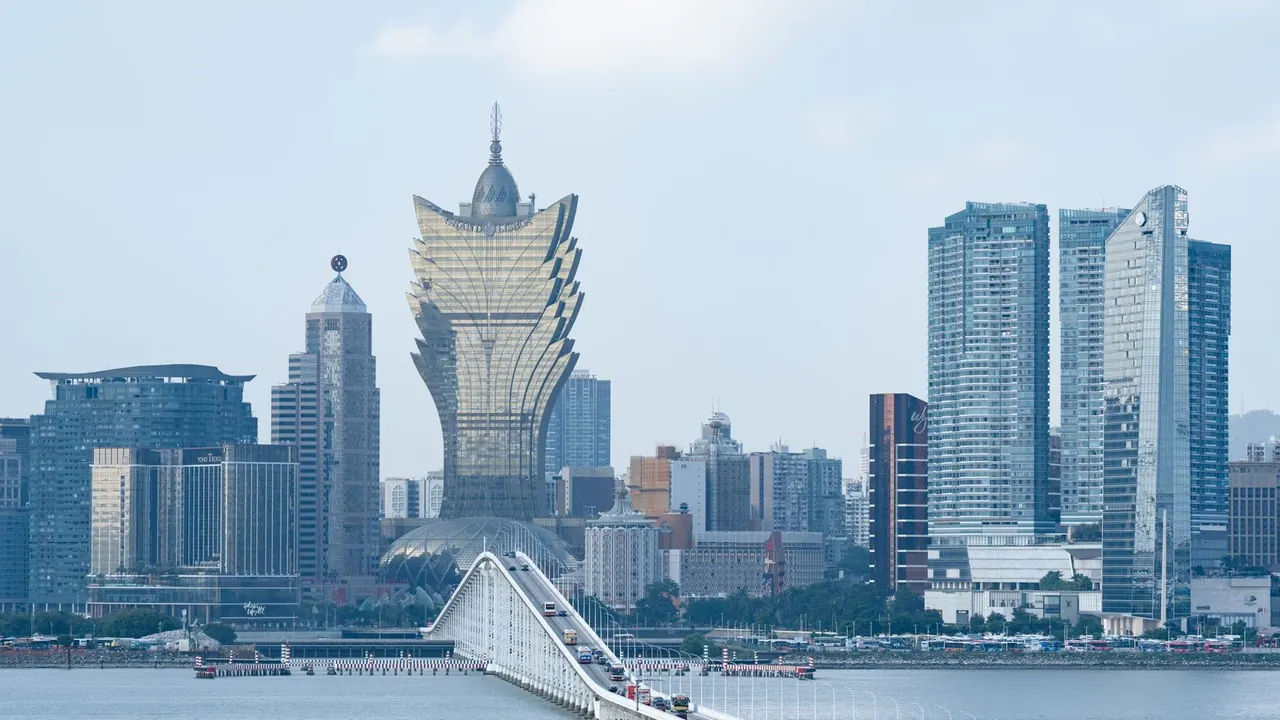
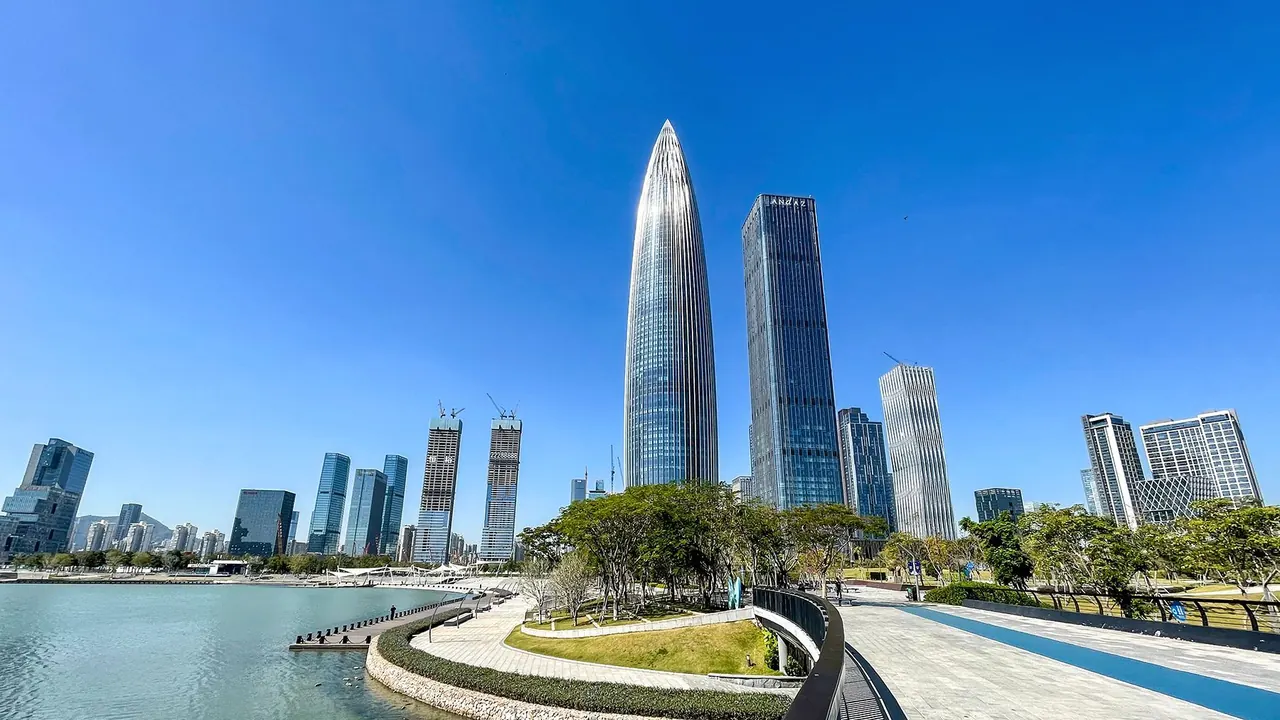
Photos: Macau by tian Jin, Pexels License; Shenzhen by Windmemories, CC BY-SA 4.0, cropped.
Macau or Shenzhen?
Our verdict in twelve categories, each scored against the same fixed benchmark cities, and the climate month by month, so you can choose for your trip.
Choose Macau for
- culture and sights
- food and drink
Macau is the choice for a traveller who wants history and eating packed into a small space. Its UNESCO-listed old centre, where Portuguese churches and Chinese temples stand a few lanes apart, and a Macanese Creole cuisine you will barely find anywhere else, make it ideal for a two or three day stay. It also adds well to a Hong Kong trip. Expect resort pools rather than proper beaches, and almost no countryside.
Choose Shenzhen for
- nature and the outdoors
- wellness
- beaches
Shenzhen suits a longer, more active trip and goes further on a modest budget. It has theme parks and a safari park for children, coastal trails and real swimming beaches on the Dapeng peninsula, all-night bathhouses, and a metro that also takes you to fast trains for Hong Kong and Guangzhou. What it can't offer is an old quarter to wander, and its sights are mostly modern.
Scoreboard
Twelve categories on one fixed scale from 0 to 100. The shaded stretch is the gap between the two.
Your match
Pick a travel style or drag the sliders, and both match scores follow your weighting.
Wins on culture and sights and food and drink with your weighting.
Wins on nature and the outdoors and wellness with your weighting.
What matters to you?
Category by category
What the scores mean for a trip.
Beaches & swimming
Neither city is a beach destination, but Shenzhen has beaches you would actually swim at. On the Dapeng peninsula, Xichong faces open sea with green hills behind it, and Dameisha and Xiaomeisha are long public sands. The catch is that they are an hour or more from the centre, and on summer weekends they get very crowded.
Macau's two beaches on Coloane are pleasant enough for a stroll. Hac Sa has dark sand under pines. But the Pearl River leaves the water silty and brown, so most swimming happens in the Cotai resort pools.
Food & drink
Macau has the more distinctive table. Macanese dishes such as minchi and African chicken come from centuries of mixing, and they sit alongside Portuguese dining rooms, serious Cantonese cooking and egg tarts eaten in the lanes below St Paul's. Food is part of the old town itself, and Coloane's village is good for a long lunch.
Shenzhen eats well in a different way. Because the city is made up of migrants, you get Chaoshan beef hotpot, Hakka chicken, Hunan and Sichuan heat and northern dumplings, plus seafood picked from tanks at Nan'ao and Shekou. But it has no cuisine of its own, most meals are in malls and office districts, and menus are often only in Chinese.
Culture & sights
Macau is clearly ahead here. The Historic Centre runs from Senado Square's wave mosaic up to the façade of St Paul's and on to Monte Fort and Guia lighthouse, and it is a continuous walk through Portuguese and Chinese history. It is compact, so a day or two covers it.
Shenzhen's sights are mostly the story of its own fast rise: the Ping An tower, the Civic Centre roof, the galleries at OCT Loft and the copy-painters of Dafen. Nantou's Ming-era lanes and the Hakka walled villages are older, but they are spread out and less impressive than Macau's core.
Nightlife
Shenzhen gives you more choice of the kind of night you have. There are big-room clubs around Coco Park, terraces and craft beer in Shekou, arts-crowd bars in OCT and late KTV rooms, although the areas are far apart and much of it is indoors.
In Macau, nights out mostly mean the casinos and the polished lounges inside the resorts. Without gambling there is little else, and the old centre goes quiet early.
Nature & outdoors
This is the biggest gap between the two. Shenzhen has Wutong Mountain, a steep climb with views towards Hong Kong, and a coastal trail between headlands and coves on the Dapeng peninsula. You can also kayak on the eastern shore, and the Shenzhen Bay waterfront path passes a mangrove reserve full of wintering waders.
Macau is almost entirely built up or reclaimed. The Coloane hills and the loop round Guia Hill are a breather, not a day out.
Day trips
Both can reach Hong Kong, but Shenzhen makes it far easier, with fast trains to West Kowloon in under half an hour and metro lines to the border. Guangzhou and Foshan are a short high-speed ride away too, and Macau itself is within reach.
From Macau, Hong Kong is about an hour by ferry or across the bridge. Guangzhou means crossing into Zhuhai first. Every trip from Macau involves passport control, and the mainland may need a visa.
Good for families
Shenzhen is made for days out with children. The cluster at Overseas Chinese Town includes Happy Valley's roller coasters and the miniature landmarks of Window of the World, and there is also the Safari Park, the marine park at Xiaomeisha, and malls with play areas. Expect long journeys between them and intense summer heat.
Macau works for a day or two. The Science Center and the Giant Panda Pavilion on Coloane are gentle outings, and resort pools help. Beyond that, the casino focus and the steep stairways of the old town limit it.
Getting around
Shenzhen's metro is the better system, clean and signed in English, and it reaches the airport, theme parks, borders and high-speed stations. But the city stretches some 80km, so crossing it can take half a day, and walking between districts is dull. Set up mobile payments before you arrive.
Macau is the reverse. The system is patchier, with crowded buses, the Taipa light rail and casino shuttles, but nothing is far away and the old peninsula is best explored on foot, hills and stairways included.
Shopping & style
The two are broadly level, but they sell very different things. Macau is about luxury, with watch dealers, jewellers and international fashion houses in the air-conditioned casino malls, plus almond cookies and Portuguese tiles from the old lanes.
Shenzhen is better for browsing and oddities. Huaqiangbei's floors of electronics stalls, the tailors at Luohu Commercial City and Dafen's oil paintings sold by the metre are unique to the city, while its luxury fashion is limited to a few mall floors.
Affordability
Shenzhen is the cheaper stay overall. Its comfortable modern hotels cost much less than in most big international cities, and ordinary meals of noodles, dim sum or hotpot are cheap. Costs rise mainly at the theme parks, the Shenzhen Bay luxury hotels and the imported-drink bars.
In Macau, walking, buses and street snacks are cheap, but room rates jump at weekends and during mainland festival weeks, and casino restaurants are expensive. A midweek visit makes a real difference to the bill.
Live music & performing arts
Neither city is worth planning a trip around for performance, and both have similar programmes. Macau has more history behind its stages: the Dom Pedro V Theatre and its long-running autumn music festival.
Shenzhen has modern halls for its symphony orchestra, touring ballet and acrobatics, plus small live houses near OCT Loft with Chinese indie bands. Most theatre there is in Mandarin.
Wellness & relaxation
Shenzhen has a real culture of relaxation. There are foot-massage parlours on almost every block, multi-floor bathhouses that run all night with pools, saunas and sleeping halls, and hot springs in the nearby hills. Some people cross the border just to spend an evening in one.
Macau's version happens inside the hotels. The large resort spas in Cotai are polished and easy to book as a pool-and-treatment day, and the quiet lanes of Coloane village are the calmest place outside them.
When should you go?
Pick your month. The climate figures are measured averages, not a forecast.
Macau in July
Shenzhen in July
Daytime high, °C
Rainfall in the month, mm
Where the figures come from
Shenzhen has no rain gauge within 25 km of the centre, so its rainfall comes from a gridded climate dataset read at the city rather than from a gauge further away.
Shenzhen's sunshine is measured 28 km from the centre, at King's Park.
Temperature and rainfall are climate normals, averaged over the years shown. Macau: 1991-2020 normals, Taipa (3.9 km from centre). Shenzhen: 1999-2020 (sunshine 1991-2020, rainfall 1991-2020) normals, Shenzhen (4.7 km from centre).
The two cities sit on the same stretch of the Pearl River Delta and share almost the same climate. The best time for both is October to December, when the heavy rain has stopped, daytime highs ease from about 29°C down to around 20°C and walking the streets is comfortable. January and February are mild and dry but cool and quite grey, and spring gets steadily damper. Macau is especially dull then, with less sunshine in March and April than Shenzhen gets.
From May to September both are hot, humid and very wet, with June and August each bringing well over 300mm of rain, and typhoons are possible. That is also the only real swimming season, with the sea around 28°C. In Shenzhen this means trips out to the Dapeng beaches. In Macau most people swim in a resort pool instead. July is the sunniest month in both cities, but heavy showers are still common.
Which traveller are you?
For a culture and arts trip, choose Macau. Its old centre combines four centuries of Portuguese and Chinese building, from the Ruins of St Paul's to A-Ma Temple, and you can walk it all. Shenzhen's history is scattered and modest, and you have to travel to reach it.
On a family trip with children, Shenzhen is the easier base. The Overseas Chinese Town theme parks, the safari park and the marine park at Xiaomeisha could fill several days, and the metro has lifts. Macau has a science centre and pandas, but the city is built around casinos.
For an outdoors trip, Shenzhen is the only real option of the two. Wutong Mountain, the coastal trail across the Dapeng peninsula and the cycle path past the Shenzhen Bay mangroves give you proper days outside. In Macau you get a few short trails on Coloane.
Before you go
| Measure | Macau | Shenzhen |
|---|---|---|
| Official language | Portuguese, Cantonese, Standard Chinese | Putonghua |
| Currency | Pataca (MOP) | Yuan Renminbi (CNY) |
| Sockets | FGM220 V, 50 Hz | ACI220 V, 50 Hz |
| Driving side | Left | Right |
| Time zone | UTC+8 | UTC+8 |
| Emergency number | 999 | Police 110, ambulance 120, fire 119 |
| Elevation | 22 m | 0 m |
| Main airport | Macau International Airport (MFM)7 km from centre41 non-stop destinations | Shenzhen Bao'an International Airport (SZX)28 km from centre174 non-stop destinations |
| Public holidays this year | - | 6 days |
By the numbers
| Measure | Macau | Shenzhen |
|---|---|---|
| City population | 682,100 | 17,494,398 |
| People per km² | 5,916 | 8,759 |
| Museums within 10 km | 28 | 7 |
| UNESCO World Heritage sites within 50 km | 1 | 0 |
| Swim season, months above 21 °C | 8 months | 8 months |
Where else could you go?
Every comparison below shares a destination with this one, so you can follow Macau or Shenzhen somewhere new.
- Hong Kongvs Shenzhen
- Hong Kongvs Macau
- Guilinvs Macau
- Guilinvs Shenzhen
- Hangzhouvs Shenzhen
- Suzhouvs Shenzhen