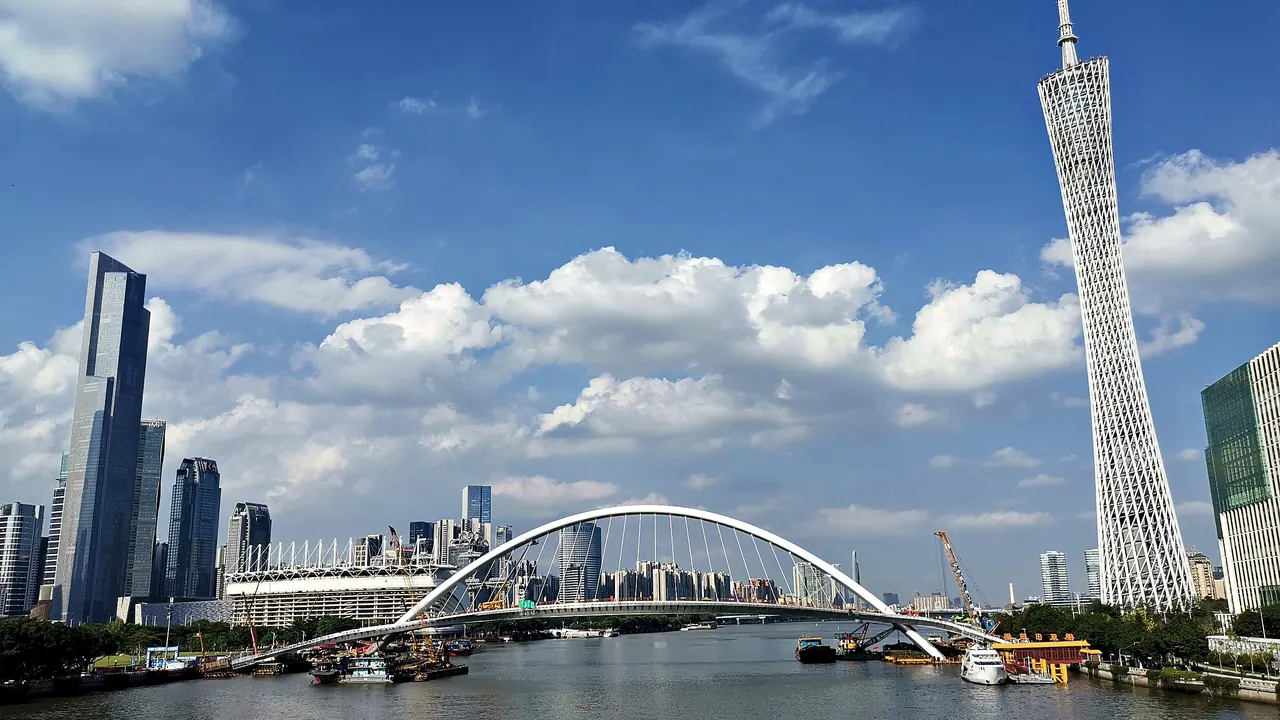
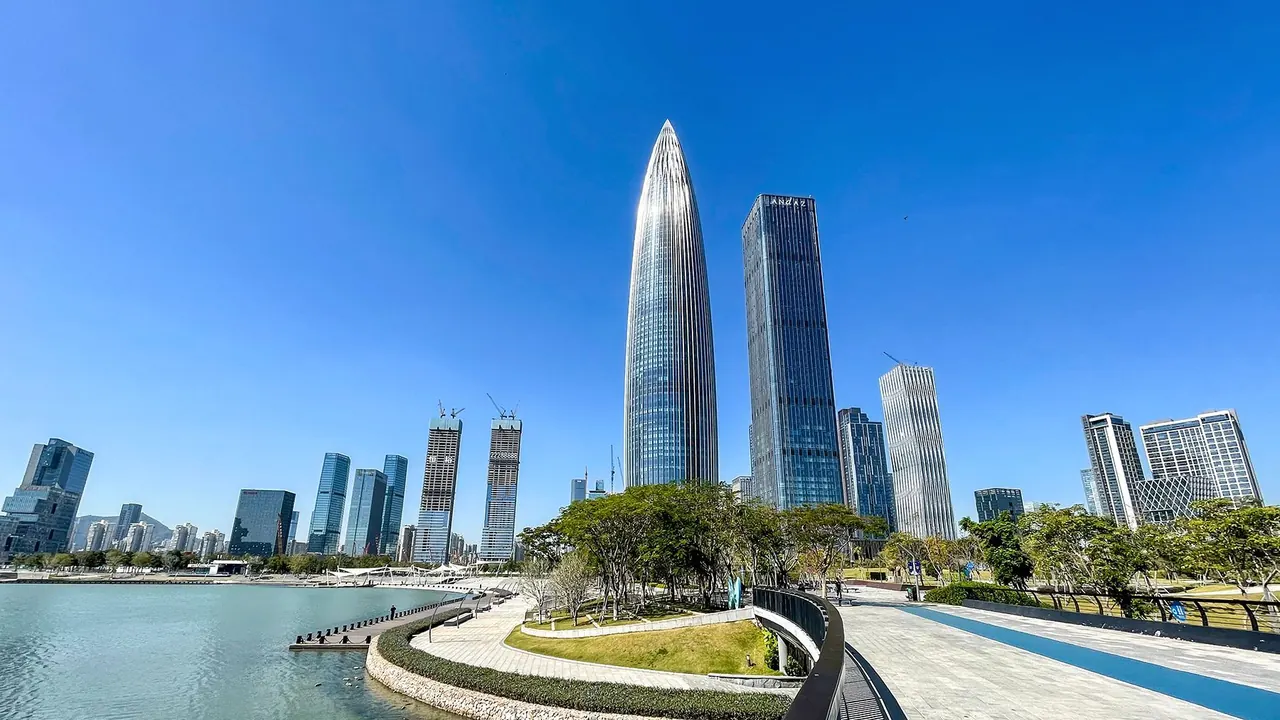
Photos: Guangzhou by Cwek, CC BY-SA 4.0, cropped; Shenzhen by Windmemories, CC BY-SA 4.0, cropped.
Guangzhou or Shenzhen?
Our verdict in twelve categories, each scored against the same fixed benchmark cities, and the climate month by month, so you can choose for your trip.
Choose Guangzhou for
- culture and sights
- food and drink
- live music and the arts
Guangzhou is the better choice when the trip is about eating and about old southern China. It is the home of Cantonese cooking, from morning tea in packed dim sum halls to seafood suppers late at night. Sights such as the carved Chen Clan Ancestral Hall and the colonial villas of Shamian Island carry a history that Shenzhen cannot offer. Evenings can go to Cantonese opera, a living local art still performed in the old western districts, and its neighbour has nothing like it.
Choose Shenzhen for
- beaches
- nature and the outdoors
- wellness
Pick Shenzhen if you want sand, coastal walks and long nights in a bathhouse. Within the city you have real beaches at Xichong on the Dapeng peninsula, a trail between headlands and coves, a stiff climb up Wutong Mountain and huge bathing complexes that stay open all night. It is a modern city with little old fabric, but Guangzhou's temples are only a short train ride away.
Scoreboard
Twelve categories on one fixed scale from 0 to 100. The shaded stretch is the gap between the two.
Your match
Pick a travel style or drag the sliders, and both match scores follow your weighting.
Too close to call, level with your weighting
Wins on culture and sights and food and drink with your weighting.
Wins on beaches and nature and the outdoors with your weighting.
What matters to you?
Category by category
What the scores mean for a trip.
Beaches & swimming
Shenzhen has beaches and Guangzhou does not, and that settles this one. Guangzhou's estuary shore is muddy and industrial, so a summer swim there means a hotel pool or a water park.
Shenzhen's beaches are on the Dapeng peninsula, an hour or more from the centre. Dameisha and Xiaomeisha are crowded public beaches, and Xichong at the tip is a wider, greener curve facing open sea. These are the same beaches a Guangzhou visitor would travel two hours to reach, so for a day at the sea, staying in Shenzhen saves most of the journey.
Food & drink
Guangzhou is where Cantonese cooking began, and food runs through its old neighbourhoods. Mornings start over har gow and pu'er in big tea halls. Roast goose and clay-pot rice come from small shops in Xiguan and Liwan, and congee and double-skin milk are served past midnight.
Shenzhen offers range rather than depth. Its population of migrants cooks Chaoshan beef hotpot, Hakka salt-baked chicken and fiery Hunan dishes, and at Shekou and Nan'ao you pick your seafood from the tanks. The good meals are in malls and office districts rather than historic streets, though, and there is no local cuisine to plan a trip around.
Culture & sights
Guangzhou has the deeper past, although you see it in separate sites rather than an old town. The main ones are the carved Chen Clan Ancestral Hall, the jade burial suit in the Nanyue King's tomb, Guangxiao Temple and the arcaded shophouses of Xiguan. Shamian Island adds colonial villas under banyan trees.
Shenzhen was a group of villages until the late twentieth century, so its sights are mostly the skyline, Civic Centre and the galleries of OCT Loft. Nantou's Ming walls and Hakka walled villages such as Crane Lake are older but far apart. Many visitors staying in Shenzhen go to Guangzhou by train for exactly this kind of history.
Nightlife
Neither city is a place to go for its nights out, and both have bottle-service clubs, cocktail bars and private karaoke rooms. The difference is in the habits around them. In Guangzhou the most local thing to do after dark is siu yeh, a long supper of seafood, barbecue and beer at plastic tables that runs until two or three in the morning.
Shenzhen's nightlife is split into separate areas. Coco Park has big clubs with DJs, Shekou has relaxed international pubs and terraces, and OCT has bars with an arts crowd. There is less life on the streets, but Shekou is the easier place for a foreign visitor to drop in for a drink.
Nature & outdoors
Shenzhen has the better outdoors. Wutong Mountain, at just under 950m, is a real climb with views to Hong Kong. A coastal trail on the Dapeng peninsula runs between rocky headlands and coves, and the path along Shenzhen Bay passes mangroves where wading birds feed in winter.
Guangzhou's green spaces are gentler: the forested low hills of Baiyun Mountain with their cable car, the river promenades and the Haizhu wetland. Its best day in nature is the waterfalls and old forest of Dinghu Mountain, about an hour and a half away.
Day trips
Both cities sit on the Pearl River Delta and share most of the same day trips, so the real difference is which way each one faces. Shenzhen is the better base for Hong Kong, with fast trains reaching West Kowloon in under half an hour, and Guangzhou's temples are only half an hour away in the other direction.
Guangzhou is better placed for trips inland and to the west. Foshan is a metro ride away, and Shunde, Zhaoqing's limestone crags and the Kaiping watchtowers are all within reach. Hong Kong and Macau still work as full days from Guangzhou. From either city, check that your visa lets you back into mainland China.
Good for families
Both cities are easy with children, but their big attractions differ. Guangzhou has one large resort, Chimelong in Panyu, where a huge drive-through safari park with pandas and koalas shares a site with a theme park, a water park and a circus.
Shenzhen's attractions are spread out more. Happy Valley's roller coasters and Window of the World are in OCT, OCT East is in the hills, and Xiaomeisha has a marine park beside a beach, which Guangzhou cannot offer. In both cities the summer heat and the long distances between sights need planning.
Getting around
Guangzhou spreads out from the river in every direction, while Shenzhen runs in a long strip some 80km along the coast, and that shape decides how your days go. In Guangzhou, forty-minute journeys between districts are normal. The old core around Xiguan and Yuexiu is pleasant on foot, and the metro runs straight to the airport and the high-speed stations.
In Shenzhen, getting from Shekou to the Dapeng beaches takes much of a morning. Within Futian, OCT or Shekou, though, walking is easy, and there are shared bikes all along the flat waterfront. The metros in both cities are clean and signed in English, and getting around is much easier in either once you have a phone payment app set up.
Shopping & style
What sets the two apart is what their markets sell. Guangzhou's wholesale districts trade in clothing, leather and fabric, and Shenzhen's trade in electronics. In Guangzhou you can taste pu'er and oolong for hours at Fangcun or browse jade on Hualin's street in the old western quarter, while Beijing Road and Shangxiajiu cover mid-market shopping.
Shenzhen's best-known market is Huaqiangbei, where multi-storey buildings are full of stalls selling phones, drones and components. It is worth a wander even if you buy nothing. Luohu Commercial City has tailors, and Dafen sells hand-painted canvases. Neither city has much independent design, and for souvenirs Guangzhou's tea, jade and porcelain beat any traditional craft you will find in Shenzhen.
Affordability
Guangzhou works out a little cheaper, though the gap is small. Many of its temples, parks and museums are free or cheap to enter, and dim sum halls and noodle shops cost very little. The catch is timing, because hotel rates climb sharply during the spring and autumn trade fairs.
Shenzhen is one of the more expensive mainland cities, and its theme parks, the bars of Shekou and Coco Park and the hotels on Shenzhen Bay add up. Its metro is still cheap, and so are hotpot and noodles in ordinary neighbourhoods, so a careful traveller spends modestly in either city.
Live music & performing arts
Guangzhou has the richer stage. Cantonese opera, with its painted faces and high, stylised singing, still plays in theatres and neighbourhood halls in the old western districts. The Opera House on the river, designed by Zaha Hadid, hosts touring ballet and opera, and the Xinghai Concert Hall on Ersha Island has good acoustics.
Shenzhen has its Concert Hall in Futian and the Poly and Grand theatres, but much of what they stage is on tour, and a few live venues near OCT Loft put on indie bands. Programmes in both cities are aimed mainly at Chinese speakers, but only Guangzhou has a living local tradition worth seeking out.
Wellness & relaxation
Shenzhen is the better place to unwind, thanks to its huge bathhouses that stay open all night. They spread pools, saunas, sleeping halls and massage rooms over several floors, and people come over the border just to spend an evening in one. Hot-spring resorts lie in the hills around the city and in nearby Huizhou.
Guangzhou has just as much cheap foot massage open late, and the Conghua hot-spring resorts are an hour north, but nothing like Shenzhen's bathhouses. Its calmest pleasure is a slow morning over tea in a park teahouse.
When should you go?
Pick your month. The climate figures are measured averages, not a forecast.
Guangzhou in July
Shenzhen in July
Daytime high, °C
Rainfall in the month, mm
Where the figures come from
Shenzhen has no rain gauge within 25 km of the centre, so its rainfall comes from a gridded climate dataset read at the city rather than from a gauge further away.
Shenzhen's sunshine is measured 28 km from the centre, at King's Park.
Temperature and rainfall are climate normals, averaged over the years shown. Guangzhou: 1991-2020 normals, Guangzhou (8.5 km from centre). Shenzhen: 1999-2020 (sunshine 1991-2020, rainfall 1991-2020) normals, Shenzhen (4.7 km from centre).
The two cities share almost the same climate, so pick your month by the weather, not by the city. November to January is the comfortable season, mild at around 20°C and mostly dry, and it is the best time for walking the streets and the hills. Rain builds from April. By early summer it is very wet, with Guangzhou at its worst in June at 357mm, while Shenzhen's wettest month is August. From June to September highs of 32 to 33°C and heavy humidity make long walks hard in either city.
The sea makes the difference. Shenzhen's water reaches 28°C from June to September and is warm enough to swim from May to October, which gives the hot months a use there that Guangzhou lacks. Shenzhen also gets more sunshine all year. Guangzhou's spring is especially grey, with little sun in March and April, so Shenzhen is the brighter choice early in the year as well.
Which traveller are you?
On a beach and sun trip, Shenzhen is the obvious choice. Xichong and the other Dapeng beaches are inside the city, an hour or so from the centre. From Guangzhou the same beaches are about two hours away, and its own estuary shore is no place to swim.
For a culture and arts trip, Guangzhou wins clearly. Its long history shows in the Chen Clan Ancestral Hall, the Nanyue King's tomb and old Buddhist temples, and Cantonese opera still plays in the old western districts. Shenzhen's history comes down to a few distant walled villages.
On a food and nightlife trip, Guangzhou comes first, mostly because of the food. You get dim sum halls in Liwan, roast goose in Xiguan and siu yeh suppers until two or three in the morning. Shenzhen's mix of regional cooking is good, but its bars and clubs are no better.
Before you go
| Measure | Guangzhou | Shenzhen |
|---|---|---|
| Official language | Putonghua | Putonghua |
| Currency | Yuan Renminbi (CNY) | Yuan Renminbi (CNY) |
| Sockets | ACI220 V, 50 Hz | ACI220 V, 50 Hz |
| Driving side | Right | Right |
| Time zone | UTC+8 | UTC+8 |
| Emergency number | Police 110, ambulance 120, fire 119 | Police 110, ambulance 120, fire 119 |
| Elevation | 21 m | 0 m |
| Main airport | Guangzhou Baiyun International Airport (CAN)29 km from centre195 non-stop destinations | Shenzhen Bao'an International Airport (SZX)28 km from centre174 non-stop destinations |
| Public holidays this year | 6 days | 6 days |
By the numbers
| Measure | Guangzhou | Shenzhen |
|---|---|---|
| City population | 18,676,605 | 17,494,398 |
| People per km² | 2,576 | 8,759 |
| Museums within 10 km | 21 | 7 |
| UNESCO World Heritage sites within 50 km | 0 | 0 |
| Swim season, months above 21 °C | - | 8 months |
Where else could you go?
Every comparison below shares a destination with this one, so you can follow Guangzhou or Shenzhen somewhere new.
- Hong Kongvs Shenzhen
- Macauvs Shenzhen
- Macauvs Guangzhou
- Hong Kongvs Guangzhou
- Yangshuovs Guangzhou
- Guilinvs Guangzhou