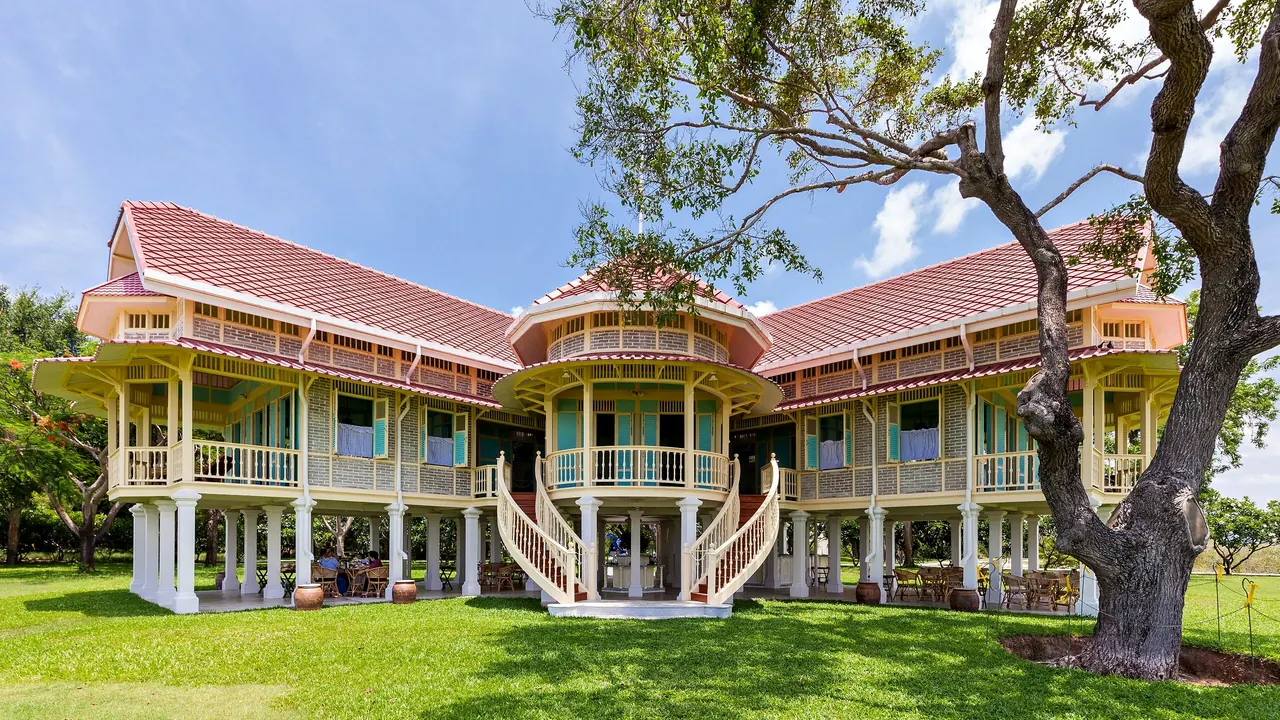
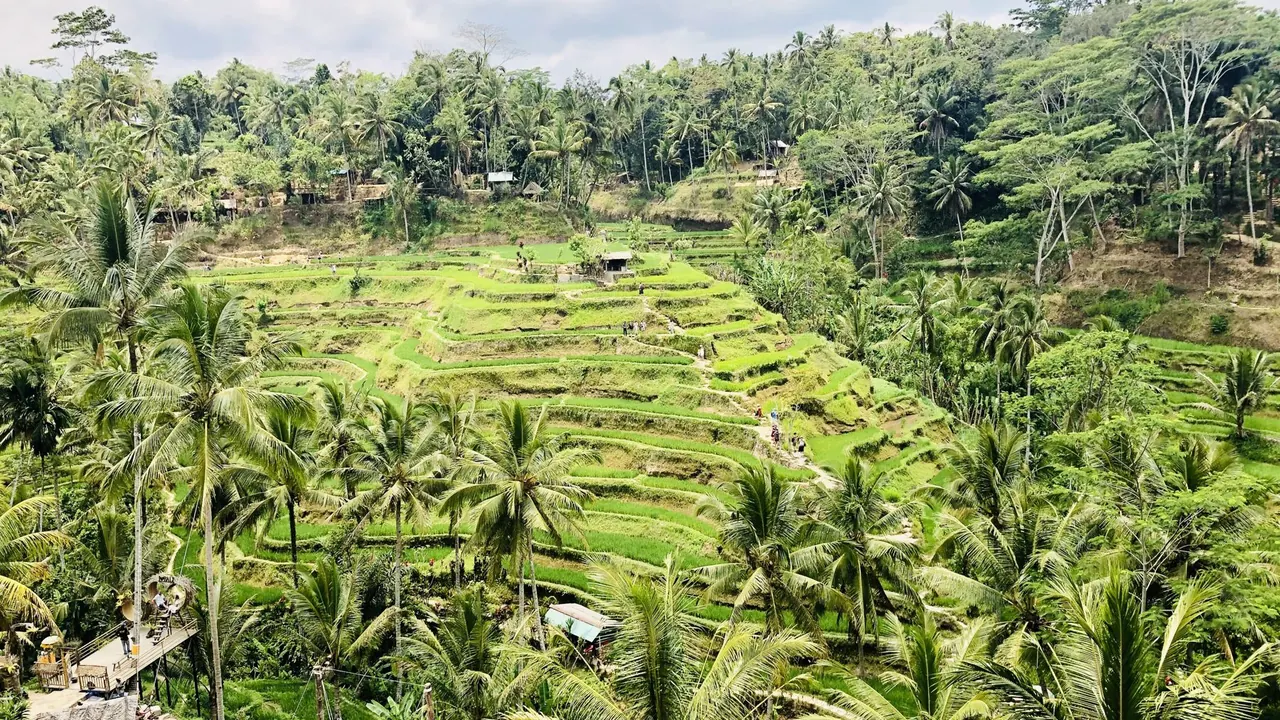
Photos: Hua Hin by allPhoto Bangkok, Pexels License; Ubud by Pinterpandai, CC BY-SA 3.0, cropped.
Hua Hin or Ubud?
Our verdict in twelve categories, each scored against the same fixed benchmark cities, and the climate month by month, so you can choose for your trip.
Choose Hua Hin for
- beaches
- getting around
- nightlife
Hua Hin suits a slow beach vacation: long pale sand, a warm and calm Gulf for easy swimming, resorts with big pools and kids' clubs, and seafood and night markets in the old town. It is the easier choice with young children, and getting along the coast is simpler. The sightseeing is short, though, and the evenings come down to beer bars, a market or the resort.
Choose Ubud for
- live music and the arts
- culture and sights
- nature and the outdoors
Pick Ubud for inland Bali: rice terraces, river gorges and temples, yoga and massage through the day, and Balinese dance with gamelan in the evenings. There is no beach, the roads are slow and most outings need a driver. For culture, landscape or a retreat-style stay, though, it gives far more than the Thai coast.
Scoreboard
Twelve categories on one fixed scale from 0 to 100. The shaded stretch is the gap between the two.
Your match
Pick a travel style or drag the sliders, and both match scores follow your weighting.
Too close to call, 2 points apart
Wins on beaches and getting around with your weighting.
Wins on live music and the arts and culture and sights with your weighting.
What matters to you?
Category by category
What the scores mean for a trip.
Beaches & swimming
Hua Hin has the beach on its doorstep: several kilometres of pale sand from the fishing pier to Khao Takiab, and a warm, calm Gulf for easy swimming. The water is often milky and the sand narrows at high tide, but quieter stretches at Khao Tao and towards Pranburi are a short drive away.
Ubud has no beach at all. The nearest easy swim is inside the reef at Sanur, and the closer black-sand Gianyar beaches are better for watching surfers. On most days the villa pool above the rice fields stands in for the sea.
Food & drink
The two eat equally well but in different ways. Hua Hin's food is seafood by the water: crab, squid and whole fish chosen by weight in the restaurants on stilts by the old pier, then satay and mango sticky rice at the Dechanuchit Road night market.
Ubud's best food is Balinese, such as babi guling at lunchtime counters and duck slow-cooked in spice paste, with a wide range of plant-based cafés and a few tasting-menu kitchens around it. Walk a lane or two off the main street for the better cooking.
Culture & sights
Hua Hin's history is that of a royal seaside retreat, and it fills a day or two. You can see the red-and-cream railway station with its royal pavilion, the teak palace of Maruekhathaiyawan and the monkey-filled hill temple at Khao Takiab. There are no museums of note.
Ubud has far more to take in, and much of it is part of daily life: offerings on doorsteps, temple processions and the old palace of Puri Saren beside its lotus-pond temple. The Puri Lukisan, Neka and ARMA museums trace Balinese painting, and the eleventh-century Elephant Cave, Goa Gajah, lies on the edge of town.
Nightlife
Neither is a place for a night out, but Hua Hin at least stays up. The lanes around Soi Bintabaht run past midnight with beer bars and sports screens, and rooftop and beachfront bars serve a sunset drink, though the scene is small and caters largely to older Western men.
Ubud is quiet well before midnight. An evening there means dinner and a garden bar, because many guests are up at dawn for yoga or Mount Batur. For clubs, people make the long drive to Seminyak or Canggu.
Nature & outdoors
Hua Hin's best landscapes are a drive away. Khao Sam Roi Yot has limestone peaks and the Phraya Nakhon cave with its royal pavilion, and the rainforest of Kaeng Krachan has gibbons and hornbills. From February to May the breezes make the bay good for kitesurfing.
In Ubud the scenery starts at the door. You can walk to the rice terraces along the Campuhan Ridge, raft the Ayung gorge or reach the waterfalls at Tibumana and Tegenungan in a short drive. The night climb of Mount Batur for sunrise over the crater lake is something the Thai coast has no answer to.
Day trips
Hua Hin has one outstanding outing, Phetchaburi, with its hilltop palace, its cave temple lit from above and its fine old murals. A longer day reaches the floating market at Damnoen Saduak and the canal town of Amphawa.
From Ubud, a whole island of temples is in reach: Tirta Empul and Gunung Kawi close by, Besakih on Mount Agung, then Tanah Lot and the UNESCO-listed Jatiluwih terraces further west. The island's slow roads limit how many fit into one day.
Good for families
Hua Hin is the simpler family base. It has a gentle, warm sea, resorts with kids' clubs and gardens on the sand, two big water parks and pony rides along the tideline. The midday heat and the busy highway are the things to plan around.
Ubud welcomes children just as warmly, and villa pools make the afternoons easy. Outside the villa, though, there are narrow pavements, scooter traffic, macaques that grab at bags and long car journeys. It suits older children who enjoy gentle rafting and rice-field walks more than toddlers.
Getting around
Neither is easy, but Hua Hin has a backbone in its green shared songthaews, which run the length of the coastal strip. The old centre between the station, the night market and the pier can be walked, and trains and buses connect to Bangkok.
Ubud has no public transport worth relying on. Its pavements are broken and its roads climb steeply in and out of the river valleys, so visitors rely on ride-hailing, hotel shuttles or their own scooter. Staying near the centre is the only way to walk out to dinner.
Shopping & style
In Hua Hin the pick is the weekend craft markets on the south side of town, with ceramics, jewellery and clothing under the trees. Beyond those it is souvenirs and copies, tailors, and malls with everyday brands.
Ubud is the better place to buy things made by hand. Carvings and sarongs fill the Art Market opposite the palace. Mas is known for woodcarving, Celuk for silver and Batuan for its paintings, and workshops on the road to Tegallalang sell furniture and homeware. Jalan Hanoman adds small boutiques for linen and yoga wear.
Affordability
Both are cheap places to sleep, eat and get a massage, and both have an expensive top end. In Hua Hin the money goes on the big beachfront resorts and the restaurants aimed at long-staying foreigners, and Thai weekenders push room rates up, so a midweek stay pays off.
In Ubud the spending is in the jungle resorts above the river valleys and the visitor cafés, while homestays and warungs stay modest. Day-long drivers are inexpensive, which matters in a town where you will hire one often.
Live music & performing arts
Hua Hin has little to attend beyond cover bands and dance shows staged for resort guests. Its link with jazz shows up only in a beach festival held in some years.
Ubud has Balinese dance with a live gamelan somewhere every evening, in the palace courtyard, on the lotus-pond stage at Pura Taman Saraswati and in village temple grounds. The programme moves between the Legong, the Barong and the chanted Kecak, and the shows are arranged for visitors but performed by long-established village troupes. There is still no theatre or concert hall.
Wellness & relaxation
Both are made for slowing down, in different ways. Hua Hin's strength is spa and rest: well-known residential retreats with detox and fitness programmes in seafront gardens, massage shops on every street and massages under the trees on the beach.
Ubud goes further. It has yoga from dawn to dusk in open pavilions, retreats lasting from a weekend to several weeks, flower baths, traditional healers and the purification ritual at Tirta Empul. For a yoga or retreat trip it is the clearer choice.
When should you go?
Pick your month. The climate figures are measured averages, not a forecast.
Hua Hin in July
Ubud in July
Daytime high, °C
Rainfall in the month, mm
Where the figures come from
Hua Hin's sunshine is measured 83 km from the centre, at Prachuap Khirikhan.
Ubud's temperatures are measured 29 km from the centre, at Denpasar / Ngurah-Rai.
Ubud's station stands 209 m below the city centre, so the centre is likely a little cooler than the figures say.
Ubud has no rain gauge within 25 km of the centre, so its rainfall comes from a gridded climate dataset read at the city rather than from a gauge further away.
Temperature and rainfall are climate normals, averaged over the years shown. Hua Hin: 1961-1990 (sunshine 1981-2010, rainfall 1981-2010) normals, Hua Hin (1.8 km from centre). Ubud: 1991-2020 normals, Denpasar / Ngurah-Rai (29 km from centre).
Both are hot all year, but their wet seasons fall at almost opposite times. Hua Hin is at its best from December to April, when the beach is dry and sunny and the sea is at bathing warmth. Rain sets in from May and peaks in October, at around 221mm. Daytime highs of 33°C from April to July keep walking to the early morning and evening.
Ubud's daytime heat changes little through the year. The rain is what matters. The wet months run from November to March and peak in January at about 297mm, which brings the greenest terraces and muddy trails. From May to October it is drier and sunnier, with August the best month at around 36mm. That is when Hua Hin is entering its rains, so between them the two cover the year.
Which traveller are you?
On a beach and sun trip, Hua Hin is the obvious pick. Its long pale beach and warm, calm Gulf are right outside the resort. Ubud has no sand at all, and the nearest easy swim, at Sanur, is the best part of an hour away by car.
For a culture and arts trip, Ubud wins clearly. Its painting museums, royal palace, temples and nightly dance with live gamelan fill both the days and the evenings. Hua Hin's royal seaside sights take a day or two, and it has almost no performances.
On a family trip with young children, Hua Hin is the easier stay. Resorts with kids' clubs, two water parks and a gentle sea keep everyone busy close to the room. Ubud's narrow pavements, scooter traffic and long drives suit older children better than toddlers.
Before you go
| Measure | Hua Hin | Ubud |
|---|---|---|
| Official language | Thai | Indonesian |
| Currency | Baht (THB) | Rupiah (IDR) |
| Sockets | ABCF220 V, 50 Hz | CF50 Hz |
| Driving side | Left | Left |
| Time zone | UTC+7 | UTC+8 |
| Emergency number | Police 191, ambulance 1669, fire 199 | 112 |
| Elevation | 9 m | 210 m |
| Main airport | Suvarnabhumi Airport (BKK)150 km from centre150 non-stop destinations | Denpasar I Gusti Ngurah Rai International Airport (DPS)29 km from centre63 non-stop destinations |
By the numbers
| Measure | Hua Hin | Ubud |
|---|---|---|
| City population | 59,369 | - |
| People per km² | 687 | - |
| Museums within 10 km | 0 | 14 |
| UNESCO World Heritage sites within 50 km | 0 | 1 |
| Swim season, months above 21 °C | 12 months | 12 months |
Where else could you go?
Every comparison below shares a destination with this one, so you can follow Hua Hin or Ubud somewhere new.
- Pattayavs Hua Hin
- Bangkokvs Hua Hin
- Siem Reapvs Hua Hin
- Krabivs Hua Hin
- Yogyakartavs Ubud
- Phuketvs Hua Hin