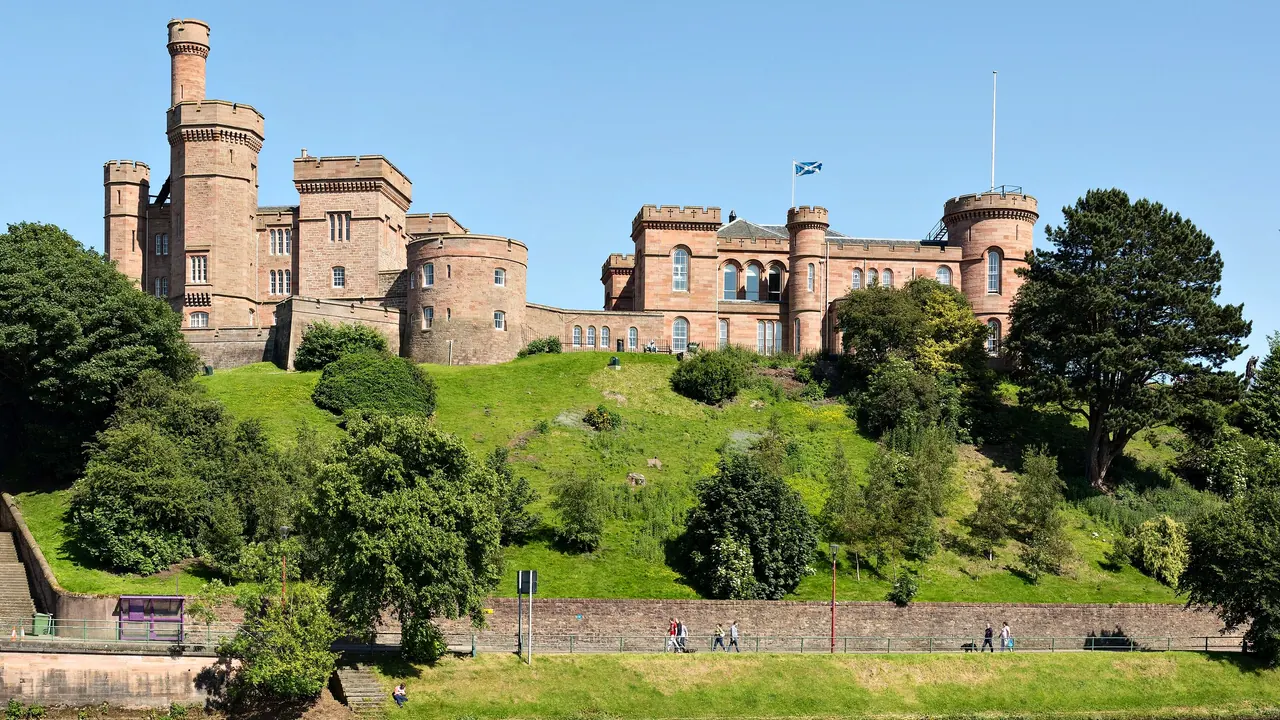
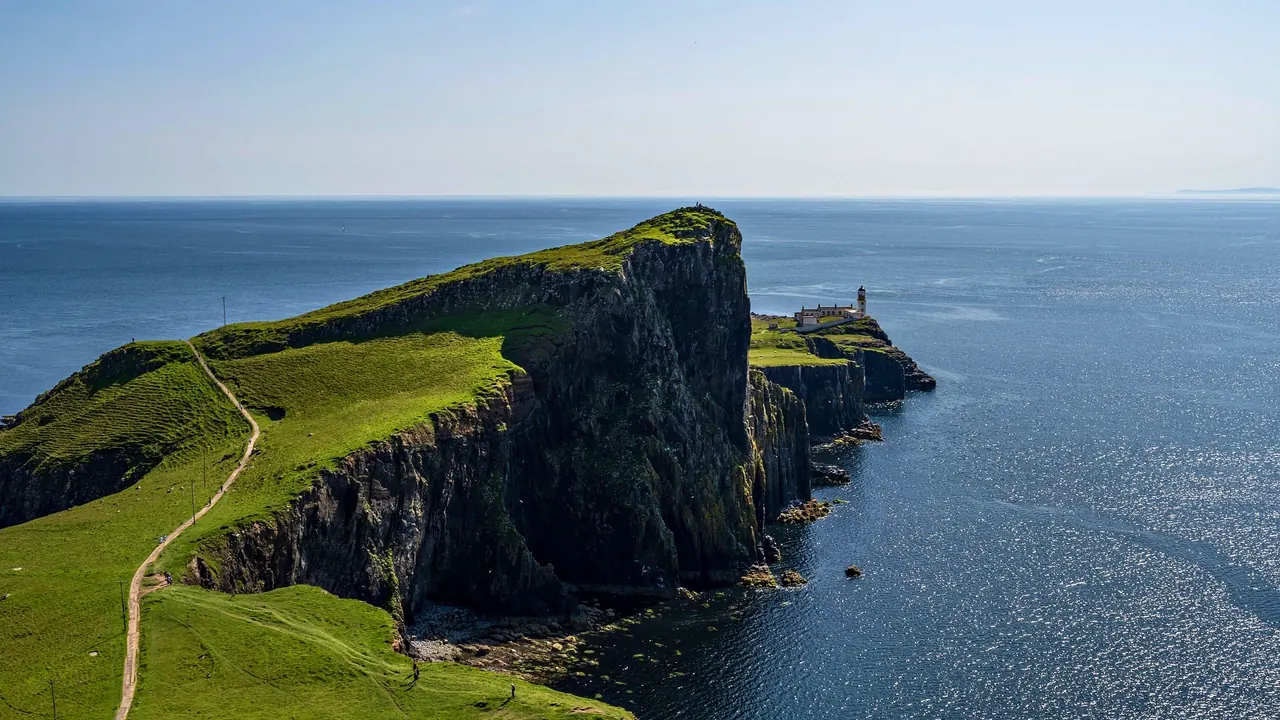
Photos: Inverness by Diliff, CC BY-SA 3.0, cropped; Isle of Skye by Evelin Magnus, Pexels License.
Inverness or Isle of Skye?
Our verdict in twelve categories, each scored against the same fixed benchmark cities, and the climate month by month, so you can choose for your trip.
Choose Inverness for
- getting around
- families
- nightlife
Inverness suits travellers who want the Highlands without giving up the comforts of a town. It is a base rather than a destination in itself: a walkable centre with a station, an arts centre, a choice of pubs and restaurants, and Loch Ness, Culloden, Speyside and the Cairngorms all within an hour or so. Families, people without a car and anyone on a tighter budget will find it far easier to manage, and the evenings give you more to do.
Choose Isle of Skye for
- food and drink
- nature and the outdoors
Skye is for people who want to be inside the landscape rather than driving out to see it. The Cuillin, the Quiraing and the Storr are on the doorstep, so the island rewards walkers, climbers and photographers who will put up with rain, midges, single-track roads and higher costs. Book a cottage and hire a car, and accept that the evenings will be quiet and early. That calm is a good part of why people go.
Scoreboard
Twelve categories on one fixed scale from 0 to 100. The shaded stretch is the gap between the two.
Your match
Pick a travel style or drag the sliders, and both match scores follow your weighting.
Wins on getting around and families with your weighting.
Wins on food and drink and nature and the outdoors with your weighting.
What matters to you?
Category by category
What the scores mean for a trip.
Beaches & swimming
Neither place is a beach destination, but Inverness has the edge. Nairn's long sands are a short drive away in one of the drier corners of the Highlands, and the shore at Chanonry Point doubles as a place to watch dolphins.
Skye's shores are more dramatic than comfortable: the white coral sand at Claigan, black sand at Talisker and Staffin, and rain that often cuts a visit short. Its one draw for swimmers is the icy Fairy Pools, which suit a quick plunge more than a swim.
Food & drink
Both eat well from the same Highland larder of langoustines, venison and whisky. The difference is in how you eat. Inverness gathers its good restaurants and pubs along the river and in the centre, so a fine dinner is a short walk from your bed.
Skye's best meals are in small country restaurants on the Dunvegan and Sleat peninsulas, and they are worth the drive, with oysters from Loch Harport and the distillery at Carbost nearby. Away from Portree, though, kitchens close early and many shut for winter, so plan and book ahead.
Culture & sights
Neither is a great place for sightseeing, and they are about level. Inverness has a castle, a cathedral and a museum covering Pictish and Gaelic history all within a short walk, and the most important historic site in either place, Culloden, is a short drive east.
Skye's history is spread across the island and centres on clans and crofting. Dunvegan Castle, the Clan Donald gardens at Armadale and the thatched cottages at Kilmuir mean a drive between each one, with nothing like a historic town centre to tie them together.
Nightlife
Inverness gives you a proper choice of evenings: wood-panelled pubs and whisky bars around Church Street and the riverside, plus a few late bars and a small club for the weekend. It is quiet by city standards, but you can go from one place to another on foot.
On Skye the evening means one bar, usually at the inn where you are staying or in a few places around Portree's square. It suits a dram after a day on the hill, but there is nothing late, and in winter some village bars barely open.
Nature & outdoors
Both are outstanding, and the difference is one of access. Inverness is a hub with spokes going out to Loch Ness and the Great Glen, Glen Affric's pine forest and the Cairngorm plateau. That gives a wider range of country, but most of it starts a drive away.
On Skye the scenery is all around you. The jagged Black Cuillin, Britain's most serious mountain ridge, the pinnacles of the Quiraing and the sea cliffs at Neist Point are a short drive from almost any cottage. Sea eagles, otters and boat trips into Loch Coruisk add a coastal side that Inverness only hints at with its dolphins.
Day trips
Inverness offers much more for days out. Urquhart Castle, Cawdor, Fort George, the Clava Cairns and the Speyside distilleries are all within an hour, and trains reach Elgin and Pitlochry. You could fill a week without repeating yourself or depending on a ferry.
Skye's outings mostly mean leaving the island, over the bridge to Eilean Donan and Plockton or by ferry to Raasay, Mallaig or Harris. Each is rewarding, but there are fewer of them, the days are longer, and the weather and sailings can upset your plans.
Good for families
Inverness is much easier with children. The Ness Islands, Bught Park and the Aquadome are in town, a Loch Ness monster boat trip appeals to most ages, and the polar bears at the Highland Wildlife Park are under an hour away.
Skye works for outdoor families who enjoy dinosaur footprints at Staffin and seal-spotting boat trips, but there are few rainy-day fallbacks. Steep or muddy paths, cliff edges and midges make it harder going with small children.
Getting around
Inverness lets you get by without a car for much longer. The flat centre can be crossed on foot in minutes, scenic railway lines run in three directions, and buses go to Loch Ness, Culloden and Nairn. You only need to hire a car or book a tour for the remoter glens.
On Skye a car is close to essential. Buses from Portree are too sparse to get you to trailheads, and the single-track roads are slower and more tiring to drive than the map suggests. In summer the Trotternish loop and the car parks at the famous viewpoints fill early.
Shopping & style
The real difference is between a small town centre and a scattering of workshops. Inverness has the wider choice: the covered Victorian Market arcade with its independent shops, a high street and shopping centre for everyday needs, and specialist shops with a long shelf of Highland and Speyside malts. The second-hand bookshop in a former church is worth an hour.
Skye's shopping is more personal and takes more effort. You buy pottery, knitwear and silver from the makers' own workshops down farm tracks, and from small galleries around Waternish, Dunvegan and Sleat. Portree has a few gift and outdoor-gear shops but no real high street.
Affordability
Your money goes further in Inverness, though it is still not a cheap base, and July and August are when rooms cost most. Outside high summer the town eases up considerably, and with the hills and lochs free to walk in, a careful traveller can keep the daily cost down.
Skye is the dearer of the two by a clear margin. Scarce accommodation pushes summer prices up sharply, cheap meals are hard to find outside Portree, and a hire car and fuel are almost unavoidable. Campsites, hostels, a cottage shared between a group, or a spring or autumn visit are the ways to bring the cost down.
Live music & performing arts
Inverness has a real venue in Eden Court, which programmes touring theatre, dance, comedy and concerts all year. On top of that, fiddle sessions run in its pubs most nights.
Skye's live culture is smaller and closer to its roots. It means ceilidhs in village halls, Gaelic song at Sabhal Mòr Ostaig and piping at the Portree Highland Games. It can be memorable in summer, but out of season it is a matter of luck whether anything is on.
Wellness & relaxation
The two are level here. Neither has a bathing tradition, and rest comes mainly from the slow pace and the long summer evenings. Inverness adds a little more structure, with the Aquadome sauna and country-house spas around Loch Ness.
Skye offers solitude instead: a cottage on a sea loch in Waternish or Sleat, with nothing to do after dark but watch the weather.
When should you go?
Pick your month. The climate figures are measured averages, not a forecast.
Inverness in July
Isle of Skye in July
Daytime high, °C
Rainfall in the month, mm
Where the figures come from
Inverness has no rain gauge within 25 km of the centre, so its rainfall comes from a gridded climate dataset read at the destination rather than from a gauge further away.
Inverness's sunshine is measured 43 km from the centre, at Kinloss.
Isle of Skye's temperatures are measured 90 km from the centre, at Stornoway.
Isle of Skye has no rain gauge within 25 km of the centre, so its rainfall comes from a gridded climate dataset read at the destination rather than from a gauge further away.
Temperature and rainfall are climate normals, averaged over the years shown. Inverness: 2005-2020 (sunshine 1991-2020, rainfall 1991-2020) normals, Inverness / Dalcross (11.9 km from centre). Isle of Skye: 1991-2020 normals, Stornoway (89.7 km from centre).
Both are at their best from May to September, and neither has beach weather in any real sense. Inverness is a little warmer, reaching about 19°C in July against Skye's 16°C, and the sea stays cold off both, peaking around 14°C. The bigger difference is rain. Inverness sits in the drier lee of the hills, while Skye takes the Atlantic weather head on and gets roughly twice as much in most months.
May is the sunniest month in both places and the one to pick for Skye, when the long light comes before the summer midges. On the island the rain builds quickly from September, and October to January bring over 200mm a month, short grey days and a real chance of closed roads and cancelled walks. Inverness copes better with the shoulder seasons and winter. It is cold and dark, but a town walk or a trip to Culloden still works, though the glens beyond are just as wet and wild.
Which traveller are you?
On a family trip with children, Inverness is the easier choice. It has play parks, the Ness Islands and an indoor pool for wet days, and the wildlife park and forest adventure park are both within an hour. Skye has little built for children and long drives between its sights.
For a trip on a tight budget, Inverness again comes out ahead. It has more rooms and cheaper ones, and trains and buses mean you can do without a hire car. On Skye, scarce accommodation, full-price meals and the need for a car push the cost of every day up.
For an outdoors trip built around walking and climbing, Skye is the stronger pick. The Cuillin ridge, the Quiraing and Neist Point start right outside your door, while from Inverness the best of the hills means a drive of an hour or more each way.
Before you go
| Measure | Inverness | Isle of Skye |
|---|---|---|
| Official language | English | English |
| Currency | Pound Sterling (GBP) | Pound Sterling (GBP) |
| Sockets | G230 V, 50 Hz | G230 V, 50 Hz |
| Driving side | Left | Left |
| Time zone | UTC, UTC+1 in summer | UTC, UTC+1 in summer |
| Emergency number | 112 or 999 | 112 or 999 |
| Elevation | 7 m | - |
| Main airport | Inverness Airport (INV)12 km from centre15 non-stop destinations | Inverness Airport (INV)15 non-stop destinations |
| Public holidays this year | 10 days | 10 days |
By the numbers
| Measure | Inverness | Isle of Skye |
|---|---|---|
| Population | 47,380 | 10,008 |
| People per km² | 2,289 | 6 |
| Museums within 10 km | 3 | - |
| UNESCO World Heritage sites within 50 km | 0 | - |
| Swim season, months above 21 °C | None | None |
Where else could you go?
Every comparison below shares a destination with this one, so you can follow Inverness or Isle of Skye somewhere new.
- Outer Hebridesvs Isle of Skye
- Aberdeenvs Inverness
- St Andrewsvs Inverness
- Glasgowvs Inverness
- Edinburghvs Inverness
- Orkneyvs Isle of Skye