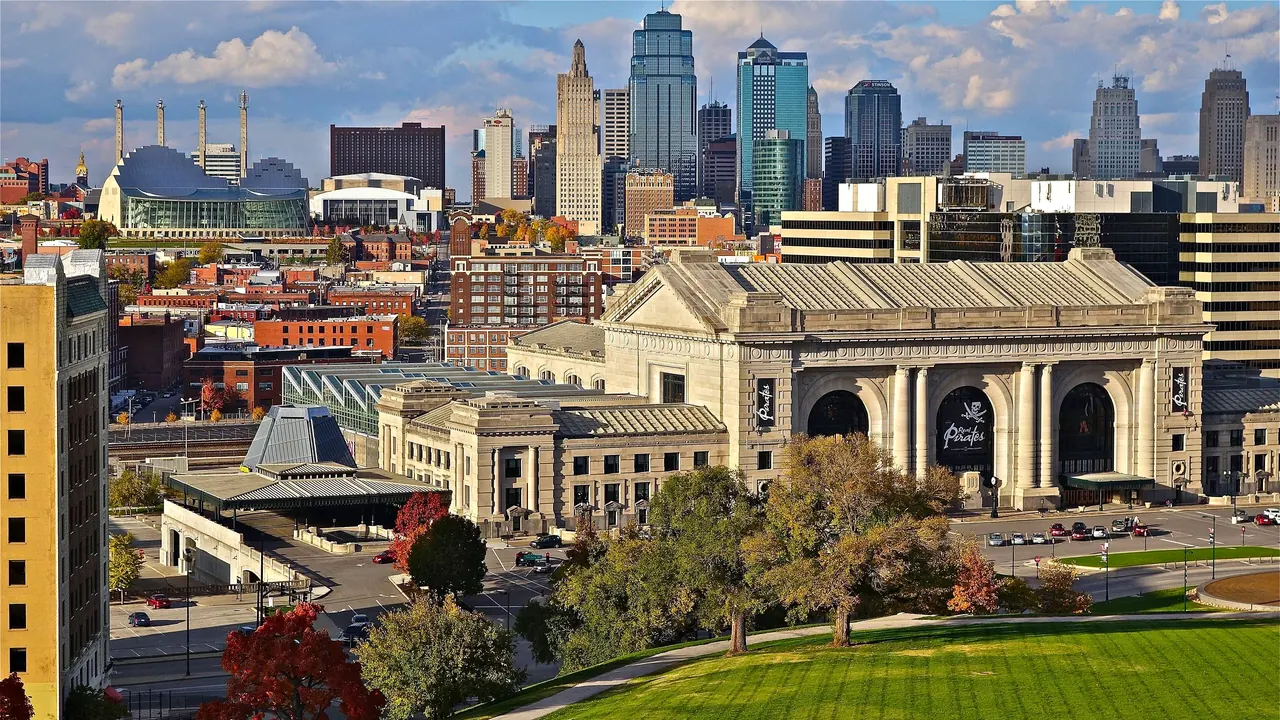

Photos: Kansas City by Dean Hochman from Overland Park, Kansas, U.S., CC BY 2.0, cropped; Louisville by NachoServant, CC BY-SA 4.0, cropped.
Kansas City or Louisville?
Our verdict in twelve categories, each scored against the same fixed benchmark cities, and the climate month by month, so you can choose for your trip.
Choose Kansas City for
- live music and the arts
- shopping
- culture and sights
Kansas City suits a traveller who wants a city to explore by day and listen to by night. Its museums go deeper, from the Nelson-Atkins to the WWI memorial and the Negro Leagues museum, and its jazz is a living tradition rather than a history lesson. Families also get a slightly bigger spread of attractions. It is the better choice for a trip spent in the city itself, ideally staying along the streetcar line.
Choose Louisville for
- day trips
- nature and the outdoors
- wellness
Louisville works best as a base for the country around it. Bourbon country, Lexington's horse farms and Mammoth Cave are all within a drive, and Olmsted's parks give it more green space in town. Pick it if whiskey, the Derby or a few days on country roads matter more to you than a long list of museums.
Scoreboard
Twelve categories on one fixed scale from 0 to 100. The shaded stretch is the gap between the two.
Your match
Pick a travel style or drag the sliders, and both match scores follow your weighting.
Too close to call, 1 point apart
Wins on live music and the arts and shopping with your weighting.
Wins on day trips and nature and the outdoors with your weighting.
What matters to you?
Category by category
What the scores mean for a trip.
Beaches & swimming
Neither city is a place for a beach vacation, because both lie deep inland. They differ only in summer swimming. Kansas City has sandy lake beaches in county parks on the edge of the metro area, which work for an afternoon. In Louisville the Ohio is a working river with strong currents, so lake swimming means driving out to the Kentucky reservoirs.
Food & drink
Each city's food centres on one obsession. In Kansas City it is smoke: hickory-smoked meat, a thick, sweet molasses sauce and burnt ends, served everywhere from old counters near the stockyards and 18th and Vine to petrol-station joints. There are also steakhouses from the cattle-town days. The Vietnamese, Ethiopian and Middle Eastern counters at the River Market and the Mexican cooking of the Westside add a little range.
In Louisville the obsession is in the glass. Whiskey Row and the downtown distillery tasting rooms put bourbon at the centre of an evening, and the plates are particular to Kentucky: the hot brown, burgoo, Benedictine and Derby pie. Go to Kansas City to eat and Louisville to drink, although in both cities the choice narrows quickly once you step outside the speciality.
Culture & sights
Kansas City has the deeper list of museums. The Nelson-Atkins, with its Chinese collection and Oldenburg shuttlecocks, is a more substantial art museum than Louisville's Speed. The National WWI Museum and the Negro Leagues and jazz museums at 18th and Vine are visits you will not find anywhere else.
Louisville's sights are built around its famous names: Churchill Downs and the Derby Museum, the Muhammad Ali Center, and the Slugger museum among the cast-iron fronts of Whiskey Row. It is better for walking among old buildings, though. Old Louisville's Victorian mansions make a finer stroll than anything in Kansas City, where the grand architecture is mostly limited to Union Station and the Plaza.
Nightlife
A night out is much the same in both: bars rather than clubs, spread across districts you need a ride between. Kansas City's nightlife is split between the sports bars of Power and Light, scruffy Westport and the calmer craft-beer bars of the Crossroads and River Market, and the city goes quiet early on weeknights.
In Louisville, the dive bars and patios of Bardstown Road and the bourbon and cocktail bars of NuLu and Butchertown are the main draws. Some bars have late licences that let a night run on, and Derby week in spring brings the whole city out.
Nature & outdoors
Louisville has more to offer outdoors, largely thanks to Olmsted. Cherokee and Iroquois parks have wooded hills and city views, the Big Four Bridge walkway takes you out over the Ohio, and across the river you can walk on the fossil beds at the Falls of the Ohio. Jefferson Memorial Forest and Bernheim Forest have proper woodland hiking, and Mammoth Cave is close enough for a day out.
Kansas City has the sheer size of Swope Park, the rose garden in Loose Park and paved trails along the creeks. But the prairie around it is gentle, and the serious hiking country of the Ozarks is hours away.
Day trips
This is Louisville's biggest advantage. Bourbon country begins about 45 minutes away at Bardstown, and the roads on to Frankfort, Lawrenceburg and Loretto lead to distilleries you can tour. Lexington's thoroughbred farms and Keeneland, Shaker Village and Lincoln's birthplace give you several more days out.
Kansas City's outings are pleasant half days rather than reasons to stay longer: Truman sites in Independence, the university town of Lawrence, the antebellum houses of Weston and the Pony Express museum in St Joseph. In both cities you need a car.
Good for families
Kansas City has a slightly fuller programme for children. It has Worlds of Fun with its water park and a large zoo, and Science City in Union Station sits close to the aquarium and Legoland Discovery Centre at Crown Center, so they make an easy day together.
Louisville covers similar ground on a smaller scale, with a well-regarded zoo, Kentucky Kingdom and the Science Center. It also has something Kansas City lacks: tram tours and ziplines underground in the Mega Cavern. In both cities the attractions are spread out, so expect a lot of time in the car.
Getting around
Both are car cities with easy roads and plenty of parking, so most visitors drive. The difference is Kansas City's streetcar along Main Street. It links the River Market, downtown, Union Station and Crown Center, so a car-free day or two is possible if you stay on the line.
Louisville has no rail transit at all. Downtown, the waterfront and NuLu are walkable, but getting to Churchill Downs, the Highlands or the big parks means driving or ride-hailing.
Shopping & style
Kansas City has more shopping, mainly because of the Country Club Plaza, a 1920s Spanish-style district of courtyards and tiled towers with chain and upmarket stores. The Crossroads adds galleries and vintage, and Westport and 39th Street add record and thrift shops.
Louisville's shopping is smaller and local: boutiques in NuLu, and vintage, records and antiques on Bardstown Road. Its souvenir is the more distinctive one, though: bottles from distillery shops that are hard to find elsewhere, along with Derby hats.
Affordability
Neither is a budget destination. Both cost about what an ordinary American city costs, with sales tax and a tip on every bill and a hire car for most visitors. Kansas City's streetcar can spare you some of that driving, and the Nelson-Atkins charges nothing for general entry.
In Louisville, hotels are good value for most of the year, and the parks, riverfront and Old Louisville cost nothing to enjoy. Derby week in spring is the exception: rates rise several times over, so travellers on a budget should plan around it.
Live music & performing arts
Kansas City has the better evenings out, because jazz grew up here. The hard-swinging style of Count Basie and Charlie Parker still plays most nights in small clubs around 18th and Vine and Midtown, often with late jam sessions. The Kauffman Center is home to the symphony, opera and ballet.
Louisville also has a full set of companies at the Kentucky Center, and Actors Theatre is known for staging new American plays. Its local sound is bluegrass and Americana in the bars on Bardstown Road. It is a dependable programme, but rarely one you would plan a night around.
Wellness & relaxation
Neither city has a spa culture of its own. Both offer hotel and day spas and an unhurried pace, and each has an old mineral-water resort within a drive: Excelsior Springs about forty minutes from Kansas City, and the grander French Lick and West Baden Springs about an hour and a half from Louisville in southern Indiana. To relax in town, Kansas City has Loose Park's roses and the Nelson-Atkins sculpture park, while Louisville offers a porch in the Highlands or a drive through horse country.
When should you go?
Pick your month. The climate figures are measured averages, not a forecast.
Kansas City in July
Louisville in July
Daytime high, °C
Rainfall in the month, mm
Where the figures come from
Kansas City has no rain gauge within 25 km of the centre, so its rainfall comes from a gridded climate dataset read at the city rather than from a gauge further away.
Kansas City's sunshine is measured 30 km from the centre, at Kansas City International Airport.
Temperature and rainfall are climate normals, averaged over the years shown. Kansas City: 1991-2020 (sunshine 1981-2010) normals, Kansas City / Harlem (8.2 km from centre). Louisville: 1991-2020 (sunshine 1981-2010) normals, Standiford Field (8.2 km from centre).
The two cities follow almost the same temperature curve. Both reach about 32°C in July and stay hot and humid from June to August, which makes long days on foot hard going. Both are cold in January, with daytime highs only in single figures. The best months for walking the streets are May, September and October, when afternoons are in the twenties. Neither city has a beach season worth planning around.
Rain is where they differ. Kansas City has a dry, fairly sunny winter, with only 30mm in January, but its rain builds through spring and peaks in May at 142mm. Louisville is damp all year, with 86mm even in January, and its winters are greyer, with less sunshine than Kansas City gets. For a winter trip Kansas City is the drier choice. In autumn the two are close, with Louisville a little sunnier in October.
Which traveller are you?
On a culture and arts trip, Kansas City is the stronger pick. The Nelson-Atkins and the National WWI Museum give you more serious museum hours, and the jazz clubs around 18th and Vine and the Kauffman Center fill the evenings better than Louisville's reliable but modest programme.
For an outdoors trip, Louisville wins clearly. Olmsted's wooded parks, the Big Four Bridge over the Ohio, the fossil beds at the Falls of the Ohio and the woodland trails of Bernheim Forest are all close at hand, and Mammoth Cave is within a day's drive.
On a shopping trip, Kansas City has more to browse. The Country Club Plaza is an attractive outdoor district of upmarket stores, and the Crossroads and Westport add galleries, vintage and records. Louisville's NuLu and Bardstown Road are smaller, though its distillery bottles make a memorable souvenir.
Before you go
| Measure | Kansas City | Louisville |
|---|---|---|
| Currency | US Dollar (USD) | US Dollar (USD) |
| Sockets | AB120 V, 60 Hz | AB120 V, 60 Hz |
| Driving side | Right | Right |
| Time zone | UTC-6, UTC-5 in summer | UTC-5, UTC-4 in summer |
| Emergency number | 911 | 911 |
| Elevation | 277 m | 142 m |
| Main airport | Kansas City International Airport (MCI)30 km from centre57 non-stop destinations | Louisville Muhammad Ali International Airport (SDF)10 km from centre40 non-stop destinations |
| Public holidays this year | 14 days | 14 days |
By the numbers
| Measure | Kansas City | Louisville |
|---|---|---|
| City population | 508,090 | 246,161 |
| People per km² | 615 | 1,434 |
| Museums within 10 km | 12 | 15 |
| UNESCO World Heritage sites within 50 km | 0 | 0 |
Where else could you go?
Every comparison below shares a destination with this one, so you can follow Kansas City or Louisville somewhere new.
- Nashvillevs Louisville
- Bransonvs Kansas City
- Pigeon Forgevs Louisville
- Gatlinburgvs Louisville
- Chattanoogavs Louisville
- St. Louisvs Kansas City