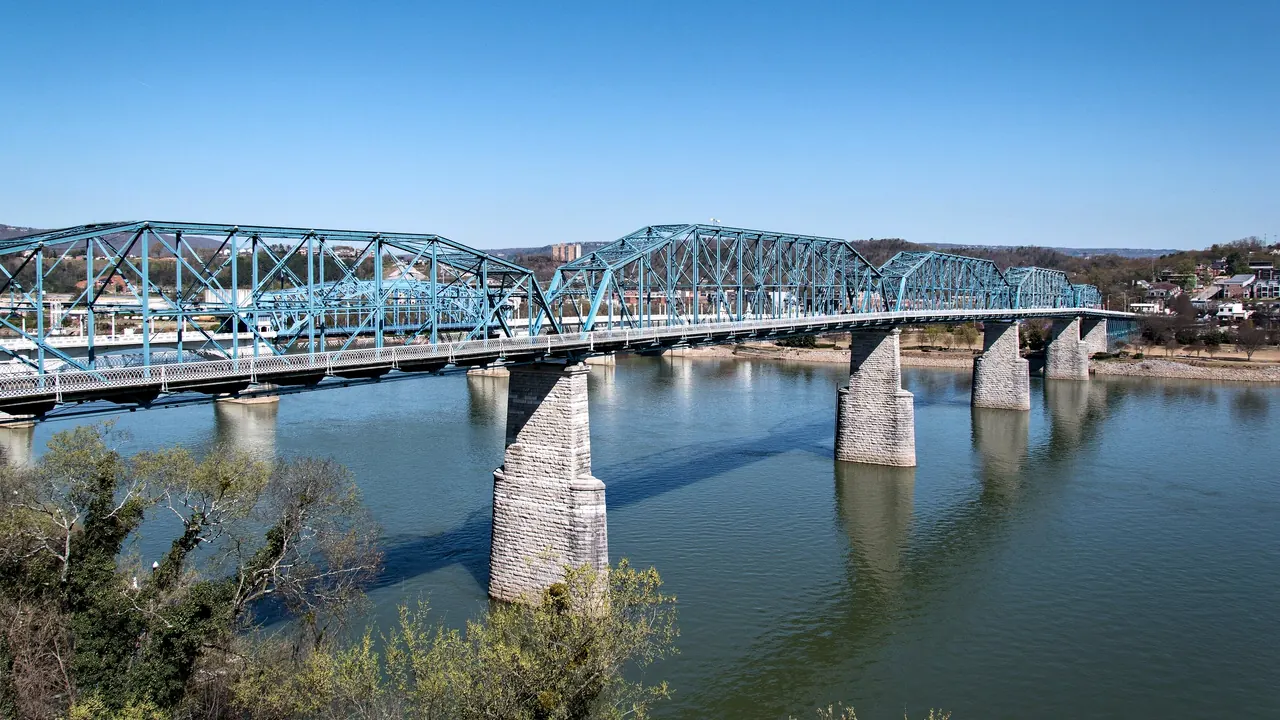
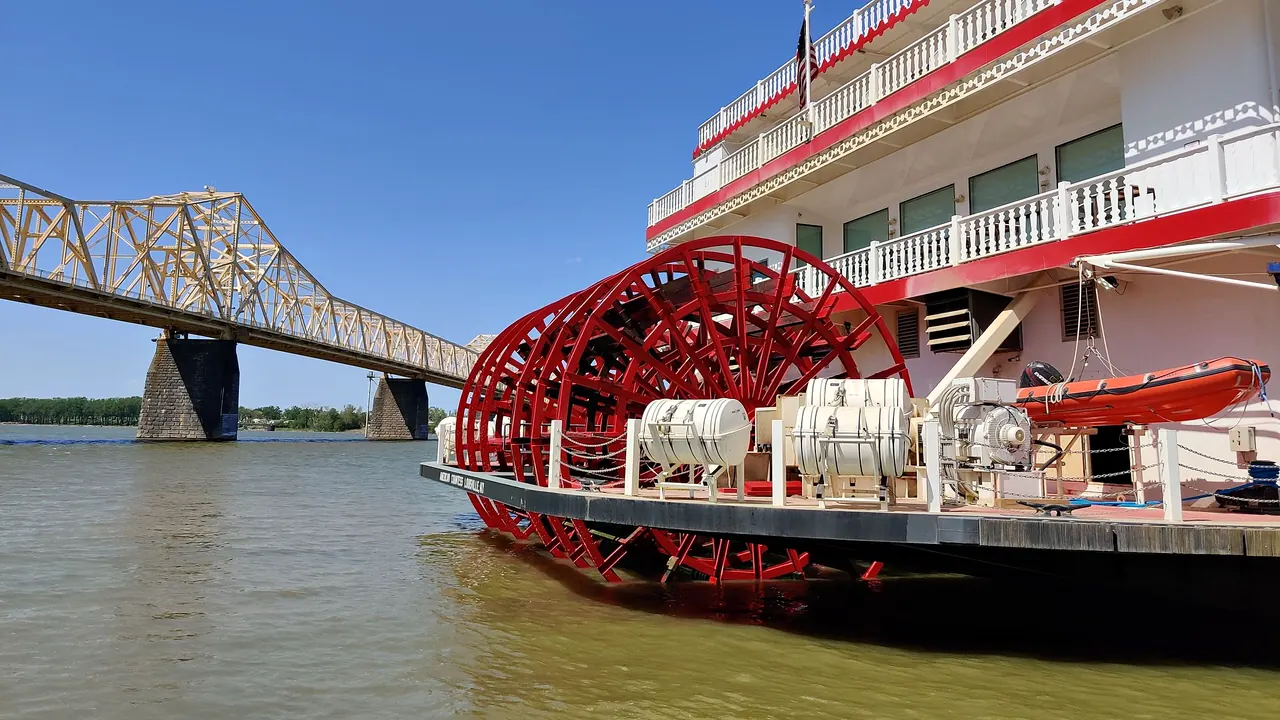
Photos: Chattanooga by Ɱ, CC BY-SA 4.0, cropped; Louisville by NachoServant, CC BY-SA 4.0, cropped.
Chattanooga or Louisville?
Our verdict in twelve categories, each scored against the same fixed benchmark cities, and the climate month by month, so you can choose for your trip.
Choose Chattanooga for
- nature and the outdoors
- families
- beaches
Chattanooga is the pick for travellers who want to spend their days outside. Lookout, Signal and Raccoon mountains rise straight from town, with climbing, hang gliding and paddling in the river gorge all close at hand. The aquarium and the attractions on Lookout Mountain also make it the better choice for a family, and its riverfront centre is a little easier to manage on foot.
Choose Louisville for
- nightlife
- live music and the arts
- food and drink
Louisville suits people who travel for what is on the plate and in the glass. Bourbon runs through its bars, its kitchens and its day trips, nights along Bardstown Road go on later, and Churchill Downs, the Ali Center and a full set of orchestra, opera, ballet and theatre give you more to do in the city itself. The country around it is gentler, so it works best as a city-and-countryside trip rather than an active one.
Scoreboard
Twelve categories on one fixed scale from 0 to 100. The shaded stretch is the gap between the two.
Your match
Pick a travel style or drag the sliders, and both match scores follow your weighting.
Too close to call, level with your weighting
Wins on nature and the outdoors and families with your weighting.
Wins on nightlife and live music and the arts with your weighting.
What matters to you?
Category by category
What the scores mean for a trip.
Beaches & swimming
Neither city is a place for a swimming vacation, but Chattanooga at least gives you somewhere to get into the water. Chickamauga Lake and Harrison Bay have small designated swimming areas, and the creeks on the plateau have cool swimming holes for hot afternoons.
In Louisville, the Ohio is a barge river with strong currents, so swimming means a pool or a drive out to the reservoir lakes in the Kentucky countryside. In either city, expect to swim in a pool rather than lie on sand.
Food & drink
Louisville has the more distinctive food and drink. Bourbon shapes everything, from the downtown tasting rooms and the long whiskey lists on Whiskey Row to the old fashioned. The city also has dishes of its own in the hot brown, burgoo, Benedictine and Derby pie, and good restaurants in NuLu, the Highlands and Butchertown.
Chattanooga eats well in a plainer Southern style: meat-and-three plates, barbecue, and catfish with grits. The chef-led places and breweries are on the Southside, and brunch is on the North Shore. Neither city goes far beyond Southern cooking, but Louisville gives a food-minded visitor more to look for.
Culture & sights
Each city fills two or three days, but Louisville's sights carry more weight. You have Churchill Downs with the Derby Museum, the Muhammad Ali Center, the Slugger and Frazier museums among the cast-iron fronts of Whiskey Row, the Speed Art Museum, and the Victorian mansions of Old Louisville. Together they make a fuller programme.
Chattanooga's story is the Civil War and the railways: battlefield views from Point Park and Missionary Ridge, and the old Terminal Station. Add the Hunter Museum on its bluff and a walk across the Walnut Street Bridge. Its history is found more in the landscape than in galleries.
Nightlife
Louisville is the better bet for a night out. Bardstown Road is a long strip of dive bars and patios, NuLu and Butchertown have cocktail and bourbon bars, and some places are licensed to stay open very late, so an evening can keep going.
Nights in Chattanooga are shorter and quieter. There are breweries, cocktail bars and a few music bars on the Southside and Main Street, with Station Street as the liveliest block, and most places wind down well before the small hours. Neither city has much of a club scene.
Nature & outdoors
This is where Chattanooga is in a different league. The Tennessee River cuts through the Cumberland Plateau right at the city, and three mountains rise above town. Its sandstone bluffs draw climbers from across the eastern states, hang gliders launch from Lookout Mountain, and you can paddle through a wooded gorge. The Ocoee whitewater, Cloudland Canyon and Fall Creek Falls are all within reach.
Louisville's outdoors are gentler and more urban: Olmsted's Cherokee and Iroquois parks, the Big Four Bridge, the fossil beds at the Falls of the Ohio, and woodland walks in Jefferson Memorial and Bernheim forests. Mammoth Cave is the standout outing, but the country around the city never becomes dramatic.
Day trips
Louisville has the more rewarding countryside close by. Bourbon country begins about three-quarters of an hour away in Bardstown. From there, the distillery roads, Lexington's horse farms and Keeneland, Shaker Village and Lincoln's birthplace make a series of easy and varied outings.
From Chattanooga, the bigger draws are cities further away. Nashville and Atlanta are about two hours each, and Huntsville's rocket centre is not much closer. Lynchburg, Sewanee and the Chickamauga battlefield make quieter outings. You need a car from either city, but Louisville's trips are shorter and have more local character.
Good for families
Chattanooga is the easier family base. The Tennessee Aquarium, with its river and ocean buildings, is a few blocks from the Creative Discovery Museum, and Coolidge Park has a carousel and splash fountains. On Lookout Mountain, the Incline Railway, Ruby Falls and Rock City are made for children.
Louisville has plenty for children too, from the zoo and the Kentucky Science Center to the coasters and water park at Kentucky Kingdom and the underground zipline at Mega Cavern. These are spread across the city, though. Both cities have hot summers that need some planning around.
Getting around
You need a car in both cities once you leave the centre, but Chattanooga's core is a little easier to manage. The riverfront, the aquarium, Bluff View and the Southside are all within walking distance, the Walnut Street Bridge takes you across to the North Shore, and a free electric shuttle runs through downtown.
Louisville has no rail transit and few useful buses. Its walkable area covers Main Street, the waterfront and NuLu, while Churchill Downs, the Highlands and the big parks all need a drive. Traffic is mild, so the driving itself is easy.
Shopping & style
Shopping is a small part of a visit to either city. The difference is in what you take home. Chattanooga's speciality is outdoor gear, found in the boutiques along Frazier Avenue and the converted railway warehouses of Warehouse Row. Louisville's is bourbon, with distillery shops selling bottles that are hard to find elsewhere, plus vintage clothes and records on Bardstown Road.
Affordability
The two cost much the same. Both have mid-sized American prices, sales tax and tipping on every meal, and a hire car that most visitors end up paying for. In Chattanooga, a family's money goes mainly on admission to the aquarium and the Lookout Mountain attractions, while free trails and the downtown shuttle help balance this.
Louisville's hotels are good value outside the racing season. Derby week in spring is the exception, when room rates jump to several times their usual level, so anyone watching their budget should avoid it.
Live music & performing arts
Louisville has clearly more on stage. The Kentucky Center is home to the city's orchestra, opera and ballet, Actors Theatre has long been known for staging new American plays, and the Palace takes touring concerts. In summer there is Shakespeare in Central Park and music at the Iroquois Amphitheater.
Chattanooga has the gilded Tivoli Theatre, a small symphony and opera company, a community theatre, and country, bluegrass and Americana in Southside bars. That fills an evening or two, while Louisville can fill several.
Wellness & relaxation
Neither city is somewhere to go for rest, and both have only hotel spas and a few day spas. In Chattanooga, relaxing means a slow afternoon on the riverfront or a Bluff View porch after days of climbing or hiking. In Louisville, it means a porch in the Highlands or a drive through horse country, and for a real spa break the old mineral-spring resorts of French Lick and West Baden Springs are about an hour and a half away in Indiana.
When should you go?
Pick your month. The climate figures are measured averages, not a forecast.
Chattanooga in July
Louisville in July
Daytime high, °C
Rainfall in the month, mm
Temperature and rainfall are climate normals, averaged over the years shown. Chattanooga: 1991-2020 (sunshine 1981-2010) normals, Lovell Field (6.3 km from centre). Louisville: 1991-2020 (sunshine 1981-2010) normals, Standiford Field (8.2 km from centre).
Both cities have the same hot, humid summer, with July highs around 32°C that make walking at midday hard work, so spring and autumn are the best seasons in each. Chattanooga warms up earlier and stays milder through winter, with January highs around 11°C, but winter is also its wettest season. It gets the most sunshine from April to July, and the most comfortable months on its trails are April to May and late September to October. Swimming in the lakes and creeks is realistic from June to September.
Louisville's winters are drier but noticeably colder. Its rain peaks in late spring instead, and May is the wettest month at around 132mm. September and October are the most pleasant months for walking Old Louisville and the Olmsted parks, and early to mid summer is when it sees the most sun.
Which traveller are you?
On an outdoors trip, Chattanooga is the clear choice. Its climbing bluffs, hang gliding from Lookout Mountain, mountain-bike trails and paddling in the Tennessee River Gorge are all right above town, and the Ocoee whitewater is about an hour away. Louisville's parks are pleasant but tame by comparison.
For a food and nightlife trip, Louisville comes out ahead. It has bourbon bars on Whiskey Row, its own dishes such as the hot brown and Derby pie, chef-led kitchens in NuLu and late-licence bars along Bardstown Road. That is more range, and later nights, than Chattanooga's breweries and Southern plates.
On a family trip with children, Chattanooga has the edge. The Tennessee Aquarium and the Creative Discovery Museum are a few blocks apart, and the Incline Railway, Ruby Falls and Rock City are made for young visitors. Louisville's zoo and Kentucky Kingdom are good but more spread out.
Before you go
| Measure | Chattanooga | Louisville |
|---|---|---|
| Currency | US Dollar (USD) | US Dollar (USD) |
| Sockets | AB120 V, 60 Hz | AB120 V, 60 Hz |
| Driving side | Right | Right |
| Time zone | UTC-5, UTC-4 in summer | UTC-5, UTC-4 in summer |
| Emergency number | 911 | 911 |
| Elevation | 206 m | 142 m |
| Main airport | Chattanooga Metropolitan Airport (Lovell Field) (CHA)6 km from centre15 non-stop destinations | Louisville Muhammad Ali International Airport (SDF)10 km from centre40 non-stop destinations |
| Public holidays this year | 13 days | 14 days |
By the numbers
| Measure | Chattanooga | Louisville |
|---|---|---|
| City population | 181,099 | 246,161 |
| People per km² | 484 | 1,434 |
| Museums within 10 km | 7 | 15 |
| UNESCO World Heritage sites within 50 km | 0 | 0 |
Where else could you go?
Every comparison below shares a destination with this one, so you can follow Chattanooga or Louisville somewhere new.
- Atlantavs Chattanooga
- Pigeon Forgevs Chattanooga
- Gatlinburgvs Chattanooga
- Nashvillevs Chattanooga
- Nashvillevs Louisville
- Ashevillevs Chattanooga