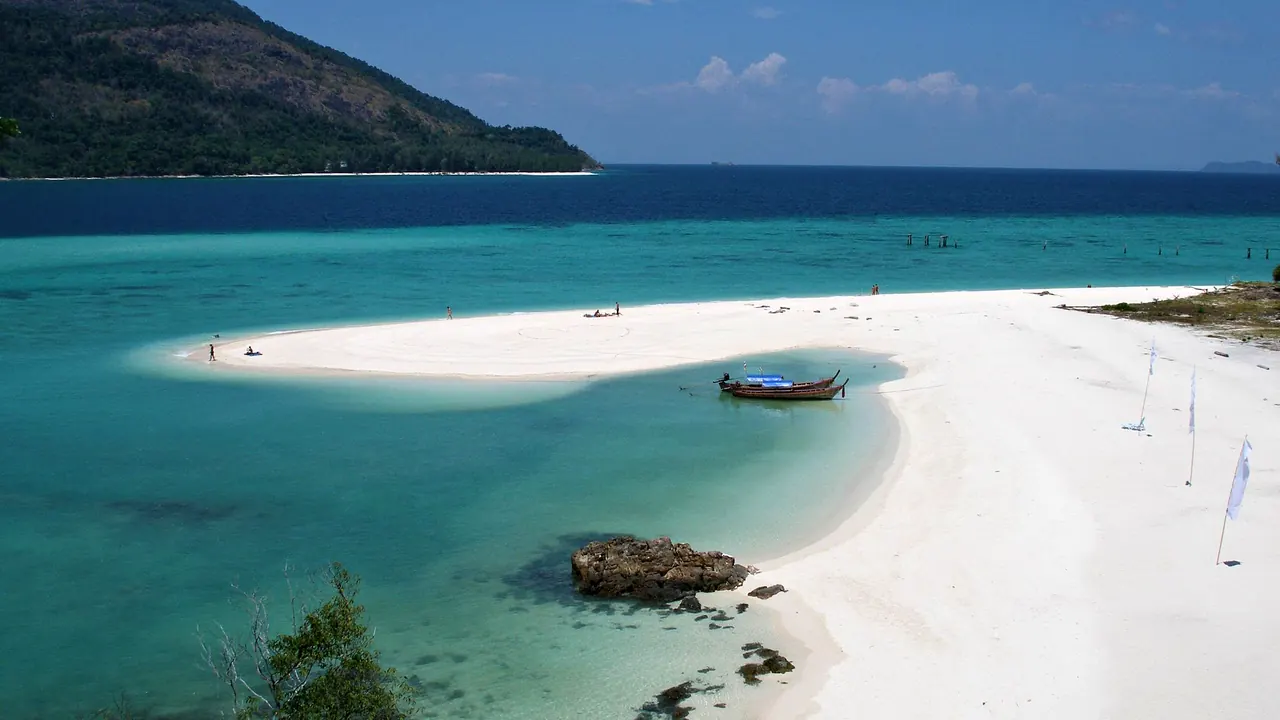
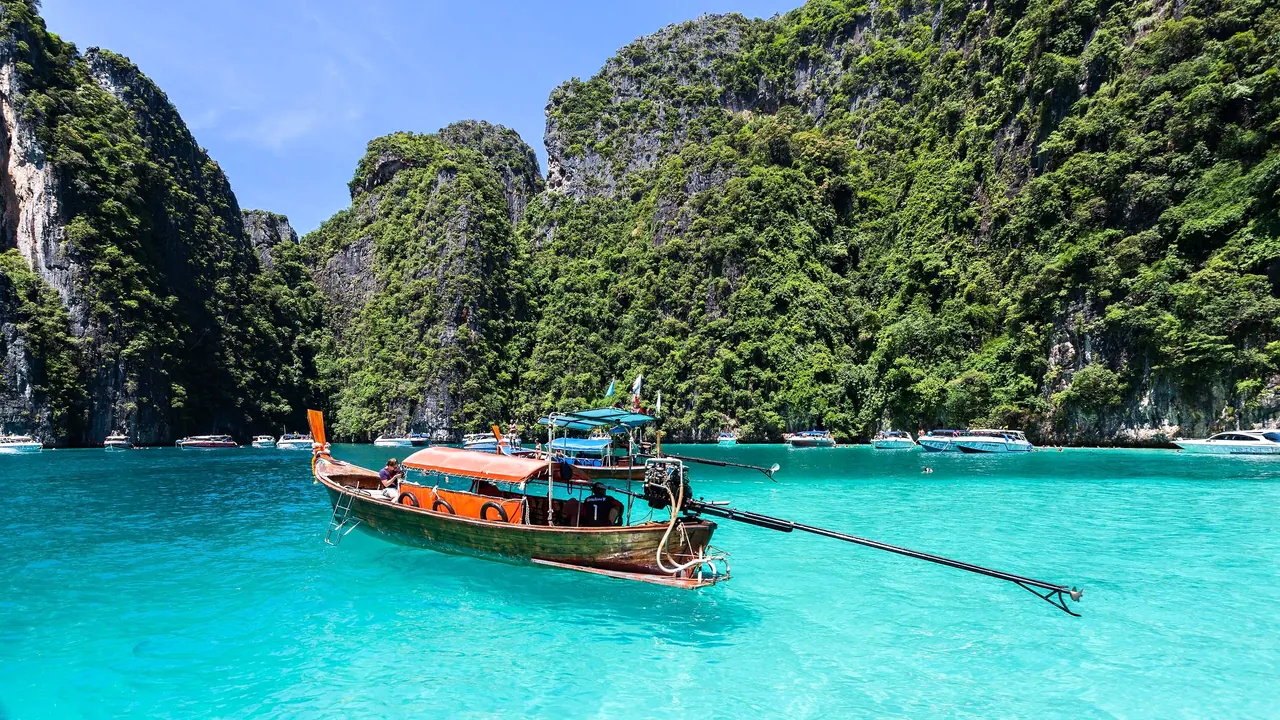
Photos: Koh Lipe by Vyacheslav Argenberg, CC BY 4.0, cropped; Koh Phi Phi by Diego Delso, CC BY-SA 3.0, cropped.
Koh Lipe or Koh Phi Phi?
Our verdict in twelve categories, each scored against the same fixed benchmark cities, and the climate month by month, so you can choose for your trip.
Choose Koh Lipe for
- getting around
- prices
- culture and sights
Koh Lipe is the better pick for a slower, more remote beach vacation. It sits far down near the Malaysian border, takes real effort to reach, and repays it with a small, flat, car-free island you can walk across, calm evenings and an uninhabited marine park on the doorstep. It suits couples and families who want to spend their days in the water and their nights over a quiet drink, and who don't mind that there is little else to do.
Choose Koh Phi Phi for
- nightlife
- nature and the outdoors
- day trips
Choose Koh Phi Phi if you want drama in the scenery and noise after dark. The limestone cliffs, Pileh Lagoon and the viewpoint over the twin bays give it the stronger landscape, the Loh Dalum beach bars run a nightly party that Lipe never tries to match, and the ferries to Lanta, Railay and Phuket make it an easy stop on a wider Andaman route. The trade-off is crowds and steep paths, and a stay is only peaceful if you sleep away from the village.
Scoreboard
Twelve categories on one fixed scale from 0 to 100. The shaded stretch is the gap between the two.
Your match
Pick a travel style or drag the sliders, and both match scores follow your weighting.
Wins on getting around and prices with your weighting.
Wins on nightlife and nature and the outdoors with your weighting.
What matters to you?
Category by category
What the scores mean for a trip.
Beaches & swimming
You won't go wrong with either for sand and clear water, but the beaches look and feel different. Lipe's are open, low beaches: the long powdery stretch of Sunrise Beach facing Koh Adang, the quieter evening light on Sunset Beach, and coral close enough to swim out to.
Phi Phi's beaches sit under limestone cliffs, which makes them more dramatic. The best swimming is at Long Beach and Laem Tong rather than at Loh Dalum, which turns very shallow at low tide. Many of its most famous coves, Maya Bay among them, are reached by boat and are more for looking at than swimming in.
Food & drink
Food is a sideline on both, and you will eat much the same things: seafood laid out on ice and grilled by the sand, roti from carts, Thai curries next to pizza and burgers. Lipe's Walking Street has a little more southern Thai heat and turmeric if you look for it. Tonsai's lanes cater more to backpackers and often tone the spice down, though the northern resorts on Phi Phi add dinners with a view.
Culture & sights
Neither island is a place for sightseeing. What Lipe has is a living one: the Urak Lawoi sea people, with their villages, boat-building, the wooden spirit shrine near Sunrise Beach and their boat-floating ceremony. Phi Phi's past as a fishing and coconut settlement has left almost nothing to see, so a small tsunami memorial and a passing look at Viking Cave from the boat are about all it offers.
Nightlife
Phi Phi is the island for a big night. Every evening the bars along Loh Dalum lay out mats, put on fire dancing, play dance music loudly and serve buckets until the early hours, and the village has pubs, reggae bars and staged Muay Thai bouts besides. It is young and much of a muchness, but it never lets up in the dry season.
Lipe's nights are barefoot and gentler: cushions on the sand at Sunrise and Pattaya beaches, a fire show, a cocktail on Walking Street. There are no clubs, and from May onwards much of it simply closes.
Nature & outdoors
Phi Phi has the more spectacular landscape. Cliffs rise straight from the sea, the narrow isthmus joins the two halves of Phi Phi Don, there is the climb to the viewpoint over both bays and a kayak into the emerald water of Pileh Lagoon. Underwater, the soft-coral walls of the Bida islands and the blacktip sharks at Shark Point are as good, and climbers have bolted routes near Tonsai, though heavy boat traffic has worn the reefs.
Lipe's outdoors is gentler and more spread out across Tarutao National Marine Park. You can snorkel at Koh Rawi and Koh Jabang, walk on the striped pebbles of Koh Hin Ngam, climb through jungle to Chado Cliff on Koh Adang, or go into the rainforest and mangrove creeks of near-wild Koh Tarutao.
Day trips
From Phi Phi, real places are within a ferry ride. Koh Lanta's stilt-house old town is about an hour away, Railay and Ao Nang about an hour and a half, and Phuket Town's Sino-Portuguese shophouses make a long but manageable day.
Lipe is too far from anywhere for that. Apart from island-hopping, the one outing with a story is Koh Tarutao and the remains of its 1930s and 1940s prison camp in the forest. Anything else means a long boat ride or a border crossing.
Good for families
Neither island has attractions made for children or more than basic medical care, and both are car-free. The difference is that all of Lipe suits a family. The whole island is calm and flat, the shallow water off Sunrise and Sunset beaches is safe for snorkelling, and the bungalows sit right by the sand.
On Phi Phi, a good family stay depends on the base. The resorts at Laem Tong have pools and gentle water, but the village is loud late at night and the paths to the outer beaches are steep and unlit. On both islands the boat crossing can be rough, and Lipe's longer journey is the bigger hurdle with toddlers.
Getting around
Once you are on Lipe, it is easier to get about. A flat walk of about twenty minutes crosses from Pattaya Beach to Sunrise Beach, and motorbike taxis cover the rest. On Phi Phi, only Tonsai and Loh Dalum are within easy walking distance. Long Beach, Laem Tong and the outer bays mean a longtail or a rough climb over the hills.
Getting there reverses the picture. Phi Phi is a single ferry from Phuket, Krabi or Ao Nang. Lipe means reaching Pak Bara by road from Hat Yai, a long speedboat crossing and often a longtail transfer to land, unless you come over from Langkawi in Malaysia.
Shopping & style
Bring what you need to either. Lipe's Walking Street and Phi Phi's village lanes both sell sarongs, swimwear and souvenir T-shirts. Phi Phi's tailor and jewellery stalls give it a little more variety, while Lipe's few minimarts and dive shops are really for things you forgot to pack.
Affordability
Both cost more than the Thai mainland because everything arrives by boat, but Lipe is a little easier on the wallet. Fan bungalows set back from the sand and simple food on Walking Street keep a stay modest, and prices drop sharply in the wet season, though much of the island closes then too.
Phi Phi's rooms are dearer, especially at the northern resorts. Drinks and longtail rides add up quickly, and you pay an entry fee to the island and the marine park. Dormitories and street roti are how budget travellers make it work.
Live music & performing arts
There is nothing to plan around on either island. On both, the entertainment is fire shows on the beach and the odd acoustic set in a bar. Phi Phi's cover bands and staged Muay Thai bouts make a little more of a show, but only as part of a night out.
Wellness & relaxation
You can unwind on either, but in different ways. On Lipe the whole island slows down. With no cars, days drift from the morning beach to the sunset beach, and there are massages in open-air salas and morning yoga at a few resorts. Only the busier beaches get noisy in peak months.
Phi Phi has proper spas set among the trees at its larger northern resorts, and hammock days at Laem Tong or the eastern bays are as restful as anything on Lipe. In and around Tonsai, though, the late music and day-tripper crowds make rest hard to find.
When should you go?
Pick your month. The climate figures are measured averages, not a forecast.
Koh Lipe in July
Koh Phi Phi in July
Daytime high, °C
Rainfall in the month, mm
Where the figures come from
Koh Lipe's temperatures are measured 51 km from the centre, at Langkawi.
Koh Lipe has no rain gauge within 25 km of the centre, so its rainfall comes from a gridded climate dataset read at the destination rather than from a gauge further away.
Koh Phi Phi's temperatures are measured 65 km from the centre, at Phuket Airport.
Koh Phi Phi has no rain gauge within 25 km of the centre, so its rainfall comes from a gridded climate dataset read at the destination rather than from a gauge further away.
Temperature and rainfall are climate normals, averaged over the years shown. Koh Lipe: 2003-2020 (rainfall 1991-2020) normals, Langkawi (51 km from centre). Koh Phi Phi: 1991-2020 (sunshine 1961-1990) normals, Phuket Airport (65.2 km from centre).
Both islands keep to the same rhythm. They are hot all year, with afternoons in the low thirties, so walking at midday is tiring in any month, and the sea stays around 29°C to 30°C throughout. The good season runs from December to March, when the water is flat and clear and February is the driest month on both. April is still warm and mostly settled, though showers pick up. From May the southwest monsoon sets in, and by October the rain is at its heaviest, near 350mm around Lipe's main beaches and a little less on Phi Phi.
The differences are small. Around Tonsai, Phi Phi gets a slightly drier January, and its data shows the sunniest skies from December to March, falling to the gloomiest in June and September. Lipe's wet season hits a little harder and lasts a little longer. It also matters more there, because so much of the island closes, while Phi Phi carries on at a lower pitch.
Which traveller are you?
On a family trip with children, Koh Lipe is the easier island. It is small, flat and car-free, with shallow water near the shore and tamer bars, and it is quietest around Sunset Beach. On Phi Phi, only the northern resorts escape the village noise and steep paths.
For a food and nightlife trip, Koh Phi Phi wins on the nights alone. The food is simple seafood and Thai staples on both islands, and Lipe's beach bars are mostly for a sundowner and a late drink. Phi Phi's beach parties and village pubs keep going until the early hours.
On an outdoors trip, Koh Phi Phi gives you more in less space. Lipe's marine park suits relaxed snorkelling and the odd jungle walk, spread over several islands. Phi Phi's cliffs and reefs are more dramatic and all close by, so diving, paddling and climbing fit into a few days.
Before you go
| Measure | Koh Lipe | Koh Phi Phi |
|---|---|---|
| Official language | Thai | Thai |
| Currency | Baht (THB) | Baht (THB) |
| Sockets | ABCF220 V, 50 Hz | ABCF220 V, 50 Hz |
| Driving side | Left | Left |
| Time zone | UTC+7 | UTC+7 |
| Emergency number | Police 191, ambulance 1669, fire 199 | Police 191, ambulance 1669, fire 199 |
| Main airport | Hat Yai International Airport (HDY)9 non-stop destinations | Krabi International Airport (KBV)14 non-stop destinations |
By the numbers
| Measure | Koh Lipe | Koh Phi Phi |
|---|---|---|
| Swim season, months above 21 °C | 12 months | 12 months |
Where else could you go?
Every comparison below shares a destination with this one, so you can follow Koh Lipe or Koh Phi Phi somewhere new.
- Koh Lantavs Koh Phi Phi
- Phuketvs Koh Phi Phi
- Langkawivs Koh Lipe
- Koh Lantavs Koh Lipe
- Penangvs Koh Lipe
- Phuketvs Koh Lipe