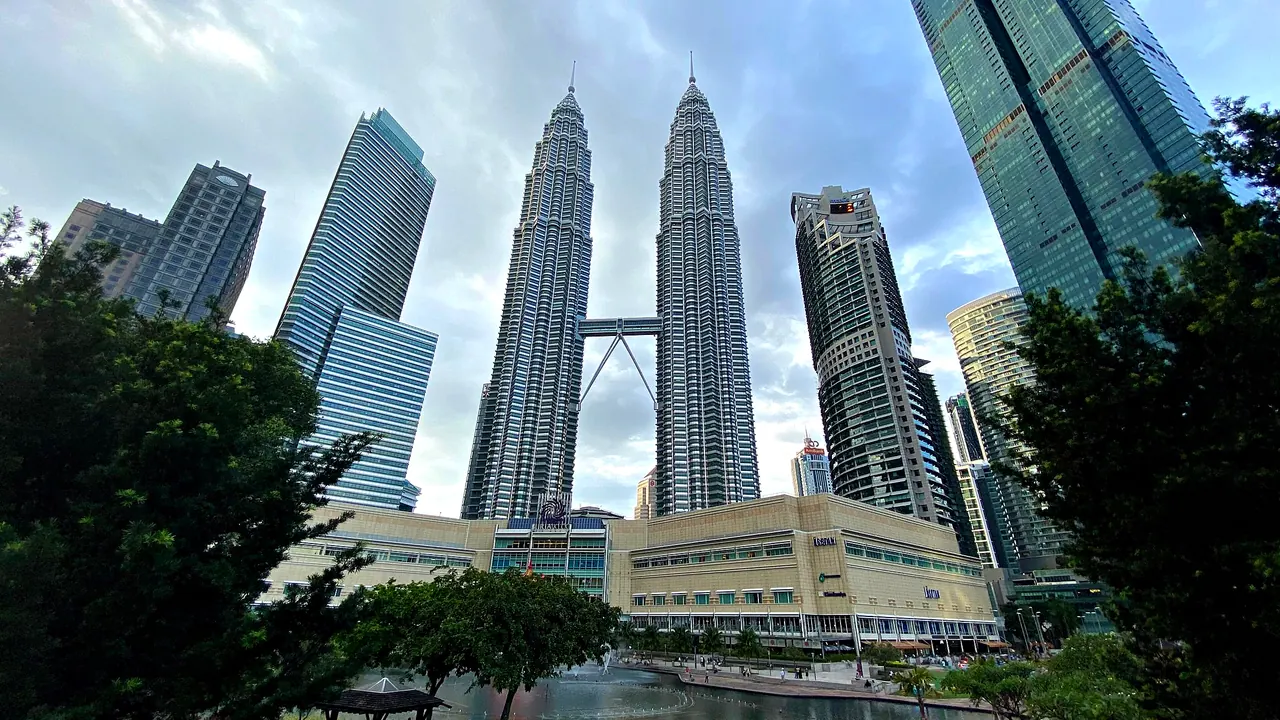
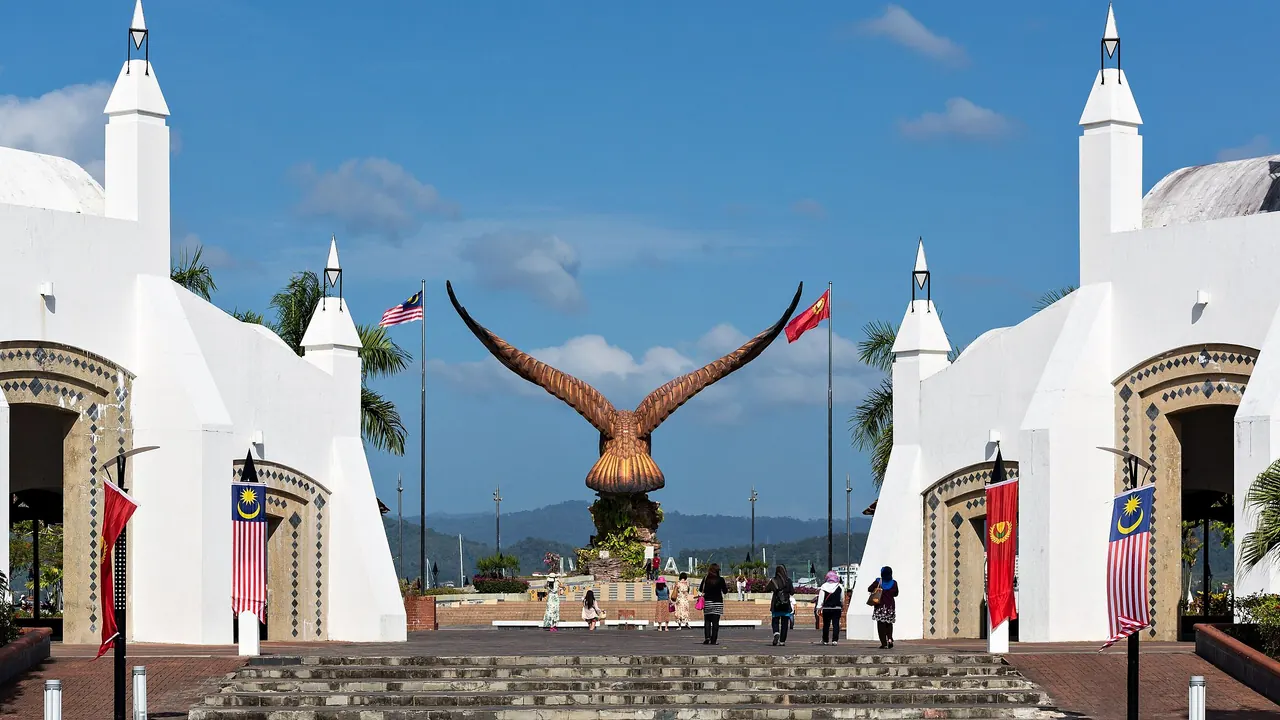
Photos: Kuala Lumpur by Brownc, CC BY-SA 4.0, cropped; Langkawi by CEphoto, Uwe Aranas, CC BY-SA 3.0, cropped.
Kuala Lumpur or Langkawi?
Our verdict in twelve categories, each scored against the same fixed benchmark cities, and the climate month by month, so you can choose for your trip.
Choose Kuala Lumpur for
- food and drink
- culture and sights
- shopping
Kuala Lumpur is the choice for a city trip built around eating, sightseeing and shopping. Its hawker stalls, mamak canteens and night markets bring Malay, Chinese and Indian cooking together in one place. Merdeka Square, the Islamic Arts Museum, Batu Caves and the giant malls of Bukit Bintang fill several full days, and Malacca is close enough for a long day out. What it cannot give you is a beach.
Choose Langkawi for
- beaches
- nature and the outdoors
- wellness
Langkawi rewards travellers who want sand, warm sea and a slower pace. Pantai Cenang and Tanjung Rhu make swimming easy, the Kilim mangroves and the rainforest of the Machinchang range cover the outdoors, and the resort spas and quiet evenings make rest the point of the stay. In return you accept a handful of small sights, simple food and very little to do after dark.
Scoreboard
Twelve categories on one fixed scale from 0 to 100. The shaded stretch is the gap between the two.
Your match
Pick a travel style or drag the sliders, and both match scores follow your weighting.
Wins on food and drink and culture and sights with your weighting.
Wins on beaches and nature and the outdoors with your weighting.
What matters to you?
Category by category
What the scores mean for a trip.
Beaches & swimming
Here the gap is as wide as it gets. Kuala Lumpur sits inland, the coast at Port Klang is mangrove mud and shipping lanes, and the ordinary sand at Port Dickson is about an hour and a half's drive away. In the city, a swim means a hotel rooftop pool.
Langkawi is built around its beaches. Pantai Cenang is a long, pale bay with shallow water and sunsets over the islands, Pantai Tengah is a calmer stretch of the same shore, and Tanjung Rhu and Datai Bay are quieter and backed by forest. The water is warm and pleasant rather than glass-clear, and snorkellers take a boat to the marine park islands. Many visitors add Langkawi to a Kuala Lumpur trip for exactly this reason.
Food & drink
Kuala Lumpur is one of Asia's great eating cities. Malay, Cantonese and Hokkien, and South Indian cooking sit side by side, and the mamak canteens serve roti canai and teh tarik around the clock. Jalan Alor after dark, Chinatown, Brickfields and the home cooking of Kampung Baru could fill a trip on their own.
Langkawi eats simply. The best meals come from the pasar malam, which moves to a different village each night, and from coastal seafood places where you choose fish by weight, while much of the food along Pantai Cenang is ordinary tourist fare. One thing works the other way: duty-free beer and wine flow easily on the island, whereas drinks in Kuala Lumpur are heavily taxed.
Culture & sights
Kuala Lumpur has two or three days of solid sightseeing. You can cross the Petronas Towers skybridge, see the Moorish-style colonial buildings around Merdeka Square, spend time in the excellent Islamic Arts Museum, and climb the rainbow stairway to the shrine at Batu Caves, with Chinatown's temples and Thean Hou Temple on top.
Langkawi does not compete on this front. Mahsuri's tomb in its small heritage village, the eagle statue in Kuah, the rice story at Laman Padi and the state gifts in the Galeria Perdana take up a morning between beach days.
Nightlife
Kuala Lumpur offers a real night out. Changkat Bukit Bintang's shophouse bars stay busy late, rooftop bars face the Petronas Towers, there are clubs for dancing into the small hours, and Bangsar has a more local feel. Even a quiet evening can end at a mamak stall over tea.
Langkawi's evenings are a sundowner on a bean bag at Pantai Cenang, a fire-twirling show and a late dinner. There are no clubs to speak of, and most of the island is dark well before midnight. Cheap duty-free drinks are the one point in its favour.
Nature & outdoors
Langkawi's landscape is its second strength after the beaches. The archipelago is a UNESCO Global Geopark, with boat and kayak trips through the Kilim mangroves under limestone cliffs and sea eagles overhead. A cable car climbs the ancient rainforest of the Machinchang range to the sky bridge, and Gunung Raya has hornbills and dusky langurs along its forest road.
Kuala Lumpur does surprisingly well for a capital, with a patch of jungle and canopy walk by the KL Tower, the Forest Research Institute's trails and suspension bridge, and Fraser's Hill for birdwatching. Beyond those, though, its wild places mean traffic or an overnight trip, while on Langkawi they are a short drive from the beach.
Day trips
Kuala Lumpur works well as a base for outings. UNESCO-listed Malacca, with its Dutch and Portuguese buildings and Peranakan food, is about two hours south. Putrajaya's mosques are half an hour away, and Klang and the firefly river at Kuala Selangor make smaller outings.
Langkawi offers little beyond its own shores. Koh Lipe in Thailand is reachable by ferry in the dry season but means crossing a border, and Alor Setar on the mainland is a long day for a modest reward. Most visitors spend spare days on island-hopping boats instead.
Good for families
Both work for children, in different ways. Kuala Lumpur has more to do: the shark-tunnel aquarium and science centre under the Petronas Towers, the bird and butterfly parks in the Lake Gardens, and the water and theme park at Sunway, with air-conditioned malls for rainy afternoons. The catch is that heat, broken pavements and busy roads mean taxis everywhere.
Langkawi is the gentler, beach-and-pool option. Shallow water at Pantai Cenang and Pantai Tengah, resort kids' clubs, the penguins at Underwater World and eagle-feeding boat trips keep younger children happy. There is no theme park, though, and the attractions run out after a few days.
Getting around
Kuala Lumpur has an actual network. LRT and MRT lines, a monorail and an airport express to KL Sentral are clean and cool, though changing lines can mean long walks through confusing stations. Cheap ride-hailing fills the gaps, and walking only works in the centre, partly thanks to the covered walkway from the Petronas Towers to Bukit Bintang.
Langkawi has essentially no public transport, so you hire a car or scooter or use ride-hailing. The island is only about 25km across, the roads are good and quiet, and the airport is next to Pantai Cenang, so driving yourself feels easy rather than a chore.
Shopping & style
Shopping in Kuala Lumpur means fashion, electronics and crafts spread across some of the biggest malls in the region. On Langkawi it mostly means stocking up on duty-free goods. Bukit Bintang's string of huge centres runs from luxury flagships to electronics floors, Mid Valley and Bangsar add more, and the malls double as places to eat and get out of the heat. For local goods, the Art Deco Central Market sells batik, songket and pewter, and Petaling Street in Chinatown has cheap goods and copies.
Langkawi's tax-free complexes in Kuah and along Pantai Cenang sell chocolate, alcohol, cosmetics and kitchenware, and Malaysian visitors in particular take bags of it home. Beyond those there are batik sarongs, pearls and night-market stalls, but no fashion streets or design shops to seek out.
Affordability
Both are easy on the budget, and what differs is where the savings fall. In Kuala Lumpur the standout is hotel quality for the price, with international chains and rooftop pools costing far less than in other capitals, plus cheap hawker food, trains and rides. Drinking is the expensive part.
On Langkawi that reverses. Duty-free beer and wine are cheap, as are night-market meals and car hire, but the luxury rainforest resorts charge international rates, and boat tours and the cable car soon add up.
Live music & performing arts
Kuala Lumpur has a modest but real performing arts life. The Malaysian Philharmonic Orchestra plays a regular season in its intimate shoebox hall inside the Petronas Towers, Istana Budaya stages large musicals and traditional productions, and small jazz bars dot Bangsar and Changkat.
On Langkawi, live performance means fire-dancing on the sand, bar cover bands and the odd Malay cultural show over a resort dinner.
Wellness & relaxation
Langkawi is the place to unwind. Traffic is light, evenings are quiet, and the resorts in the northwestern rainforest and at Tanjung Rhu have serious spas, some with treatment pavilions among trees and streams. Simple massage shops line Pantai Cenang.
Kuala Lumpur matches it on massage, with reflexology parlours all along Bukit Bintang, good hotel spas and a few Turkish-style hammams. The city itself is anything but restful, though: you have to look for calm in the Lake Gardens early in the day or by a rooftop pool. Neither place has a bathing tradition, and Langkawi's small hot spring near Kuah is not a reason to go.
When should you go?
Pick your month. The climate figures are measured averages, not a forecast.
Kuala Lumpur in July
Langkawi in July
Daytime high, °C
Rainfall in the month, mm
Where the figures come from
Kuala Lumpur's temperatures are measured 46 km from the centre, at Sepang/KL International Airport.
Kuala Lumpur has no rain gauge within 25 km of the centre, so its rainfall comes from a gridded climate dataset read at the destination rather than from a gauge further away.
Langkawi's temperatures are measured 75 km from the centre, at Alor Star.
Langkawi has no rain gauge within 25 km of the centre, so its rainfall comes from a gridded climate dataset read at the destination rather than from a gauge further away.
Temperature and rainfall are climate normals, averaged over the years shown. Kuala Lumpur: 1991-2020 (sunshine 1981-2010) normals, Sepang/KL International Airport (46.1 km from centre). Langkawi: 2004-2020 (rainfall 1991-2020) normals, Alor Star (75 km from centre).
Both places are hot all year, with daytime highs around 33°C in every month, so the real difference is rain. Langkawi has a clear dry season from December to March, when February brings only 38mm and the west-coast beaches have their calmest, clearest water. Rain builds from April, and from May to October the monsoon brings heavy downpours and choppier seas, peaking in October at 385mm. The sea stays near 29°C throughout, so swimming is never cold, only less clear in the wet months.
Kuala Lumpur has no true dry season. Afternoon storms come all year, with February and June to July the least wet months and October to December the wettest. November reaches the same 385mm as Langkawi's worst month. It is sunniest from March to July and greyest in November and December. Long walks at midday are hard work in any month, so mornings and evenings suit the streets best. If you are pairing the two, go to Langkawi between December and March and spend the city days in Kuala Lumpur in mid-year.
Which traveller are you?
For a beach and sun trip, Langkawi is the clear answer. Pantai Cenang's wide, shallow bay and the quieter sand at Tanjung Rhu give easy swimming in warm water. Kuala Lumpur is inland, and its nearest real beach is a long drive away.
On a food and nightlife trip, choose Kuala Lumpur. Jalan Alor, Brickfields and Kampung Baru serve three cuisines at hawker prices, and Changkat Bukit Bintang, the rooftop bars and the clubs keep going late. Langkawi offers night markets and beach bars that go quiet early.
For a culture and arts trip, Kuala Lumpur gives far more. You get colonial Merdeka Square, the Islamic Arts Museum, Batu Caves, an orchestra in the Petronas Towers and Malacca within a day's reach. Langkawi's sights, such as Mahsuri's tomb and Eagle Square, take a single morning.
Before you go
| Measure | Kuala Lumpur | Langkawi |
|---|---|---|
| Official language | Malay | Malay |
| Currency | Malaysian Ringgit (MYR) | Malaysian Ringgit (MYR) |
| Sockets | G240 V, 50 Hz | G240 V, 50 Hz |
| Driving side | Left | Left |
| Time zone | UTC+8 | UTC+8 |
| Emergency number | 999 | 999 |
| Elevation | 50 m | - |
| Main airport | Kuala Lumpur International Airport (KUL)45 km from centre148 non-stop destinations | Langkawi International Airport (LGK)9 non-stop destinations |
By the numbers
| Measure | Kuala Lumpur | Langkawi |
|---|---|---|
| Population | 9,000,280 | 64,792 |
| People per km² | 36,932 | 136 |
| Museums within 10 km | 25 | - |
| UNESCO World Heritage sites within 50 km | 1 | - |
| Swim season, months above 21 °C | 12 months | 12 months |
Where else could you go?
Every comparison below shares a destination with this one, so you can follow Kuala Lumpur or Langkawi somewhere new.
- Koh Lipevs Langkawi
- Penangvs Langkawi
- Malaccavs Kuala Lumpur
- Koh Lantavs Langkawi
- Koh Phi Phivs Langkawi
- Krabivs Langkawi