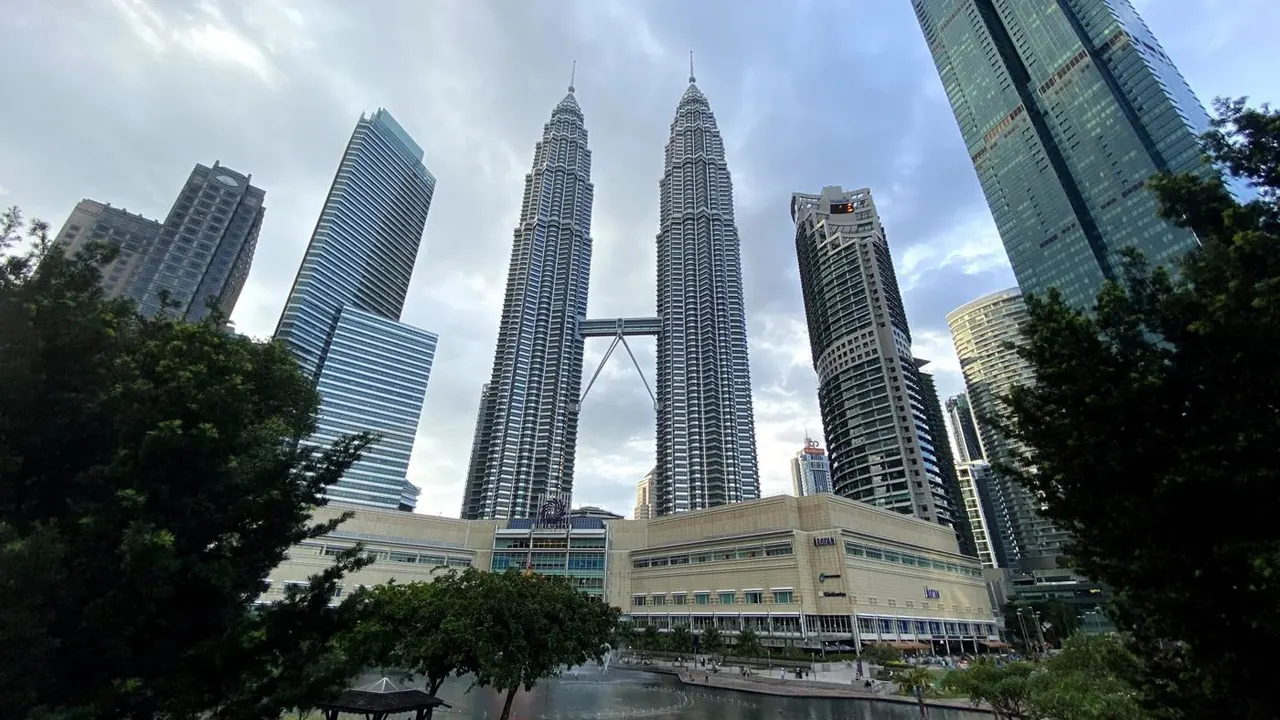
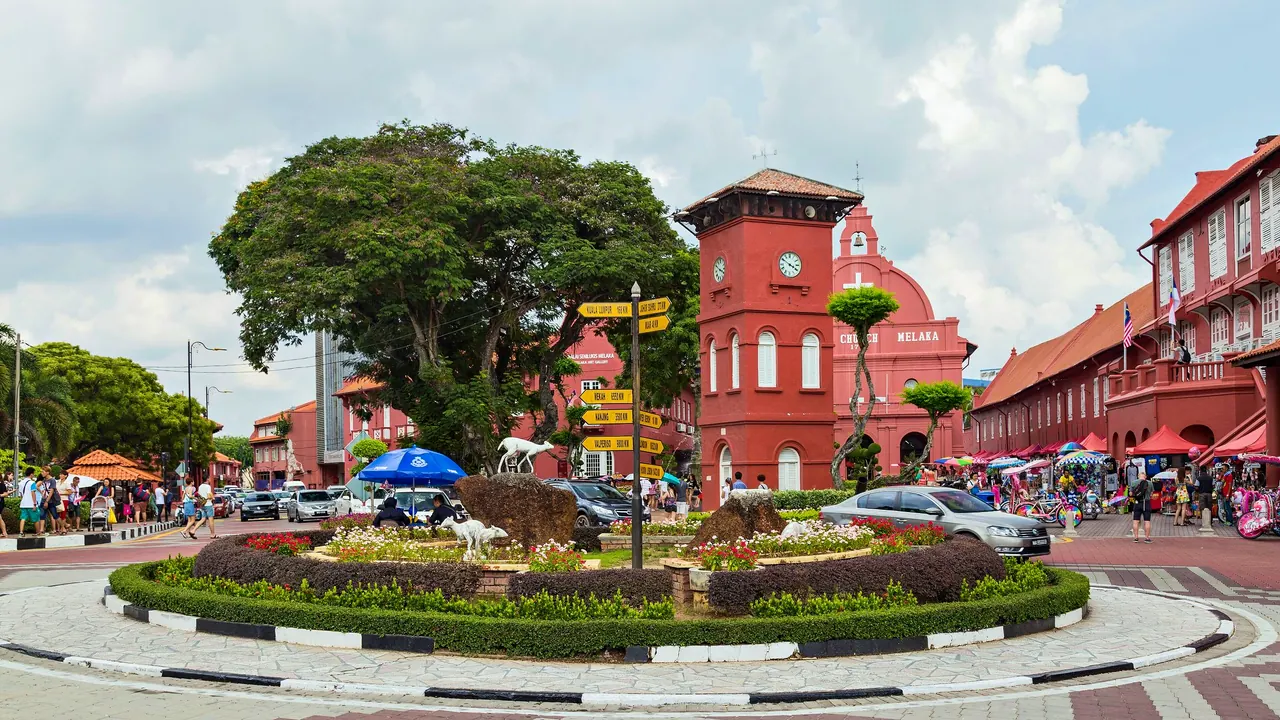
Photos: Kuala Lumpur by Brownc, CC BY-SA 4.0, cropped; Malacca by Marcin Konsek, CC BY-SA 4.0, cropped.
Kuala Lumpur or Malacca?
Our verdict in twelve categories, each scored against the same fixed benchmark cities, and the climate month by month, so you can choose for your trip.
Choose Kuala Lumpur for
- nightlife
- shopping
- nature and the outdoors
Kuala Lumpur suits travellers who want a big Asian city with range. Malay, Chinese and South Indian cooking are eaten side by side at hawker stalls and round-the-clock mamak canteens. There are rooftop bars facing the Petronas Towers, giant malls in Bukit Bintang and real rainforest at the edge of the centre. It is also the easier base for families and for day trips, one of which is Malacca itself.
Choose Malacca for
- culture and sights
- beaches
- prices
Malacca is the choice for a slower, concentrated stay in history. Five centuries of trading-port past fit into a few walkable streets, from the red Dutch square and St Paul's Hill to the Peranakan shophouses of Heeren Street. The food is a cuisine of its own rather than a tour of the country. Evenings are quiet outside the weekend night market, so it rewards two or three unhurried days, best of all midweek.
Scoreboard
Twelve categories on one fixed scale from 0 to 100. The shaded stretch is the gap between the two.
Your match
Pick a travel style or drag the sliders, and both match scores follow your weighting.
Wins on nightlife and shopping with your weighting.
Wins on culture and sights and beaches with your weighting.
What matters to you?
Category by category
What the scores mean for a trip.
Beaches & swimming
Neither city is a reason to pack swimwear. Kuala Lumpur is inland. Its nearest coast at Port Klang is mangrove and shipping water, and the closest proper sand is at Port Dickson, about an hour and a half away.
Malacca at least sits on the Strait. Klebang is good for a sunset walk, and the quiet casuarina-lined sand of Tanjung Bidara is about 30km north, though the water is brown and a swim still usually means the hotel pool. For a real beach, either city needs a separate leg to Langkawi, Penang or the east coast.
Food & drink
Both are serious eating cities, but Kuala Lumpur offers breadth. Malay, Cantonese, Hokkien and South Indian cooking sit side by side, mamak canteens serve at any hour, Jalan Alor fills after dark and Kampung Baru keeps Malay home cooking. There is also a polished restaurant tier when you want one.
Malacca goes deep rather than wide. It is the heartland of Nyonya cooking, with laksa, ayam pongteh and chicken rice balls, plus Kristang dishes from the Portuguese Settlement, eaten in the shophouse kopitiams around Jonker Street. Over a longer stay its menus start to repeat in a way the capital's never do.
Culture & sights
Malacca is the better choice for culture, because there the whole historic centre is the sight. Kuala Lumpur's highlights are younger and spread out: the Petronas Towers, the British-era buildings around Merdeka Square, the National Mosque in the Lake Gardens and Batu Caves on the edge of town, with a train or a taxi between each. Its one clear advantage is the Islamic Arts Museum, a major collection that Malacca cannot match.
Malacca fits five centuries of trading-port history into a handful of streets. The red Stadthuys square, the roofless church on St Paul's Hill, the A Famosa gate and the Peranakan townhouses of Heeren Street are minutes apart, and Harmony Street sets a Chinese temple, a mosque and a Hindu temple within a few hundred metres of each other.
Nightlife
Kuala Lumpur has a real night out. There are the shophouse pubs of Changkat Bukit Bintang, rooftop bars facing the twin towers and a cluster of large clubs, with more neighbourhood-style bars in Bangsar and Mont Kiara.
Malacca's evenings mean the weekend night market on Jonker Street or a quiet beer by the lit-up river, and on weeknights the centre goes to sleep early. Alcohol is heavily taxed in both, so a late tea at a mamak stall is the more local way to end the night.
Nature & outdoors
Kuala Lumpur has rainforest within easy reach, which is rare for a capital. There is the jungle reserve and canopy walkway by the KL Tower, the trails and suspension bridge of the Forest Research Institute, and the cooler hill stations of Fraser's Hill and Genting further out.
Malacca's surroundings are flat plantation country, so time outdoors means the riverside walk, the coastal mangrove paths or a boat to Pulau Besar. Its one proper climb, Gunung Ledang, is about an hour and a half away.
Day trips
From Kuala Lumpur the outstanding day trip is Malacca itself, two hours south, with Putrajaya, royal Klang and the firefly river at Kuala Selangor as shorter outings. Malacca can reach the capital in reverse, but it works better as a destination than a base. Its own nearby options are smaller, such as the river town of Muar and the buffalo-horn roofs of Negeri Sembilan.
Good for families
With children, Kuala Lumpur gives you far more to fill the days. Beneath the Petronas Towers are an aquarium with a shark tunnel and a science centre, and the park beside them has a splash area. The Lake Gardens add bird and butterfly parks, and there are also the national zoo and the Sunway water park. Air-conditioned malls take care of stormy afternoons.
Malacca is gentler and smaller in scope. The lit-up trishaws, the short river cruise, the revolving tower and Zoo Melaka will fill a couple of days. Weekend crowds in the old town are heavy, and the heat makes an afternoon by the pool part of the plan.
Getting around
Kuala Lumpur has a rail network that Malacca lacks: LRT and MRT lines, a monorail through Bukit Bintang and an airport express to KL Sentral. Changing lines can mean long walks, and walking outside the centre is hard going, so most visitors mix trains with cheap ride-hailing.
Malacca turns that around. Its heritage core is walkable in minutes and pleasant by bicycle in the early morning, but there is no metro or tram and buses are slow. Anything beyond the old town, such as Klebang or the Portuguese Settlement, means a ride-hailing car.
Shopping & style
Kuala Lumpur shops on a regional scale. Bukit Bintang's malls run straight into the one under the Petronas Towers, Bangsar adds independent boutiques, and the Art Deco Central Market gathers batik, songket and pewter.
Malacca is for small, particular buys rather than a shopping day: antique porcelain and clocks from Jonker Street dealers, beaded Nyonya slippers and embroidered kebaya blouses. Its waterfront malls cover only everyday needs.
Affordability
Both are cheap, and the difference lies in where the money goes. Kuala Lumpur gives unusually good hotels for the money, including international chains with rooftop pools, alongside very cheap hawker food and trains.
Malacca is cheaper in the small things, with museums and temples that charge little or nothing and good-value guesthouses in restored shophouses. Its boutique hotels fill at weekends and in Malaysian school vacations, though, so midweek stays pay off. In both cities, drinking costs more than eating.
Live music & performing arts
The Malaysian Philharmonic Orchestra, playing a regular season in its intimate hall inside the twin towers, gives Kuala Lumpur the only dependable concert evening of the two. Istana Budaya adds large musical and traditional productions, and a small jazz circuit plays in bars around Bangsar and Changkat.
Malacca offers a single staged history show on a rotating platform, worth an evening if the city's past interests you. Beyond that it has community traditions such as dondang sayang and Kristang branyo dancing, which you will find at festivals rather than on a programme.
Wellness & relaxation
Neither is a retreat, and in both, unwinding means massage rather than bathing. Kuala Lumpur offers more of it: rows of reflexology parlours in Bukit Bintang, plentiful hotel spas with Malay herbal treatments, a few hammams, and the cool hill stations for a real change of air.
Malacca is calmer on a weekday morning, with inexpensive massage in the old town, resort pools on the outskirts and long kopitiam breakfasts by the river. The weekend crowds and night-market noise undo much of that.
When should you go?
Pick your month. The climate figures are measured averages, not a forecast.
Kuala Lumpur in July
Malacca in July
Daytime high, °C
Rainfall in the month, mm
Where the figures come from
Kuala Lumpur's temperatures are measured 46 km from the centre, at Sepang/KL International Airport.
Kuala Lumpur has no rain gauge within 25 km of the centre, so its rainfall comes from a gridded climate dataset read at the city rather than from a gauge further away.
Temperature and rainfall are climate normals, averaged over the years shown. Kuala Lumpur: 1991-2020 (sunshine 1981-2010) normals, Sepang/KL International Airport (46.1 km from centre). Malacca: 1991-2020 (sunshine 1981-2010) normals, Malacca (8.7 km from centre).
Both cities are hot in every month, with daytime highs between 31°C and 34°C, so rain matters more than temperature when choosing dates. Either way, the streets are best walked early in the morning. Kuala Lumpur is much the wetter of the two. Rain builds through March and April, and October to December is the heaviest stretch, peaking at 385mm in November. June and July are its driest and sunniest-feeling months, and the most comfortable time for a city stay.
Malacca's best spell is January and February, when rainfall drops to about 82mm, and February to May bring its most sunshine. Rain climbs from March and is highest in August and November, but it never reaches the capital's levels. The sea along this coast stays close to 30°C all year, warm but not much of a draw at either city.
Which traveller are you?
On a shopping trip, Kuala Lumpur is the clear pick. Bukit Bintang strings together huge malls from luxury flagships to electronics floors, with Mid Valley and Bangsar beyond. Malacca's antiques and Peranakan crafts on Jonker Street fill an afternoon, not a trip.
For a food and nightlife trip, Kuala Lumpur again. Three cuisines meet at Jalan Alor and the mamak stalls, and Changkat Bukit Bintang and the rooftop bars keep going late. Malacca's Nyonya cooking is superb, but its weeknights end early.
On a culture and arts trip built around history and architecture, Malacca fits better. Its UNESCO-listed core packs Dutch, Portuguese and Peranakan streets into a short walk. Kuala Lumpur has the Islamic Arts Museum and an orchestra, but more scattered sights.
Before you go
| Measure | Kuala Lumpur | Malacca |
|---|---|---|
| Official language | Malay | Malay |
| Currency | Malaysian Ringgit (MYR) | Malaysian Ringgit (MYR) |
| Sockets | G240 V, 50 Hz | G240 V, 50 Hz |
| Driving side | Left | Left |
| Time zone | UTC+8 | UTC+8 |
| Emergency number | 999 | 999 |
| Elevation | 50 m | 14 m |
| Main airport | Kuala Lumpur International Airport (KUL)45 km from centre146 non-stop destinations | Kuala Lumpur International Airport (KUL)86 km from centre146 non-stop destinations |
By the numbers
| Measure | Kuala Lumpur | Malacca |
|---|---|---|
| City population | 9,000,280 | 455,300 |
| People per km² | 36,932 | - |
| Museums within 10 km | 25 | 22 |
| UNESCO World Heritage sites within 50 km | 1 | 1 |
| Swim season, months above 21 °C | 12 months | 12 months |
Where else could you go?
Every comparison below shares a destination with this one, so you can follow Kuala Lumpur or Malacca somewhere new.
- Singaporevs Malacca
- Penangvs Kuala Lumpur
- Singaporevs Kuala Lumpur
- Penangvs Malacca
- Jakartavs Malacca
- Jakartavs Kuala Lumpur