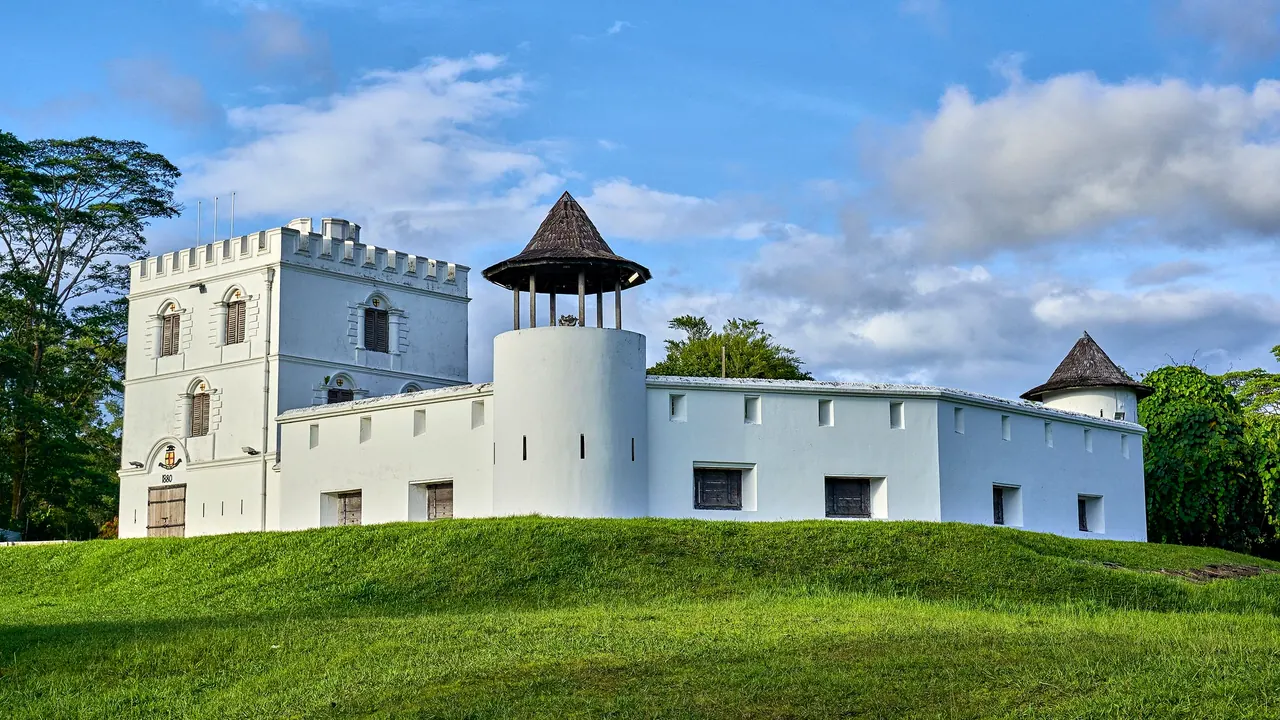
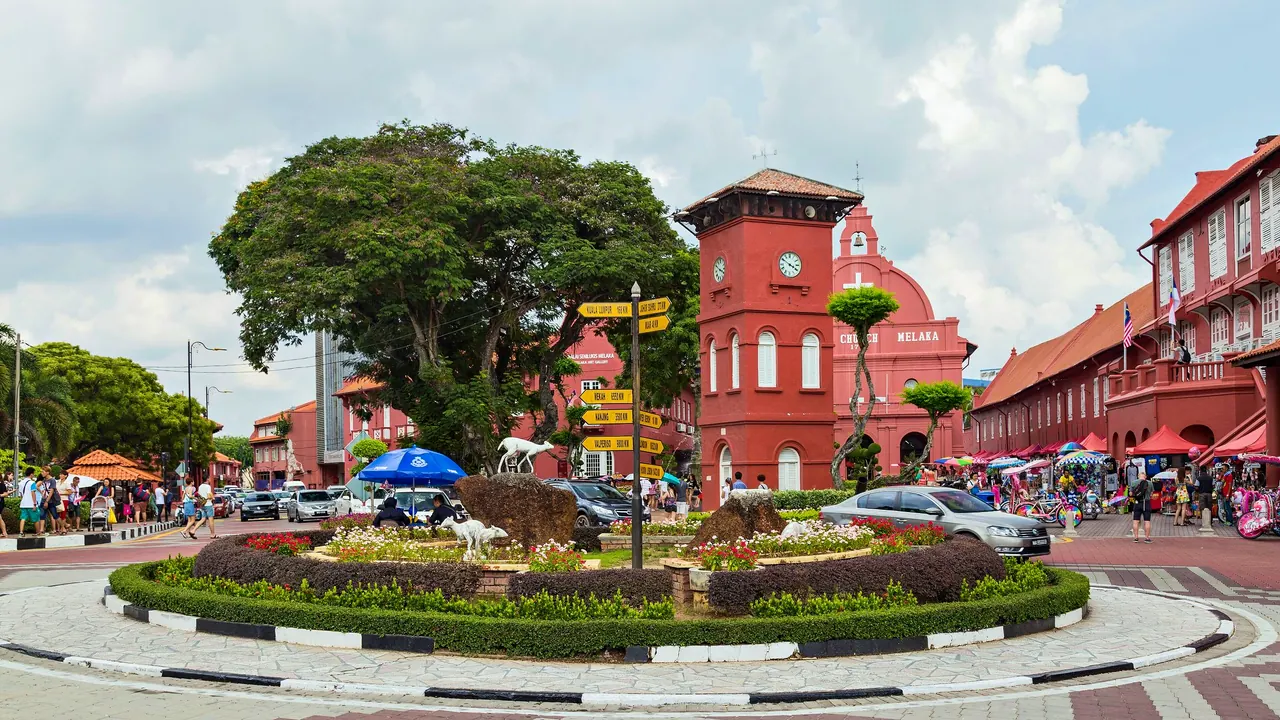
Photos: Kuching by Damian Pankowiec, CC BY-SA 4.0, cropped; Malacca by Marcin Konsek, CC BY-SA 4.0, cropped.
Kuching or Malacca?
Our verdict in twelve categories, each scored against the same fixed benchmark cities, and the climate month by month, so you can choose for your trip.
Choose Kuching for
- nature and the outdoors
- beaches
- wellness
Kuching is for travellers who want rainforest and wildlife within easy reach of a comfortable town. Orangutans at Semenggoh, proboscis monkeys at Bako and night walks at Kubah fill the days, and Sarawak laksa and riverside seafood fill the evenings. It also suits families and anyone who wants a slower, quieter pace, as long as they are happy to book boats and drivers to get out to the parks.
Choose Malacca for
- culture and sights
- getting around
- prices
Malacca rewards those who come for history and food, and finds both in the same few streets. The Dutch square, St Paul's Hill and the Peranakan shophouse lanes give you far more to see on foot than Kuching's riverfront, and Nyonya cooking alone is a good reason to stay. There is little wild country around it, so it works best as a short, compact stop built around walking and eating.
Scoreboard
Twelve categories on one fixed scale from 0 to 100. The shaded stretch is the gap between the two.
Your match
Pick a travel style or drag the sliders, and both match scores follow your weighting.
Wins on nature and the outdoors and beaches with your weighting.
Wins on culture and sights and getting around with your weighting.
What matters to you?
Category by category
What the scores mean for a trip.
Beaches & swimming
Neither city is a beach destination, but Kuching gets closer. Damai and Santubong, about forty minutes north, have proper sand backed by jungle and the peak of Mount Santubong, even if the water is often silty.
Malacca's own shoreline is reclaimed land and mudflat on a busy shipping lane, and Klebang is for sunsets rather than swimming. The nearest real sand, at Tanjung Bidara, is 30km up the coast and the water is no clearer, so the hotel pool does most of the work.
Food & drink
Both cities are worth visiting for their food, and in each it is cooking you won't easily find anywhere else. Kuching's table is Sarawakian: laksa for breakfast, kolo mee, Dayak dishes such as midin fern and chicken cooked in bamboo, and seafood grilled by weight at the riverside courts.
Malacca's is Nyonya: ayam pongteh, assam fish, chicken rice rolled into balls, satay celup dipped into a shared pot, and cendol made with dark palm sugar. Kristang curries from the Portuguese Settlement add a third layer. Neither city has much fine dining.
Culture & sights
Malacca has the deeper heritage. Its UNESCO-listed core packs the Stadthuys and Christ Church, the Portuguese ruin on St Paul's Hill, the Porta de Santiago and the Peranakan merchant houses of Heeren Street into a few streets. Harmony Street lines up a temple, a mosque and a Hindu temple within a few hundred metres.
Kuching's story is narrower but unusual. The White Rajahs' Astana and Fort Margherita face the Old Court House across the river. The Borneo Cultures Museum is the better of the two cities' museums for understanding indigenous peoples, but the whole set fits comfortably into two days.
Nightlife
Both cities wind down early, and evenings in each are mostly about food. Kuching has a little more choice of places to drink, with pubs, rooftop bars and live-band lounges around Jalan Padungan and a few clubs at weekends. Malacca's evenings centre on the Jonker Street night market and a few quiet riverside spots for a beer, and the old town is quiet on weeknights.
Nature & outdoors
This is the widest gap between the two. From Kuching you can watch orangutans at Semenggoh, go looking for proboscis monkeys and pitcher plants at Bako, and take night frog walks at Kubah. There are also dolphin and firefly boat trips on the Santubong estuary, and Gunung Gading has rafflesia flowers.
Malacca sits on flat plantation country. The river path, the mangroves near the Straits and the island of Pulau Besar make easy mornings. The only real climb, Gunung Ledang, is about an hour and a half away across the Johor border.
Day trips
Outings from the two cities are of a different kind. Kuching's lead to Borneo's peoples rather than to towns: the longhouses of the Sarawak Cultural Village, the living Bidayuh community at Annah Rais, and small places such as Siniawan, Bau and the border market at Serikin.
Malacca's lead to other towns. Kuala Lumpur and Putrajaya can be done in a long day, Muar has a riverside of colonial buildings, and Negeri Sembilan has buffalo-horn Minangkabau roofs.
Good for families
Kuching is the better choice for children, mainly because of its animals: orangutans arriving at Semenggoh and monkeys at Bako tend to stay with children long after the trip. The cultural village dances and the city's cat statues add lighter moments. Bako's boat ride and rough trails do suit older children best.
Malacca has more that is built for children, including Zoo Melaka, the Ayer Keroh water parks, the revolving tower and the trishaws. On the other hand, weekend crowds in the old town and patchy pavements make days there harder work.
Getting around
Malacca is easier to get around. Dutch Square, St Paul's Hill, Jonker Street and Harmony Street are joined by a riverside path, a hired bicycle works well early in the morning, and long-distance buses leave from Melaka Sentral.
Kuching's centre is just as compact, and the wooden sampans across the river are a pleasure. The difference is that its main sights lie outside town, so reaching Bako, Semenggoh or the beaches means paying for a driver, a taxi or a tour. In both cities, ride-hailing apps cover what walking cannot.
Shopping & style
In both cities, the things worth buying are small and local, and there is no luxury shopping in either. Kuching sells Borneo crafts: rattan, beadwork and handwoven Iban pua kumbu in the Main Bazaar shophouses, plus Sarawak pepper, kek lapis and the jungle produce at Satok market. Malacca's speciality is antiques and Peranakan craft along Jonker Street, from old porcelain to beaded slippers, kebaya blouses and painted tiles.
Affordability
Both are cheap places to eat and sleep, and in both, heavily taxed alcohol can cost more than the day's meals. Where the money goes is different. In Kuching it is the boats, drivers and guided tours needed to reach the parks, which add up quickly for anyone travelling alone. In Malacca it is the old-town boutique hotels at weekends and during school vacations, so coming midweek saves the most.
Live music & performing arts
Neither city has a theatre or concert season, and each has one thing worth planning around. Kuching has the Rainforest World Music Festival, held each year at the foot of Mount Santubong, plus sape music and dance at the cultural village. Malacca has a staged history show on a rotating platform, which runs as a regular performance. The rest is community tradition: dondang sayang verses, Kristang branyo dancing at the Festa San Pedro, and lion dances in the shophouse lanes.
Wellness & relaxation
Kuching is the more restful of the two. Its slow riverside pace holds through the week, and the resort spas at Damai and Santubong offer treatments with jungle and sea views.
Malacca can be just as gentle on a weekday morning, with a long kopitiam breakfast and a walk by the river. At weekends, though, crowds, traffic and the night market change the mood, so anyone coming to unwind should go midweek. Both cities have plenty of inexpensive reflexology and massage shops.
When should you go?
Pick your month. The climate figures are measured averages, not a forecast.
Kuching in July
Malacca in July
Daytime high, °C
Rainfall in the month, mm
Temperature and rainfall are climate normals, averaged over the years shown. Kuching: 1991-2020 (sunshine 1981-2010) normals, Kuching (8.3 km from centre). Malacca: 1991-2020 (sunshine 1981-2010) normals, Malacca (8.7 km from centre).
Both cities are hot all year, with daytime highs in the low thirties, and the sea stays bath-warm in both, so the choice comes down to rain. Kuching's northeast monsoon makes December to February very wet, with January bringing around 671mm, and the sea off Damai is rougher then. Rain eases from April to September, and July is the driest month at about 200mm. It is also the sunniest, so the middle of the year is the best time for the parks and the beaches.
Malacca's pattern runs almost the other way. February is its driest month at about 82mm, and the long sunny spell from February to May is the best time for walking the old town. Rain builds through the second half of the year to a wet November of about 234mm, though even then Malacca is far drier than Kuching in its wet season. In both cities, keep to the shade at midday and walk in the early morning and evening.
Which traveller are you?
On an outdoors trip, Kuching is the clear choice. Semenggoh's orangutans, Bako's cliffs and proboscis monkeys, Kubah's night hikes and the rope-assisted climb of Mount Santubong are all close by. Malacca has river walks and a single serious hike, Gunung Ledang.
For a culture and arts trip, Malacca gives you more. Five centuries of Malay, Portuguese, Dutch and Peranakan history fill its UNESCO-listed streets. Kuching's Brooke-era riverfront and the Borneo Cultures Museum are worthwhile but can be covered in two days.
On a family trip with children, Kuching tends to leave the stronger memories. Watching orangutans swing in at feeding time beats most attractions. Malacca does offer a zoo, water parks and light-covered trishaws, but its heritage core gets crowded with day-trippers at weekends.
Before you go
| Measure | Kuching | Malacca |
|---|---|---|
| Official language | Malay | Malay |
| Currency | Malaysian Ringgit (MYR) | Malaysian Ringgit (MYR) |
| Sockets | G240 V, 50 Hz | G240 V, 50 Hz |
| Driving side | Left | Left |
| Time zone | UTC+8 | UTC+8 |
| Emergency number | 999 | 999 |
| Elevation | 8 m | 14 m |
| Main airport | Kuching International Airport (KCH)8 km from centre23 non-stop destinations | Kuala Lumpur International Airport (KUL)86 km from centre145 non-stop destinations |
By the numbers
| Measure | Kuching | Malacca |
|---|---|---|
| City population | 325,132 | 455,300 |
| People per km² | 754 | - |
| Museums within 10 km | 6 | 22 |
| UNESCO World Heritage sites within 50 km | 0 | 1 |
| Swim season, months above 21 °C | 12 months | 12 months |
Where else could you go?
Every comparison below shares a destination with this one, so you can follow Kuching or Malacca somewhere new.
- Kuala Lumpurvs Malacca
- Singaporevs Malacca
- Penangvs Malacca
- Singaporevs Kuching
- Kota Kinabaluvs Kuching
- Kuala Lumpurvs Kuching