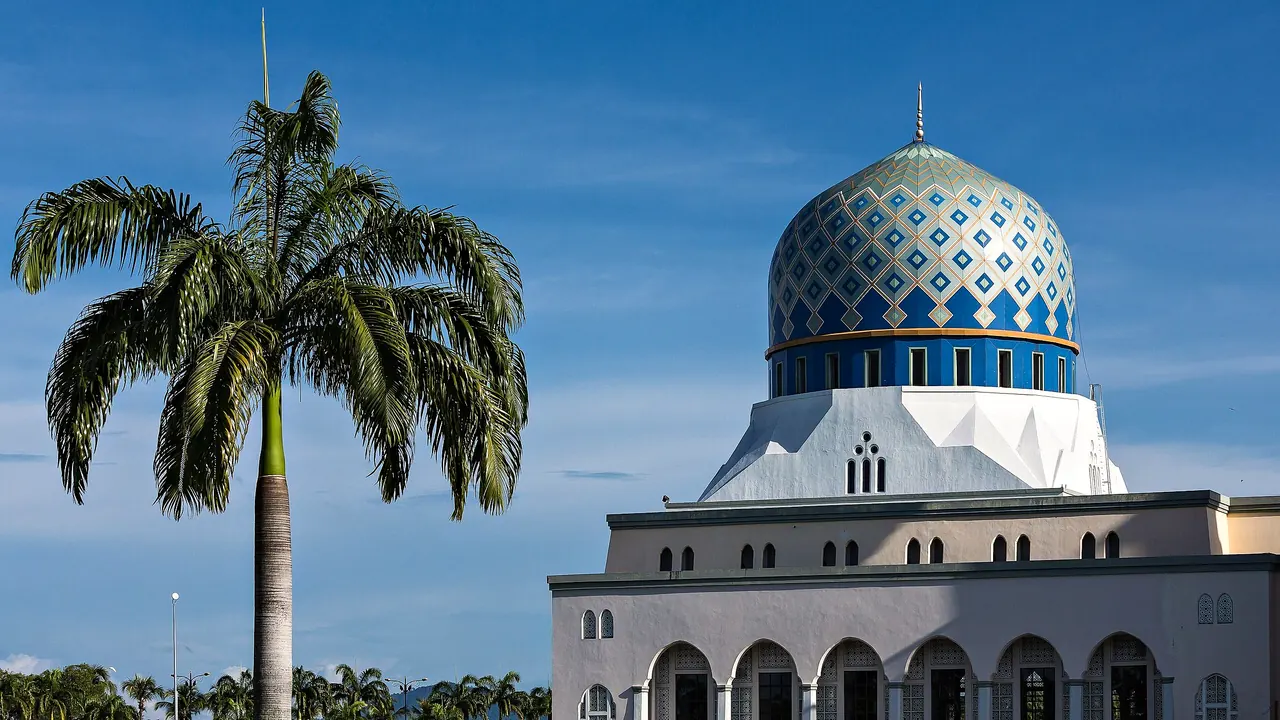
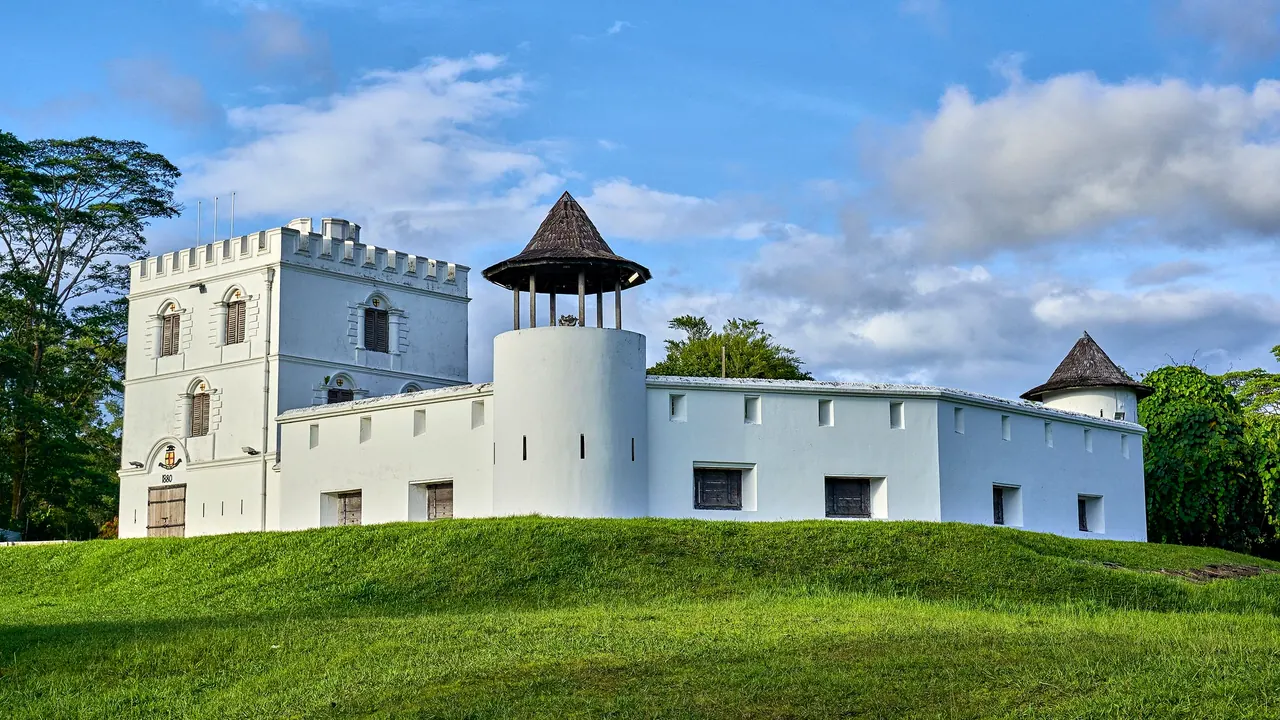
Photos: Kota Kinabalu by CEphoto, Uwe Aranas, CC BY-SA 3.0, cropped; Kuching by Damian Pankowiec, CC BY-SA 4.0, cropped.
Kota Kinabalu or Kuching?
Our verdict in twelve categories, each scored against the same fixed benchmark cities, and the climate month by month, so you can choose for your trip.
Choose Kota Kinabalu for
- beaches
- nightlife
- nature and the outdoors
Kota Kinabalu suits travellers who want the sea and the mountain on one trip. The marine park islands are a short boat ride from the centre, with coral close to shore, and the beach resorts make for easy stays. Mount Kinabalu, Borneo's biggest climb, is a couple of hours' drive away. Its drier spell early in the year is also far kinder than Kuching's.
Choose Kuching for
- culture and sights
- live music and the arts
- food and drink
Choose Kuching if the town itself matters to you. The Brooke-era riverfront, Main Bazaar and the Borneo Cultures Museum fill two good days. The laksa and kolo mee alone are worth the journey, and semi-wild orangutans are half an hour away at Semenggoh. The beaches are an afterthought, so come for the rainforest, the food and the river rather than for swimming.
Scoreboard
Twelve categories on one fixed scale from 0 to 100. The shaded stretch is the gap between the two.
Your match
Pick a travel style or drag the sliders, and both match scores follow your weighting.
Too close to call, 1 point apart
Wins on beaches and nightlife with your weighting.
Wins on culture and sights and live music and the arts with your weighting.
What matters to you?
Category by category
What the scores mean for a trip.
Beaches & swimming
On beaches, Kota Kinabalu wins easily. The five islands of Tunku Abdul Rahman Park are about a quarter of an hour by speedboat from the central jetty, with white sand, coral just offshore and clear water. They are best reached early, before the day-trippers arrive. Tanjung Aru and Dalit Bay add resort stays that put the sea at the centre.
Kuching has no beach in town at all. Damai and Santubong, about forty minutes north, look striking with jungle and Mount Santubong behind them, but the water is often cloudy with silt. Most visitors swim in the hotel pool and treat the coast as a half-day outing.
Food & drink
Both are cheap, casual eating towns built on kopitiams and open-air stalls. Kuching has the edge because so much of its food is its own. Sarawak laksa and kolo mee are reasons to visit in themselves, and Dayak dishes such as midin fern and chicken cooked in bamboo are hard to find anywhere else.
Kota Kinabalu is the better seafood town, with live tanks in its big open-air restaurants and squid and stingray grilled at the waterfront night market. Its own sang nyuk mee and Tuaran mee, and the Kadazan raw fish salad hinava, are well worth seeking out. Neither city does much fine dining.
Culture & sights
Kuching has a real historic centre, and Kota Kinabalu largely does not. The Brooke family's century of rule left Fort Margherita and the Astana on one bank of the river, facing the Old Court House and the shophouses of Main Bazaar on the other. Chinese clan temples, Carpenter Street and the Borneo Cultures Museum are all close by.
Kota Kinabalu was mostly destroyed in 1945. Its sights, the Sabah Museum, the floating City Mosque and the Atkinson Clock Tower, take half a day, and its indigenous cultures are better seen in the villages outside town.
Nightlife
Neither city is built for late nights, but Kota Kinabalu has a little more going on. Its waterfront bars look out over the sunset and the islands, and a few live-band bars and small clubs stay open later at weekends. Early starts for the boats and the mountain still keep things modest.
Kuching's evenings are quieter. A few pubs, rooftop bars and karaoke spots cluster around Jalan Padungan, and most nights end with a walk along the lit river.
Nature & outdoors
Both are superb bases for Borneo's outdoors, and the difference is in kind. Kota Kinabalu has the mountain and the sea. Mount Kinabalu, at 4,095m the highest peak in Borneo, is a two-day climb through cloud forest about two hours inland. The marine park offers snorkelling, diving and kayaking, and the Kiulu and Padas rivers have whitewater rafting.
Kuching is about seeing wildlife up close. Semenggoh's orangutans, Bako's proboscis monkeys among sandstone cliffs and mangroves, night walks at Kubah and rafflesia at Gunung Gading are all within easy reach. Most of them are closer to town than Kota Kinabalu's big sights.
Day trips
From both cities the best outings head into the landscape, and there are few towns worth a visit. From Kota Kinabalu, go to the Sunday tamu at Kota Belud, a working rural market, or take a slow ride on Borneo's only railway, south through rice fields to Papar and Beaufort.
Kuching's outings centre on longhouse life. The Sarawak Cultural Village at Santubong shows the traditional houses, and Annah Rais is a Bidayuh longhouse community where people still live. The wooden shophouses of Siniawan and the old gold-mining town of Bau make shorter half days.
Good for families
For families the two are much alike: safe, relaxed and warm towards children, but with little built for them and draining heat. What differs is the main attraction. Kota Kinabalu offers shallow island beaches for first snorkels, Lok Kawi Wildlife Park and resorts with kids' clubs. Kuching has the orangutans at Semenggoh, the waterfront promenade and its cat statues, while Bako's rough trails suit older children better.
Getting around
Both have a compact, walkable core that gives way to sprawl, with no rail transit and buses that visitors struggle to use, so ride-hailing apps do most of the work. Kota Kinabalu's advantage is that the island boats leave from the jetty in the centre. Kuching has a tight heritage quarter and sampans that cross the river in moments. The big sights, Mount Kinabalu in one case and Bako or Semenggoh in the other, need a driver, a tour or a car.
Shopping & style
In both cities the shopping is local, with malls for the basics and no designer scene. Kota Kinabalu's highlight is the Sunday market on Gaya Street, along with the shell work, pearls and woven goods at the waterfront handicraft market. Main Bazaar in Kuching goes deeper into Borneo crafts, especially Iban pua kumbu textiles and beadwork, though quality varies. Sarawak pepper and kek lapis make easy gifts.
Affordability
Day-to-day costs are low in both, with cheap noodle breakfasts, cheap ride-hailing and comfortable mid-range hotels. The money goes on the outings. In Kota Kinabalu that means the permits, compulsory guides and hut for Mount Kinabalu, plus diving and resort rates. In Kuching it means boats and drivers to the parks, which cost solo travellers most, and heavily taxed alcohol.
Live music & performing arts
Kuching has the bigger draw: the Rainforest World Music Festival at the Sarawak Cultural Village, which brings musicians from around the world to the foot of Mount Santubong. Outside the festival there are occasional sape performances and the dance shows at the cultural village.
Kota Kinabalu offers less. Its traditional dances are mostly staged for visitors. The Kaamatan harvest festival in Penampang is the best chance to hear gong ensembles and bamboo bands played by local people.
Wellness & relaxation
Neither city has a bathing tradition, and in both, relaxing means cheap reflexology and resort spas. Kota Kinabalu's resorts at Tanjung Aru and Dalit Bay are built around the beach. Poring Hot Springs offers an open-air soak after the mountain, though it is a long way from town. Kuching's calm comes from its slow pace by the river, and its resort spas at Damai sit between jungle and sea.
When should you go?
Pick your month. The climate figures are measured averages, not a forecast.
Kota Kinabalu in July
Kuching in July
Daytime high, °C
Rainfall in the month, mm
Temperature and rainfall are climate normals, averaged over the years shown. Kota Kinabalu: 1991-2020 (sunshine 1981-2010) normals, Kota Kinabalu (5.3 km from centre). Kuching: 1991-2020 (sunshine 1981-2010) normals, Kuching (8.3 km from centre).
Both cities are hot all year, with daytime highs in the low thirties every month. The real question is rain, and in either city streets are best walked early or after dusk. Kota Kinabalu has a clear dry spell from February to April, when February gets just 83mm and March is the sunniest month, which makes it good island weather. From May the rain builds steadily to a peak of 381mm in October, and the sea can turn choppy in the northeast monsoon months around the turn of the year.
Kuching's year runs almost the other way. December to February is very wet: January brings 671mm and little sunshine, with rough seas at Damai and muddy trails at Bako. June to August is its best window, and July is both the driest month, at 200mm, and the sunniest. The sea stays warm off both coasts all year. Early in the year Kota Kinabalu is by far the safer choice. From June to September the two are close, and Kuching is if anything slightly drier.
Which traveller are you?
On a beach and sun trip, Kota Kinabalu is the clear pick. The Tunku Abdul Rahman islands are a short boat ride from the centre, with white sand and coral to snorkel over. Kuching's nearest beaches are a drive away, and its water is often silty.
For a culture and arts trip, Kuching gives much more. The White Rajah riverfront, the shophouses of Main Bazaar, the Chinese temples and the Borneo Cultures Museum fill two days. The Rainforest World Music Festival is a bigger draw than anything on Kota Kinabalu's stages.
For travellers set on seeing orangutans, Kuching makes it simple. At Semenggoh, half an hour from town, semi-wild apes come in at feeding times, and Bako adds proboscis monkeys. From Kota Kinabalu, wild orangutans mean a longer journey east, though Lok Kawi keeps captive ones.
Before you go
| Measure | Kota Kinabalu | Kuching |
|---|---|---|
| Official language | Malay | Malay |
| Currency | Malaysian Ringgit (MYR) | Malaysian Ringgit (MYR) |
| Sockets | G240 V, 50 Hz | G240 V, 50 Hz |
| Driving side | Left | Left |
| Time zone | UTC+8 | UTC+8 |
| Emergency number | 999 | 999 |
| Elevation | 5 m | 8 m |
| Main airport | Kota Kinabalu International Airport (BKI)5 km from centre37 non-stop destinations | Kuching International Airport (KCH)8 km from centre23 non-stop destinations |
By the numbers
| Measure | Kota Kinabalu | Kuching |
|---|---|---|
| City population | 452,058 | 325,132 |
| People per km² | 1,284 | 754 |
| Museums within 10 km | 3 | 6 |
| UNESCO World Heritage sites within 50 km | 0 | 0 |
| Swim season, months above 21 °C | 12 months | 12 months |
Where else could you go?
Every comparison below shares a destination with this one, so you can follow Kota Kinabalu or Kuching somewhere new.
- Puerto Princesavs Kota Kinabalu
- El Nidovs Kota Kinabalu
- Singaporevs Kuching
- Malaccavs Kuching
- Kuala Lumpurvs Kuching
- Cebuvs Kota Kinabalu