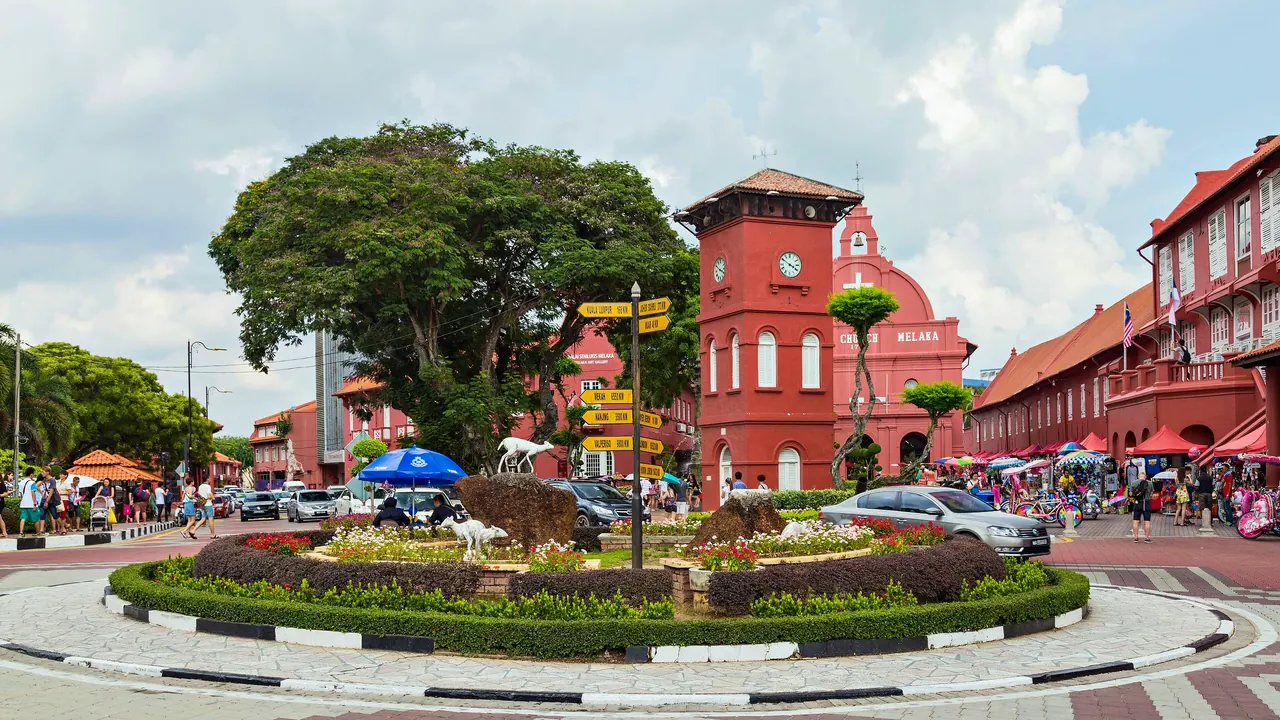
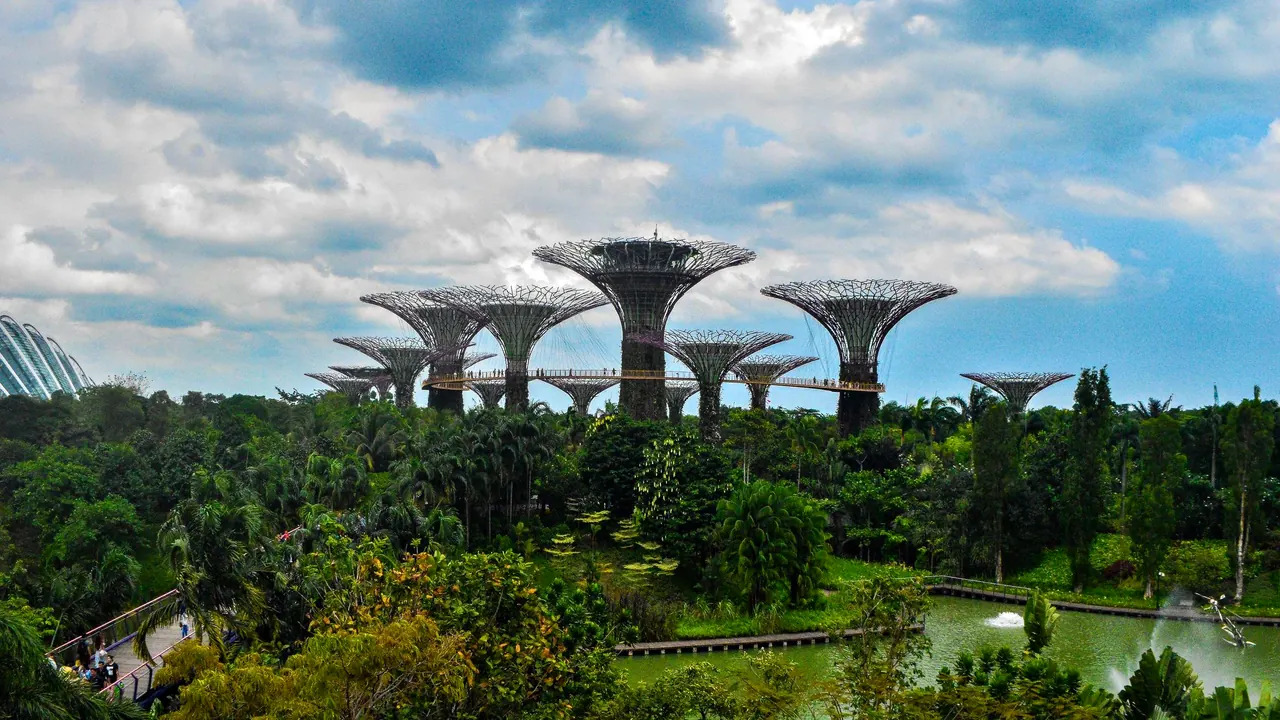
Photos: Malacca by Marcin Konsek, CC BY-SA 4.0, cropped; Singapore by Kai Kai, Pexels License.
Malacca or Singapore?
Our verdict in twelve categories, each scored against the same fixed benchmark cities, and the climate month by month, so you can choose for your trip.
Choose Malacca for
- prices
- day trips
- culture and sights
Malacca suits a slow, inexpensive trip built around eating and wandering. Nyonya cooking in old shophouse kopitiams, the red Dutch square and St Paul's Hill, and the Peranakan lanes of Heeren Street fill two or three unhurried days. The small core is easy on foot and the town costs little, and Kuala Lumpur, Putrajaya and Muar are all within reach for a day out. It is for travellers who want history close at hand more than a list of attractions.
Choose Singapore for
- getting around
- families
- shopping
Choose Singapore if you want ease and range and can pay for it. Families get some of Asia's best wildlife parks and Sentosa, the MRT takes the effort out of every outing, and the food runs from UNESCO-recognised hawker halls up to serious restaurants. Hotel beds are expensive, but the money buys polish: rooftop bars over Marina Bay, the malls of Orchard Road, concerts at the Esplanade and rainforest half an hour from the centre.
Scoreboard
Twelve categories on one fixed scale from 0 to 100. The shaded stretch is the gap between the two.
Your match
Pick a travel style or drag the sliders, and both match scores follow your weighting.
Wins on prices and day trips with your weighting.
Wins on getting around and families with your weighting.
What matters to you?
Category by category
What the scores mean for a trip.
Beaches & swimming
Malacca's waterfront is reclaimed land and mudflat. The brown water carries shipping and jellyfish, and Klebang is a place for a sunset walk, not a swim. The nearest proper sand is at Tanjung Bidara or Port Dickson, and neither has clear water.
Neither city is a beach destination, but Singapore does better. On Sentosa, Siloso, Palawan and Tanjong beaches have imported sand, palms and netted lagoons where swimming is safe, and East Coast Park has a long shoreline for picnics and cycling, though the strait is cloudy and full of tankers. In both cities most visitors end up swimming in the hotel pool.
Food & drink
Malacca's strength is depth in a single tradition. It is the heartland of Nyonya cooking, with ayam pongteh, sour assam fish and pineapple tarts, and it adds its own specialities: chicken rice moulded into balls, satay celup dipped in a shared pot, and Kristang devil's curry from the Portuguese Settlement. For Peranakan food at its source, nowhere is better.
Singapore has more range and wins overall. At Maxwell, Lau Pa Sat and Tekka, Chinese, Malay, Indian and Peranakan stalls stand side by side, and above them is a tier of Cantonese banquets and tasting menus that Malacca does not have. Both cities tax alcohol heavily, so in either one the eating matters more than the drinking.
Culture & sights
The two are broadly level but offer very different things. Malacca is a historic town you walk through: five centuries of trading history around the Stadthuys, the Portuguese ruins on St Paul's Hill and the A Famosa gate. Harmony Street fits a Chinese temple, a mosque and a Hindu temple into a few hundred metres, and the Baba Nyonya Heritage Museum is set in a real merchant's house.
Singapore's strength is its collections and its modern city. The Asian Civilisations Museum, the National Gallery and the Peranakan Museum stand in the Civic District, and the UNESCO-listed Botanic Gardens and the Supertrees at Marina Bay add landmarks that Malacca cannot match. Go to Malacca for atmosphere and to Singapore for museums.
Nightlife
Evenings in Malacca mean walking and eating. The weekend night market on Jonker Street brings a few loud bars, the riverside by the old warehouses is good for a quiet beer, and on weeknights the town goes to bed early.
Singapore has a real night out, though a polished one. Its cocktail bars in the shophouses of Telok Ayer and Kampong Glam are highly regarded, rooftop bars look over Marina Bay, and Clarke Quay has the clubs. Drinks cost a great deal, but there is plenty to choose from.
Nature & outdoors
Around Malacca the land is flat plantation. The outdoor options are a stroll along the river, the mangrove paths and a boat to Pulau Besar. Its one real asset is Gunung Ledang, a proper rainforest mountain about an hour and a half away, something Singapore cannot offer.
Day to day, Singapore gives you more green space and easier access to it. Bukit Timah's primary rainforest, the MacRitchie treetop walk and the Southern Ridges are all within half an hour of the centre, with macaques and hornbills along the way. Sungei Buloh is good for birds, and Pulau Ubin has mangroves and cycle tracks.
Day trips
Malacca has more within reach. Kuala Lumpur is about two hours away, with domed Putrajaya on the way, and the colonial riverfront of Muar and the buffalo-horn roofs of Negeri Sembilan make quieter outings.
From Singapore, almost every day out means crossing a border: Johor Bahru over the causeway, or a ferry to the resorts of Batam and Bintan. Within the country there is only Pulau Ubin. Malacca itself is too far from Singapore for a comfortable day trip, so many visitors simply give it a stay of its own.
Good for families
Malacca is friendly to children. The flashing trishaws, the short river cruise, the revolving tower and Zoo Melaka keep them busy for a few days. The constant heat, crowded weekends and broken pavements mean an afternoon by the pool is usually part of the plan.
Singapore is in another league. The Mandai parks include the zoo, Night Safari, River Wonders and Bird Paradise, and Sentosa adds Universal Studios, an aquarium and calm lagoons. Free water play areas, clean food courts and air-conditioned transport make long days far easier for parents.
Getting around
Malacca's heritage core is small enough to walk, with Dutch Square, Jonker Street and Harmony Street linked by the riverside path. Beyond it there is no metro, and the buses are slow, so the zoo, Klebang or the Portuguese Settlement usually mean a ride-hailing car.
Singapore is about as easy as cities get. The MRT reaches nearly every sight from the airport to Sentosa, a contactless card works as a ticket, and covered walkways and underground links take much of the sting out of the heat.
Shopping & style
Malacca's shopping is small and local. Antique dealers on Jonker Street sell porcelain and clocks, and nearby shops sell hand-beaded slippers, kebaya blouses and painted tiles. The malls cover everyday needs and little more.
Singapore offers far more. Orchard Road's linked malls stock almost every international brand, Marina Bay adds more luxury houses, and Haji Lane has independent design shops. Joo Chiat Road sells the same kind of Peranakan beadwork as Malacca, but prices are much higher.
Affordability
Malacca is cheap. Restored shophouse guesthouses, hawker breakfasts and short ride-hailing trips cost very little, and most temples and museums are free or nearly so. Only weekends and school vacations push hotel rates up, so coming midweek helps.
Singapore is among the most expensive stops in Asia. Hotel rooms cost a great deal even at modest standards, and the wildlife parks and Sentosa charge high entry fees. Hawker food and the MRT soften the bill, and in both cities alcohol is the item that hurts most.
Live music & performing arts
In Malacca, the one bookable evening is the staged history spectacle on the reclaimed waterfront, watched from a rotating platform. Beyond it you depend on the calendar: dondang sayang verses, Kristang branyo dancing at the Festa San Pedro, and lion dances in the shophouse lanes.
Singapore has a proper season. The Singapore Symphony Orchestra plays at the Victoria Concert Hall and the Esplanade, the Esplanade's domes host dance and drama, its waterfront stage puts on free shows, and touring musicals come through often.
Wellness & relaxation
Neither city has a bathing tradition. In Malacca, rest means cheap reflexology shops in the old town, resort pools on the outskirts and quiet weekday mornings over a long kopitiam breakfast. The weekend crowds and the noise of the night market break that calm.
Singapore offers more for a few restorative hours. Its luxury hotel spas are excellent, Chinatown keeps a culture of foot massage, and early walks in the Botanic Gardens or by the reservoirs are peaceful. Away from the gardens, though, the city moves fast.
When should you go?
Pick your month. The climate figures are measured averages, not a forecast.
Malacca in July
Singapore in July
Daytime high, °C
Rainfall in the month, mm
Temperature and rainfall are climate normals, averaged over the years shown. Malacca: 1991-2020 (sunshine 1981-2010) normals, Malacca (8.7 km from centre). Singapore: 1991-2020 (rainfall 1961-1990) normals, Singapore / Changi Airport (17 km from centre).
Both cities are hot in every month, with daytime highs of about 32°C, so in either one you walk in the early morning or the evening all year. The sea stays at around 29°C in both, warm but murky. The rain is what separates them. Malacca is driest and sunniest from January to March, with February the best month at about 82mm. Rain builds from April and stays heavy through the second half of the year.
Singapore runs closer to the opposite pattern. Its steadiest weather is from April to September, when it is noticeably drier than Malacca, and November and December are its wettest and greyest months, with December reaching 333mm. For a trip early in the year Malacca has the better weather. Between June and September the rain favours Singapore.
Which traveller are you?
On a tight budget, Malacca is the clear choice, because a bed there costs as little as the food. Singapore can feed you cheaply too, but even a modest hotel room costs a great deal, and that one bill decides it.
On a family trip with young children, Malacca is welcoming but tiring, since almost anything beyond the old town needs a car. Singapore is far easier. It is safe, clean and cool indoors, and its big attractions are all a train ride apart.
For a shopping trip, Malacca has small handmade souvenirs worth an hour or two. Singapore is the place to go, though: almost every international label is gathered in air-conditioned malls that stay open late, which matters in this heat.
Before you go
| Measure | Malacca | Singapore |
|---|---|---|
| Official language | Malay | English, Tamil, Malay, Standard Chinese |
| Currency | Malaysian Ringgit (MYR) | Singapore Dollar (SGD) |
| Sockets | G240 V, 50 Hz | G230 V, 50 Hz |
| Driving side | Left | Left |
| Time zone | UTC+8 | UTC+8 |
| Emergency number | 999 | Police 999, ambulance 995, fire 995 |
| Elevation | 14 m | 21 m |
| Main airport | Kuala Lumpur International Airport (KUL)86 km from centre148 non-stop destinations | Singapore Changi Airport (SIN)17 km from centre172 non-stop destinations |
| Public holidays this year | - | 11 days |
By the numbers
| Measure | Malacca | Singapore |
|---|---|---|
| Population | 455,300 | 5,866,139 |
| People per km² | - | 8,158 |
| Museums within 10 km | 22 | 40 |
| UNESCO World Heritage sites within 50 km | 1 | 1 |
| Swim season, months above 21 °C | 12 months | 12 months |
Where else could you go?
Every comparison below shares a destination with this one, so you can follow Malacca or Singapore somewhere new.
- Kuala Lumpurvs Malacca
- Kuala Lumpurvs Singapore
- Penangvs Malacca
- Penangvs Singapore
- Kuchingvs Singapore
- Jakartavs Singapore