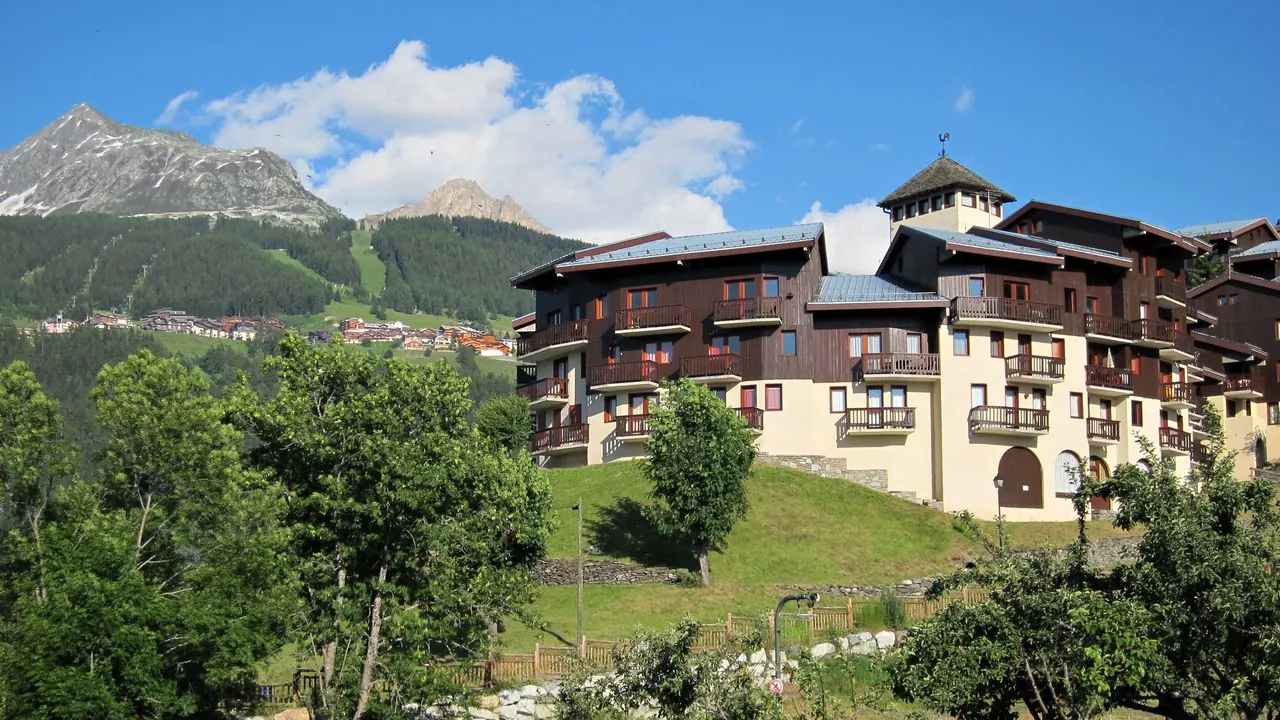
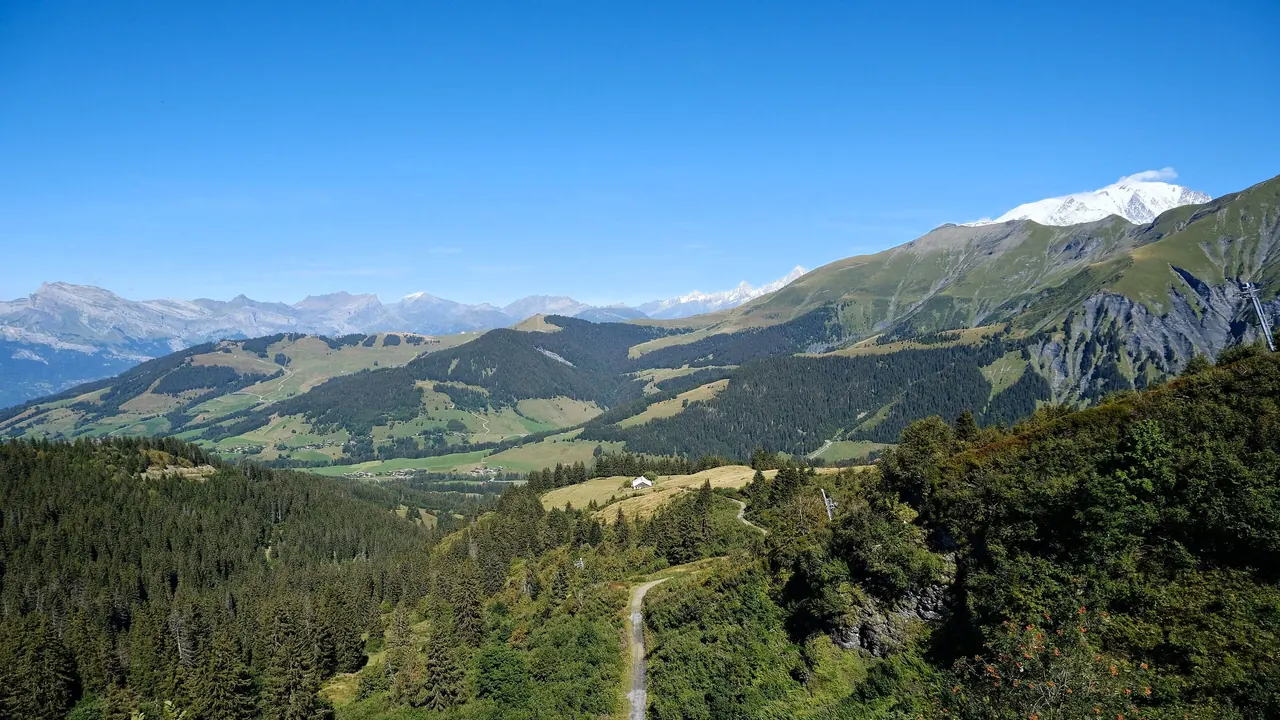
Photos: La Plagne by Henk Monster, CC BY 3.0, cropped; Megève by Guilhem Vellut, CC BY 2.0, cropped.
La Plagne or Megève?
Our verdict in twelve categories, each scored against the same fixed benchmark cities, and the climate month by month, so you can choose for your trip.
Choose La Plagne for
- prices
- families
- getting around
La Plagne is the better choice for a ski week built around the snow itself. Its villages sit high, many of them right on the pistes, and the Paradiski link to Les Arcs gives keen skiers a huge area to cover. Families do especially well here, with car-free Belle Plagne, big children's ski schools and apartments that keep a costly week under some control.
Choose Megève for
- day trips
- shopping
- food and drink
Megève suits travellers who want the mountains with comfort. It is a real village with a medieval core, Michelin-starred cooking, boutique streets and hotel spas, all facing Mont Blanc. Its skiing is gentler and lower, so the snow is less certain, but Chamonix, Annecy, Geneva and Italy's Aosta Valley are all within a day's drive. Expect to pay heavily for all of it.
Scoreboard
Twelve categories on one fixed scale from 0 to 100. The shaded stretch is the gap between the two.
Your match
Pick a travel style or drag the sliders, and both match scores follow your weighting.
Wins on prices and families with your weighting.
Wins on day trips and shopping with your weighting.
What matters to you?
Category by category
What the scores mean for a trip.
Beaches & swimming
Neither is a swimming destination, but Megève offers a little more in summer. There are natural bathing ponds in the neighbouring valleys, pools at the Palais, and Lake Annecy about an hour's drive away, where the water reaches the low twenties in high summer.
At La Plagne the mountain lakes are too cold for more than a paddle, so swimming means the resort's indoor or heated pools.
Food & drink
Both kitchens are built on the same Savoyard dishes of fondue, raclette, tartiflette, Reblochon and Beaufort, and both are at their best over a long terrace lunch on the slopes. La Plagne mostly stops there. Its villages offer pizzerias, crêperies and ski-week menus, and many guests simply cook for themselves in their apartments.
Megève adds a level of fine dining that is rare in the Alps, with several starred kitchens in the village and on Mont d'Arbois, plus farmhouse auberges in the side valleys in summer. The catch is that very little of it is cheap or casual.
Culture & sights
La Plagne was built from scratch for skiing in the 1960s, so its interest lies in modernist period pieces such as the stepped block of Aime 2000, which looks like a stranded liner, and the Olympic bobsleigh track. For old churches and Savoyard villages you have to drive down to the valley.
Megève has a real past, though it fills a morning rather than a trip. Its pedestrian centre keeps a medieval street plan around the church of Saint-Jean-Baptiste, the Calvaire chapels climb the hillside above, and Henry Jacques Le Même's interwar chalets set the model for the elegant Alpine resort.
Nightlife
Evenings in the two resorts are about equally lively but feel quite different. La Plagne's nights are après-ski in its plainest form: slope-side bars filling as the lifts close, a few pubs in Plagne Centre and Belle Plagne, and an early night for a family crowd.
Megève dresses up. Its evenings run from hotel bars with open fires to piano and wine bars in the cobbled lanes, and a long dinner usually matters more than dancing. Both go very quiet out of season.
Nature & outdoors
Both are first-rate mountain bases, but the terrain differs. La Plagne is higher and more snow-sure, running from about 1,250m up to the Bellecôte glacier above 3,000m. It is part of the vast Paradiski area, and in summer Champagny-le-Haut opens into the Vanoise National Park, with its ibex and marmots.
Megève's skiing is lower: wooded, cruising pistes in the Évasion Mont-Blanc area, with snow at the bottom that varies from year to year. It makes up for this with the view straight across to Mont Blanc, sleigh and cross-country options, and summer hikes up Mont Joly, with Chamonix's high glaciers close by.
Day trips
Megève is by far the better base for exploring. Chamonix is about forty minutes away, and Annecy and Geneva about an hour each. The Mont Blanc tunnel puts Courmayeur and Roman Aosta within easy reach, so you can spend a day in a different country.
From La Plagne every outing starts with a long drive down the mountain. The Romanesque basilica at Aime and walled Conflans are close, but Annecy is two hours away, and Italy is only practical once the Little St Bernard pass opens in summer.
Good for families
La Plagne was planned around families, and it shows in villages like Belle Plagne, where children step out of the door onto gentle snow, ski schools run on a large scale and the bob-raft ride on the Olympic track thrills older children.
Megève is safe, small and car-free at its centre, with sleigh rides, an ice rink and pony rides in summer. Even so, its offer is more modest, there is little to do on rainy days, and the cost of a family week climbs fast.
Getting around
Once you have arrived, both are easy to get around on foot and by free shuttle, but La Plagne makes daily life simpler. Most beds are ski-in, ski-out, the lifts double as transport, and a small cable car links Plagne Centre with Aime 2000. The drawback is the long climb up from Aime station, which often needs snow chains in winter.
In Megève the centre is walkable, but many chalets are scattered along steep hillside roads, summer shuttles are thin and the nearest station is down at Sallanches. Geneva airport is a little over an hour away, which suits drivers.
Shopping & style
Megève is a place people shop for pleasure. Its cobbled lanes hold designer ski-wear, cashmere and fur, jewellers and galleries of Alpine interiors, and Allard, the village's own ski-wear house since the 1920s, is a local institution. It is all small-scale and fits into a few streets.
La Plagne's shops are practical: ski hire, outdoor gear and groceries. The best things to take home are its cheese, sausages and génépi.
Affordability
Self-catering is what keeps La Plagne within reach. Lift passes, lessons and mountain lunches add up quickly, but its many apartments and resort supermarkets let families control the bill, and summer or quieter ski weeks cost noticeably less.
Megève is among the priciest places in the Alps, with hotels, chalets and meals aimed at a wealthy crowd and hardly any cheap options. Budget-minded visitors often sleep in the valley towns and drive up.
Live music & performing arts
Live music in La Plagne means a band at an après-ski bar, a torchlight descent or the odd open-air show in season, and anything more serious means going to Chambéry.
Megève has a little more to listen to, though there is still no theatre or concert season. Its long jazz connection brings live evening sets in a cellar or piano bar in winter, and in summer there are concerts in the village and the church.
Wellness & relaxation
Megève is built for unwinding. Its grand hotels compete on spas with pools and hammams, the Palais opens its wellness area to everyone, and the Saint-Gervais thermal baths are only twenty minutes away.
La Plagne offers saunas and hot tubs in the residences and aquatic centres for tired legs, but a week there is mainly about skiing hard. Its spa towns, Brides-les-Bains and La Léchère, are about an hour down the valley.
When should you go?
Pick your month. The climate figures are measured averages, not a forecast.
La Plagne in July
Megève in July
Daytime high, °C
Rainfall in the month, mm
Where the figures come from
La Plagne has no weather station within reach, so its figures come from a gridded climate model rather than a measured record, and read a broad area rather than one spot.
Megève's temperatures are measured 29 km from the centre, at Bourg-St-Maurice.
Megève's station stands 162 m below the city centre, so the centre is likely a little cooler than the figures say.
Megève has no rain gauge within 25 km of the centre, so its rainfall comes from a gridded climate dataset read at the destination rather than from a gauge further away.
Temperature and rainfall are climate normals, averaged over the years shown. La Plagne: 2001-2020 normals, NASA POWER reanalysis grid, no weather station within 90 km. Megève: 1999-2020 (rainfall 1991-2020) normals, Bourg-St-Maurice (29.1 km from centre).
La Plagne is cold and high. From December to February daytime highs stay below freezing, around -4°C in January, which is what keeps its snow reliable through the ski season. Summer is short and cool, with July reaching about 18°C. July and August are good for walking the high pastures, but far too cool for a beach day. Rain is spread fairly evenly through the year, with a wetter spell in late spring that peaks at about 103mm in May.
Megève is much milder all year. Summer highs reach around 27°C in July, so June to August is warm enough for afternoons at the bathing ponds or a drive to Lake Annecy. Winter days are often above freezing, which is why the snow on its lower slopes is less dependable than at La Plagne. It is also the wetter of the two, especially in early winter, with about 140mm in December. For walking, the drier stretch from July into September is the best bet, and September stays pleasantly mild without the summer heat.
Which traveller are you?
On a family trip with young children, La Plagne has the edge. Car-free villages sit right on the snow, the ski schools and snow gardens are large, the beginner runs are wide, and self-catering apartments make a family week much easier to manage.
For a trip on a tight budget, La Plagne is again the safer pick. Neither resort is cheap, but its big stock of apartments and its resort supermarkets keep costs within reach in a way that Megève's luxury hotels and dining never do.
For a relaxing and wellness trip, choose Megève. Its grand hotels compete on their spas and the Palais has a public wellness area. Long lunches, sleigh rides and a quiet car-free centre set a slower pace, and the Saint-Gervais thermal baths are twenty minutes away.
Before you go
| Measure | La Plagne | Megève |
|---|---|---|
| Official language | French | French |
| Currency | Euro (EUR) | Euro (EUR) |
| Sockets | CE230 V, 50 Hz | CE230 V, 50 Hz |
| Driving side | Right | Right |
| Time zone | UTC+1, UTC+2 in summer | UTC+1, UTC+2 in summer |
| Emergency number | 112 | 112 |
| Elevation | 1,974 m | 1,027 m |
| Main airport | Geneva International Airport (GVA)92 km from centre150 non-stop destinations | Geneva International Airport (GVA)58 km from centre150 non-stop destinations |
| Public holidays this year | 11 days | 11 days |
By the numbers
| Measure | La Plagne | Megève |
|---|---|---|
| Population | - | 2,893 |
| People per km² | - | 66 |
| Museums within 10 km | 2 | 2 |
| UNESCO World Heritage sites within 50 km | 0 | 1 |
Where else could you go?
Every comparison below shares a destination with this one, so you can follow La Plagne or Megève somewhere new.
- Saint-Gervais-les-Bainsvs Megève
- Courchevelvs La Plagne
- Les Arcsvs La Plagne
- Méribelvs La Plagne
- La Clusazvs Megève
- Le Grand-Bornandvs Megève