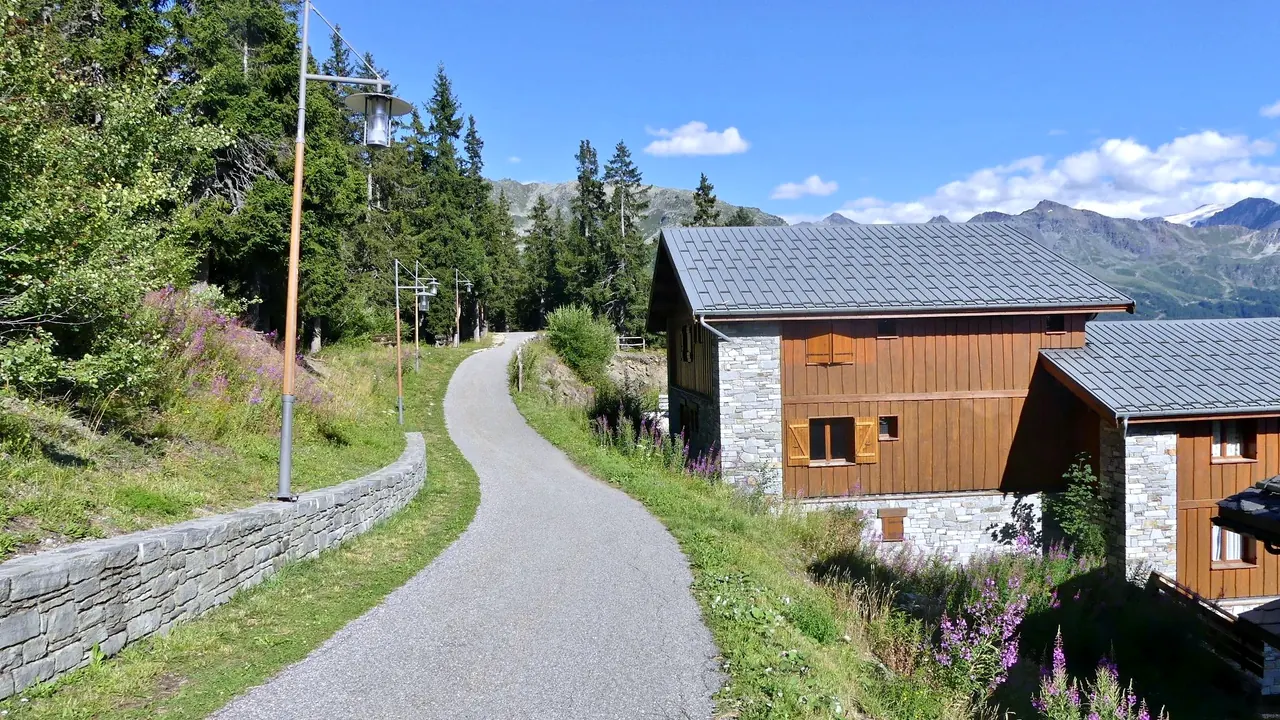
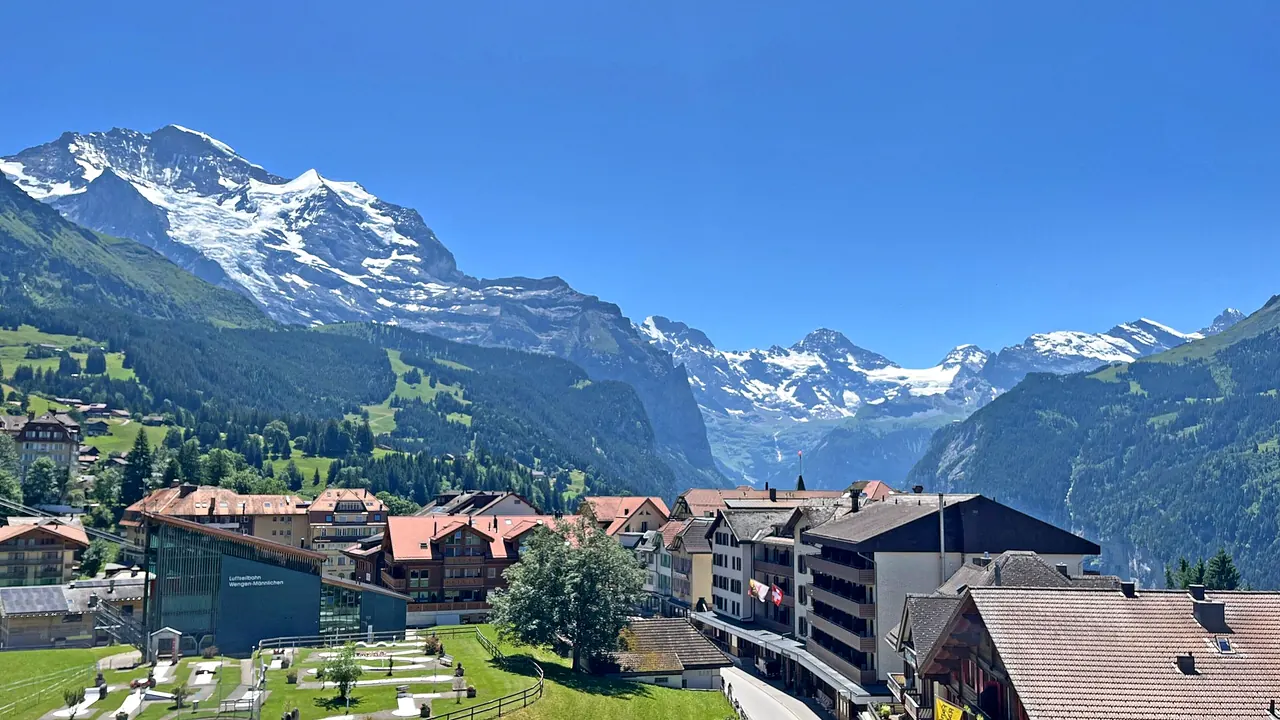
Photos: La Rosière by Florian Pépellin, CC BY-SA 4.0, cropped; Wengen by Charles J. Sharp, CC BY-SA 4.0, cropped.
La Rosière or Wengen?
Our verdict in twelve categories, each scored against the same fixed benchmark cities, and the climate month by month, so you can choose for your trip.
Choose La Rosière for
- prices
- food and drink
- culture and sights
La Rosière is the better pick for skiers and walkers who want big mountain terrain without the very top Alpine prices. Its sunny slopes run over the pass into Italy, so a ski day can end with pasta and espresso on the far side. Self-catering chalets keep a family week within reach, and summer brings cheap lifts and the Aosta valley. You will want a car for anything beyond the slopes.
Choose Wengen for
- getting around
- day trips
- beaches
Wengen suits travellers who will pay for one of the great mountain settings in Europe. The village has no cars and faces the Jungfrau, with the Eiger and Mönch close behind. Rack railways and cable cars take you to high ridges, the Jungfraujoch and the lakes and old towns below, all without driving. It costs a great deal more, but the scenery and the calm are hard to match.
Scoreboard
Twelve categories on one fixed scale from 0 to 100. The shaded stretch is the gap between the two.
Your match
Pick a travel style or drag the sliders, and both match scores follow your weighting.
Wins on prices and food and drink with your weighting.
Wins on getting around and day trips with your weighting.
What matters to you?
Category by category
What the scores mean for a trip.
Beaches & swimming
You cannot swim properly from either village, but Wengen has the better fallback. About an hour down by train, the lidos on Lake Thun make a pleasant afternoon on a hot July day.
From La Rosière, swimming means the hotel pool or a very cold Alpine lake down the valley. There is nothing nearby to match the Interlaken lakes.
Food & drink
Both serve hearty Alpine food, Savoyard fondue and tartiflette in one and rösti and veal in cream sauce in the other, and neither has much range. La Rosière comes out slightly ahead because the ski area crosses into Italy, so lunch can be proper pasta, polenta and espresso, and Bourg-Saint-Maurice below has a weekly market.
In Wengen, most meals are in hotel dining rooms or mountain huts, often on half-board. There are almost no casual options. The terrace lunch facing the Jungfrau is memorable mainly for the view.
Culture & sights
Neither is a place for sightseeing. La Rosière's nearest sights are the baroque village churches of the Tarentaise and the Iron Age stone circle on the Little St Bernard Pass.
Wengen has its Belle Époque hotels from its days as an English resort and a long ski-racing history. The real difference is access: museums and historic towns are an easy train ride from Wengen, but a drive from La Rosière.
Nightlife
Both are quiet after dark, with après-ski bars that fill as the lifts close and empty soon after dinner. La Rosière is deliberately aimed at families, and anyone after a livelier scene should look at other Tarentaise resorts. Wengen has one big exception: the weekend of the Lauberhorn downhill in January, when the whole village parties.
Nature & outdoors
Both are outstanding mountain bases. Wengen is the more spectacular, perched above the sheer walls and waterfalls of the Lauterbrunnen valley and facing the Eiger, Mönch and Jungfrau. Trails lead straight from the village to Kleine Scheidegg, and the railway climbs to the Jungfraujoch glacier.
La Rosière has the sunnier, more open setting, on a south-facing balcony looking across to the Vanoise glaciers. Its strength is skiing over the frontier into La Thuile, with heli-skiing on the Italian side. In summer the pass opens to hiking, mountain biking and paragliding among marmots and ibex.
Day trips
La Rosière's best outing depends on the season. In summer, with the Little St Bernard Pass open, the Aosta valley is close: Roman walls, a theatre and an arch in Aosta itself, castles along the valley floor and Courmayeur beneath Mont Blanc. In winter the pass road closes. Beyond Bourg-Saint-Maurice and the Beaufortain cheese villages, Annecy and Chambéry are the nearest larger towns worth a day out, each around two hours' drive away.
Wengen offers more choice in every season, and you don't need a car. The slow rack railway down to Lauterbrunnen adds time to every trip, but within about an hour you can reach Interlaken, Thun's castle above its old town, the lake steamers to Oberhofen and Spiez, and the Ballenberg museum of rural houses near Brienz. Bern, with its arcaded medieval old town, makes a long but rewarding day.
Good for families
Both are long-standing family resorts with the same gap: nothing built for children beyond the snow, and little to do on a wet day. La Rosière's advantages are ski-in, ski-out lodging, sunny nursery slopes and dog-sled afternoons, and it is easier on the budget.
Wengen's advantage is safety: with no cars, children can walk around freely, and short train rides bring high views within reach of small legs. Steep paths and difficult buggy pushing are the trade-off.
Getting around
Wengen is far easier without a car. The rack railway brings you up from Lauterbrunnen, electric carts carry your luggage, and the same line and a cable car take you on to the high ridges. Going down to the valley is slow, though.
La Rosière is spread along a hillside road, with a free shuttle and lifts linking its quarters. The nearest station is half an hour below at Bourg-Saint-Maurice, and outside the ski area a car makes a real difference.
Shopping & style
There is little to choose between them. Both have ski hire, outdoor gear and a small grocery. La Rosière adds local cheese and charcuterie to take home, and Wengen has chocolate counters. For proper shopping, Wengen is better placed, with Interlaken and Bern down the line.
Affordability
La Rosière is clearly cheaper. It is expensive in ski season, as every Alpine resort is, but it costs less than the glamorous resorts nearby. Self-catering chalets cut costs, and summer is a bargain by mountain standards.
Wengen is priced at the top Swiss resort level for rooms, meals and drinks. The railways that make the trip worthwhile add a heavy cost to each outing, especially the Jungfraujoch, so rail passes help but only to a point.
Live music & performing arts
Neither has a theatre or concert life, only occasional bar music and seasonal events. Wengen has a little more Alpine character, with summer concerts, yodelling, alphorn evenings and a village brass band, and Interlaken and Bern are reachable for a real performance.
Wellness & relaxation
Neither has public baths, so in both places a pool or sauna depends on where you stay. At La Rosière that is easier to arrange, because apartment residences have them as well as hotels. In summer it also has the better soak within reach, the old thermal baths at Pré-Saint-Didier just over the pass in Italy. The catch is that the same pass road brings a steady stream of summer cars through the resort.
Wengen has no road at all, and that is what puts it ahead for rest. Everyone arrives by rack railway, so the village has no traffic noise in any season, and the mountain air and the view are most of the treatment. If you want a spa as well, book one of the larger hotels, because there is nothing outside them.
When should you go?
Pick your month. The climate figures are measured averages, not a forecast.
La Rosière in July
Wengen in July
Daytime high, °C
Rainfall in the month, mm
Where the figures come from
La Rosière has no weather station within reach, so its figures come from a gridded climate model rather than a measured record, and read a broad area rather than one spot.
Wengen has no weather station within reach, so its figures come from a gridded climate model rather than a measured record, and read a broad area rather than one spot.
Temperature and rainfall are climate normals, averaged over the years shown. La Rosière: 2001-2020 normals, NASA POWER reanalysis grid, no weather station within 90 km. Wengen: 1991-2020 normals, TerraClimate 4 km grid at the town, no weather station within 90 km.
Neither place is a beach destination, so the question is snow or trails. La Rosière has the sharper seasons: winter highs stay well below freezing, about -4°C in January, which keeps the snow cold on its sunny slopes, and summer is the warmer of the two at around 18°C in July. It is also the drier resort for most of the year, with the wettest weather in May.
Wengen is milder in midwinter, near 0°C, and a little cooler in high summer. It is noticeably wetter, with about 110mm a month from May to August, so summer walking means watching the forecast. The cloud can stay for days. For hiking, both are at their best from late June to September. Wengen's autumn stays wet into November, while La Rosière's September and October are drier and steadier.
Which traveller are you?
On a trip on a tight budget, La Rosière is the realistic choice. Both are Alpine resorts, but its self-catering apartments and lower winter costs go much further, and summer prices drop sharply. Wengen's hotels and mountain railways make every day expensive.
For an outdoors trip, Wengen has the edge. Trails start at the village and lead to the Männlichen ridge and beneath the Eiger north face, and the railway climbs to a glacier. La Rosière has fine skiing and pastures, but not quite this drama.
On a relaxing and wellness trip, choose Wengen for its car-free quiet, with cowbells, waterfalls and a balcony facing the Jungfrau. La Rosière is restful too, but summer traffic crosses the pass, and its best thermal baths are over the border.
Before you go
| Measure | La Rosière | Wengen |
|---|---|---|
| Official language | French | French, German, Italian, Romansh |
| Currency | Euro (EUR) | Swiss Franc (CHF) |
| Sockets | CE230 V, 50 Hz | CJ230 V, 50 Hz |
| Driving side | Right | Right |
| Time zone | UTC+1, UTC+2 in summer | UTC+1, UTC+2 in summer |
| Emergency number | 112 | 112 |
| Elevation | 1,844 m | 1,274 m |
| Main airport | Geneva International Airport (GVA)89 km from centre150 non-stop destinations | Zürich Airport (ZRH)106 km from centre226 non-stop destinations |
| Public holidays this year | 11 days | 10 days |
By the numbers
| Measure | La Rosière | Wengen |
|---|---|---|
| Population | - | 1,116 |
| People per km² | - | 31 |
| Museums within 10 km | 0 | 2 |
| UNESCO World Heritage sites within 50 km | 0 | 1 |
Where else could you go?
Every comparison below shares a destination with this one, so you can follow La Rosière or Wengen somewhere new.
- Mürrenvs Wengen
- Les Arcsvs La Rosière
- Grindelwaldvs Wengen
- Tignesvs La Rosière
- La Plagnevs La Rosière
- Val d'Isèrevs La Rosière