Lake Garda or Puglia?
Our verdict in twelve categories, each scored against the same fixed benchmark cities, and the climate month by month, so you can choose for your trip.
Choose Lake Garda for
- nature and the outdoors
- wellness
- families
Lake Garda suits travellers who want mountains and water in the same view, and a base that does much of the work for them. The narrow north around Riva, Torbole and Arco is built for climbing, mountain biking and windsurfing. The south-east shore is one of Italy's easiest places to take children, and Sirmione's thermal springs give a slower stay a focus. The railway on the southern shore brings Verona and Venice within reach without a car. What you give up is a sandy sea, and the food is less reliable.
Choose Puglia for
- culture and sights
- nightlife
- beaches
Choose Puglia if you would rather have a real coast than a lake. Instead of Garda's pebble lidos it has sand and clear sea, and instead of a round of pleasant half-days its towns, Lecce and Alberobello above all, are worth the journey in themselves. Meals also cost less. The price is mobility: where Garda runs on trains and ferries, Puglia needs a car, and the region is long enough that seeing both ends means two bases.
Scoreboard
Twelve categories on one fixed scale from 0 to 100. The shaded stretch is the gap between the two.
Your match
Pick a travel style or drag the sliders, and both match scores follow your weighting.
Wins on nature and the outdoors and wellness with your weighting.
Wins on culture and sights and nightlife with your weighting.
What matters to you?
Category by category
What the scores mean for a trip.
Beaches & swimming
At Lake Garda you swim in fresh water, with no salt, no tide and hardly a wave. You get in from a jetty or a stone shelf and spend the afternoon on the lawn behind it. The prettiest places are the cove at Punta San Vigilio and the bays of the Valtenesi near Manerba. The lake is only really inviting at the height of summer, and the water is cooler and choppier in the north around Riva.
Puglia wins easily because it has open sea and many more kinds of shore. You can swim from sand, from the flat limestone rocks off towns such as Monopoli, or from a boat in the sea caves below the Gargano cliffs near Vieste. The swimming season also lasts a little further into autumn than the lake's. The drawback is August, when lidos fill the most popular stretches and the beaches are crowded. June and September have more room.
Food & drink
Puglia eats better and more reliably. Burrata from the Murge, orecchiette with turnip tops, raw sea urchins on the Bari waterfront and the butcher-grill houses of the Valle d'Itria make ordinary meals memorable, and even simple trattorias keep a strong regional character.
Lake Garda's strength is its wine rather than its kitchens. Bardolino, Chiaretto and Lugana are on the doorstep, with Amarone just beyond. The lake fish and bigoli are good, but the harbour fronts lean on pizza and set menus, so the best meals usually mean driving up to an agriturismo in the hills.
Culture & sights
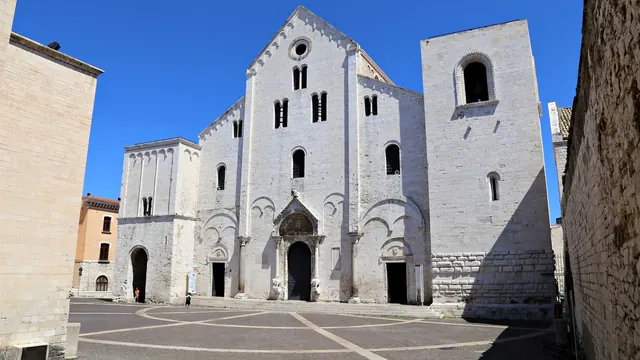
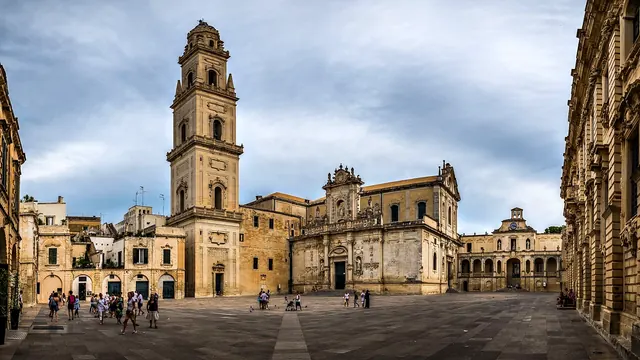
Puglia has much more to see in its own right. Lecce's baroque streets, the trulli districts of Alberobello, the lone octagon of Castel del Monte and the Romanesque cathedrals at Trani, Bari and Otranto are sights you would travel for, although seeing them means driving from town to town.
Garda's heritage works better as a series of half-days. There is Sirmione's moated castle and the Roman villa at the Grotte di Catullo, d'Annunzio's strange Vittoriale with a warship set into the hillside, and the castles at Malcesine and Riva. These are attractive outings rather than the reason to come.
Nightlife
Puglia goes out later and louder, at least in summer. In July and August Gallipoli's beach clubs run from sunset into the small hours, Lecce's baroque squares fill with drinkers, and Bari keeps its old-town bars busy all year.
On Lake Garda, a typical evening is an aperitivo by the harbour, dinner and a stroll along the promenade. Desenzano is the only town with real nightlife, with lakefront bars and a few large clubs that fill on weekends. Most other towns are quiet early.
Nature & outdoors
Lake Garda is far stronger for the outdoors. The narrow north is a fjord walled by mountains: the cable car from Malcesine climbs Monte Baldo for ridge walks and paragliding, Arco's limestone draws climbers all year, and Torbole's steady wind makes it a classic for sailing and windsurfing.
Puglia is mostly gentle olive country, better for a bike ride through the Valle d'Itria than for anything demanding. Its wilder side is in the Gargano, with the beech woods of the Foresta Umbra, the sea caves and the Tremiti islands for snorkelling, and in the cliff paths of the far Salento.
Day trips
Both make excellent bases for outings, but the outings are different. From Garda's southern shore the main line takes you to major art cities without a car: Verona in well under an hour, Venice, Vicenza and Padua on the same line, and Mantua and Bergamo close by.
Puglia's day trips are small towns reached by car: whitewashed Ostuni and Locorotondo, harbours such as Trani and Polignano, and the Greek-speaking villages near Lecce. Matera's cave dwellings, about an hour from Bari, are the one great outing comparable to Verona.
Good for families
Lake Garda is better set up for children. Gardaland, its aquarium, the water parks and the Parco Natura Viva safari park all sit around the south-east shore, and the resort campsites with pools and children's clubs mean parents rarely need to plan. Older children can try biking or windsurfing in the north.
Puglia is easy-going rather than organised. The shallow sandy beaches of the Ionian Salento suit small children, Italian piazza life welcomes them late into the evening, and the trulli and the Fasano safari park make good outings. Otherwise most days are spent on the beach.
Getting around
Getting around is about as easy in both, but in different ways. Garda is compact: the towns are walkable and linked by ferry, which makes it easy to manage without a car from a single base. Driving is the weak point, with narrow, tunnelled shore roads that clog in summer.
Puglia's roads are good and mostly uncrowded, but the distances are long, about four to five hours from the Gargano to the southern tip. A car is close to essential, except for staying along the Bari to Lecce railway at Polignano or Monopoli.
Shopping & style
Puglia gives you more worth bringing home. There are the ceramic workshops of Grottaglie, Lecce's papier-mache figures, and linen and pottery from the Valle d'Itria, and Bari's streets around Via Sparano cover everyday fashion.
Lake Garda's shopping is mainly its weekly markets at Desenzano, Lazise and Bardolino, along with oil, wine, Limone's lemon products and good outdoor gear in Riva and Arco. Anyone after fashion goes to Verona or Milan.
Affordability
Puglia is the cheaper of the two, and most of the saving is at the table. Trattoria meals, street food and local wine cost less than around the lake, although high-season rooms near the Salento beaches, the paid loungers and the car hire still add up.
On Lake Garda the lakefront hotels in Sirmione, Malcesine and Limone are expensive, and theme parks and ferries get costly for a family. The campsites, agriturismi and Valtenesi villages are the way to keep costs down. In both regions spring and autumn are noticeably cheaper.
Live music & performing arts
Puglia has more of its own. Bari's Teatro Petruzzelli holds a full opera and ballet season, Martina Franca's summer festival stages rare operas in a palace courtyard, and the pizzica folk dance comes together each August at the Notte della Taranta in Melpignano.
Lake Garda's own offer is summer shows in the Vittoriale's amphitheatre and band concerts in the town squares. Its best evening of music is outside the region, at the opera in Verona's arena.
Wellness & relaxation
Lake Garda has the stronger spa tradition. Sirmione's warm sulphur springs rise from the lake bed and supply thermal pools that look out over the water. The open-air thermal park near Lazise and the hotel spas at Gardone and Salò add to it.
Puglia's calm comes from its countryside rather than its baths. Restored masserie with pools, and long lunches in the Valle d'Itria, set the pace. The springs at Santa Cesarea Terme and Torre Canne are pleasant extras rather than a reason to go.
When should you go?
Pick your month. The climate figures are measured averages, not a forecast.
Lake Garda in July
Puglia in July
Daytime high, °C
Rainfall in the month, mm
Where the figures come from
Lake Garda's sunshine is measured 28 km from the centre, at Verona / Villafranca.
Puglia's temperatures are measured 64 km from the centre, at Brindisi.
Puglia has no rain gauge within 25 km of the centre, so its rainfall comes from a gridded climate dataset read at the destination rather than from a gauge further away.
Temperature and rainfall are climate normals, averaged over the years shown. Lake Garda: 2005-2025 (sunshine 1991-2020, rainfall 1991-2020) normals, Verona / Rivoltella (1.6 km from centre). Puglia: 1991-2020 (sunshine 1981-2010) normals, Brindisi (64.4 km from centre).
Lake Garda's warm season runs from June to September. July is the hottest month at about 29°C, and this is the time for bathing in the lake. Rain falls all through the year rather than in one season. May and the autumn months are often damp, and November is the wettest month at about 121mm. Winter days are cold and grey, poor weather for wandering the lake towns. For hiking and sightseeing, April to early June and September to mid-October are mild and comfortable, though showers are likely in both.
Puglia stays warm for longer and is sunnier in every month. It also has a true dry summer, with almost no rain from June to August. July and August reach about 30°C, which is too hot for long walks through the towns at midday. The sea is warm enough for swimming from June to September and is warmest in August at around 26°C. Rain returns in September and builds through October and November. For sightseeing in Lecce and the Valle d'Itria, go between April and early June or in early September, when it is warm and mostly dry but not as hot as midsummer. Winters are milder than at the lake.
Which traveller are you?
On an outdoors trip, Lake Garda is the clear choice. Riva, Torbole and Arco give you limestone climbing, via ferrate, mountain-bike trails and a dependable afternoon wind for windsurfing. Puglia is gentler cycling country, and only the Gargano matches the lake for drama.
For a beach and sun trip, choose Puglia. The Ionian Salento has long pale sands and shallow turquoise water, the Adriatic side adds coves and sea stacks, and the summer is drier and sunnier. Garda offers pebble shores and grassy lidos on a lake.
On a family trip with children, Lake Garda makes things easier. Gardaland, the water parks and the safari zoo are all close together on the south-east shore, the resort campsites have pools and organised entertainment, and ferry rides keep the days varied. In Puglia most of the day is spent on the beach, and you need a car to get anywhere.
Before you go
| Measure | Lake Garda | Puglia |
|---|---|---|
| Official language | Italian | Italian |
| Currency | Euro (EUR) | Euro (EUR) |
| Sockets | CFL230 V, 50 Hz | CFL230 V, 50 Hz |
| Driving side | Right | Right |
| Time zone | UTC+1, UTC+2 in summer | UTC+1, UTC+2 in summer |
| Emergency number | 112 | 112 |
| Main airport | Verona Villafranca Valerio Catullo Airport (VRN)96 non-stop destinations | Bari Karol Wojtyła International Airport (BRI)104 non-stop destinations |
| Public holidays this year | 13 days | 13 days |
By the numbers
| Measure | Lake Garda | Puglia |
|---|---|---|
| Population | - | 3,866,174 |
| People per km² | - | 198 |
| Swim season, months above 21 °C | - | 4 months |
Where else could you go?
Every comparison below shares a destination with this one, so you can follow Lake Garda or Puglia somewhere new.
- Lake Comovs Lake Garda
- Cinque Terrevs Lake Garda
- Amalfi Coastvs Puglia
- Hvarvs Puglia
- Caprivs Puglia
- Corfuvs Puglia