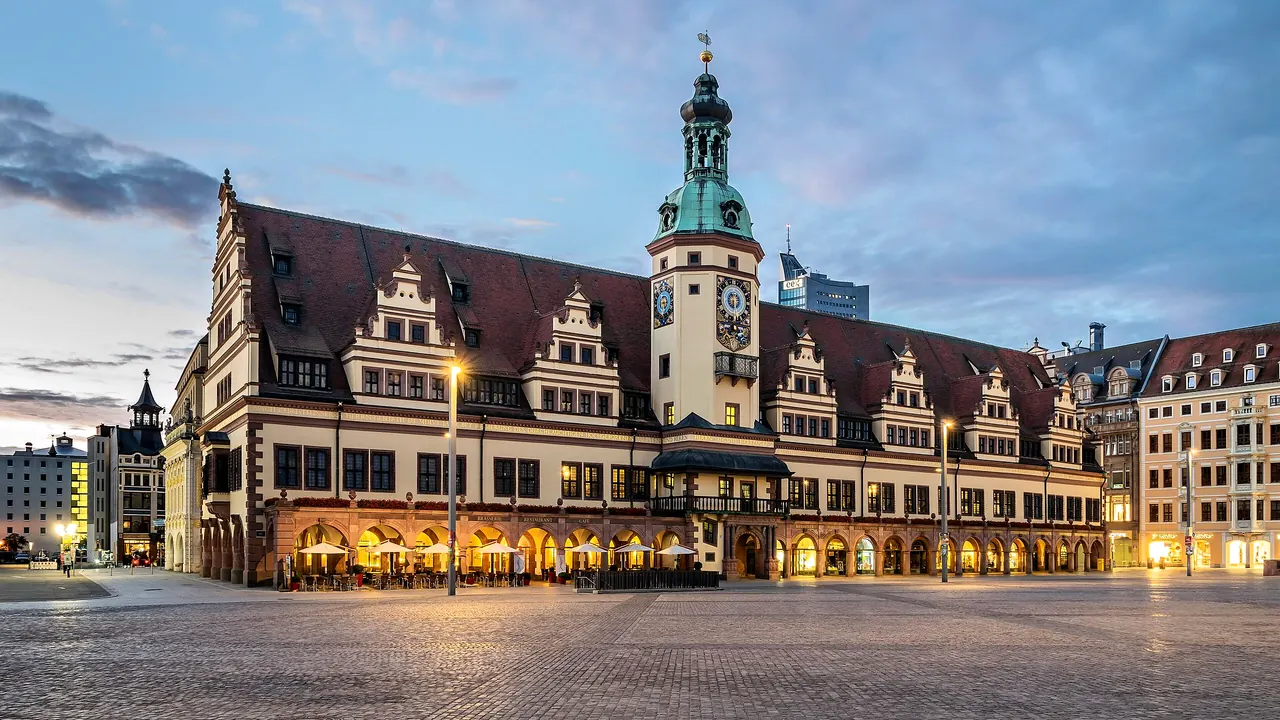
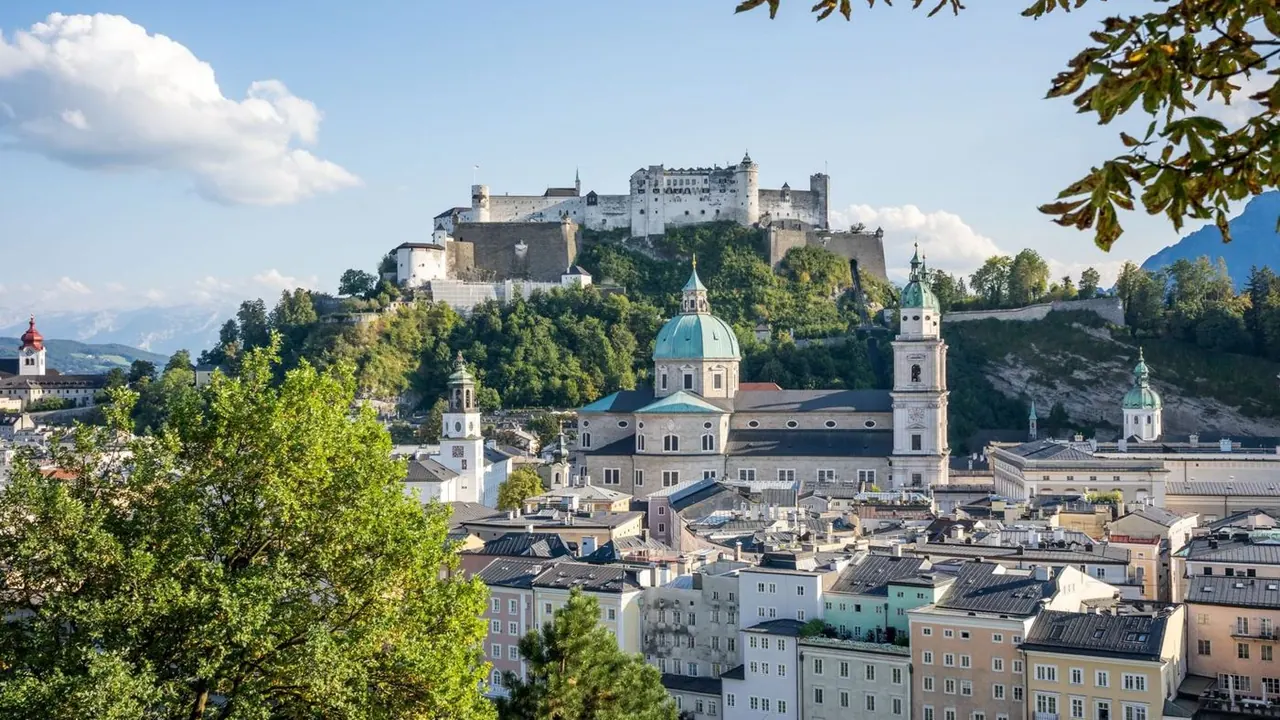
Photos: Leipzig by Krzysztof Golik, CC BY-SA 4.0, cropped; Salzburg by Leonhard Niederwimmer, Pexels License.
Leipzig or Salzburg?
Our verdict in twelve categories, each scored against the same fixed benchmark cities, and the climate month by month, so you can choose for your trip.
Choose Leipzig for
- nightlife
- prices
- getting around
Leipzig suits travellers who want a lot of city for their money. Beds cost much less than in Salzburg, and the clubs in old factories keep going past dawn at weekends. The Gewandhaus and the Bach churches give it music to match. Its station also makes it an easy base, with Dresden, Weimar and Berlin all reachable by train in a day. Choose it for a lively, good-value trip built on music, recent history and rail travel.
Choose Salzburg for
- nature and the outdoors
- wellness
- culture and sights
Salzburg is the better pick when the setting matters most. Its Baroque old town is the grander of the two, the fortress looks down on it from the cliff, and the Alps begin at the edge of town. Hikers, people who like a slow pace and anyone drawn to spa towns will find more here, and the festival seasons bring top-class performers. Expect to pay noticeably more for it, and expect quiet evenings.
Scoreboard
Twelve categories on one fixed scale from 0 to 100. The shaded stretch is the gap between the two.
Your match
Pick a travel style or drag the sliders, and both match scores follow your weighting.
Too close to call, 2 points apart
Wins on nightlife and prices with your weighting.
Wins on nature and the outdoors and wellness with your weighting.
What matters to you?
Category by category
What the scores mean for a trip.
Beaches & swimming
Neither city has a coast, and both rely on lakes for a hot afternoon, but the lakes are very different. Leipzig's are flooded lignite mines just south of town, with sandy shores and beach bars, and you can get there by tram or bike.
Salzburg's swimming is in the alpine lakes of the Salzkammergut, half an hour or more away. The water there is clear and green, with steep hills behind it, and you get in from lawns, jetties and small pebble shores rather than sand. In both cities the season is short.
Food & drink
The two are evenly matched: hearty regional cooking and a strong coffee-house tradition in both. Leipzig offers Saxon roasts and the sour, salted Gose beer, and its more interesting cooking is in the casual international places of the Südvorstadt and Plagwitz.
Salzburg puts Austrian classics and the Salzburger Nockerl on the table, and the beer garden of the Augustiner monastery brewery in Mülln is hard to beat. Its old town, though, is full of overpriced menus for tour groups. Head for the inns on the hills, or the few serious fine-dining kitchens near the city, which Leipzig largely lacks.
Culture & sights
Salzburg has the stronger sights, and they come as one whole: a UNESCO-listed Baroque old town where the cathedral, the Residenz and the arcaded squares are minutes apart. Hohensalzburg fortress rises above it, and Mozart's houses and Mirabell Palace lie close by.
Leipzig's appeal is more about stories than set pieces. Bach's grave is in the Thomaskirche, the 1989 revolution began with prayers in the Nikolaikirche, and the former Stasi headquarters tells the GDR story. Each city fills two or three days.
Nightlife
Leipzig is in another league after dark. It is a student city whose club scene grew up in empty warehouses and squats, with electronic music, relaxed door policies and weekend nights that end after sunrise. On top of that come the bar streets of the Karli, Connewitz and the converted mills of Plagwitz.
Salzburg's evenings usually mean a concert, dinner and a litre mug in a beer hall, and the old town falls silent around midnight. A few student pubs on Rudolfskai stay open later, but for clubbing people take the train to Munich.
Nature & outdoors
Salzburg is the outdoor city by a wide margin. Wooded ridges rise in the centre itself, and the Untersberg cable car lifts you to about 1,800m for limestone ridge walks. The Gaisberg is used for paragliding, Berchtesgaden National Park is about half an hour away, and ski areas lie within an hour's drive.
Leipzig is green but flat. Its best outdoor time is under the oaks of the Auwald floodplain forest, paddling the canals from Plagwitz or cycling round the old mining lakes. For real hiking you need a two-hour train ride.
Day trips
Both cities make excellent bases, but for different kinds of outing. From Leipzig, everything goes by train: Dresden and Weimar are about an hour away, Wittenberg, Naumburg and Dessau's Bauhaus are easy trips, and Berlin is close. Expect a run of German towns full of history, art and the Reformation.
From Salzburg, the trips are about landscape and salt: Hallstatt on its strip of shore, the lake villages of St Wolfgang and St Gilgen, and the salt mines at Hallein and Berchtesgaden. Some of these are much easier with a car.
Good for families
Leipzig's flat streets and trams make it the easier city with a pushchair, and its zoo is the bigger single draw, with a covered tropical hall for rainy days. Belantis theme park sits beside a sandy lake just south of town.
Salzburg's highlights are smaller and more playful: the trick fountains at Hellbrunn, the hands-on Haus der Natur and the wooden miners' slides in the nearby salt mines. There is no theme park, and the cobbled, steep lanes are hard work with a buggy.
Getting around
Leipzig runs on rails. Trams reach the outer districts, an underground S-Bahn line heads south towards the lakes, the flat streets have plenty of cycle lanes, and every day trip leaves from the one main station.
Salzburg's centre is a walk rather than a ride. The fortress, the old town and Mirabell lie within about fifteen minutes of each other, and trolleybuses cover the rest of the city. The weak point is the slow regional buses to the lakes, which lead many visitors to hire a car.
Shopping & style
Neither is a shopping destination, and each has one distinct speciality. Leipzig's trade-fair arcades keep you dry, though they are filled mostly with chains. The independent shopping is in the west, around the vintage and record shops of Karl-Heine-Strasse and the galleries of the Spinnerei, a former cotton mill.
Salzburg is the place to buy traditional Alpine dress, with dirndls and loden jackets made to measure near Getreidegasse. In Advent, the Christmas market on Domplatz is one of the oldest in the region.
Affordability
Leipzig is clearly the cheaper stay. You can sleep within walking distance of the old town for much less than in most German cities, as long as you avoid the big trade-fair weeks. Meals and drinks cost the national average.
Salzburg charges a lot for its beauty. Central hotels are expensive all year, and during the summer festival and Advent both rooms and restaurant tables become scarce. To keep costs down, stay across the river or in the suburbs, eat in the outer inns and use the city card.
Live music & performing arts
These are two great music cities of about equal weight, built around different composers. Leipzig's music runs all year: the Gewandhaus Orchestra, the Thomanerchor singing Bach in his own church and the Bachfest in June. Rock clubs, cabaret and the huge Whitsun goth gathering add range beyond classical music.
Salzburg's high points come in seasons. The summer festival brings opera to the Felsenreitschule and Jedermann in front of the cathedral, and Mozart Week and the Easter Festival add two more. Those tickets need planning well ahead, and jazz and contemporary music are thin.
Wellness & relaxation
Salzburg is the better place to unwind. The city has the Paracelsus Bad, with saunas looking out at the Kapuzinerberg, and real spa culture is close by: the brine baths of Bad Reichenhall are about twenty minutes away, with the thermal springs of the Gastein valley further south.
Leipzig's offer is limited to modern sauna complexes and hotel spas. Its main way to relax is a long walk through the floodplain forest on a quiet Sunday.
When should you go?
Pick your month. The climate figures are measured averages, not a forecast.
Leipzig in July
Salzburg in July
Daytime high, °C
Rainfall in the month, mm
Temperature and rainfall are climate normals, averaged over the years shown. Leipzig: 1991-2020 (sunshine 1961-1990, rainfall 1961-1990) normals, Leipzig-Holzhausen (5.7 km from centre). Salzburg: 1991-2020 normals, Salzburg (3.4 km from centre).
The two cities have almost the same temperatures through the year. Both peak at about 25°C in July and August, May to September is comfortable for walking, and winters hover just above freezing. The real difference is rain. Leipzig stays fairly dry all year, and even its wettest month, June, gets only about 67mm. Salzburg's summer is its wet season, with up to 168mm in June as storms build against the mountains, so you need a flexible plan for the lakes and peaks.
Sunshine splits the year too. Leipzig is slightly sunnier from April to June, while Salzburg gets clearly more sun from autumn through to early spring. That makes Salzburg the brighter choice for a crisp winter or Advent visit. For lake swimming, both have only a short window, in July and August.
Which traveller are you?
On a food and nightlife trip, Leipzig is the pick. Dinner is roughly a draw, Gose and Saxon roasts against schnitzel and coffee-house cake. Afterwards, though, Leipzig lets you dance until daylight with easy-going doors, while Salzburg is asleep by midnight.
For an outdoors trip, Salzburg wins easily. You can walk ridge paths above the domes, ride the cable car up the Untersberg, sail or paddle on the Salzkammergut lakes, or hike in Berchtesgaden. Flat Leipzig has its floodplain forest and canoe routes, but no mountains.
On a trip on a tight budget, Leipzig goes much further. Rooms near the old town are cheap for Germany, and beer and simple food in the student districts are fairly priced. Salzburg's hotels and old-town restaurants are expensive all year, and even more so during festivals.
Before you go
| Measure | Leipzig | Salzburg |
|---|---|---|
| Official language | German | German, Austrian Sign Language |
| Currency | Euro (EUR) | Euro (EUR) |
| Sockets | CF230 V, 50 Hz | CF230 V, 50 Hz |
| Driving side | Right | Right |
| Time zone | UTC+1, UTC+2 in summer | UTC+1, UTC+2 in summer |
| Emergency number | 112 | 112 |
| Elevation | 110 m | 424 m |
| Main airport | Leipzig/Halle Airport (LEJ)13 km from centre20 non-stop destinations | Salzburg Airport (SZG)3 km from centre64 non-stop destinations |
| Public holidays this year | 11 days | 16 days |
By the numbers
| Measure | Leipzig | Salzburg |
|---|---|---|
| City population | 615,932 | 155,021 |
| People per km² | 2,068 | 2,360 |
| Museums within 10 km | 40 | 38 |
| UNESCO World Heritage sites within 50 km | 1 | 3 |
Where else could you go?
Every comparison below shares a destination with this one, so you can follow Leipzig or Salzburg somewhere new.
- Hallstattvs Salzburg
- Dresdenvs Leipzig
- Munichvs Salzburg
- Innsbruckvs Salzburg
- Berlinvs Leipzig
- Cortina d'Ampezzovs Salzburg