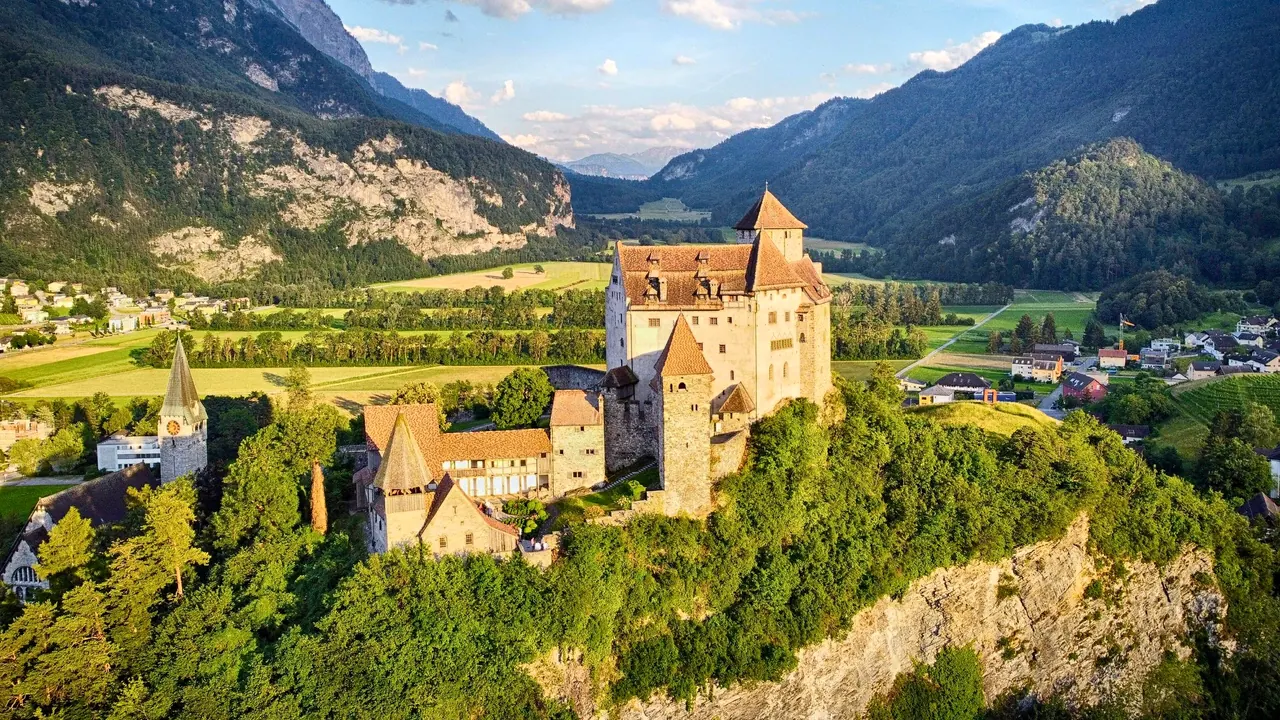
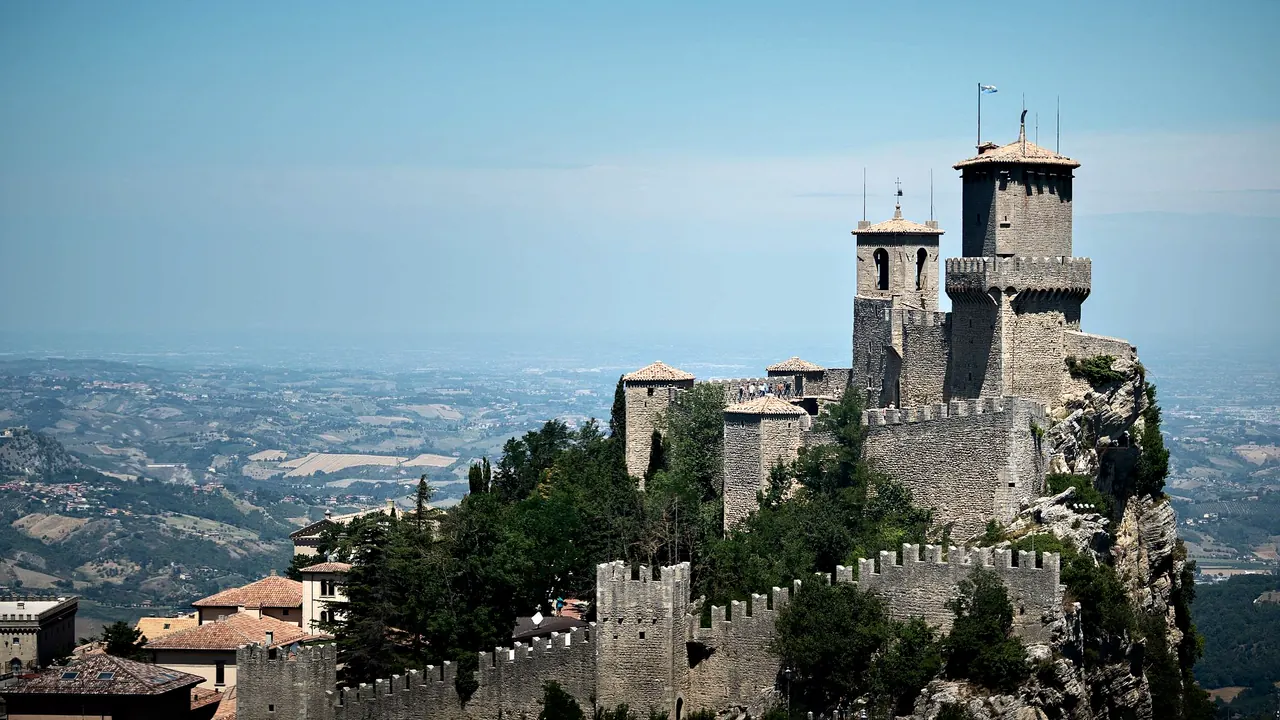
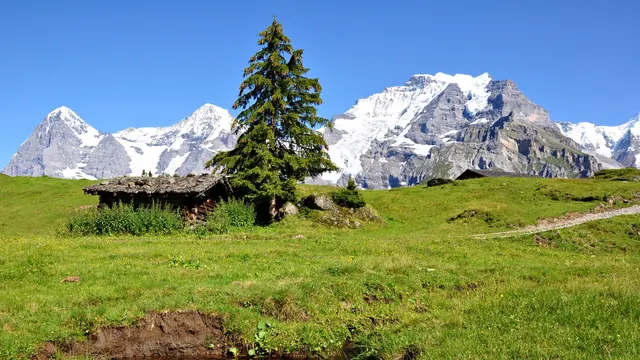
Photos: Liechtenstein by Clemenspool, CC BY-SA 4.0, cropped; San Marino by Tibor Szabo, Pexels License.
Liechtenstein or San Marino?
Our verdict in twelve categories, each scored against the same fixed benchmark cities, and the climate month by month, so you can choose for your trip.
Choose Liechtenstein for
- getting around
- nature and the outdoors
- live music and the arts
Liechtenstein is for walkers and for travellers who want a calm Alpine base with excellent connections. The trails above Gaflei and Malbun climb to summits on the Swiss and Austrian borders, buses reach every village, and Swiss and Austrian towns are an easy ride away. Expect quiet evenings and high prices for all of it.
Choose San Marino for
- prices
- culture and sights
- shopping
San Marino gives you more history for less money. Its walled town and three towers on Monte Titano are the sight in themselves, the Romagna cooking is heartier, and rooms cost what they would in provincial Italy. With a car it also makes a good base for Urbino, San Leo and Ravenna.
Scoreboard
Twelve categories on one fixed scale from 0 to 100. The shaded stretch is the gap between the two.
Your match
Pick a travel style or drag the sliders, and both match scores follow your weighting.
Wins on getting around and nature and the outdoors with your weighting.
Wins on prices and culture and sights with your weighting.
What matters to you?
Category by category
What the scores mean for a trip.
Beaches & swimming
Neither country has a shore, so a beach day means going somewhere else. In Liechtenstein the Rhine is too fast and cold for bathing, and summer swimming happens in the well-kept outdoor pools of Vaduz and Schaan, with the mountains behind them.
San Marino is just as landlocked, but you can see the Adriatic from its walls. The Riviera beaches in Italy are a short trip down the mountain, which makes a sea day easier to add to a stay.
Food & drink
San Marino eats better. Its kitchen is Romagna's: piadina, fresh tagliatelle and strozzapreti, slow-cooked rabbit and torta Tre Monti. The trattorias in the outlying castelli are better than the set menus in the old town, and the state wine cooperative sells its Sangiovese and Moscato.
Liechtenstein's cooking is plainer and Alpine: Käsknöpfle with apple sauce, cornmeal Ribel and plates in the mountain huts at Malbun. Its best food and drink stop is the princely wine cellars in Vaduz. Neither country has markets or street food.
Where in Liechtenstein: Vaduz, Schaan, Malbun
Culture & sights
San Marino's sight is the whole place. A walled town runs along the ridge of Monte Titano, you can climb the Guaita and Cesta towers, and the Palazzo Pubblico and the basilica frame the squares. Together they make one of the oldest surviving republics a UNESCO site, which no single spot in Liechtenstein can match.
Liechtenstein's culture is mostly in museums. The Kunstmuseum and the Hilti Art Foundation in Vaduz hold serious modern art, and you can add Gutenberg Castle at Balzers and the ruins at Schellenberg. Vaduz Castle, the prince's home, can only be seen from outside.
Where in Liechtenstein: Vaduz, Balzers, Schellenberg
Nightlife
Both are quiet places to spend an evening, and a long dinner is the usual night out. Liechtenstein has a few wine bars, hotel bars and pubs in Vaduz and Schaan, and young locals head to Feldkirch or across the Rhine.
San Marino's old town goes almost silent once the coaches leave, apart from a few wine bars and hotel terraces that look over the lights of the coast. For anything livelier, people go down to the Riviera.
Where in Liechtenstein: Vaduz, Schaan
Nature & outdoors
Liechtenstein has far more to offer outdoors. Two thirds of the country is mountains. Roads climb from the Rhine valley through Triesenberg to the Samina and Malbun valleys, the Fürstensteig is cut into the rock above Gaflei, and the Liechtenstein Trail crosses the country in a few days. Malbun has gentle skiing and Steg has cross-country trails, and flat cycle paths run along the Rhine.
San Marino has one striking feature: the limestone cliffs of Monte Titano, about 739m high, with views from the Adriatic to the Apennines. The woodland paths take a morning, and after that there is only gentle walking and cycling among the castelli.
Where in Liechtenstein: Malbun, Fürstensteig and Gaflei, Steg and the Samina valley, Rhine valley cycle paths
Day trips
From Liechtenstein the outings are easy, if less striking. Buses from Schaan, Vaduz and Balzers meet trains at Buchs, Sargans and Feldkirch, which put St Gallen's abbey library, Appenzell, Chur and the towns on Lake Constance about an hour away. Zurich is close enough for a full day.
San Marino has the richer surroundings. San Leo on its rock, Gradara's castle and Roman Rimini are close by, Renaissance Urbino is about an hour away, and the mosaics of Ravenna take a little longer. The catch is that only the Rimini bus runs regularly, so most of these trips need a car.
Where in Liechtenstein: Vaduz, Schaan, Balzers
Good for families
Neither has much built for children, and the difference is in how you would use them. Liechtenstein works as a calm base: buses take prams, Malbun has beginner slopes and ski schools, and the pools and Rhine cycle paths fill a few more days.
San Marino is better as a lively day out. Children can climb towers, ride the cable car from Borgo Maggiore and watch the crossbowmen. The steep steps are hard work with a pushchair, though, and several museums are about torture and weapons.
Where in Liechtenstein: Malbun, Vaduz, Rhine valley cycle paths
Getting around
Liechtenstein is the easier of the two without a car. The country is only about 25km long, one bus network links all eleven municipalities with Schaan as the hub, and buses climb the hairpins to Triesenberg and through the tunnel to Malbun. Trains are the weak point, so you usually change at Buchs, Sargans or Feldkirch.
San Marino's old town is small and largely car-free, but its lanes and stairways are steep. A cable car drops to Borgo Maggiore, and the bus from Rimini station is the only main link. Buses to the other castelli are infrequent, so most visitors drive.
Where in Liechtenstein: Vaduz, Schaan, Triesenberg, Malbun
Shopping & style
Liechtenstein's shopping is limited to the pedestrian centre of Vaduz. The stamps from the post office and a bottle of wine from the slopes below the castle are the best things to take home.
San Marino has more to buy. Taxes are lower than in Italy, so perfume, spirits, watches and electronics draw shoppers, and an outlet centre in the valley sells discounted fashion. The old town's lanes add ceramics, liqueurs and replica crossbows.
Where in Liechtenstein: Vaduz
Affordability
Liechtenstein is expensive whichever way you spend the time. Its few hotels are comfortable and priced to match, and eating out adds up quickly. The cheaper side of a stay is the buses, which are fairly priced and reach every village and trailhead, along with the mountain walks and the museums in Vaduz, most of which cost little.
San Marino is far easier on the pocket. A room on Monte Titano often costs less than one by the sea on the Riviera in high season, so the mountain can also serve as a cheaper base for beach days. Wandering the walled town is free, and the towers and museums are modestly priced. The one thing to avoid is the set menus with a view in the old town, which charge more for what they serve.
Live music & performing arts
Liechtenstein has more of a season. The theatre in Schaan stages drama, dance and cabaret, the country has its own symphony orchestra, and the halls in Vaduz host recitals and the odd jazz evening.
San Marino has a couple of small theatres. Its high point is the Medieval Days, when drummers, flag-throwers and period music fill the old town. For opera or serious concerts, visitors to either country travel, to Zurich or the Bregenz lake stage, or into Italy.
Where in Liechtenstein: Schaan, Vaduz
Wellness & relaxation
Neither has thermal springs, and in both the spas are in hotels. Liechtenstein's calm lasts all day in villages such as Triesenberg and Malbun, and the thermal resort of Bad Ragaz is about half an hour across the Rhine. San Marino's calm comes in the early morning and after the coaches leave, while the main lanes are crowded with tour groups in the middle of the day.
Where in Liechtenstein: Malbun, Triesenberg, Vaduz
When should you go?
Pick your month, and for a country the place in it. The climate figures are measured averages, not a forecast.
Vaduz (Liechtenstein) in July
San Marino in July
Daytime high, °C
Rainfall in the month, mm
Where the figures come from
Vaduz (Liechtenstein)'s temperatures are measured 51 km from the centre, at Sigmarszell-Zeisertsweiler.
Vaduz (Liechtenstein) has no rain gauge within 25 km of the centre, so its rainfall comes from a gridded climate dataset read at the destination rather than from a gauge further away.
San Marino's temperatures are measured 52 km from the centre, at Frontone.
San Marino has no rain gauge within 25 km of the centre, so its rainfall comes from a gridded climate dataset read at the destination rather than from a gauge further away.
Temperature and rainfall are climate normals, averaged over the years shown. Vaduz (Liechtenstein): 1991-2020 normals, Sigmarszell-Zeisertsweiler (51.3 km from centre). San Marino: 1991-2020 normals, Frontone (51.5 km from centre).
In Vaduz, summer is warm rather than hot, with highs around 24°C in July and August. That is also the sunniest and the wettest time, with up to 126mm of rain in August, so expect showers on the mountain trails. Late spring and September are good for walking at lower levels. Winter is cold in the valley, and that is when Malbun opens its small ski area.
San Marino is warmer all year and gets hotter in summer, reaching 30°C in July. That is its driest month, but the climbs on the ridge are hard work in the heat. The rain moves to autumn instead, building to about 105mm in November. In July and August the Adriatic on the Riviera below warms to 26°C, so a swim is easy to add. For walking the old town, May, June and September are the best months.
Which traveller are you?
On an outdoors trip, Liechtenstein is the clear choice. The Fürstensteig ridge path, the Drei Schwestern and the routes up the Samina valley give real mountain days above 2,000m, and Malbun adds skiing in winter. San Marino's ridge takes about a morning.
For a trip on a tight budget, San Marino is far kinder. Hotels on the mountain are fairly priced and the village trattorias give solid meals for the money. In Liechtenstein, Swiss-level prices hit even simple inns, so some visitors sleep in Austria and come in for the day.
On a culture and arts trip, San Marino gives more. The whole medieval town on Monte Titano is a UNESCO site, and the walkways between its towers hang over the cliffs. Liechtenstein's Kunstmuseum and Hilti collection in Vaduz are fine but take only a day.
More comparisons
Each shares a side with Liechtenstein or San Marino.
Where else could you go?
Set Liechtenstein or San Marino against any other country.