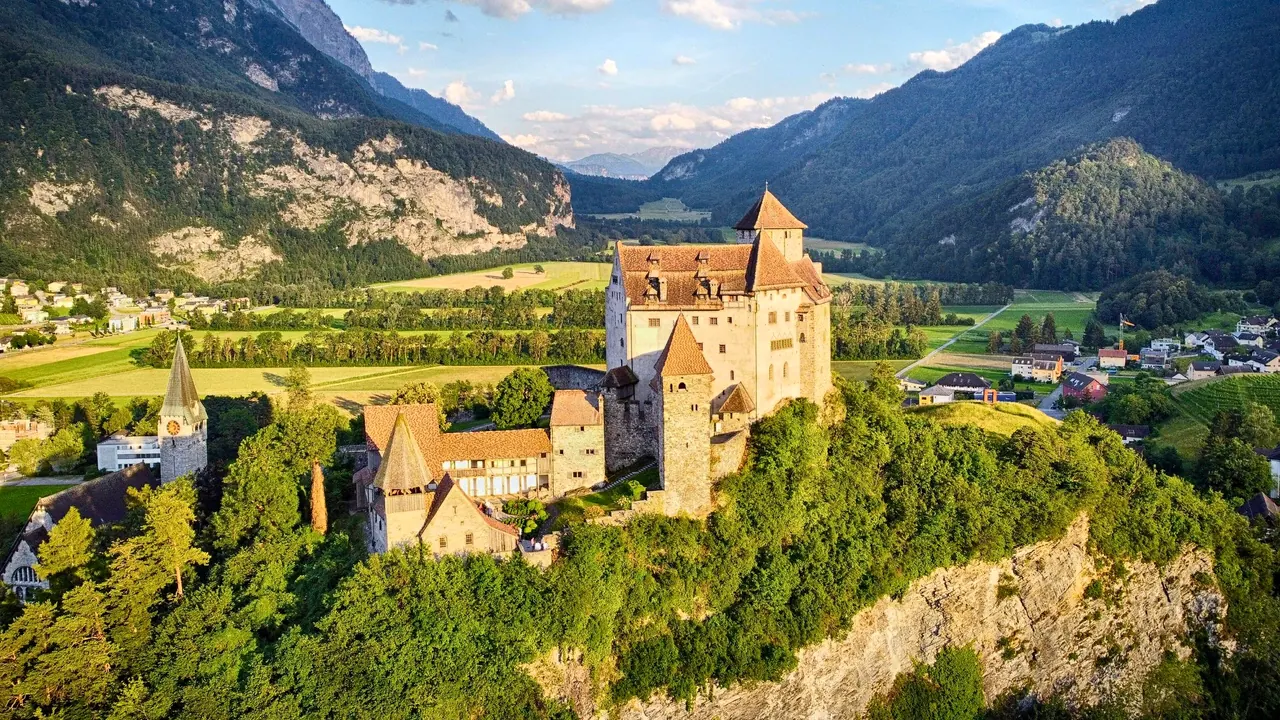
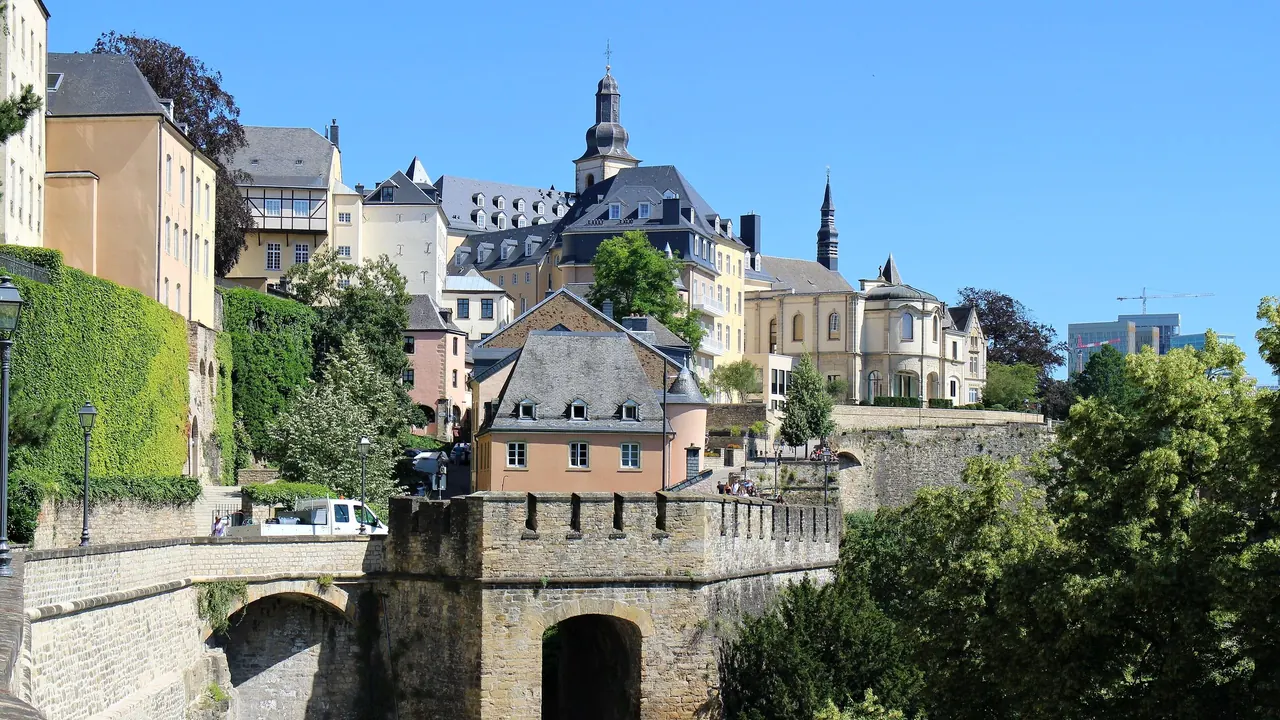
Photos: Liechtenstein by Clemenspool, CC BY-SA 4.0, cropped; Luxembourg by Suicasmo, CC BY-SA 4.0, cropped.
Liechtenstein or Luxembourg?
Our verdict in twelve categories, each scored against the same fixed benchmark cities, and the climate month by month, so you can choose for your trip.
Choose Liechtenstein for
- nature and the outdoors
Liechtenstein suits a quiet Alpine stay built around walking. Its ridges and high valleys rise straight from the Rhine, the buses reach the trailheads, and evenings end early in small villages. It is also a good base for days out in eastern Switzerland and Austria. Come for the mountains and the borders around them, not to spend long in its museums, restaurants or bars.
Choose Luxembourg for
- culture and sights
- food and drink
- wellness
Luxembourg is the better pick for a rounded trip with more to fill the days. You get a fortified old town on its cliffs, a real restaurant and wine scene, a proper concert hall and a thermal spa town. There is also enough for children to make a family week work. It has no high mountains, but its gorges, forests and vineyard paths keep walkers happy, and the trains and trams make it easier to get about without a car.
Scoreboard
Twelve categories on one fixed scale from 0 to 100. The shaded stretch is the gap between the two.
Your match
Pick a travel style or drag the sliders, and both match scores follow your weighting.
Wins on nature and the outdoors with your weighting.
Wins on culture and sights and food and drink with your weighting.
What matters to you?
Category by category
What the scores mean for a trip.
Beaches & swimming
Neither country has a coast, but Luxembourg at least has open water. The Upper Sûre Lake has grassy bathing areas among wooded hills, and the old gravel pits at Remerschen give easy lake swimming in high summer.
Liechtenstein has nothing comparable. The Rhine is too fast and cold for swimming, so summer swimming means the well-kept outdoor pools in Vaduz and Schaan. In either country, beach days belong to another trip.
Food & drink
Luxembourg eats far better. It has a large tier of refined French-leaning restaurants and a wide international spread, and the hearty local cooking runs to smoked pork collar with broad beans and river fish in Riesling sauce. The Moselle wineries pour Riesling, Pinot Gris and crémant on the spot.
Liechtenstein's table is smaller and simpler. Try Käsknöpfle with apple sauce, Ribel cornmeal, a few good restaurants in Vaduz and Schaan, and mountain-hut plates in Malbun. The princely wine cellars below the castle are the stop worth making, but a few days covers it all.
Where in Liechtenstein: Vaduz, Schaan, Malbun
Culture & sights
Luxembourg's capital is a sight in its own right: a UNESCO-listed old town on cliffs, ringed by fortress remains, with the Bock casemates, the Corniche ramparts and the old suburbs of Grund and Clausen below. Add MUDAM, the national museum, Vianden castle, Echternach's abbey and the Family of Man exhibition at Clervaux, and there is several days' worth.
Liechtenstein's culture fits into a day in Vaduz. The Kunstmuseum and the Hilti Art Foundation are small but high in quality. The prince's castle is only seen from outside, and Gutenberg Castle in Balzers and the Schellenberg ruins make a short drive beyond.
Where in Liechtenstein: Vaduz, Balzers, Schellenberg
Nightlife
Luxembourg has the only real night out of the two. It is still small, though: bars in the old brewery at the Rives de Clausen, pubs in Grund, and a few late cocktail spots in Hollerich, at their liveliest on Thursday and Friday.
In Liechtenstein, the evening means a wine bar or hotel bar in Vaduz or Schaan, and its own young people cross to Feldkirch to go out.
Where in Liechtenstein: Vaduz, Schaan
Nature & outdoors
These two are close as outdoor destinations, but the landscapes differ. Liechtenstein is properly Alpine. Roads climb from the Rhine to Triesenberg and Malbun, the Fürstensteig is cut into the rock above Gaflei, and the Drei Schwestern ridge looks across to the Swiss peaks. Malbun also adds skiing in winter, though serious mountain walkers work through the best routes quickly.
Luxembourg has no mountains. It makes up for that with variety: the mossy sandstone ravines of the Mullerthal, the deep wooded valleys of the Ardennes for multi-day hikes, vineyard paths along the Moselle and kayaking on the Sûre.
Where in Liechtenstein: Malbun, Fürstensteig and Gaflei, Steg and the Samina valley, Rhine valley cycle paths
Day trips
Both sit where borders meet, so day trips are a strength in each. What differs is the scenery. From Liechtenstein, the trips are Alpine and Germanic: walled Feldkirch, Bregenz and Lindau on Lake Constance, St Gallen's abbey library, painted Appenzell, old Chur, and Zurich for a full big-city day.
Luxembourg has more within its own borders, including Vianden, Echternach, Clervaux and Schengen. Across them, the history is Roman and French: Trier's Roman gate and baths, Metz's Gothic cathedral and Nancy's Place Stanislas.
Where in Liechtenstein: Vaduz, Schaan, Balzers
Good for families
Luxembourg gives children more to do. Parc Merveilleux at Bettembourg has rides and animals, and there are the hands-on science centre at Differdange and the natural history museum in Grund. The casemates, the Vianden chairlift and the rocky Mullerthal paths turn castles and landscape into adventures.
Liechtenstein is just as safe and easy, but there is less to do. Malbun's beginner slopes and summer walks, the outdoor pools and the Rhine cycle paths fill a few days. After that, families head to Lake Constance or eastern Switzerland.
Where in Liechtenstein: Malbun, Vaduz, Rhine valley cycle paths
Getting around
Luxembourg is easier to move around. A tram links the station, the old town and Kirchberg, and public lifts such as the glass one down to Pfaffenthal save the climbs between levels. A single train and bus network reaches the Moselle, Clervaux and the borders.
Liechtenstein is tiny and its buses are good, running from the Schaan hub up the hairpins to Triesenberg and Malbun. Trains, though, barely serve it, so arriving and leaving means changing at Sargans, Buchs or Feldkirch. In both countries, a car only really helps for remote villages and early starts at trailheads.
Where in Liechtenstein: Vaduz, Schaan, Triesenberg, Malbun
Shopping & style
In Liechtenstein, shopping comes down to a short walk through the pedestrian centre of Vaduz: souvenirs, a few watch and jewellery shops, and the post office, where collectors buy the country's stamps. A bottle from the vineyards below the castle is the best thing to take home.
Luxembourg gives a shopper far more to do. The Grand-Rue and the lanes of the upper town carry international fashion and luxury labels, with chocolatiers and delicatessens in between, and large malls sit on the edge of the city. Villeroy & Boch porcelain and Moselle crémant make good presents, though few visitors plan a trip around the shops.
Where in Liechtenstein: Vaduz
Affordability
Both are among the most expensive places in Europe to stay, but Luxembourg gives you a little more room. Hotel rates often fall at weekends when business travellers leave, transport costs little, and the ramparts and valley walks are free.
Liechtenstein charges Swiss prices, has only a handful of mostly expensive hotels, and even a simple inn meal costs a lot. Budget travellers often sleep across the border in Austria and visit for the day.
Live music & performing arts
Liechtenstein's stage is a local one. The theatre in Schaan puts on drama, dance and cabaret, the country's own symphony orchestra gives a concert series, and brass bands play at the summer village festivals. For bigger nights, people travel out to Zurich, St Gallen or the summer opera on Bregenz's lake stage.
Luxembourg keeps those bigger nights at home. The Philharmonie on the Kirchberg plateau hosts its own orchestra and touring soloists. The Grand Théâtre stages opera and dance with larger European houses, Neimënster abbey in Grund adds chamber music and jazz, and the Rockhal in Esch draws touring bands. Expect many plays to be in French or German.
Where in Liechtenstein: Schaan, Vaduz
Wellness & relaxation
Luxembourg has the thermal waters. Mondorf-les-Bains, near the French border, has mineral springs feeding indoor and outdoor pools and saunas in a park, an easy restorative day from the capital.
Liechtenstein has no springs of its own, only hotel spas. What it offers is deep quiet in Triesenberg and Malbun, and Bad Ragaz is half an hour away across the Rhine for a proper soak.
Where in Liechtenstein: Malbun, Triesenberg, Vaduz
When should you go?
Pick your month, and for a country the place in it. The climate figures are measured averages, not a forecast.
Vaduz (Liechtenstein) in July
Luxembourg in July
Daytime high, °C
Rainfall in the month, mm
Where the figures come from
Vaduz (Liechtenstein)'s temperatures are measured 51 km from the centre, at Sigmarszell-Zeisertsweiler.
Vaduz (Liechtenstein) has no rain gauge within 25 km of the centre, so its rainfall comes from a gridded climate dataset read at the destination rather than from a gauge further away.
Temperature and rainfall are climate normals, averaged over the years shown. Vaduz (Liechtenstein): 1991-2020 normals, Sigmarszell-Zeisertsweiler (51.3 km from centre). Luxembourg: 1991-2020 normals, Luxembourg / Luxembourg (6.3 km from centre).
The two run on almost the same temperatures. Daytime highs reach about 24°C in July and August and fall to around 4°C in January, so late spring to early autumn is the time for walking in both. The difference is the rain. In the Rhine valley around Vaduz, summer is the wettest season, peaking at about 126mm in August, so mountain days in Liechtenstein need some flexibility. Luxembourg's rain is spread evenly through the year at around 72mm a month, and its summers are noticeably sunnier, which makes April to September reliable for its old town and valley walks.
In both countries, winter is short of daylight and grey. Liechtenstein makes something of it, because the snow at Malbun brings gentle skiing. In Luxembourg, December is its wettest month and has the least sun, so it is better kept for a short city visit. Luxembourg's lakes are only warm enough to swim in July and August.
Which traveller are you?
On a culture and arts trip, choose Luxembourg. Its UNESCO-listed fortress town, the Bock casemates and Vianden castle give you several days of sights. The Philharmonie and the Grand Théâtre fill the evenings. Liechtenstein's museums in Vaduz take a single day.
For a food and nightlife trip, Luxembourg wins clearly. It has polished French-leaning restaurants, Moselle crémant tasted at the wineries, and an evening of bars at the Rives de Clausen. In Liechtenstein, a good dinner and a glass of princely Pinot Noir is about as late as the night goes.
On an outdoors trip with real mountains in mind, choose Liechtenstein. The Fürstensteig ridge path, summits over 2,000m and the cross-country Liechtenstein Trail are proper Alpine walking. Luxembourg's Mullerthal gorges and Ardennes valleys are lovely, but they are forest and sandstone rather than peaks.
More comparisons
Each shares a side with Liechtenstein or Luxembourg.
Where else could you go?
Set Liechtenstein or Luxembourg against any other country.