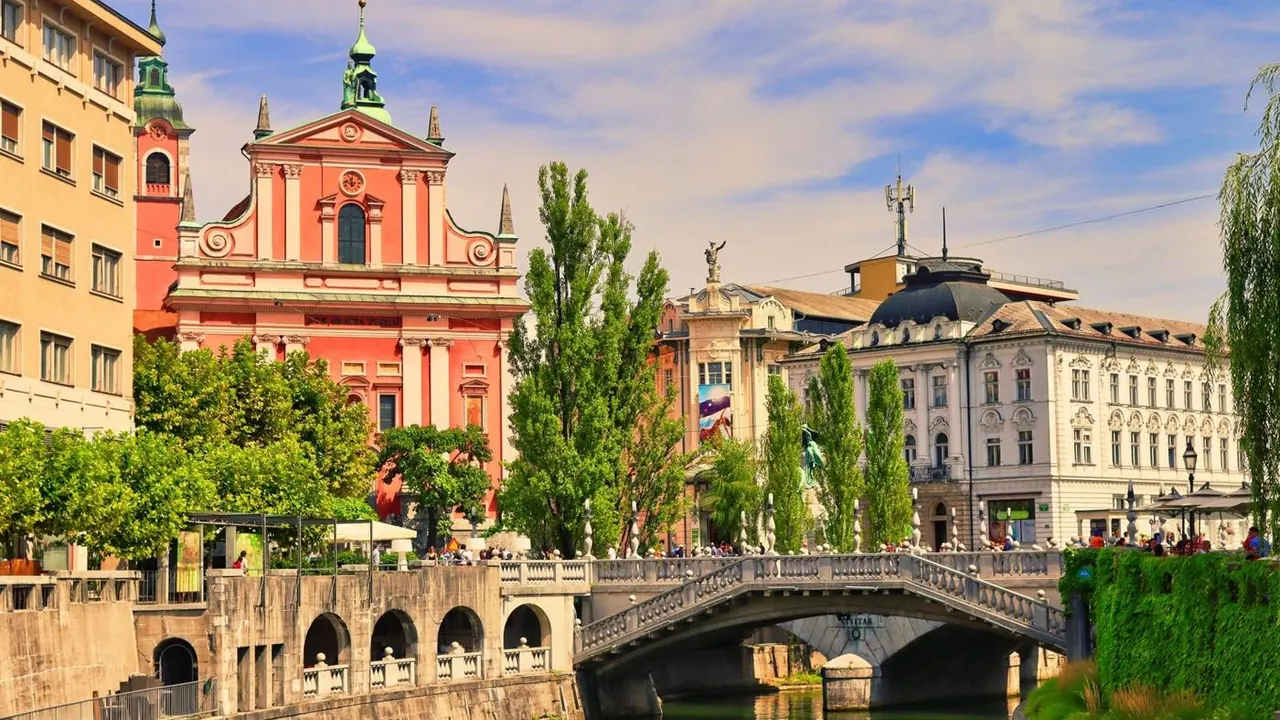
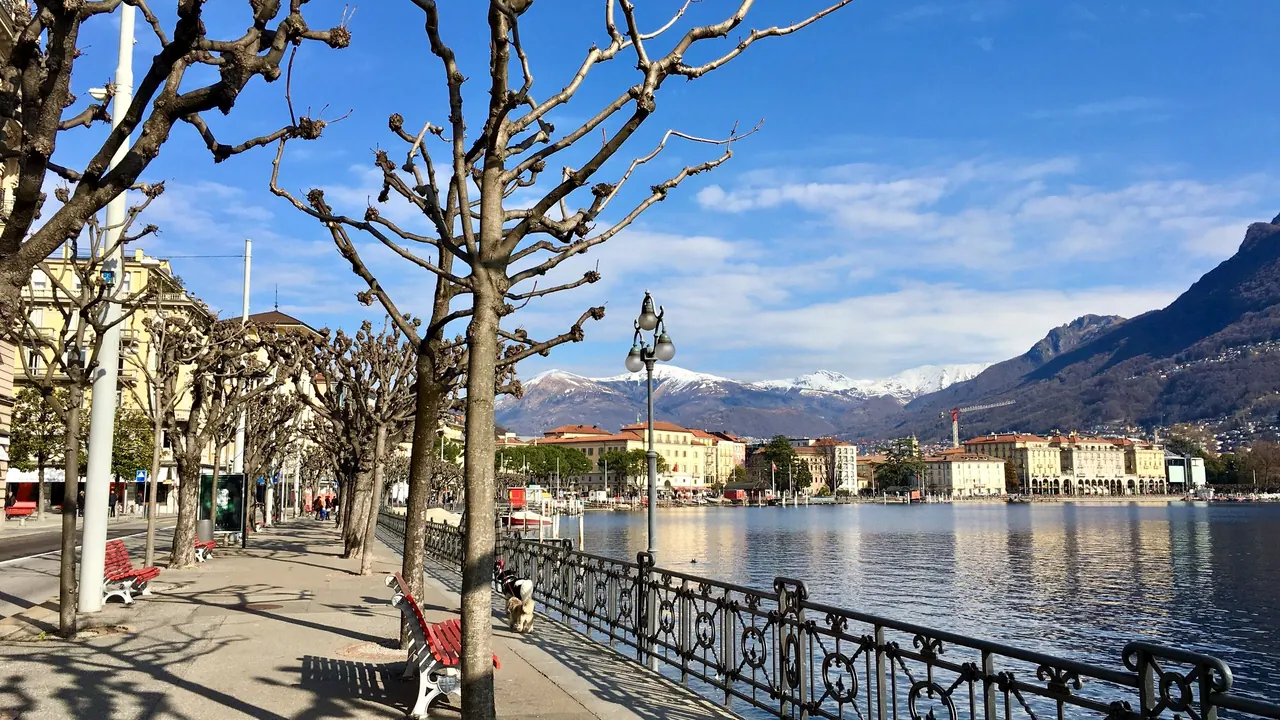
Photos: Ljubljana by detait, Pexels License; Lugano by Thomas Woodtli from Zürich, Switzerland, CC BY-SA 2.0, cropped.
Ljubljana or Lugano?
Our verdict in twelve categories, each scored against the same fixed benchmark cities, and the climate month by month, so you can choose for your trip.
Choose Ljubljana for
- prices
- culture and sights
- nightlife
Ljubljana suits travellers who want a small capital that feels lived-in and doesn't cost much. Plečnik's riverside city has more to see, livelier evenings along the Ljubljanica and in Metelkova, and better wine bars and inns. It also puts most of Slovenia, from Bled to the karst caves, within a short ride.
Choose Lugano for
- beaches
- shopping
- day trips
Lugano is the place for a slower, more polished stay by a lake. Your days go on swimming from a lido, taking boats to Gandria and Morcote and riding the funicular up Monte Brè. Because it sits on the border, Milan, Como and Lake Maggiore are easy to add. Everything costs Swiss prices, though, so it is best for travellers who care more about scenery and ease than about budget.
Scoreboard
Twelve categories on one fixed scale from 0 to 100. The shaded stretch is the gap between the two.
Your match
Pick a travel style or drag the sliders, and both match scores follow your weighting.
Wins on prices and culture and sights with your weighting.
Wins on beaches and shopping with your weighting.
What matters to you?
Category by category
What the scores mean for a trip.
Beaches & swimming
Neither city is on the sea, but in Lugano you can swim without leaving town. From June to early September you can walk to the main lido at the mouth of the Cassarate or to the smaller bathing spots towards Castagnola and Paradiso. Boats also run to the lake baths in the villages.
Ljubljana has less in town. Locals cool off in the Sava on the northern edge, and anything more means an hour's trip to Lake Bled or a longer one to Piran and Izola. The Adriatic there is warm, but the shore is concrete platforms and pebble rather than sand.
Food & drink
Ljubljana has more variety and is cheaper to eat in. The Central Market under Plečnik's colonnades, the summer street-food gathering on the market square and the gostilna inns serving Carniolan sausage and jota keep a few days of eating interesting. The best of it is the wine bars pouring Vipava and Brda wines by the glass.
Lugano's strength is narrower: the grotto, with polenta, braised meats and Ticino Merlot at granite tables under chestnut trees. It makes a memorable meal, but there is little street food or cheap eating, and many visitors save their serious dining for trips into Italy.
Culture & sights
Ljubljana has more to see and a stronger sense of place. Plečnik's UNESCO-listed bridges, embankments and library give the centre the stamp of one architect. The castle hill and the baroque old town fill a couple of days, and Metelkova adds a rougher, more artistic side.
Lugano can be seen in a day: the arcaded streets around Piazza della Riforma, San Lorenzo cathedral, Luini's Passion fresco in Santa Maria degli Angioli and the art collection split between LAC and Palazzo Reali. The Hesse museum at Montagnola is the main reason to stay longer.
Nightlife
Neither is a party city, but Ljubljana stays out later. Students fill the riverside bars on warm nights, and Metelkova's small, scruffy clubs run late at weekends.
In Lugano an evening means an aperitivo under the arcades and then a long dinner, among a well-dressed local crowd and at high prices. Most nights are over before midnight, and young locals go to Milan when they want more.
Nature & outdoors
Both are excellent bases for the outdoors; the difference is the kind of landscape. Ljubljana leads into the high mountains. Triglav National Park and the Julian Alps are about an hour away, and there is rafting on the Soča, Velika Planina in the Kamnik-Savinja Alps, the Postojna and Škocjan caves and skiing nearby in winter.
Lugano is a lake between steep wooded peaks, best explored on foot. Funiculars climb Monte Brè and San Salvatore, and there is the path to Gandria and the ridge walk from Lema to Tamaro. On the lake you can hire paddleboards and kayaks, though the high Alps are further away.
Day trips
Lugano has the edge because it sits on the border and reaches two countries by train. Milan's cathedral and The Last Supper are just over an hour away and Como is half an hour. Bellinzona's castles and the islands of Lake Maggiore are also within reach.
Ljubljana's trips are more rural and mostly in Slovenia: Bled, painted Radovljica, Predjama Castle built into its cliff, the Lipizzaner stud at Lipica and the mining town of Idrija. Trieste and Zagreb are about two hours away, and a car helps for the smaller places.
Good for families
Both cities are calm, safe and easy with children rather than full of attractions, so the difference is in what a family day looks like. Ljubljana's flat, car-free centre suits pushchairs. Children get the castle funicular, the dragons on the Dragon Bridge, the zoo on Rožnik hill and puppet shows they can follow without the language.
In Lugano the lake fills the day, with boat trips, slides at the lidos, mountain railways and the miniature Swiss landmarks at Melide. The steep streets are hard going with a pushchair, but the outdoor days suit younger children well.
Getting around
You walk in both centres, but the walking feels different. Ljubljana is flat and mostly pedestrianised, with a bike-share for the outer districts. Lugano climbs steeply from the shore, with a funicular between the station and the old town and buses on the hillsides.
Further out, Lugano is the easier of the two. Swiss trains, lake boats and mountain railways go almost everywhere without a car. In Slovenia, intercity buses are quicker than the slow trains, and the remote valleys really need a hire car.
Shopping & style
Lugano has more for a shopper, though mostly at the expensive end. Via Nassa's arcades are lined with Swiss watchmakers, jewellers and Italian fashion houses, and there is a large designer outlet towards Mendrisio.
Ljubljana is about small local finds: pumpkin-seed oil, coastal salt and honey at the Central Market, Idrija lace, gingerbread hearts and the Sunday antiques market on the embankment. They make good gifts, but there is no luxury street.
Affordability
This is where the two differ most. Ljubljana has middling prices for Europe. Inns serve set lunches, local wine is fairly priced and you spend almost nothing on transport. Only summer rooms in the old town reach Western European prices.
Lugano is expensive in every part of a stay, from lakeside hotels to boat trips and mountain railways. Grotti, set lunches and the free regional transport that comes with most hotel stays help a little, and some visitors eat on the Italian side to save money.
Live music & performing arts
Ljubljana has more choice for a night out. It has the Philharmonic, the National Opera and Ballet, the programmes at Cankarjev dom and the summer Ljubljana Festival in Plečnik's Križanke courtyard, so opera is on the menu as well as concerts. Alternative music plays at Metelkova.
In Lugano almost everything happens at LAC, home of the Orchestra della Svizzera italiana. In summer, Estival Jazz brings free open-air concerts to Piazza della Riforma. For opera, people go to La Scala in Milan.
Wellness & relaxation
For mineral pools and saunas, Ljubljana is the better base, though the water lies outside the city. Slovenia's thermal spa towns are within about an hour's drive, and in town there is a large indoor water park with a sauna complex on the eastern edge. The rest of the calm comes from the quiet, car-free centre and slow afternoons at cafés by the river.
Lugano relaxes you through its setting more than through bathing. Mornings under the arcades, afternoons on a lido or a bench in Parco Ciani and a mild, sunny shore lined with palms make it easy to do very little. For spa treatments there are the big lakeside hotels and an indoor pool and sauna complex near Rivera.
When should you go?
Pick your month. The climate figures are measured averages, not a forecast.
Ljubljana in July
Lugano in July
Daytime high, °C
Rainfall in the month, mm
Temperature and rainfall are climate normals, averaged over the years shown. Ljubljana: 1991-2020 (sunshine 1981-2010, rainfall 1981-2010) normals, Ljubljana / Bezigrad (1.9 km from centre). Lugano: 1991-2020 normals, Lugano (1.2 km from centre).
In summer the two are much alike. Ljubljana reaches about 28°C in July and August and Lugano only a degree less. June to early September is the season for Lugano's lidos and the Alpine lakes near Ljubljana. The real difference is when the rain falls. Lugano is wet every month from April to November. Ljubljana's rain comes in bursts: heavy in June and again from August to October, with the wettest month around 176mm in October. July is its driest and sunniest summer month.
Winter separates them most clearly. Ljubljana is cold and grey, with highs around 4°C in December and January and very little sunshine, so walking around town is a chilly business. Lugano stays milder at about 7°C, is drier and gets far more winter sun, which makes it the better choice for a walk by the lake in the cold months. Both are pleasant for walking in May and late September.
Which traveller are you?
On a trip on a tight budget, Ljubljana is the obvious choice. Set lunches at gostilna inns, fairly priced local wine and a centre you cross on foot keep costs down. In Lugano, meals, boats and mountain railways all cost Swiss prices.
For a beach and sun trip, Lugano does better even without a sea. Its lidos have lawns, decks and ladders into a lake that warms to swimming temperature in summer. From Ljubljana, swimming means the river on the edge of town or a trip out to Bled.
On a food and nightlife trip, Ljubljana has more to offer. You can drink Brda orange wine, eat štruklji in old inns, and then move on to the riverside terraces and Metelkova's late clubs. Lugano's grotti are lovely for a long dinner, but the town goes quiet early.
Before you go
| Measure | Ljubljana | Lugano |
|---|---|---|
| Official language | Slovene | French, German, Italian, Romansh |
| Currency | Euro (EUR) | Swiss Franc (CHF) |
| Sockets | CF230 V, 50 Hz | CJ230 V, 50 Hz |
| Driving side | Right | Right |
| Time zone | UTC+1, UTC+2 in summer | UTC+1, UTC+2 in summer |
| Emergency number | 112 | 112 |
| Elevation | 309 m | 283 m |
| Main airport | Ljubljana Jože Pučnik Airport (LJU)20 km from centre32 non-stop destinations | Milan Malpensa International Airport (MXP)46 km from centre208 non-stop destinations |
| Public holidays this year | 21 days | 15 days |
By the numbers
| Measure | Ljubljana | Lugano |
|---|---|---|
| City population | 284,293 | 63,495 |
| People per km² | 1,736 | 837 |
| Museums within 10 km | 14 | 17 |
| UNESCO World Heritage sites within 50 km | 3 | 5 |
Where else could you go?
Every comparison below shares a destination with this one, so you can follow Ljubljana or Lugano somewhere new.