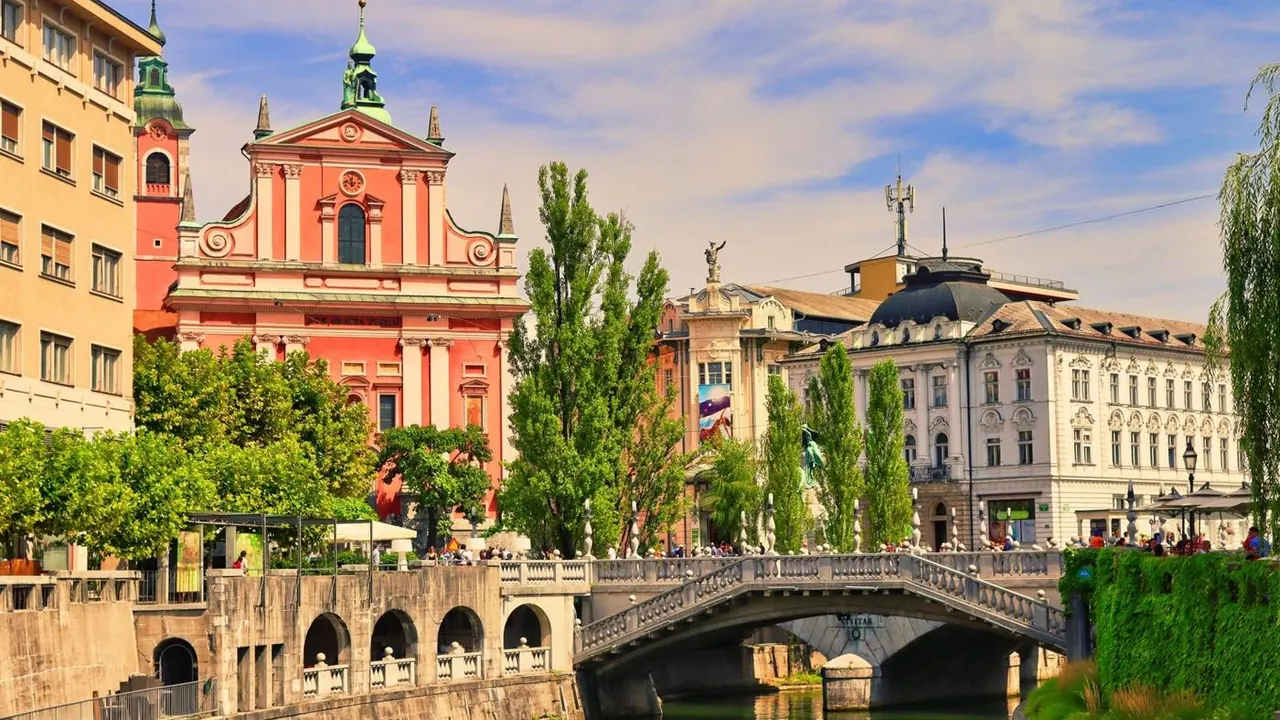
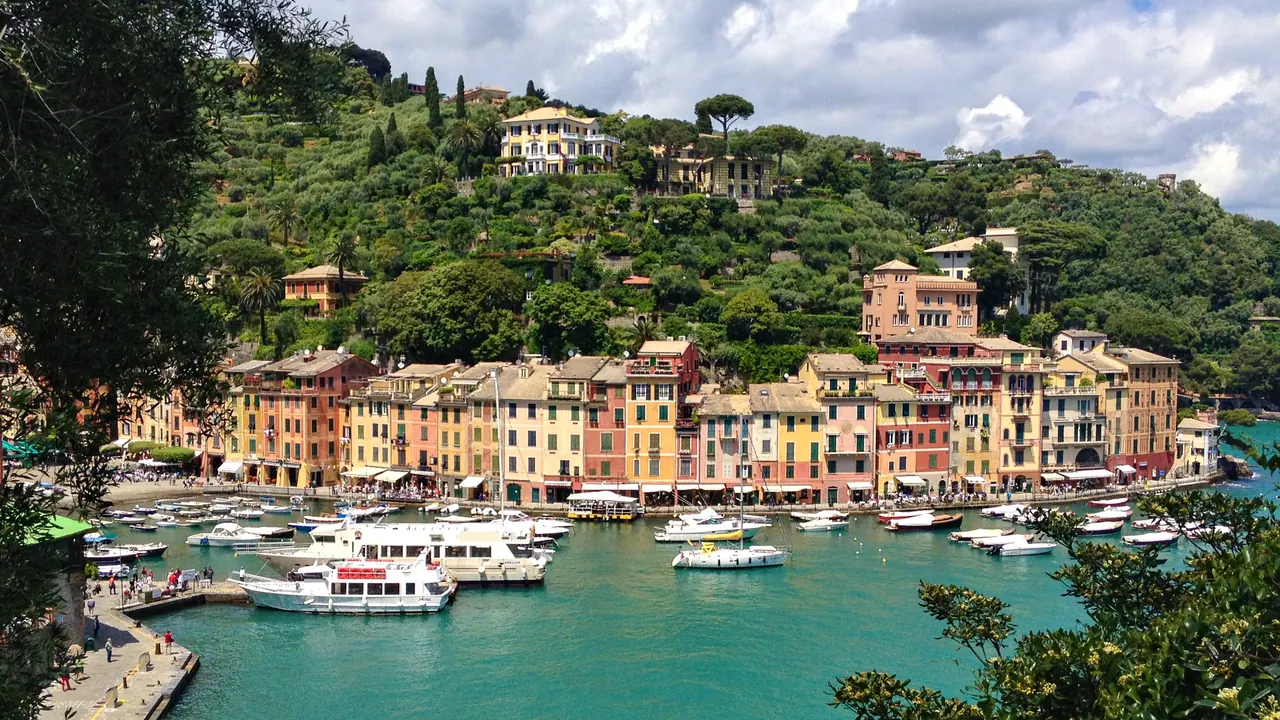
Photos: Ljubljana by detait, Pexels License; Portofino by Michal Osmenda, CC BY 2.0, cropped.
Ljubljana or Portofino?
Our verdict in twelve categories, each scored against the same fixed benchmark cities, and the climate month by month, so you can choose for your trip.
Choose Ljubljana for
- prices
- live music and the arts
- culture and sights
Ljubljana suits travellers who want a proper small capital with plenty to fill the evenings: Plečnik's riverside architecture, a castle on its hill, opera and concerts, wine bars along the Ljubljanica and a market worth browsing. It costs far less than the Ligurian coast, you can walk everywhere, and the Julian Alps, Bled and the karst caves make easy day trips. It is the better base for families, for anyone on a budget, and for a trip that mixes city life with mountains.
Choose Portofino for
- beaches
Portofino is for a short, scenic stay by the sea, and for travellers who don't mind paying heavily for the setting. People come for the painted harbour, swims off clear rocks, the headland trails to San Fruttuoso and boat trips along the Riviera, not for museums or nightlife. Couples who want long lunches facing the water and quiet mornings on the coast path will love it. Anyone after variety, a lively evening or good value will find it thin.
Scoreboard
Twelve categories on one fixed scale from 0 to 100. The shaded stretch is the gap between the two.
Your match
Pick a travel style or drag the sliders, and both match scores follow your weighting.
Wins on prices and live music and the arts with your weighting.
Wins on beaches with your weighting.
What matters to you?
Category by category
What the scores mean for a trip.
Beaches & swimming
Portofino is far better for swimming. It has no proper beach in the village, but the rocks towards the lighthouse drop into very clear, deep water. Paraggi's small sandy bay is close by, and boats run to the pebble cove at San Fruttuoso. The catch is that every spot is small, and in summer they fill up and the loungers cost a lot.
Ljubljana is inland. A swim there means the Sava on the city's edge or a trip to Lake Bled, and the nearest sea at Piran is an hour and a half away, along a shore of concrete platforms.
Food & drink
Ljubljana gives you more to enjoy at the table, mainly through its produce and its wine. The Central Market under Plečnik's colonnades sells cheeses, cured meats and pumpkin-seed oil. The gostilna inns serve hearty štruklji, jota and Carniolan sausage, and riverside wine bars pour the orange wines of the west alongside bottles from Brda and Vipava. The range is narrow, so the city suits a few days of good eating more than a long stay.
Portofino serves sound Ligurian cooking, with trofie al pesto, fritto misto and Recco's thin cheese focaccia. It comes from a handful of harbour terraces, though, where the view is most of what you pay for. There is no market and no casual everyday eating, so people who care about food go over to Camogli or Santa Margherita.
Culture & sights
Ljubljana has much more to see. Plečnik's bridges, colonnades and library give the whole centre a single architectural character. There is also a baroque and Secession old town, a castle reached by funicular, solid national galleries and the murals of Metelkova, easily enough for two or three days.
In Portofino the village itself is the sight. Add the church of San Giorgio, Castello Brown and the remote abbey at San Fruttuoso, and you are done in about a day.
Nightlife
Neither place is a party town, but Ljubljana at least gives you a night out. Its students keep the embankment bars busy, and Metelkova's scruffy clubs stay open late at weekends. In Portofino the evening is a smart aperitivo facing the yachts, then dinner, then very little else. For anything later you have to go to Santa Margherita or Genoa.
Nature & outdoors
Both offer outstanding landscape, of very different kinds. From Ljubljana you can reach real mountains: the Julian Alps and Triglav National Park, the Soča for rafting, Velika Planina's high pastures and the Postojna and Škocjan caves, plus some skiing in winter.
Portofino's landscape is a single protected headland where cliff paths, some fitted with chains, link the Semaforo Nuovo viewpoint with San Fruttuoso and Camogli. Offshore, the marine reserve gives it something Slovenia's capital cannot: dives along red coral walls and down to the Christ of the Abyss.
Day trips
Both make excellent bases, and the difference is between land and sea. From Ljubljana, buses, trains or a car reach Bled, painted Radovljica, the cliff castle at Predjama, Idrija's mining heritage and even Trieste or Zagreb, so a week can cover a whole small country.
Portofino's trips run along the coast to Camogli, Sestri Levante, Genoa's palaces and, by summer ferry, the Cinque Terre and Portovenere. Arriving by boat is half the fun, but outside the ferry season you are left with the train.
Good for families
Ljubljana is much easier with children. The flat, car-free centre suits pushchairs. There is the castle funicular, the Dragon Bridge, Tivoli's playgrounds, a small zoo and a puppet theatre that young children can follow without knowing Slovene.
Portofino has boats, the walk up to the castle and swims off the rocks. It has no playgrounds, though, and its steep stepped paths are hard going with a pushchair. Most families stay in Rapallo or Santa Margherita instead.
Getting around
Ljubljana is simpler to get around. The old town, market, museums and Tivoli Park are all within a short walk of each other. A bike-share scheme and electric shuttles cover the rest, and intercity buses fan out across the country.
Portofino is tiny on foot, though the climbs to the church and lighthouse are steep. Getting in and out is the hard part. One narrow coast road connects it with Santa Margherita, parking is scarce, and in summer the buses are packed. That leaves the seasonal ferries as the pleasant option.
Shopping & style
Neither is a shopping destination, and what you'd buy is very different. In Ljubljana that means honey, coastal salt, pumpkin-seed oil and Idrija lace from the market, the Sunday flea market on the embankment and a few design boutiques around Trubarjeva. Portofino packs big fashion and jewellery houses and resort wear into a few lanes behind the harbour. They take under an hour to browse, and many are aimed at people coming off the yachts.
Affordability
Ljubljana costs far less. Set lunches at the inns, local wine, cheap museum entry and a centre you can walk keep daily costs moderate. Only central summer hotels run high, and staying further out or avoiding July and August fixes that.
Portofino is one of Italy's most expensive places to stay. It has a few luxury hotels, and the harbour restaurants, beach loungers, boat hire and parking all charge accordingly. Hiking and the local bus are almost the only cheap things, which is why many visitors sleep in Camogli or Rapallo.
Live music & performing arts
Ljubljana has a real season for a city its size. There is the Slovenian Philharmonic, which goes back to 1701, opera and ballet in the neo-Renaissance national house, a year-round programme at Cankarjev dom and the summer festival in Plečnik's Križanke courtyard.
Portofino has no theatre or regular venue, only the odd summer concert in the piazzetta or at the castle. For opera you would have to go to the Teatro Carlo Felice in Genoa.
Wellness & relaxation
Both are restful places without a bathing tradition of their own, but the calm feels different. Ljubljana is quiet, green and car-free, with long riverside café afternoons. It has a big water park with saunas, and Slovenia's thermal spa towns are within about an hour's drive.
Portofino offers hotel spas and shaded coastal paths with only the sea for company. Its calm depends on timing, though, because the tour-boat crowds fill the harbour at midday in high summer.
When should you go?
Pick your month. The climate figures are measured averages, not a forecast.
Ljubljana in July
Portofino in July
Daytime high, °C
Rainfall in the month, mm
Where the figures come from
Portofino's temperatures are measured 31 km from the centre, at Genova / Sestri.
Portofino has no rain gauge within 25 km of the centre, so its rainfall comes from a gridded climate dataset read at the city rather than from a gauge further away.
Temperature and rainfall are climate normals, averaged over the years shown. Ljubljana: 1991-2020 normals, Ljubljana / Bezigrad (1.9 km from centre). Portofino: 1991-2020 normals, Genova / Sestri (31 km from centre).
The two climates are very different in winter. Ljubljana sits inland and has cold winters, with daytime highs of about 4°C in December and January. Portofino stays mild through the same months, at around 12°C, so it is fine for coastal walks even in midwinter. Both reach similar summer highs in July and August. In Ljubljana the summer months are also by far the sunniest, but they are rarely dry, because rain falls steadily all year. Spring and early autumn are the best times there for walking the streets and the hills.
On the coast the sea is warm enough for swimming from June into early October and peaks at about 25°C in August. July is the driest month there by a long way. Autumn is the wettest season in both places, but Portofino gets the heavier storms, with around 225mm in October against about 159mm in Ljubljana's wettest month, September. For a beach stay, pick early summer or September on the Riviera. Ljubljana is at its best from May to early October.
Which traveller are you?
On a beach and sun trip, Portofino is the clear pick. It has swimming ladders into deep, clear water, the sheltered bay at Paraggi and boat rides to San Fruttuoso's pebble cove. From Ljubljana, the sea is a long day trip to a mostly concrete shore.
For a culture and arts trip, Ljubljana gives you far more: Plečnik's UNESCO-listed works, the castle, several good galleries and a real opera house and philharmonic. Portofino's sights fill a single day, and for any performance you have to go into Genoa.
On a trip on a tight budget, choose Ljubljana. Set lunch menus, cheap entry to the sights and a centre you can walk keep costs modest. Portofino is among Italy's most expensive places to stay, and most visitors sleep in neighbouring towns to cope.
Before you go
| Measure | Ljubljana | Portofino |
|---|---|---|
| Official language | Slovene | Italian |
| Currency | Euro (EUR) | Euro (EUR) |
| Sockets | CF230 V, 50 Hz | CFL230 V, 50 Hz |
| Driving side | Right | Right |
| Time zone | UTC+1, UTC+2 in summer | UTC+1, UTC+2 in summer |
| Emergency number | 112 | 112 |
| Elevation | 309 m | 20 m |
| Main airport | Ljubljana Jože Pučnik Airport (LJU)20 km from centre32 non-stop destinations | Genoa Cristoforo Colombo Airport (GOA)32 km from centre25 non-stop destinations |
| Public holidays this year | 21 days | 13 days |
By the numbers
| Measure | Ljubljana | Portofino |
|---|---|---|
| City population | 284,293 | 355 |
| People per km² | 1,736 | 142 |
| Museums within 10 km | 14 | 14 |
| UNESCO World Heritage sites within 50 km | 3 | 2 |
| Swim season, months above 21 °C | - | 4 months |
Where else could you go?
Every comparison below shares a destination with this one, so you can follow Ljubljana or Portofino somewhere new.