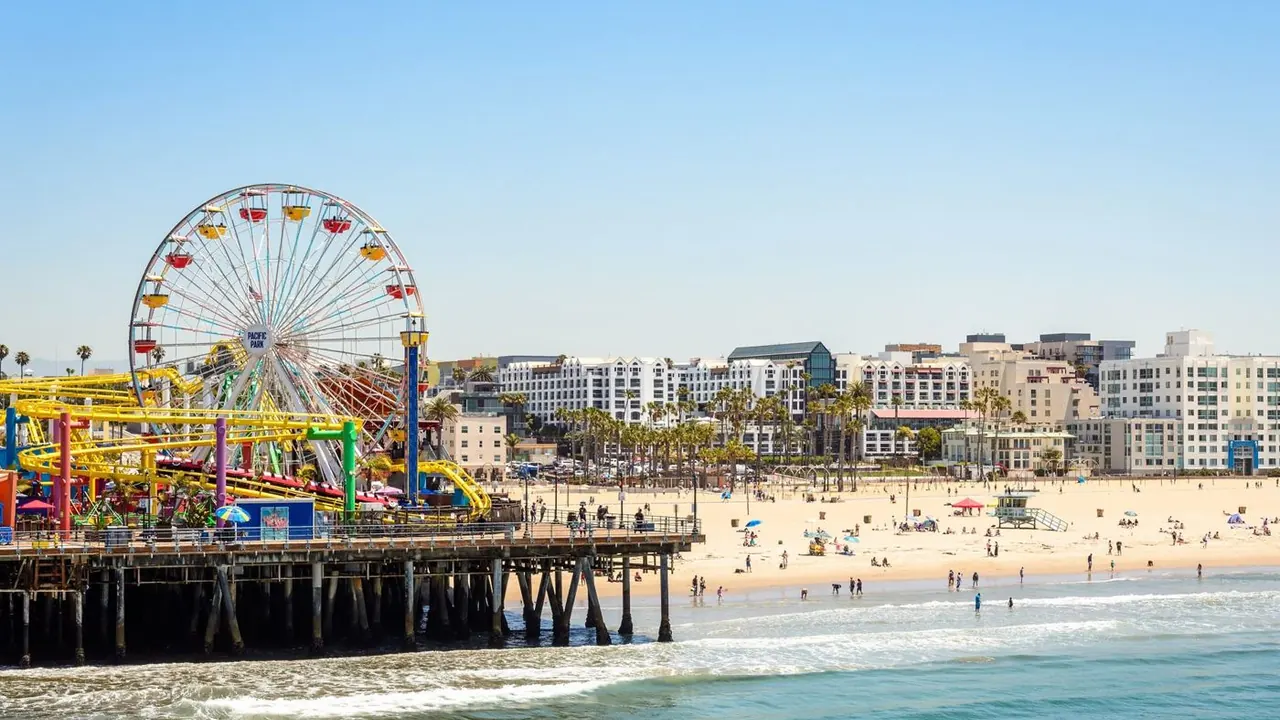
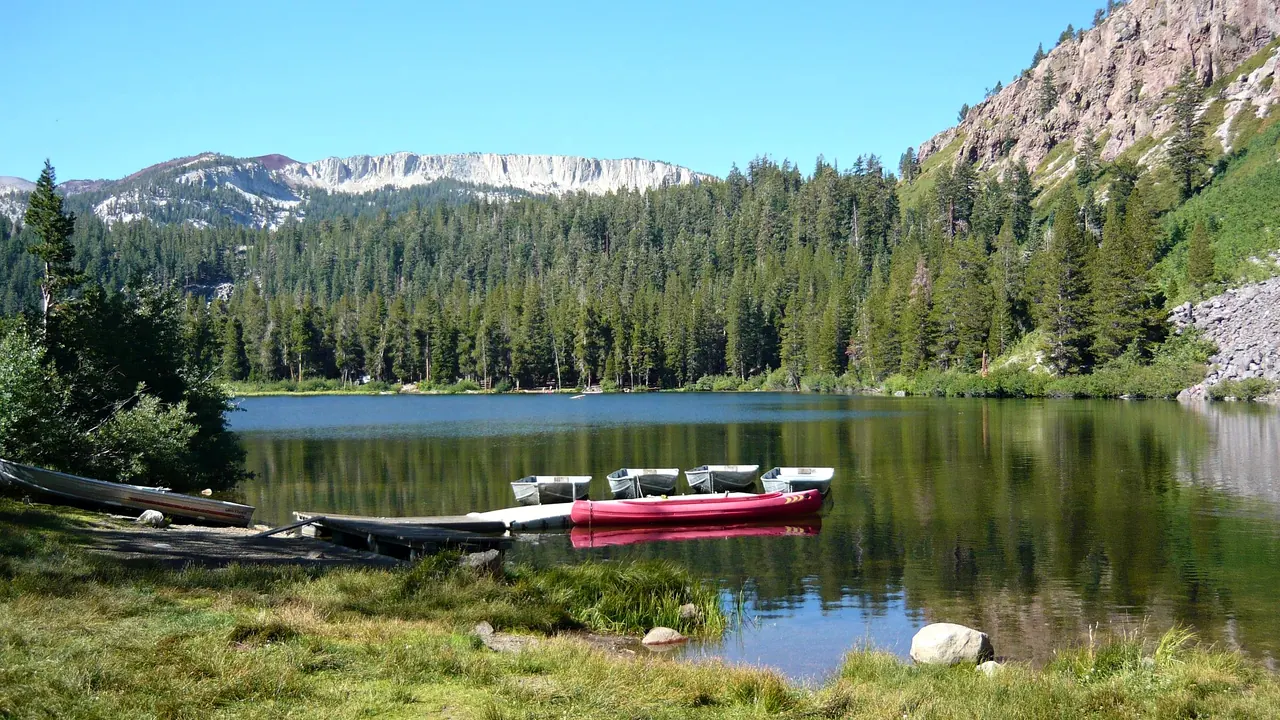
Photos: Los Angeles by BenSherman, Public domain; Mammoth Lakes by Dr. Al. K. Lisch, CC BY-SA 3.0, cropped.
Los Angeles or Mammoth Lakes?
Our verdict in twelve categories, each scored against the same fixed benchmark cities, and the climate month by month, so you can choose for your trip.
Choose Los Angeles for
- live music and the arts
- shopping
- culture and sights
Los Angeles is the choice for a trip built around the city itself. It has immigrant food neighbourhoods from Koreatown to the San Gabriel Valley, the Getty and LACMA, an orchestra at the Walt Disney Concert Hall and clubs in Hollywood, and the theme parks and shops come on top of that. It suits travellers who want a lot to do every day, families with children who want rides and museums, and anyone happy to spend time in a car to reach it all.
Choose Mammoth Lakes for
- getting around
- nature and the outdoors
Mammoth Lakes is for people who want to spend the trip outdoors. A big ski mountain sits above the town, the Lakes Basin is a short trip away, and the Yosemite high country and Mono Lake are within reach in summer. Evenings are quiet, the food is simple and filling, and there is almost nothing to see in the town itself. Skiers, hikers, anglers and mountain bikers will enjoy it far more than anyone who needs a city around them.
Scoreboard
Twelve categories on one fixed scale from 0 to 100. The shaded stretch is the gap between the two.
Your match
Pick a travel style or drag the sliders, and both match scores follow your weighting.
Wins on live music and the arts and shopping with your weighting.
Wins on getting around and nature and the outdoors with your weighting.
What matters to you?
Category by category
What the scores mean for a trip.
Beaches & swimming
Los Angeles has a real coast, more than 100km of it, from the coves of Malibu to the volleyball courts of Hermosa and the boardwalk at Venice. The Pacific is cool, so most people wade or surf rather than swim, but the beach culture is genuine.
Mammoth Lakes is far from the sea. The nearest thing to a swim is a cold summer dip at Horseshoe Lake or Crowley Lake, and the inviting pools at Hot Creek are off limits.
Food & drink
Food is a reason to choose Los Angeles. Its immigrant communities cook their own cuisines in Koreatown, Thai Town and the San Gabriel Valley, and it also has serious chef-led restaurants and Grand Central Market for grazing. The catch is that you drive between them.
Mammoth Lakes feeds people well after a day outside, with big breakfasts, burgers, steak and beer brewed in town. There is no local cuisine and no market scene, though, and some kitchens close or cut back in the quiet months.
Culture & sights
Los Angeles is a twentieth-century city to look at. Griffith Observatory gazes across the basin to the Hollywood Sign, the Walk of Fame and the old movie palaces line Hollywood Boulevard, and the studio lots show where films are made. Architecture is a reason to come in itself, from the steel curves of Frank Gehry's Walt Disney Concert Hall to the Art Deco towers downtown and the mid-century houses. There is no old quarter to speak of, since Olvera Street is small, and the sights lie far apart.
Mammoth Lakes has almost nothing to see in town. It grew from a mining camp into a ski resort, so its streets are modern lodges, condominiums and the pedestrian Village. A single small history museum tells the mining story, and people come here for the mountains instead.
Nightlife
Los Angeles has several kinds of night out in different places. There are velvet-rope clubs in Hollywood, the gay bars of Santa Monica Boulevard, cocktail rooms in old downtown banks and dive bars in Echo Park. The bars close at 2am and each district needs a ride, but the choice is wide.
Mammoth Lakes has après-ski and little else. The Village bars and brewery taprooms fill up at the end of the ski day, and outside the busy winter weekends the town is quiet well before midnight.
Nature & outdoors
Los Angeles does well for a big city, with Griffith Park, the ridge trails of the Santa Monica Mountains and surfing at Malibu. You will spend a lot of time in traffic getting to them, and the summer heat and fire season limit the inland hiking.
Mammoth Lakes is built around the outdoors, and it is the stronger of the two by a wide margin. The ski mountain rises right above town and often runs into early summer, and the granite lakes of the Lakes Basin are just beyond it. Devils Postpile and Mono Lake's tufa towers are a short drive further, and Tioga Pass leads to Yosemite's high country about an hour away.
Day trips
From Los Angeles there is a good choice of outings. Santa Barbara has its mission and red-tiled streets, Catalina is a ferry ride away, and Laguna Beach, Ojai and Palm Springs are all within a drive. Traffic decides how far you get in a day.
Mammoth Lakes has fewer places to go, and they lie a long way apart along the highway. Bodie ghost town and Manzanar are the strongest, and Mono Lake and June Lake are short outings. When the passes close in winter, most trips go into the mountains rather than to other towns.
Good for families
Los Angeles gives children a great deal: Disneyland, Universal Studios, the space shuttle at the California Science Center, the La Brea Tar Pits and the aquarium in Long Beach. It works best if parents plan one area per day and accept the driving.
Mammoth Lakes suits outdoor families well. It has a ski school, a snow tubing hill, rowing boats on the lakes and a gondola to the summit. It has nothing indoors for a stormy day, though, and the altitude can tire young children for the first day or two.
Getting around
Mammoth Lakes is the easier of the two to manage. In winter, free shuttles and the Village gondola make a ski vacation possible without a car, and in summer a trolley and a shuttle cover the Lakes Basin and Reds Meadow. You still need a car to explore the wider Eastern Sierra.
Los Angeles covers a whole basin, and its freeways are often jammed. The Metro reaches Santa Monica, Hollywood, Pasadena and Long Beach, but most visitors still hire a car or use ride-hailing and walk only within single neighbourhoods.
Shopping & style
Los Angeles is a real shopping city. It has luxury houses on Rodeo Drive, streetwear and vintage on Melrose, independent shops on Abbot Kinney, and the flea market at the Rose Bowl for serious bargain hunters.
Mammoth Lakes sells what you need for the mountains: ski and climbing gear, fly-fishing tackle, rental shops and landscape photography. For anything else, people wait until they are back in a city.
Affordability
Both places are expensive, but in different ways. In Los Angeles the costs build up through hotels near the coast, tips and tax on meals, and a hire car with fuel and parking. Taco trucks, Koreatown and the free beaches and Getty soften the bill.
In Mammoth Lakes the cost depends on the season. Lift tickets and peak ski-week lodging are steep, while a summer of hiking and lakes costs little beyond a park pass. Self-catering in a condominium is the usual way to save, which Los Angeles rarely needs.
Live music & performing arts
In Los Angeles you can plan a trip around performances. The Philharmonic plays at Disney Hall and the Hollywood Bowl, LA Opera is at the Music Center, rock bands play the Sunset Strip and improv runs every night in Hollywood.
Mammoth Lakes offers a community theatre on the college campus, and in summer a jazz festival and chamber concerts in a meadow. These are pleasant evenings, but not a reason to go.
Wellness & relaxation
Los Angeles has the more developed wellness scene, mostly thanks to Koreatown's bathhouses with their hot and cold pools and body scrubs, many open late. It also has the spas of Beverly Hills and yoga studios everywhere, but the city itself is not restful.
Mammoth Lakes offers something simpler: soaking in a primitive hot spring in the sagebrush with the Sierra across the valley, then a hot tub at your lodge. It is calmer than Los Angeles but has fewer facilities.
When should you go?
Pick your month. The climate figures are measured averages, not a forecast.
Los Angeles in July
Mammoth Lakes in July
Daytime high, °C
Rainfall in the month, mm
Where the figures come from
Mammoth Lakes's station stands 227 m below the city centre, so the centre is likely a little cooler than the figures say.
Mammoth Lakes has no rain gauge within 25 km of the centre, so its rainfall comes from a gridded climate dataset read at the city rather than from a gauge further away.
Temperature and rainfall are climate normals, averaged over the years shown. Los Angeles: 1991-2020 normals, Los Angeles Airport (18.5 km from centre). Mammoth Lakes: 2008-2020 (rainfall 1991-2020) normals, Mammoth / Whitmore Hot Springs (12 km from centre).
Los Angeles stays mild all year. Daytime highs only move between about 19°C in winter and 25°C in late summer, so walking the neighbourhoods is comfortable in any month. Most of the rain falls in winter, roughly December to March, and from late spring through the summer it is close to dry. The Pacific stays cool. It is at its warmest from July to September, at around 20°C, and those are the best months for anyone keen to get in the water.
Mammoth Lakes has true mountain seasons. December and January bring highs of about 6°C and the wettest weather of the year, falling mostly as snow, and that is what makes the ski season. Spring warms slowly. June to September is dry and warm, peaking at 28°C in July and August, and those are the months for the lakes, the trails and the high passes. In winter the two places could hardly be more different. In summer both are dry, but Mammoth's days are the hotter of the two.
Which traveller are you?
On a culture and arts trip, Los Angeles wins easily. It has the Getty, LACMA and the Broad, the Huntington's library and gardens, and the Philharmonic at Disney Hall or the Hollywood Bowl. Mammoth Lakes offers a small cabin museum and a community theatre.
For a food and nightlife trip, choose Los Angeles. You can eat tacos on the Eastside, Korean barbecue late at night or regional Chinese food in the San Gabriel Valley, then go on to rooftop bars, Silver Lake dives or West Hollywood. In Mammoth Lakes the night ends with après-ski and an early bed.
On an outdoors trip, Mammoth Lakes is the stronger choice. You can ski a major mountain into early summer, then hike the Lakes Basin, ride the bike park and walk to Devils Postpile. Los Angeles has good canyon trails, but the traffic stands between you and them.
Before you go
| Measure | Los Angeles | Mammoth Lakes |
|---|---|---|
| Currency | US Dollar (USD) | US Dollar (USD) |
| Sockets | AB120 V, 60 Hz | AB120 V, 60 Hz |
| Driving side | Right | Right |
| Time zone | UTC-8, UTC-7 in summer | UTC-8, UTC-7 in summer |
| Emergency number | 911 | 911 |
| Elevation | 106 m | 2,402 m |
| Main airport | Los Angeles International Airport (LAX)19 km from centre177 non-stop destinations | Reno Tahoe International Airport (RNO)217 km from centre25 non-stop destinations |
| Public holidays this year | 13 days | 13 days |
By the numbers
| Measure | Los Angeles | Mammoth Lakes |
|---|---|---|
| City population | 3,898,747 | 7,191 |
| People per km² | 2,994 | 110 |
| Museums within 10 km | 40 | 0 |
| UNESCO World Heritage sites within 50 km | 1 | 0 |
| Swim season, months above 21 °C | None | - |
Where else could you go?
Every comparison below shares a destination with this one, so you can follow Los Angeles or Mammoth Lakes somewhere new.
- Santa Monicavs Los Angeles
- Anaheimvs Los Angeles
- Huntington Beachvs Los Angeles
- Newport Beachvs Los Angeles
- Laguna Beachvs Los Angeles
- Big Bear Lakevs Los Angeles