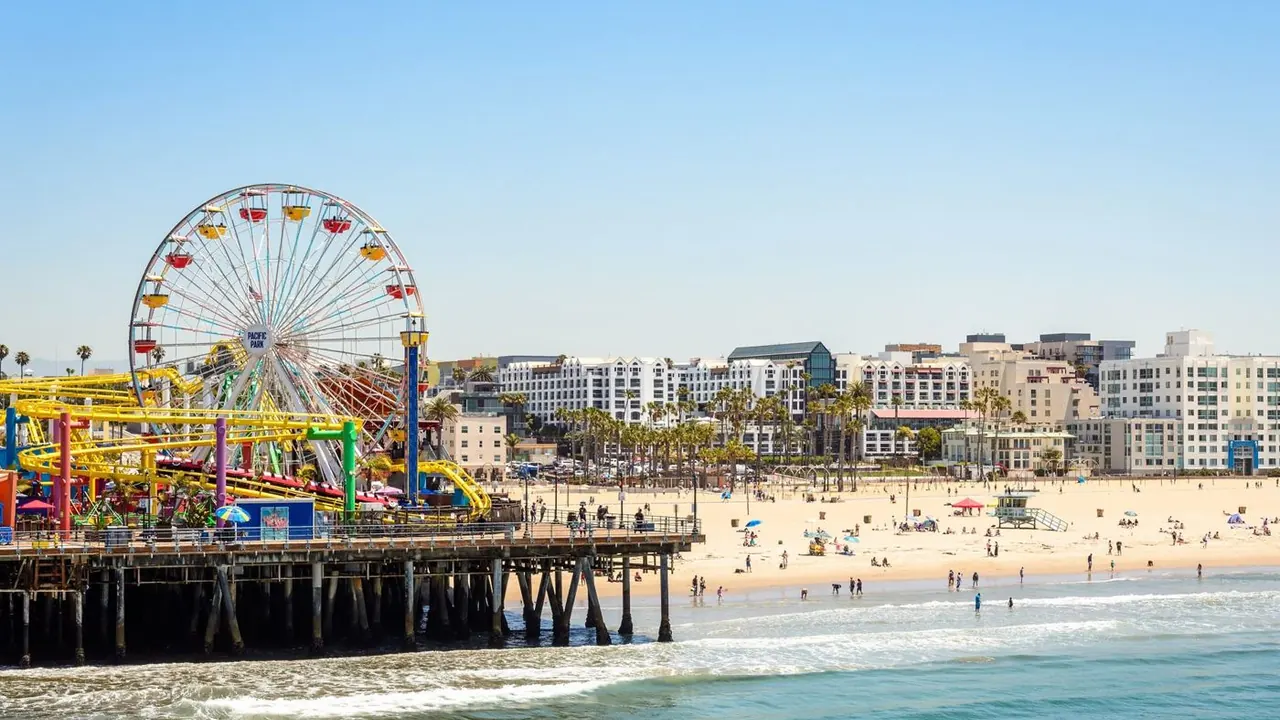
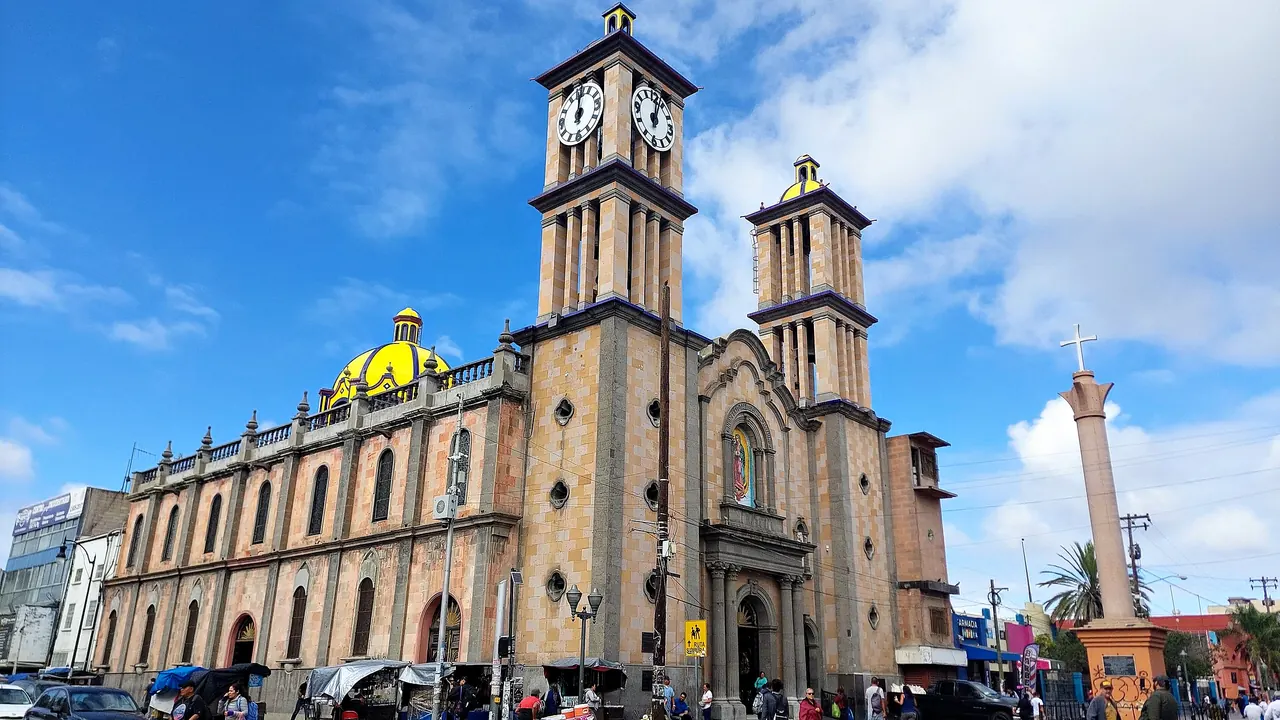
Photos: Los Angeles by BenSherman, Public domain; Tijuana by Exprimidor, CC BY-SA 4.0, cropped.
Los Angeles or Tijuana?
Our verdict in twelve categories, each scored against the same fixed benchmark cities, and the climate month by month, so you can choose for your trip.
Choose Los Angeles for
- families
- live music and the arts
- nature and the outdoors
Los Angeles suits the traveller who wants a big, many-sided trip and doesn't mind paying for it. Its art museums, the Philharmonic and the Hollywood Bowl, mountain trails behind the city and theme parks for the children give it far more range than its neighbour. Its immigrant food is also among the best anywhere. The price is high, and so is the time spent in a car between neighbourhoods.
Choose Tijuana for
- prices
- getting around
Tijuana is for a shorter, cheaper and more focused visit built around eating and drinking. Adobada tacos, Baja Med cooking, craft taprooms and late nights on Calle Sexta are the reason to go, and money goes much further than across the border. Rosarito and the Valle de Guadalupe wine country are within easy reach. Don't come for museums, quiet or anything aimed at children.
Scoreboard
Twelve categories on one fixed scale from 0 to 100. The shaded stretch is the gap between the two.
Your match
Pick a travel style or drag the sliders, and both match scores follow your weighting.
Wins on families and live music and the arts with your weighting.
Wins on prices and getting around with your weighting.
What matters to you?
Category by category
What the scores mean for a trip.
Beaches & swimming
Los Angeles has much more shore to choose from. More than 100km of it runs from the Malibu coves at El Matador and Zuma through Santa Monica and Venice to the South Bay, with volleyball, surf breaks and the bike path along the sand.
Tijuana's own Playas de Tijuana is better for a seafront stroll to the border fence than a swim, because runoff often fouls the water. A proper beach day there means a drive to Rosarito. Both coasts share the same cool Pacific, so neither is a warm-water swimming trip.
Food & drink
Both are cities where eating is a main reason to come, but Los Angeles goes further. Koreatown's charcoal barbecue and late-night soup, regional Chinese cooking in the San Gabriel Valley, and Thai, Armenian, Ethiopian, Persian and Oaxacan kitchens sit alongside its taco trucks, chef-driven restaurants and the stalls of Grand Central Market. The catch is that the best of it is spread across the basin, and you drive between meals.
Tijuana goes deep into one tradition instead. It has adobada and birria, sea urchin tostadas from the seafood carts, the Caesar salad in the city where it was invented, and Baja Med cooking in Zona Río and Chapultepec, with craft beer and Valle de Guadalupe wines to go with them. Beyond Mexican food the choice narrows quickly, and the city's Chinese-Mexican tradition is the main exception.
Culture & sights
Los Angeles offers far more to see, though nearly all of it is modern. There is the Getty on its Brentwood hilltop, the antiquities at the Getty Villa, LACMA and the Broad, the Huntington's library and gardens, and Hollywood's studio lots and movie palaces, plus architecture from Art Deco to the Disney Concert Hall.
Tijuana's sights fill a day or two. The Museo de las Californias inside the domed cultural centre gives a good grounding in the peninsula's history, and the Jai Alai palace stands out on Revolución. The most striking sight is the painted border fence running into the sea.
Nightlife
Los Angeles has more variety: velvet-rope clubs in Hollywood, the gay strip of West Hollywood, rooftop bars downtown and dive bars in Silver Lake and Echo Park. But last orders come at 2am, and a night usually stays in one district.
Tijuana is smaller but runs later, and it is easier for a visitor to find. Avenida Revolución keeps its loud, cheap Prohibition-era bars for visitors from the north, while Calle Sexta's cantinas and the Zona Río taprooms are where locals go. Stick to those areas after dark.
Nature & outdoors
Los Angeles has real wild country within reach. You can hike up Mount Hollywood in Griffith Park, walk the chaparral ridges of the Santa Monica Mountains above Malibu, or head into the pine forest of the San Gabriels, where peaks rise above 3,000m. Boats also run out to the Channel Islands.
Tijuana sits among dry, scrubby hills with little green space. Its outdoors lies down the coast instead, with the surf around Rosarito, gentle cycling among the vineyards and the blowhole at La Bufadora. Serious hiking there is out of reach on a day trip.
Day trips
The two offer about as many good days out, but of different kinds. From Los Angeles they run along the California coast: Spanish Colonial Santa Barbara, the ferry to Catalina, Laguna Beach and Ojai. Freeway traffic decides how far you get.
Tijuana offers two countries. Ensenada's fish market, Puerto Nuevo's lobster and the wineries of the Valle de Guadalupe lie to the south, with San Diego to the north. Getting back across the border can take hours, and you need your documents.
Good for families
Los Angeles is one of the strongest family destinations anywhere. Disneyland, Universal Studios, Knott's Berry Farm and Magic Mountain cover the thrills. The Natural History Museum's dinosaurs, the Aquarium of the Pacific and the Santa Monica Pier fill the gentler days.
Tijuana has El Trompo's science exhibits, the IMAX dome and a small animal collection in Parque Morelos. It is otherwise built for adults, and Avenida Revolución is aimed at drinkers. The theme parks families want are across a crossing that can take hours.
Getting around
Both cities sprawl and both assume you have a car, so neither is easy. Los Angeles has the edge in public transport, because its Metro rail does reach Hollywood, Pasadena, Long Beach and Santa Monica. Tijuana has no metro at all, only a rapid bus and route taxis that are hard for a visitor to read.
Tijuana makes up for this with cheap, plentiful ride-hailing and a walkable core right by the San Ysidro crossing. In Los Angeles, most visitors hire a car and plan each day around one area.
Shopping & style
Los Angeles is a serious shopping city: luxury houses on Rodeo Drive, streetwear and vintage on Melrose, independent shops on Abbot Kinney, and the Rose Bowl flea market for hunting down secondhand finds.
Tijuana's shopping is practical and folk-craft rather than fashion. You bargain for pottery, silver and leather near the border, buy chillies and vanilla at Mercado Hidalgo and browse the small studios of Pasaje Rodríguez. There is almost nothing in the way of boutiques.
Affordability
This is the category where Tijuana clearly wins. Street food, mid-range rooms in Zona Río and rides across town all cost little, and only the Revolución bars, the smarter Baja Med tables and wine-country tastings come close to northern prices.
Los Angeles is expensive on every front: hotels in the coastal and Westside areas, tax and tips on meals, a hire car with parking, and theme park tickets. Its taco trucks, free beaches and the free Getty collections ease the bill but don't change it.
Live music & performing arts
Los Angeles is a major stage city. The Philharmonic plays at Disney Concert Hall and moves outdoors to the Hollywood Bowl in summer, there is LA Opera, and Broadway tours play the Pantages. Below that come the rock rooms of the Sunset Strip, improv theatres and the jazz of Leimert Park.
Tijuana's programme is anchored by the state orchestra at the cultural centre and an opera company known for its yearly open-air staging. The rest is informal: mariachis at Plaza Santa Cecilia, banda in the cantinas, and the Nortec sound that grew up in the bars around Calle Sexta.
Wellness & relaxation
Los Angeles has a real pampering draw in Koreatown's Korean bathhouses, with hot and cold pools, scrubs and heated floors, open late or around the clock. Add the yoga studios and the Beverly Hills spas, with Ojai and the Palm Springs springs within reach.
Tijuana offers hotel spas and fairly priced massages, but it has no bathing tradition. Its health trade is dental and medical. The calm is out in the vineyard stays of the wine valleys, not in the city.
When should you go?
Pick your month. The climate figures are measured averages, not a forecast.
Los Angeles in July
Tijuana in July
Daytime high, °C
Rainfall in the month, mm
Where the figures come from
Tijuana has no rain gauge within 25 km of the centre, so its rainfall comes from a gridded climate dataset read at the city rather than from a gauge further away.
Temperature and rainfall are climate normals, averaged over the years shown. Los Angeles: 1991-2020 normals, Los Angeles Airport (18.5 km from centre). Tijuana: 2006-2020 (rainfall 1991-2020) normals, San Diego / Bandini (6.7 km from centre).
The two cities share almost the same coastal climate, mild in every month and never really cold for walking. Winter days in both sit around the high teens, and most of the year's rain falls between December and March. Los Angeles is the wetter of the two, at about 76mm in February, so a winter visit there risks a few more grey, wet days. From May to September both are almost completely dry. Late summer is the warmest stretch, about 25°C in Los Angeles and a little more in Tijuana, which reaches about 27°C in September, warm but rarely uncomfortable for a day on foot.
The sea is the same cool Pacific off both coasts, about 15°C from January to April and only about 21°C at its warmest in August and September. Those late-summer months are the best for getting into the water, but in either city most people wade, surf in a wetsuit or simply walk the sand. Autumn, from September into October, is the best all-round time in both: dry, warm and as mild as the sea gets.
Which traveller are you?
For a trip on a tight budget, Tijuana is the easy choice. Street tacos, seafood carts, good-value hotels in Zona Río and cheap rides across town stretch money a long way, while Los Angeles adds hotel costs, tips, a hire car and parking.
On a family trip with children, Los Angeles wins clearly. Disneyland, Universal Studios, the space shuttle at the California Science Center and the La Brea Tar Pits fill days easily, whereas Tijuana offers little beyond El Trompo and a beach outing.
For a culture and arts trip, Los Angeles is far richer. The Getty, LACMA and the Huntington make a serious art circuit, and the Philharmonic and comedy clubs fill the evenings. Tijuana's cultural centre and border murals fill only a day or two.
Before you go
| Measure | Los Angeles | Tijuana |
|---|---|---|
| Official language | - | Spanish, Nahuatl, Yucatec Maya |
| Currency | US Dollar (USD) | Mexican Peso (MXN) |
| Sockets | AB120 V, 60 Hz | AB127 V, 60 Hz |
| Driving side | Right | Right |
| Time zone | UTC-8, UTC-7 in summer | UTC-8, UTC-7 in summer |
| Emergency number | 911 | 911 |
| Elevation | 106 m | 20 m |
| Main airport | Los Angeles International Airport (LAX)19 km from centre177 non-stop destinations | General Abelardo L. Rodriguez International Airport (TIJ)6 km from centre38 non-stop destinations |
| Public holidays this year | 13 days | 9 days |
By the numbers
| Measure | Los Angeles | Tijuana |
|---|---|---|
| City population | 3,898,747 | 1,810,645 |
| People per km² | 2,994 | 2,842 |
| Museums within 10 km | 39 | 3 |
| UNESCO World Heritage sites within 50 km | 1 | 0 |
| Swim season, months above 21 °C | None | 1 month |
Where else could you go?
Every comparison below shares a destination with this one, so you can follow Los Angeles or Tijuana somewhere new.