
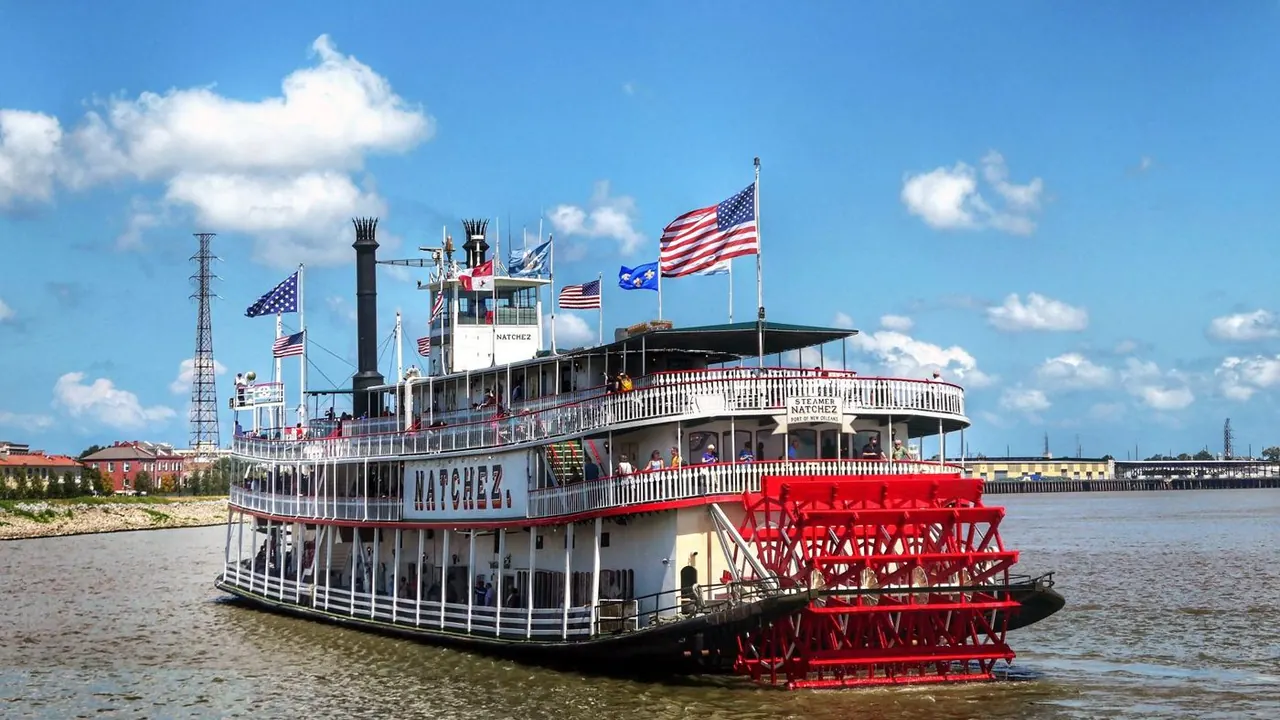
Photos: Louisville by NachoServant, CC BY-SA 4.0, cropped; New Orleans by Bernard Spragg, CC0.
Louisville or New Orleans?
Our verdict in twelve categories, each scored against the same fixed benchmark cities, and the climate month by month, so you can choose for your trip.
Choose Louisville for
- day trips
- nature and the outdoors
- families
Louisville suits travellers who come for bourbon and horses and bring a car to reach them. Its draws are the distilleries around Bardstown, the thoroughbred farms near Lexington, Churchill Downs and a run of green Olmsted parks. Hotels are reasonable outside the racing season and the driving is easy, so it works best as a base for touring Kentucky rather than as a city to explore on foot.
Choose New Orleans for
- nightlife
- live music and the arts
- getting around
For the traveller who wants the city itself to be the event, New Orleans is the clear choice. It has a cooking tradition all its own, live jazz every night, bars with no closing time and a colonial quarter that is unusually complete for an American city, all within a flat stretch you can walk or ride by streetcar. It rewards curiosity and appetite much more than Louisville does, though the summer heat and some uneasy streets after dark mean you need to plan a little.
Scoreboard
Twelve categories on one fixed scale from 0 to 100. The shaded stretch is the gap between the two.
Your match
Pick a travel style or drag the sliders, and both match scores follow your weighting.
Wins on day trips and nature and the outdoors with your weighting.
Wins on nightlife and live music and the arts with your weighting.
What matters to you?
Category by category
What the scores mean for a trip.
Beaches & swimming
Neither city is a place for a beach trip, and for most visitors to either one, swimming means a hotel pool. Louisville's nearest option is the reservoir lakes out in the Kentucky countryside, which are good for lake bathing and boating.
New Orleans has slightly more to offer. The Mississippi Gulf Coast around Bay St. Louis and Gulfport is well over an hour's drive away, and its water is warm in summer but shallow and murky rather than clear.
Food & drink
Louisville eats and drinks well around one subject, bourbon. Whiskey Row has bars pouring hundreds of labels, and there are a few local dishes worth trying: the hot brown, burgoo and Derby pie. Away from the Southern tradition, the choice thins out quickly.
New Orleans is in another league. It has a whole cuisine of its own, with Creole dining rooms in the French Quarter that have served the same dishes for over a century, po'boy shops in Mid-City, gumbo, étouffée and a calendar set by crawfish and oysters. Both cities treat a drink as part of the meal, but the Sazerac and the Vieux Carré were born in New Orleans, and the cooking around them is much deeper.
Culture & sights
Louisville's sights follow its fame. Churchill Downs and the Derby Museum, the Muhammad Ali Center and the Slugger Museum on Whiskey Row fill two or three good days, and Old Louisville's Victorian mansions make a fine afternoon walk.
New Orleans gives you more to explore. The French Quarter is an old colonial town with iron balconies, courtyards, Jackson Square and the Cabildo, where Louisiana passed to the United States. Add the Garden District's antebellum houses, the above-ground tombs and the National WWII Museum. Neither city has a long list of great museums, but New Orleans has far more history in its streets.
Nightlife
Both cities go out in bars rather than clubs, but on very different scales. In Louisville, a night out means the dive bars and patios of Bardstown Road, bourbon bars in NuLu and the chain-bar block at Fourth Street Live. The city only really cuts loose around the Derby.
New Orleans has no legal closing time, and you can carry your drink down the street in a plastic cup, so evenings drift from one bar to the next. Bourbon Street is the loud, neon end of it. Frenchmen Street and the corner bars of the Bywater are where locals go. Watch for pickpockets in the late crowds.
Nature & outdoors
Louisville has the edge here, and more variety in the land itself. Cherokee and Iroquois parks give wooded hills and views over the city, the Falls of the Ohio has fossil beds you can walk out on, and Jefferson Memorial Forest and Bernheim Forest are good for proper woodland hikes. Mammoth Cave is close enough for a day.
New Orleans is flat and wet, and its nature is on the water. Boat and kayak trips run through cypress swamps with alligators and herons, and the Barataria Preserve has boardwalk trails. In summer the heat makes all of it hard going.
Day trips
Louisville has the better spread of outings, and most of them lead to bourbon or horses. You can tour distilleries around Bardstown and Lawrenceburg, see the white-fenced farms and Keeneland racecourse near Lexington, or visit Shaker Village and Lincoln's birthplace. You need a car and someone who isn't tasting.
From New Orleans, the classic outing is the River Road to the sugar plantations, where the Whitney's account of slavery stays with most visitors. Baton Rouge and the quiet Gulf towns are easy trips too, but the Cajun prairie around Lafayette is about as far as a day allows.
Good for families
Both cities work well with children, and both are hard going in the hot summer. Louisville is the more relaxed choice, with roller coasters and a water park at Kentucky Kingdom, underground ziplines in the Mega Cavern and the hands-on Science Center, although you need a car to get between them.
New Orleans makes the outings themselves part of the fun: rides on the streetcar and the paddle-steamer, the Audubon Zoo's swamp area, the riverfront aquarium and the parade crowds along St. Charles Avenue. The trade-off is closer watch over where you walk after dark, with Bourbon Street off limits at night.
Getting around
Louisville is built around the car. It has no rail transit, and Churchill Downs, the Highlands and the big parks are all a drive apart, though light traffic makes the driving easy.
New Orleans is far easier without a car. The French Quarter, the Marigny and the Warehouse District sit close together on flat ground, and the slow green St. Charles streetcar reaches Uptown. Ride-hailing covers the airport and the swamps, and a car is only worth having for day trips.
Shopping & style
Louisville's best souvenir is in a bottle. Distillery shops sell bourbons that are hard to find elsewhere, and beyond that there are NuLu's few boutiques and the vintage and record shops of Bardstown Road.
New Orleans has more to browse and more that is its own. Royal Street has antique dealers selling chandeliers and estate jewellery, Magazine Street has miles of independent shops, and the city has its own line in Mardi Gras masks and pralines. Neither city is a place for designer labels.
Affordability
Overall costs are much alike, but they fall in different places. In Louisville, beds are the bargain outside the racing season, while a hire car or ride-hailing, plus tax and tips on every meal, push up the daily bill.
New Orleans works the other way round. Rooms near the Quarter are the big expense, while po'boys, the streetcar and free music in the streets keep the days cheap. In both cities, the big festival weeks (the Derby in Louisville, Mardi Gras and Jazz Fest in New Orleans) are the ones to avoid on a budget.
Live music & performing arts
For live music, New Orleans is far ahead, as the birthplace of jazz. There are brass bands and zydeco on Frenchmen Street every night, second-line parades on Sundays, and Jazz Fest in spring.
Louisville's strength is the formal season New Orleans largely lacks. The Kentucky Center hosts the orchestra, opera and ballet, Actors Theatre has a long record of staging new American plays, and the bars on Bardstown Road add bluegrass and Americana. It is reliable, but it is rarely the reason for a trip.
Wellness & relaxation
Neither city has a bathing or spa tradition, so in both you are left with hotel spas and a slow pace. Louisville's idea of unwinding is a porch in the Highlands or a drive through horse country, and for a real spa break, the old mineral-spring resorts of French Lick and West Baden Springs are about an hour and a half away. New Orleans offers quiet courtyard guesthouses, streetcar rides under the oaks and lazy afternoons in City Park.
When should you go?
Pick your month. The climate figures are measured averages, not a forecast.
Louisville in July
New Orleans in July
Daytime high, °C
Rainfall in the month, mm
Temperature and rainfall are climate normals, averaged over the years shown. Louisville: 1991-2020 (sunshine 1981-2010) normals, Standiford Field (8.2 km from centre). New Orleans: 1991-2020 (sunshine 1981-2010) normals, New Orleans Airport (2.7 km from centre).
Louisville has four real seasons. Winters are cold, with daytime highs around 6°C in January, and July and August are hot and humid, very sunny but tiring for a day of walking between sights. The best months are late April to early June and September to October, when the parks and bourbon country are warm and pleasant. Rain is spread evenly through the year and is a little heavier in spring.
New Orleans runs a season ahead and much warmer. January still reaches about 17°C, so winter is mild and good for exploring, and February to April and late October to November are the most comfortable times of all. From June to September highs sit around 33°C in heavy humidity, and the summer is also the wettest stretch, with about 194mm in June. Over the same months the Gulf warms to around 30°C, though swimming means a drive to the Mississippi coast.
Which traveller are you?
For a food and nightlife trip, New Orleans is well ahead. Creole and Cajun cooking, oysters and crawfish in season, cocktails invented in the city and bars that never have to close make a night out here far richer than Louisville's bourbon bars.
On an outdoors trip, Louisville is the better pick. Its Olmsted parks have wooded hills, the fossil beds at the Falls of the Ohio are walkable, Bernheim Forest is close by and Mammoth Cave is within reach. New Orleans offers swamp boat tours, but the summers are punishing.
For a short city break, New Orleans makes far better use of a few days. The French Quarter, the Marigny and the Garden District can all be reached on foot or by streetcar. In Louisville, Churchill Downs, the Highlands and the parks each need a drive.
Before you go
| Measure | Louisville | New Orleans |
|---|---|---|
| Currency | US Dollar (USD) | US Dollar (USD) |
| Sockets | AB120 V, 60 Hz | AB120 V, 60 Hz |
| Driving side | Right | Right |
| Time zone | UTC-5, UTC-4 in summer | UTC-6, UTC-5 in summer |
| Emergency number | 911 | 911 |
| Elevation | 142 m | -2 m |
| Main airport | Louisville Muhammad Ali International Airport (SDF)10 km from centre40 non-stop destinations | Louis Armstrong New Orleans International Airport (MSY)18 km from centre51 non-stop destinations |
| Public holidays this year | 14 days | 14 days |
By the numbers
| Measure | Louisville | New Orleans |
|---|---|---|
| City population | 246,161 | 383,997 |
| People per km² | 1,434 | 423 |
| Museums within 10 km | 15 | 16 |
| UNESCO World Heritage sites within 50 km | 0 | 0 |
| Swim season, months above 21 °C | - | 7 months |
Where else could you go?
Every comparison below shares a destination with this one, so you can follow Louisville or New Orleans somewhere new.
- Gulf Shoresvs New Orleans
- Orange Beachvs New Orleans
- Nashvillevs Louisville
- Pensacolavs New Orleans
- Pigeon Forgevs Louisville
- Gatlinburgvs Louisville