Photos: Lugano by Thomas Woodtli from Zürich, Switzerland, CC BY-SA 2.0, cropped; Luxembourg by Suicasmo, CC BY-SA 4.0, cropped.
Lugano or Luxembourg?
Our verdict in twelve categories, each scored against the same fixed benchmark cities, and the climate month by month, so you can choose for your trip.
Choose Lugano for
- beaches
- nature and the outdoors
- day trips
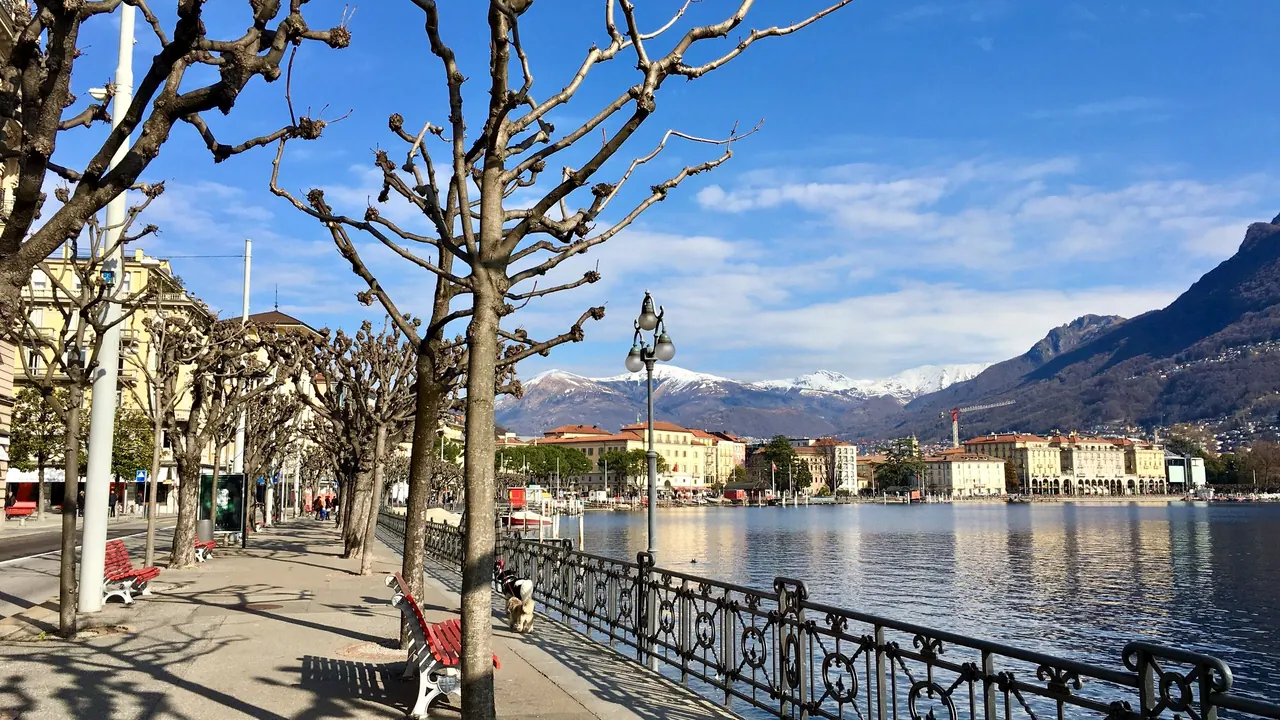
Lugano is the choice for travellers who want landscape. You get a lake to swim in during summer, funiculars and mountain paths that start at the edge of town, and day trips to Milan, Como and Lake Maggiore. It suits an unhurried outdoor stay, where the evening means an aperitivo and a long grotto dinner rather than a night out.
Choose Luxembourg for
- culture and sights
- live music and the arts
- nightlife
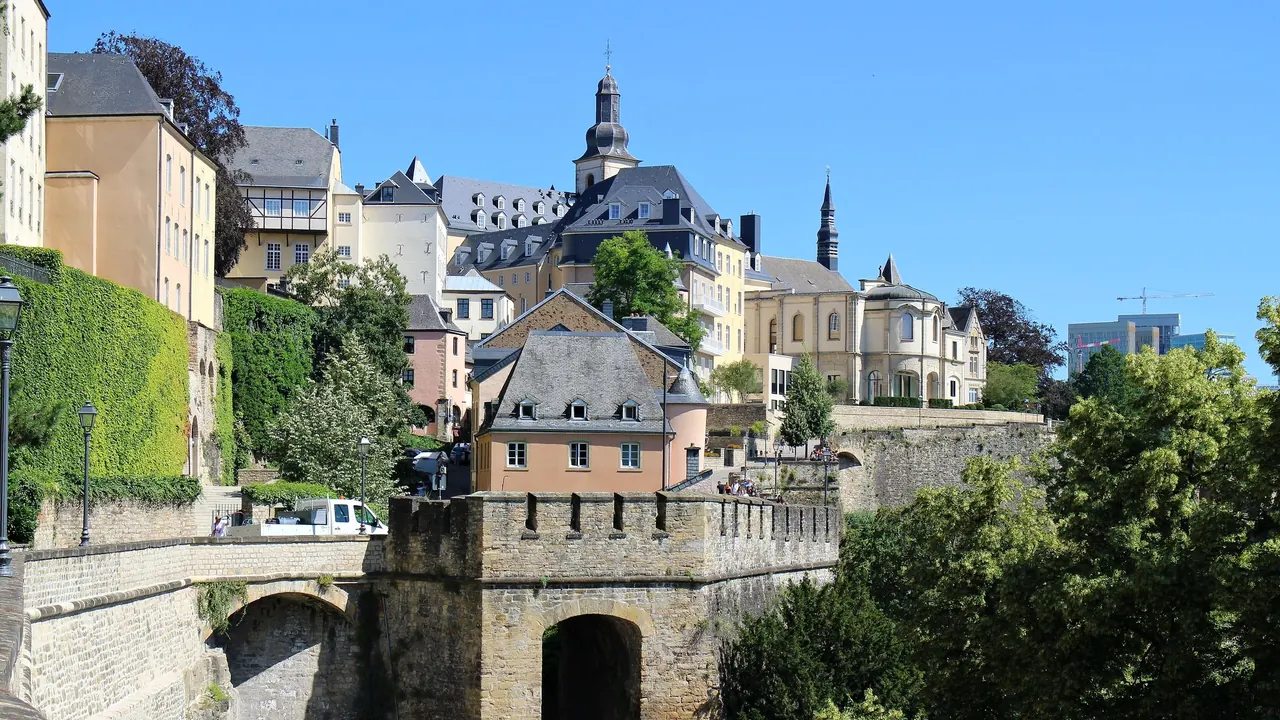
Pick Luxembourg if the town itself is the point. The fortress on its rock, the casemate tunnels and the drop to the Grund give it more to see, and the Philharmonie gives it the stronger concert programme. Free public transport makes Trier, Metz and the castles of the north easy to add. It suits a cooler city break with sightseeing and music at its centre.
Scoreboard
Twelve categories on one fixed scale from 0 to 100. The shaded stretch is the gap between the two.
Your match
Pick a travel style or drag the sliders, and both match scores follow your weighting.
Too close to call, 1 point apart
Wins on beaches and nature and the outdoors with your weighting.
Wins on culture and sights and live music and the arts with your weighting.
What matters to you?
Category by category
What the scores mean for a trip.
Beaches & swimming
Neither city has a coast, but in summer Lugano's lake is part of daily life. There is the city lido at the mouth of the Cassarate, there are decks and ladders along the shore towards Castagnola and Paradiso, and the villages reached by boat have small lake baths. The water is a little warmer too.
In Luxembourg, a swim means a trip out of town, either to the Upper Sûre reservoir about an hour north or to the gravel pits at Remerschen. For most visitors it stays an occasional outing on a hot day.
Food & drink
The two are closely matched, but the food is very different. Lugano's cooking is Italian and rustic and is best found in a grotto under chestnut trees: polenta, braised meats and a glass of Ticino Merlot. Many visitors cross into Italy for more choice.
Luxembourg mixes French, German, Belgian, Portuguese and Italian cooking, has more serious fine dining for its size, and pours Moselle Riesling and crémant by the glass. Neither is a place for cheap street food, and in both cities lunch is the better-value meal.
Culture & sights
Luxembourg has more to see. Its old town stands on a sandstone plateau ringed by the remains of a UNESCO-listed fortress. You can walk through the Bock casemates and look down on the Grund from the Chemin de la Corniche. There are also the Grand Ducal Palace, the national museum and MUDAM across the Red Bridge, enough for two days.
Lugano's sights are gentler and quicker to see. The arcaded Lombard streets around Piazza della Riforma, San Lorenzo above the lake, Luini's Passion fresco in Santa Maria degli Angioli and the art collection at LAC can all be covered in one day.
Nightlife
Neither is a party town, but Luxembourg has a little more going on after dinner. The bars and clubs at the Rives de Clausen, the riverside pubs of the Grund and the later venues in Hollerich draw a young international crowd, and Thursday and Friday are the busy nights.
In Lugano, an evening means an aperitivo on the lakefront and a long dinner, with a few lounge bars by the water. The town is quiet before midnight, and its young people go to Milan to go out.
Nature & outdoors
Nature is Lugano's strongest card. Steep wooded mountains rise straight from the lake. Funiculars climb Monte Brè and San Salvatore, a rack railway goes up Monte Generoso and the green water of the Verzasca and Maggia valleys is about an hour away. Paddleboards and kayaks are easy to hire on the lake.
Luxembourg's countryside is softer. There are wooded gorges right through the city centre, the mossy sandstone passages of the Müllerthal half an hour away, the hills of the Ardennes and cycle paths along the Moselle. It is good walking country, but there are no mountains.
Day trips
Both cities sit on borders and both make excellent bases, but Lugano's trips carry more weight. Milan's cathedral and The Last Supper are just over an hour away and Como is half an hour. In the other direction lie the castles of Bellinzona, Lake Maggiore and the Borromean Islands.
From Luxembourg, Roman Trier and Gothic Metz are each under an hour by train. Vianden's castle, Echternach and the Moselle wine villages make quieter outings. These are fine trips, but on a smaller scale than Milan and the Italian lakes.
Good for families
Both cities are safe and calm, and neither has a zoo or aquarium, but Lugano gives children slightly more to do. Boat rides to the villages, slides at the lidos, mountain funiculars and the park of Swiss landmarks in miniature at Melide fill several outdoor days. The steep streets are hard work with a pushchair, though.
Luxembourg is easier with a buggy, thanks to its public lifts, and the casemate tunnels feel like an adventure. Beyond the natural history museum and the Parc Merveilleux at Bettembourg, however, it suits only two or three days.
Getting around
Both are easy without a car. Luxembourg's advantage is that all public transport in the country is free. A tram runs to Kirchberg, trains reach Vianden and the Moselle, and public lifts link the upper town to the Grund.
Lugano is a walkable lakefront with a steep hill behind it, and a short funicular runs down from the station. Its extras are the lake boats and the mountain railways. Hotel stays usually include free regional transport as well.
Shopping & style
Neither city is a shopping destination, and both cater mainly to wealthy buyers. Lugano's Via Nassa is lined with watchmakers, jewellers and Italian fashion houses under its arcades. There is a designer outlet near Mendrisio, and Milan is close for anything more.
Luxembourg's Grand-Rue has the luxury brands and Avenue de la Gare has the high-street chains. The Villeroy & Boch porcelain outlet and a bottle of Moselle crémant are the most local things to take home.
Affordability
Both are expensive, and there is little to choose between them. Lugano has Swiss prices for hotels, meals, boats and mountain railways. Grotti, set lunches and the regional transport most hotels include ease the bill a little.
Luxembourg offers a few more savings. Transport is free everywhere, several museums charge nothing, wine by the glass is reasonable and room rates can drop at weekends. In both cities, the cheaper option is to eat or stay across the border.
Live music & performing arts
Luxembourg has more on stage. The Philharmonie on Kirchberg is home to its own orchestra and hosts many touring ones, and the Grand Théâtre brings in opera, dance and drama in several languages. The Rotondes and Neimënster add concerts, including open-air summer evenings in the Grund.
In Lugano, most of the programme is at LAC, home of the Orchestra della Svizzera italiana, and much of the theatre is in Italian. Its high point is summer, when Estival Jazz fills Piazza della Riforma with free concerts.
Wellness & relaxation
Lugano's calm comes from the lake, while Luxembourg has a real thermal spring within easy reach. In Lugano the day slows down by itself: a morning on a lido, an afternoon on a bench under the palms of Parco Ciani, a grotto lunch that runs on. There are no springs, so for pools and saunas you go to the spas in the lakeside hotels or the large indoor complex near Rivera.
At Mondorf-les-Bains, half an hour from Luxembourg near the French border, a warm mineral spring has supplied a thermal establishment in landscaped parkland since the nineteenth century. It makes an easy day of pools, saunas and treatments. Back in the city, the river walks through the Grund and the Pétrusse valley are the quiet counterpart to Lugano's lakeshore.
When should you go?
Pick your month. The climate figures are measured averages, not a forecast.
Lugano in July
Luxembourg in July
Daytime high, °C
Rainfall in the month, mm
Temperature and rainfall are climate normals, averaged over the years shown. Lugano: 1991-2020 normals, Lugano (1.2 km from centre). Luxembourg: 1991-2020 normals, Luxembourg / Luxembourg (6.3 km from centre).
Lugano is a few degrees warmer than Luxembourg all year and reaches 27°C in July and August. The lidos are open and the lake is warm enough for swimming from June to early September. The catch is rain. From April to November it comes in heavy bursts, peaking at around 178mm in May, although long sunny spells come in between. Spring and autumn are best for walking and hiking, as summer can be humid. Winter is cool but brighter than north of the Alps.
Luxembourg reaches about 24°C in high summer. That is comfortable for the ramparts and valley paths but rarely swimming weather. Its rain is spread evenly through the year instead of arriving in a wet season. The bigger difference is light: from November to January the days are grey, with only 41 hours of sunshine in December. May to September is the best stretch, and autumn is good for the forests and the grape harvest.
Which traveller are you?
On a beach and sun trip, Lugano is the better bet. Neither city has a sea, but Lugano's lake lidos, with their decks, pools and ladders into warmer water, beat Luxembourg's reservoir and gravel-pit swimming out of town. Lugano's summers are also hotter.
For a culture and arts trip, Luxembourg wins. The UNESCO-listed fortress, the casemates, the national museum and MUDAM fill two days. The Philharmonie and the Grand Théâtre also offer a fuller programme of concerts and stage shows than Lugano's LAC.
On an outdoors trip, Lugano is far ahead. Funiculars lift you onto Monte Brè and San Salvatore, the ridge from Monte Lema to Monte Tamaro is a classic hike and the Verzasca valley is an hour away. Luxembourg's Müllerthal is lovely, but there are no mountains.
Before you go
| Measure | Lugano | Luxembourg |
|---|---|---|
| Official language | French, German, Italian, Romansh | French, German, Luxembourgish |
| Currency | Swiss Franc (CHF) | Euro (EUR) |
| Sockets | CJ230 V, 50 Hz | CF230 V, 50 Hz |
| Driving side | Right | Right |
| Time zone | UTC+1, UTC+2 in summer | UTC+1, UTC+2 in summer |
| Emergency number | 112 | 112 |
| Elevation | 283 m | 300 m |
| Main airport | Milan Malpensa International Airport (MXP)46 km from centre208 non-stop destinations | Luxembourg-Findel International Airport (LUX)6 km from centre115 non-stop destinations |
| Public holidays this year | 15 days | 12 days |
By the numbers
| Measure | Lugano | Luxembourg |
|---|---|---|
| City population | 63,495 | 137,678 |
| People per km² | 837 | 2,663 |
| Museums within 10 km | 17 | 19 |
| UNESCO World Heritage sites within 50 km | 5 | 4 |
Where else could you go?
Every comparison below shares a destination with this one, so you can follow Lugano or Luxembourg somewhere new.