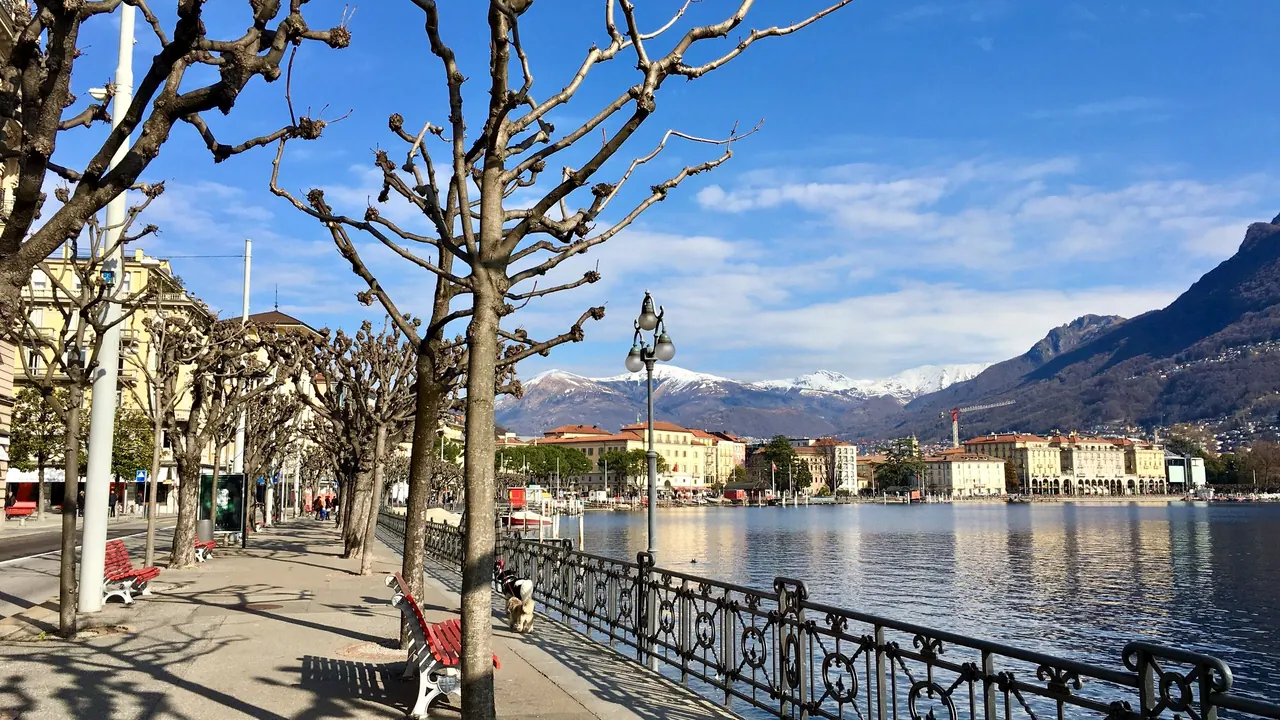
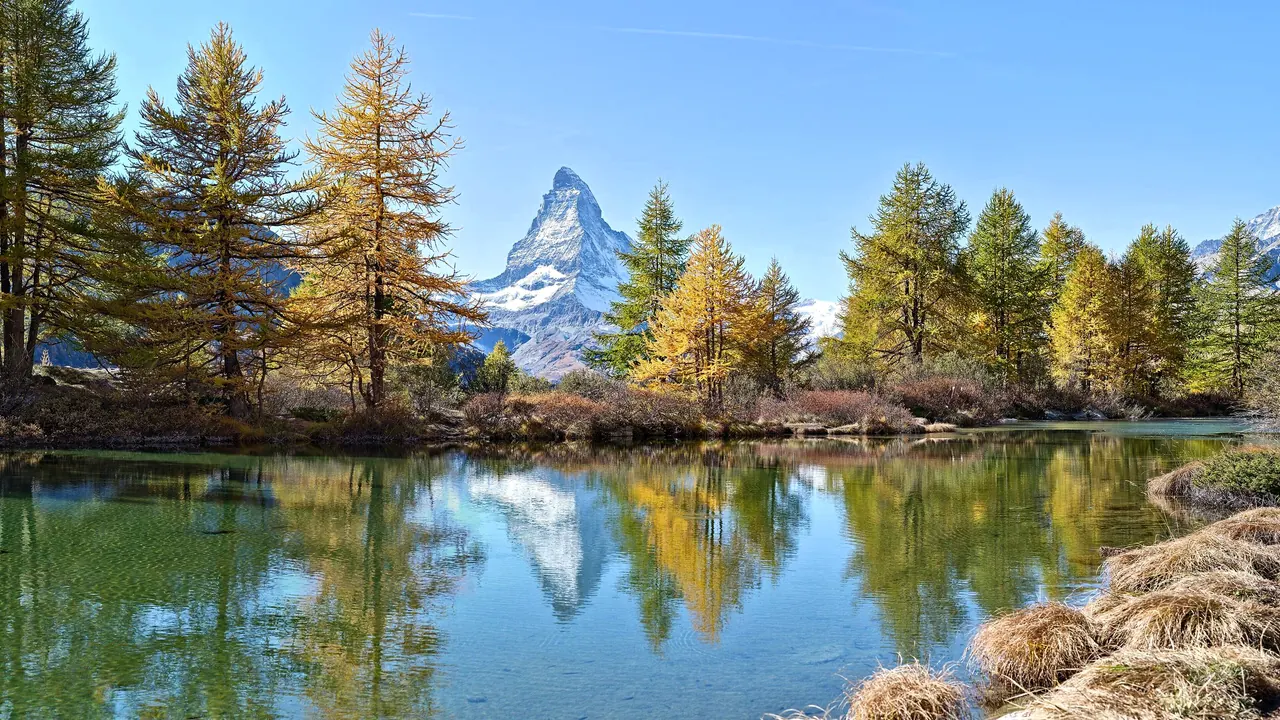
Photos: Lugano by Thomas Woodtli from Zürich, Switzerland, CC BY-SA 2.0, cropped; Zermatt by Roy Egloff, CC BY-SA 4.0, cropped.
Lugano or Zermatt?
Our verdict in twelve categories, each scored against the same fixed benchmark cities, and the climate month by month, so you can choose for your trip.
Choose Lugano for
- day trips
- beaches
- live music and the arts
Lugano suits travellers who want a warm lake, an Italian-speaking town and a base for exploring two countries. Milan, Como, Bellinzona and Lake Maggiore are all easy outings by train or boat. You can spend hot afternoons at a lido, and evenings mean aperitivo and concerts at LAC. It is the better choice for a varied trip that mixes sights, gentle walks and long grotto lunches.
Choose Zermatt for
- nature and the outdoors
- nightlife
- wellness
Choose Zermatt if the mountains are the whole point. The Matterhorn rises over a car-free village, lifts climb to glaciers and high trails, and the skiing runs across into Italy. Skiers, hikers and climbers get more here than anywhere around Lugano's lake. In return you get few sights, rainy days that are hard to fill and even higher prices, so plan your days on the slopes rather than in towns.
Scoreboard
Twelve categories on one fixed scale from 0 to 100. The shaded stretch is the gap between the two.
Your match
Pick a travel style or drag the sliders, and both match scores follow your weighting.
Wins on day trips and beaches with your weighting.
Wins on nature and the outdoors and nightlife with your weighting.
What matters to you?
Category by category
What the scores mean for a trip.
Beaches & swimming
Neither place has a sea, but only Lugano has water you would want to get into. In July and August the lake is warm enough for an afternoon at the city lido by the mouth of the Cassarate, or at the smaller bathing spots towards Castagnola and Paradiso. Boats run to small lake baths in the villages around the shore.
Zermatt's tarns are filled with glacier meltwater. They are for photographing the Matterhorn's reflection, not for swimming.
Food & drink
The two eat about equally well within a narrow, expensive range, but the cooking faces different ways. Lugano looks south. Grotti in the hills and lakeside villages serve polenta, risotto and braised meats with Ticino Merlot under chestnut trees, and Italy is close enough for a better-value meal over the border.
Zermatt's table is Alpine Valais: raclette, fondue, air-dried beef and white wines such as Fendant and Petite Arvine. The best meals are terrace lunches in the hamlets around Findeln and Furi with the Matterhorn in view. The village also has a few ambitious fine-dining kitchens, but many places close between seasons.
Culture & sights
Lugano has more to see, though neither is a heavyweight. A day there takes in the Lombard-style arcades around Piazza della Riforma, the cathedral of San Lorenzo, Luini's fresco in Santa Maria degli Angioli and the art collection split between LAC and Palazzo Reali. The Hermann Hesse museum in Montagnola makes a pleasant extra.
Zermatt's story is mountaineering. The underground Matterhorn Museum covers the first ascent of 1865, there is the climbers' cemetery and you can see the old larch barns of the Hinterdorf. That takes a morning, and the Gornergrat railway of 1898 completes its history.
Nightlife
A night out in Lugano begins with an aperitivo, while in Zermatt it often begins in ski boots. Lugano's evenings centre on the lakefront and the old-town arcades, followed by a long dinner among a well-dressed, mostly local crowd. The promenade stays lively on summer weekends, but the town is usually quiet before midnight, and young people head to Milan.
Zermatt is louder in winter. The slope-side bars fill from late afternoon, and a few clubs on the main street keep going past midnight at busy weekends. In summer the hikers and climbers turn in early, and between seasons much of the village is shut.
Nature & outdoors
Both are mountain country, but Zermatt sits in the high Alps. Cog railways and cable cars reach the Matterhorn, the Gorner Glacier and dozens of four-thousand-metre peaks. You can ski across into Italy, ski glacier pistes in summer, walk the Five Lakes trail or climb with a guide.
Lugano's landscape is lower and softer. Funiculars run up Monte Brè and San Salvatore, a lakeside path leads to Gandria, and the ridge from Monte Lema to Monte Tamaro makes a fine day hike. The green Verzasca valley is about an hour away, and you can take kayaks and paddleboards out on the lake. It is better for walking in spring and autumn than for adventure at altitude.
Day trips
Lugano is by far the better base for outings. Milan is just over an hour away by train and Como about half an hour. The castles of Bellinzona, Lake Maggiore with the Borromean Islands, and Bergamo's upper town are all easy days out across two countries.
From Zermatt every outing starts with the long train ride down the valley. Sion's castle hills and the Stockalper Palace in Brig are worth seeing, but most visitors spend their spare days in the mountains instead.
Good for families
Lugano works slightly better with children, mostly thanks to the lake. There are slides at the lidos, boat trips to the villages, playgrounds in Parco Ciani and the park of miniature Swiss landmarks at Melide. Its steep streets are hard work with a pushchair, though.
Zermatt's car-free streets are a real plus. Families who ski or hike get nursery slopes at Sunnegga, marmots to spot and gondola rides. Rainy days are harder to fill, however, and the thin air at the highest viewpoints can be too much for small children.
Getting around
Both are easy without a car, in different ways. Lugano is a walkable lakeside town with a hill to deal with, which a short funicular from the station takes care of. Buses, lake boats and fast trains to Como and Milan cover the rest.
Zermatt bans ordinary cars altogether. You arrive by train via Täsch, then walk or take an electric taxi, and the lifts start in the village itself. Its drawback is distance, because leaving the valley takes over an hour.
Shopping & style
Lugano gives you more to browse. Under the arcades of Via Nassa, Swiss watchmakers stand next to Italian fashion houses. The old-town lanes add delicatessens, wine shops and a weekly market, and there is a large designer outlet near Mendrisio, with Milan close by.
Zermatt has one main street of watches, jewellery and Matterhorn souvenirs. Its ski and mountaineering outfitters are genuinely good if you need gear.
Affordability
Both are among the most expensive places you could choose, and Lugano is only somewhat less so. Grotti and set lunches help, hotel stays usually include free regional transport, and meals in nearby Italian towns are cheaper, so there is some room to save.
Zermatt adds costly lift and cog-railway tickets to high prices for rooms and meals. Self-catering, picnics and sleeping down the valley in Täsch are the main ways to cut costs.
Live music & performing arts
Lugano has a proper cultural season. The concert hall at LAC is home to the Orchestra della Svizzera italiana, its theatre stages drama and dance, and Estival Jazz fills Piazza della Riforma with free concerts in summer.
Zermatt has no theatre or concert hall. Outside Zermatt Unplugged in spring and a chamber music festival in late summer, live music usually means a band in an après-ski bar.
Wellness & relaxation
Lugano offers a slow lakeside pace, while Zermatt offers fine hotel spas and the quiet of a car-free village. In Lugano the day unwinds over coffee under the arcades, an afternoon on a lido or a bench in Parco Ciani, and a grotto lunch that runs into the evening. The large lakeside hotels have spas, and a big indoor pool and sauna complex near Rivera adds more.
Zermatt has an unusual number of excellent hotel spas, many with mountain views and a few open to non-residents for the day. Clear air and no traffic noise make winter evenings after skiing especially restful, though in peak weeks the mood is active rather than slow.
When should you go?
Pick your month. The climate figures are measured averages, not a forecast.
Lugano in July
Zermatt in July
Daytime high, °C
Rainfall in the month, mm
Where the figures come from
Zermatt has no weather station within reach, so its figures come from a gridded climate model rather than a measured record, and read a broad area rather than the city itself.
Temperature and rainfall are climate normals, averaged over the years shown. Lugano: 1991-2020 normals, Lugano (1.2 km from centre). Zermatt: 1991-2020 normals, TerraClimate 4 km grid at the town, no weather station within 90 km.
Lugano is at its best in warm weather. From June to early September the lidos are open and the lake is pleasant for swimming, and July and August reach about 27°C. Summer is also the sunniest part of the year. It is a wet place, though. From April to November most months bring around 150mm of rain, so bring rain gear even at the height of summer. Spring and early autumn are the comfortable months for hiking and walking the old town. Winter is cool and short on sunshine.
Zermatt follows a different calendar. Daytime highs stay below freezing from December to February, which is the heart of the ski season. July and August reach only about 14°C, which is good for hiking but never warm enough to swim. Rain is spread more evenly through the year and is heaviest in November, at 130mm. The weeks between the ski and hiking seasons in late spring and late autumn are the weakest time to go.
Which traveller are you?
On a beach and sun trip, Lugano is the only real option of the two. Its lidos have lawns, decks and ladders into a lake warm enough for summer swimming. In Zermatt even the mountain tarns stay icy, and the only swimming is in a hotel pool.
For a culture and arts trip, Lugano offers clearly more: an arcaded old town, Luini's Passion fresco, the art collection at LAC and Palazzo Reali, and a resident orchestra. Milan's Last Supper and Brera gallery are an hour away. Zermatt's heritage fills a morning.
On an outdoors trip, Zermatt is the place to go. Lifts climb above 3,800m to skiing in winter and glacier pistes in summer, and to hundreds of kilometres of high trails beneath the Matterhorn. Lugano's funicular summits and ridge walks are lovely but lower and gentler.
Before you go
| Measure | Lugano | Zermatt |
|---|---|---|
| Official language | French, German, Italian, Romansh | French, German, Italian, Romansh |
| Currency | Swiss Franc (CHF) | Swiss Franc (CHF) |
| Sockets | CJ230 V, 50 Hz | CJ230 V, 50 Hz |
| Driving side | Right | Right |
| Time zone | UTC+1, UTC+2 in summer | UTC+1, UTC+2 in summer |
| Emergency number | 112 | 112 |
| Elevation | 283 m | 1,624 m |
| Main airport | Milan Malpensa International Airport (MXP)46 km from centre208 non-stop destinations | Geneva International Airport (GVA)128 km from centre150 non-stop destinations |
| Public holidays this year | 15 days | 9 days |
By the numbers
| Measure | Lugano | Zermatt |
|---|---|---|
| City population | 63,495 | 6,023 |
| People per km² | 837 | 25 |
| Museums within 10 km | 17 | 2 |
| UNESCO World Heritage sites within 50 km | 5 | 2 |
Where else could you go?
Every comparison below shares a destination with this one, so you can follow Lugano or Zermatt somewhere new.