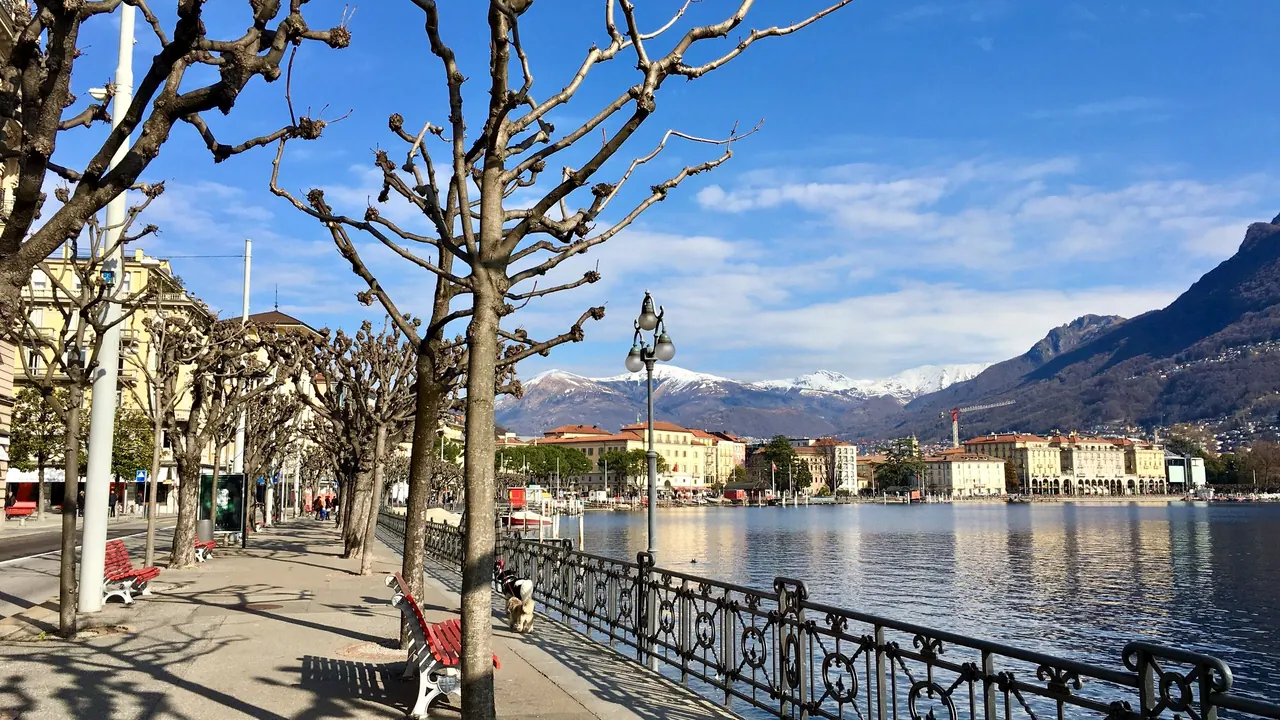
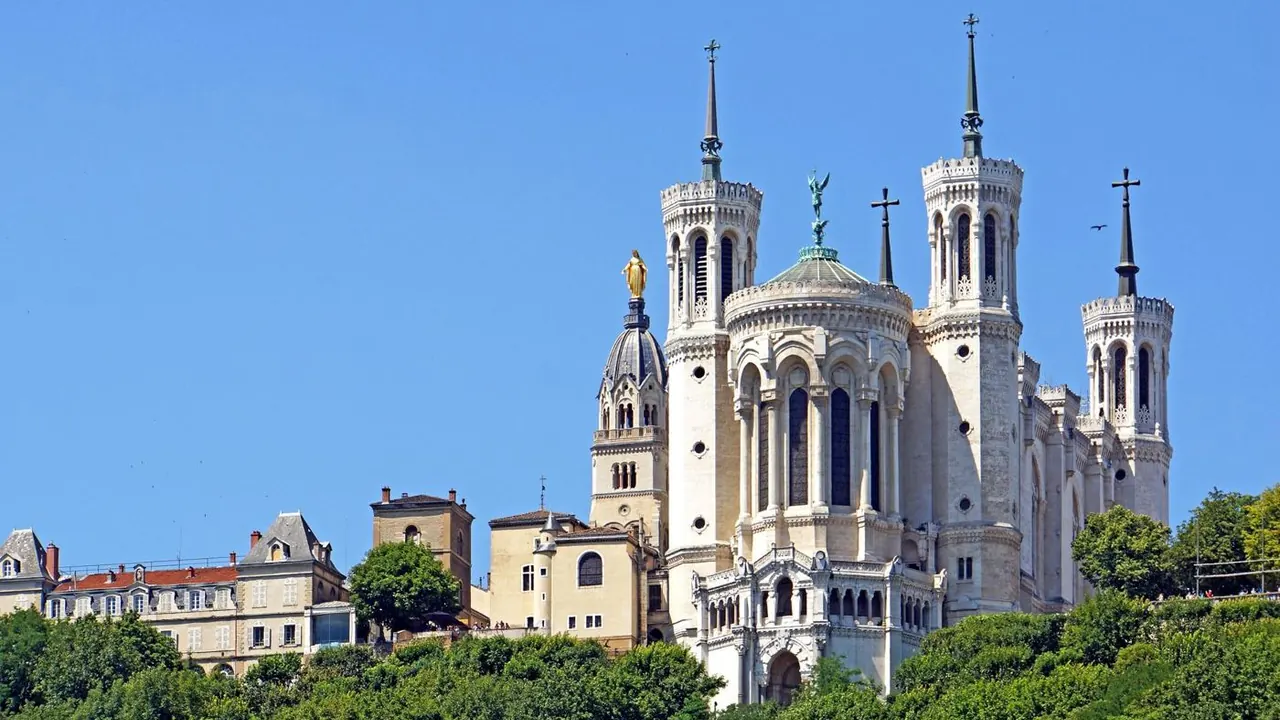
Photos: Lugano by Thomas Woodtli from Zürich, Switzerland, CC BY-SA 2.0, cropped; Lyon by Dennis G. Jarvis, CC BY-SA 2.0, cropped.
Lugano or Lyon?
Our verdict in twelve categories, each scored against the same fixed benchmark cities, and the climate month by month, so you can choose for your trip.
Choose Lugano for
- beaches
- nature and the outdoors
- day trips
Lugano suits travellers who want the scenery to be the trip: a lake set among steep wooded mountains, funiculars to the summits, afternoons at the lido and easy trains to Como, Milan and the castles of Bellinzona. It is a calm, unhurried base for walkers and couples, as long as the budget can take Swiss prices and quiet evenings are what you want.
Choose Lyon for
- food and drink
- culture and sights
- nightlife
For a city with real depth, Lyon is the stronger choice. Its bouchons, markets and fine-dining tradition make eating the main event, and Roman Fourvière, Renaissance Vieux Lyon and a major art museum fill several full days. Add opera, dance and a student-driven night out, all at noticeably lower cost, and it rewards anyone who travels for food, culture and evenings out.
Scoreboard
Twelve categories on one fixed scale from 0 to 100. The shaded stretch is the gap between the two.
Your match
Pick a travel style or drag the sliders, and both match scores follow your weighting.
Wins on beaches and nature and the outdoors with your weighting.
Wins on food and drink and culture and sights with your weighting.
What matters to you?
Category by category
What the scores mean for a trip.
Beaches & swimming
Neither city has a sea, but Lugano has a lake you can swim in right in town. Its lidos have lawns, decks and ladders into the water at the mouth of the Cassarate and along the shore towards Castagnola and Paradiso, and the villages you reach by boat have small lake baths of their own. From June to early September it makes an easy plan for a hot afternoon.
In Lyon the only place to swim is the supervised bathing lake at Miribel-Jonage on the city's edge. The Rhône quays are for sunbathing only. Clear Alpine water at Annecy or the Lac du Bourget means a day out of up to two hours each way.
Food & drink
The gap here is wide, and Lyon is one of France's great places to eat. There are bouchons serving quenelles and salade lyonnaise, a deep fine-dining tradition that began with the Mères lyonnaises, Les Halles Paul Bocuse and Sunday markets along the Saône. Together they make meals the centre of a stay, with Beaujolais and northern Rhône wines close at hand.
Lugano's strength is narrower: the grotto, where you eat polenta and braised meats with a glass of Ticino Merlot under chestnut trees in the hills. Beyond that the choice is thin and expensive, which is why many visitors cross into Italy for their bigger meals.
Culture & sights
Lyon offers two thousand years of history in layers. There are the Roman theatres and Gallo-Roman museum on Fourvière, the Renaissance quarter of Vieux Lyon with its traboules, the silk-weavers' hill of Croix-Rousse and a fine-arts museum among the best in France outside Paris. It takes several days to see properly.
Lugano can be seen in a day. The arcaded old town around Piazza della Riforma, the cathedral of San Lorenzo, Luini's Passion fresco and the LAC galleries make a pleasant round, and the Hesse museum in Montagnola is worth a side trip.
Nightlife
An evening in Lugano means an aperitivo by the lake and a long dinner among a well-dressed local crowd, and most nights are over before midnight. The town's own young people go to Milan to go out.
Lyon has much more going on, driven by its students. There are wine and cocktail bars on the Presqu'île, pubs in Vieux Lyon, barges on the Rhône quays that work as bars and clubs, and a serious electronic scene in warehouse clubs towards Gerland, with the Nuits Sonores festival in spring. Outside weekends and term time it quietens earlier than a city its size might suggest.
Nature & outdoors
Lugano's setting is in a different league. The lake winds between steep wooded mountains, funiculars climb Monte Brè and San Salvatore, a rack railway runs up Monte Generoso and a lakeside path leads to Gandria. The green valleys of Verzasca and Maggia are about an hour away, and kayaks and paddleboards are easy to hire.
Lyon's outdoor life is more urban, built around the car-free Rhône quays and the large Parc de la Tête d'Or. Beyond the city, the Monts d'Or and the Beaujolais hills are gentle country, and the serious terrain of the Chartreuse and Vercors needs a car and an hour or more of driving.
Day trips
Both cities are excellent bases, but Lugano comes out ahead because it sits on the border and puts two countries within easy reach by train. Milan's cathedral and The Last Supper are just over an hour away and Como about half an hour. The castles of Bellinzona and Lake Maggiore with the Borromean Islands are in the other direction, and boats run to Morcote.
Lyon's day trips lean towards wine and old towns. There is Roman Vienne about twenty minutes away, medieval Pérouges, the Beaujolais villages and, further on, Beaune and Cluny, with Annecy and Grenoble towards the Alps.
Good for families
Both cities work well with children, in different ways. Lugano relies on the outdoors: boat trips, lido slides, funiculars, the Generoso rack railway and the Swiss landmarks in miniature at Melide, which suit younger children best.
Lyon has more built attractions, including some for older children. The Tête d'Or has a free zoo, pedalos and pony rides, the Musée des Confluences has dinosaur skeletons, and there is an aquarium and Guignol puppet theatre too. In both cities the steep hills are hard work with a pushchair.
Getting around
Neither city needs a car, but they work differently. Lugano is a small town you can walk along the lakefront, with a funicular to take you up the slope to the station and buses, lake boats and mountain railways for everything beyond.
Lyon is a big city whose flat, walkable Presqu'île is backed by four metro lines, trams, funiculars up Fourvière and a bike-share scheme on the riverside paths.
Shopping & style
Lyon has the wider range. High-street chains line the rue de la République, luxury labels gather around Place des Jacobins and Part-Dieu has a huge mall. The more distinctive finds are silk scarves, the designer workshops of Croix-Rousse and the antique dealers on the rue Auguste Comte.
Lugano is narrower and more expensive. It centres on the watchmakers, jewellers and Italian fashion houses under the arcades of Via Nassa, with a designer outlet near Mendrisio, and serious shoppers usually go on to Milan.
Affordability
Swiss prices follow you everywhere in Lugano, from the lakeside hotel room to the funicular ticket and the evening glass of Merlot. A grotto is the gentlest way to eat well, and the regional transport pass that comes with most hotel stays takes the edge off getting about. Even so, the same days cost far more here than in the Italian towns across the border.
Lyon is much kinder to the wallet and well below Paris. Rooms are fairly priced for most of the year, though they get tight and dear during the big trade fairs and the Fête des Lumières. Midday is when the savings are, as bouchons and bistros serve full lunch menus for much less than dinner, while an evening of fine dining costs what it would anywhere else in France.
Live music & performing arts
Lyon's stage life is far fuller. Its glass-vaulted opera house is home to an opera company and a ballet, the Orchestre National de Lyon plays at the Auditorium, and the Célestins and the TNP stage serious theatre. Dance is the city's specialism, through the Maison de la Danse and the Biennale, and in summer the Nuits de Fourvière puts on performances in the Roman theatres.
In Lugano almost everything happens at LAC, home of the Orchestra della Svizzera italiana, with mostly classical programmes and theatre largely in Italian. Its summer highlight is Estival Jazz, a series of free concerts in Piazza della Riforma.
Wellness & relaxation
Unwinding in both places is about pace rather than spas, but the setting differs. In Lugano the lake does the work: a morning coffee under the arcades, an afternoon on a lido or a bench in Parco Ciani, a grotto lunch that runs into the evening. When you want water and heat, there are hotel spas and a big pool and sauna complex near Rivera.
Lyon's calm is that of a city: quiet Sunday mornings by the Saône, the lawns of the Tête d'Or, a hammam or day spa, and a swim at the open-air Tony Bertrand pool on the Rhône quays. For real thermal baths, Aix-les-Bains is about an hour and a half away.
When should you go?
Pick your month. The climate figures are measured averages, not a forecast.
Lugano in July
Lyon in July
Daytime high, °C
Rainfall in the month, mm
Temperature and rainfall are climate normals, averaged over the years shown. Lugano: 1991-2020 normals, Lugano (1.2 km from centre). Lyon: 1991-2020 (sunshine 1981-2010) normals, Lyon / Bron (10.6 km from centre).
The two have almost the same temperatures through the year, so rain and light make the difference. Both are coldest in December and January, warm up through May and peak at 27°C in Lugano and 28°C in Lyon in July and August. That is warm enough for Lugano's lake lidos from June to early September, while in Lyon summer heat is better spent on the river quays or on a trip to the Alpine lakes. From April to November Lugano is much the wetter of the two, with up to 178mm in May. Its drier spells come in late winter and early spring, so a sunny March is a good time for a walk along the lake.
Lyon's rain is lighter and more evenly spread. It peaks in October, and its summers are the sunnier, so May to September is comfortable for exploring on foot. Winter is where Lugano wins: from November to January it gets about twice as much sunshine as Lyon, which often stays grey at around 55 hours in December.
Which traveller are you?
On a culture and arts trip, Lyon is the clear pick. The Roman theatres on Fourvière, the Renaissance lanes and traboules of Vieux Lyon and the Musée des Beaux-Arts fill several days, and the evenings bring opera, ballet and the Maison de la Danse.
For an outdoors trip, Lugano has far more landscape on its doorstep. Funiculars climb Monte Brè and San Salvatore, the ridge from Monte Lema to Tamaro is a fine day hike and the Verzasca valley is about an hour away, all without a car.
On a trip on a tight budget, Lyon makes the money last longer. Walking the traboules, climbing to the Fourvière viewpoint, finding the Croix-Rousse murals and browsing the Sunday markets cost nothing. In Lugano, by contrast, every boat or funicular ride takes a real bite out of a small budget.
Before you go
| Measure | Lugano | Lyon |
|---|---|---|
| Official language | French, German, Italian, Romansh | French |
| Currency | Swiss Franc (CHF) | Euro (EUR) |
| Sockets | CJ230 V, 50 Hz | CE230 V, 50 Hz |
| Driving side | Right | Right |
| Time zone | UTC+1, UTC+2 in summer | UTC+1, UTC+2 in summer |
| Emergency number | 112 | 112 |
| Elevation | 283 m | 160 m |
| Main airport | Milan Malpensa International Airport (MXP)46 km from centre208 non-stop destinations | Lyon Saint-Exupéry Airport (LYS)20 km from centre141 non-stop destinations |
| Public holidays this year | 15 days | 11 days |
By the numbers
| Measure | Lugano | Lyon |
|---|---|---|
| City population | 63,495 | 519,127 |
| People per km² | 837 | 10,838 |
| Museums within 10 km | 17 | 43 |
| UNESCO World Heritage sites within 50 km | 5 | 2 |
Where else could you go?
Every comparison below shares a destination with this one, so you can follow Lugano or Lyon somewhere new.