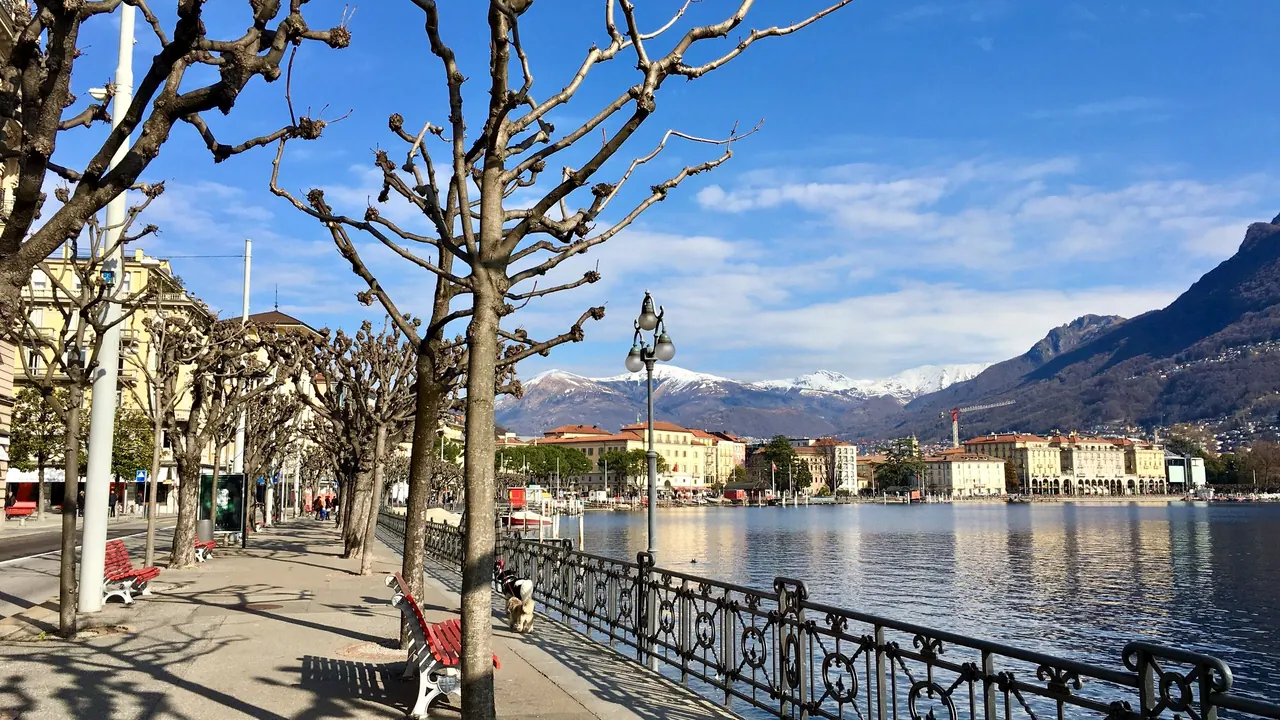
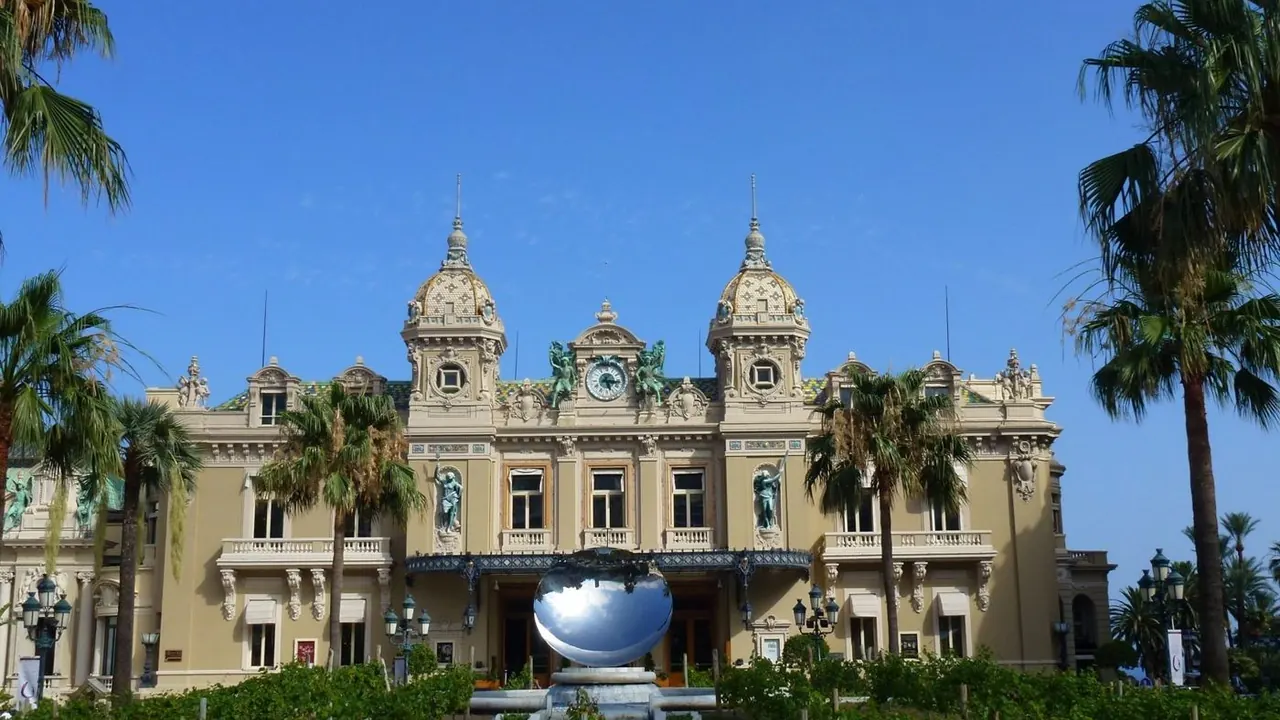
Photos: Lugano by Thomas Woodtli from Zürich, Switzerland, CC BY-SA 2.0, cropped; Monaco by otterboris, CC BY 3.0, cropped.
Lugano or Monaco?
Our verdict in twelve categories, each scored against the same fixed benchmark cities, and the climate month by month, so you can choose for your trip.
Choose Lugano for
- nature and the outdoors
- prices
Lugano suits travellers who come for landscape and want to spend their days outdoors. Steep wooded mountains surround the lake, funiculars climb from the edge of town, and the ridge hikes of Ticino are within easy reach. Evenings are quiet: an aperitivo by the water, then a long dinner. Milan and Lake Como are close by train, and Lugano is expensive, though a little less ruinous than its rival.
Choose Monaco for
- beaches
- nightlife
- live music and the arts
Pick Monaco for the sea, the stage and the glamour. Clear water for swimming, the palace and aquarium on the Rock, opera and ballet in the Salle Garnier and dressed-up nights around the Casino give even a short stay real polish. The whole Riviera from Nice to Menton lies along the railway. It is for travellers with a generous budget who want warmth and sun more than mountain paths.
Scoreboard
Twelve categories on one fixed scale from 0 to 100. The shaded stretch is the gap between the two.
Your match
Pick a travel style or drag the sliders, and both match scores follow your weighting.
Wins on nature and the outdoors and prices with your weighting.
Wins on beaches and nightlife with your weighting.
What matters to you?
Category by category
What the scores mean for a trip.
Beaches & swimming
Monaco has the sea and Lugano does not, and for most swimmers that settles it. In Lugano you swim at lidos on the lake: lawns, wooden decks and ladders into water that reaches about 23°C in high summer. The main lido is at the mouth of the Cassarate, with smaller spots towards Castagnola and Paradiso.
Monaco is not much of a beach resort either. Still, Larvotto's sheltered, clear water, the rocky platforms and the beach clubs give you a proper sea swim, the season lasts into early October, and the longer beaches of Menton and Nice are a short train ride away.
Food & drink
Monaco eats better at the top end. It has an unusual number of starred and grand hotel dining rooms cooking Riviera and Ligurian food, and the Condamine market sells barbagiuan and socca. Lugano's strength is humbler: the grotto, with polenta, braised meats and Ticino Merlot at granite tables under chestnut trees.
Neither is good for cheap or casual meals. In both, visitors often save their freer eating for a trip over a border, into Italy from Lugano and to Menton or Nice from Monaco.
Culture & sights
Monaco has more to see, though neither takes long. The Rock holds the Prince's Palace and its guard ceremony, the cathedral where Grace Kelly is buried and the Oceanographic Museum on its cliff. Across the harbour, Monte-Carlo adds the Casino and its Belle Époque setting.
Lugano's old town around Piazza della Riforma takes about a day. It has Luini's Passion fresco in Santa Maria degli Angioli and an art collection split between LAC and Palazzo Reali. The Hermann Hesse museum at Montagnola is a gentle extra in the hills.
Nightlife
Monaco has a real night out, if a glossy one. There are hotel bars around the Casino square and clubs and lounges on the Larvotto seafront and by the port, and on Grand Prix weekend the harbour turns into one long party. Lugano's evenings are an aperitivo under the arcades or by the lake and a long dinner, and the town is mostly quiet before midnight.
Neither has pubs or an underground scene. Younger people on a budget leave town to go out, heading to Milan from Lugano and to Nice from Monaco.
Nature & outdoors
Lugano is the stronger choice outdoors, because the landscape starts at the edge of town. Funiculars climb Monte Brè and San Salvatore, the lakeside path runs to Gandria, a rack railway goes up Monte Generoso, and the Lema to Tamaro ridge walk is close by. The green valleys of Verzasca and Maggia are about an hour away.
Monaco itself is built over, so its nature lies around it: the old mule path from Èze-sur-Mer up to Èze, the coastal paths of Cap d'Ail and Cap Martin and the view from Tête de Chien. What it offers that Lugano cannot is clear sea water for snorkelling and diving.
Day trips
Both make superb bases, and the difference is the kind of place you spend your days in. From Lugano the pull is Italian and Alpine. Milan's Last Supper and Brera are just over an hour by train, and Lake Como, Bellinzona's castles and Lake Maggiore are close.
Monaco's trips follow a coastline. Villefranche and Nice lie to the west, Menton to the east and Èze up the hill. Further out are Antibes, Saint-Paul-de-Vence and Grasse, nearly all of them reachable by train or bus.
Good for families
Both are safe and easy with children, without being built for them. Lugano works through the lake and the mountains: boat trips, slides at the lidos, funicular rides and the park of Swiss landmarks in miniature at Melide.
Monaco has the bigger single draw in the Oceanographic Museum's aquarium, and it adds Larvotto's gentle water and the palace guard. Both towns are steep, but Monaco's public lifts make life easier with a pushchair.
Getting around
Both have walkable centres where the slope is the problem, not the distance. In Lugano a short funicular links the high station to the old town, and lake boats serve the villages. Monaco, about 3km end to end, connects its levels with free public lifts and escalators and runs a small solar ferry across the harbour.
Further afield they differ in direction. Lugano has Swiss trains and mountain railways, while Monaco's hillside station opens up the whole Riviera. In neither is a car worth having in town.
Shopping & style
Monaco is the better place to shop, though only if luxury is what you want. Lugano's offer comes down to Via Nassa, one arcaded street of Swiss watchmakers, jewellers and Italian fashion houses, plus delicatessens and wine shops in the old-town lanes. There are few crafts, no great department store and little for younger tastes, and serious shoppers go on to Milan.
Monaco's Carré d'Or packs the big fashion houses and high jewellers into a few streets around the Casino gardens, and a covered mall below adds some mainstream labels. On a summer evening, window-shopping there is part of the Monte-Carlo scene. Outside that cluster there are no high-street chains, flea markets or craft quarters, so anyone who wants variety takes the train to Nice.
Affordability
Neither will suit a tight budget, but Lugano is the less punishing of the two. Its grotti and set lunches are reasonable ways to eat well, and hotel stays usually include free regional transport. Monaco is priced for the very wealthy, down to a café coffee, and rates climb further on event weekends.
The ways to save also differ. From Lugano you save by eating in Italian lakeside towns on day trips. In Monaco many visitors sleep over the French border in Beausoleil, Menton or Nice and come in for the day.
Live music & performing arts
Monaco has the stronger stage. The Monte-Carlo Opera performs in the gilded Salle Garnier, where works by Massenet and Puccini had their premières, and Les Ballets de Monte-Carlo and the Philharmonic both have international names. Lugano's cultural life centres on LAC, with the Orchestra della Svizzera italiana and theatre that is mostly in Italian.
Summer is when Lugano does best, with the free Estival Jazz concerts in Piazza della Riforma. Monaco's main season runs from winter into spring, and in summer it adds big-name open-air shows by the sea.
Wellness & relaxation
Lugano relaxes you through the lake rather than in a treatment room. It has no bathing tradition, so a restful stay means unhurried days between the arcades, the lidos and the lawns of Parco Ciani. Spa time is limited to the lakeside hotels and a large indoor pool and sauna complex near Rivera, north of town. It suits someone who wants to do very little in a green, mild setting.
Monaco goes further if you want to be looked after. Its thalassotherapy centre beside the Casino and the grand hotel spas make a proper treatment day easy to arrange, built around seawater rather than the hot springs of a spa town. Between sessions, the Japanese Garden and the Rock's ramparts are quiet places to sit. The mood is polished rather than sleepy, though, and the calm goes on the principality's big event weekends.
When should you go?
Pick your month. The climate figures are measured averages, not a forecast.
Lugano in July
Monaco in July
Daytime high, °C
Rainfall in the month, mm
Temperature and rainfall are climate normals, averaged over the years shown. Lugano: 1991-2020 normals, Lugano (1.2 km from centre). Monaco: 1991-2020 normals, Nice (19.9 km from centre).
Lugano is a summer and shoulder-season destination with a lot of rain. From May to November nearly every month brings about 150mm or more. Only June to August are warm enough for a lazy afternoon at a lido, with highs around 27°C. Spring and autumn are the best hiking weather despite the showers. The drier winter months are cold, around 7°C by day in January.
Monaco follows the classic Mediterranean pattern. Summers are sunny and almost dry, with highs of 28°C and the sea at about 25°C in August. Heavy rain arrives in October and November. Its winters are far milder than Lugano's, so walking the Rock and the gardens is pleasant all year, and it gets more sunshine than Lugano in every month.
Which traveller are you?
For an outdoors trip, Lugano is the clear pick. Funiculars and a rack railway take you straight from town up Monte Brè, San Salvatore and Monte Generoso. The Monte Lema to Tamaro ridge is a classic day hike, and the Verzasca valley is about an hour away.
On a beach and sun trip, choose Monaco. Its summers are drier and sunnier, the sea is clear and the bathing season runs into early October. Larvotto, the coves of Cap d'Ail and the beaches of Menton and Nice beat Lugano's lake lidos.
For a culture and arts trip, Monaco gives you more. The Rock has the Prince's Palace and the Oceanographic Museum, and the principality has an opera house, a ballet company and an orchestra with international names. Lugano's sights fit into a day, and its stage is mostly LAC.
Before you go
| Measure | Lugano | Monaco |
|---|---|---|
| Official language | French, German, Italian, Romansh | French |
| Currency | Swiss Franc (CHF) | Euro (EUR) |
| Sockets | CJ230 V, 50 Hz | CEF230 V, 50 Hz |
| Driving side | Right | Right |
| Time zone | UTC+1, UTC+2 in summer | UTC+1, UTC+2 in summer |
| Emergency number | 112 | 112 |
| Elevation | 283 m | 68 m |
| Main airport | Milan Malpensa International Airport (MXP)46 km from centre208 non-stop destinations | Nice-Côte d'Azur Airport (NCE)18 km from centre130 non-stop destinations |
| Public holidays this year | 15 days | 12 days |
By the numbers
| Measure | Lugano | Monaco |
|---|---|---|
| City population | 63,495 | 38,857 |
| People per km² | 837 | 18,503 |
| Museums within 10 km | 17 | 14 |
| UNESCO World Heritage sites within 50 km | 5 | 2 |
| Swim season, months above 21 °C | - | 4 months |
Where else could you go?
Every comparison below shares a destination with this one, so you can follow Lugano or Monaco somewhere new.