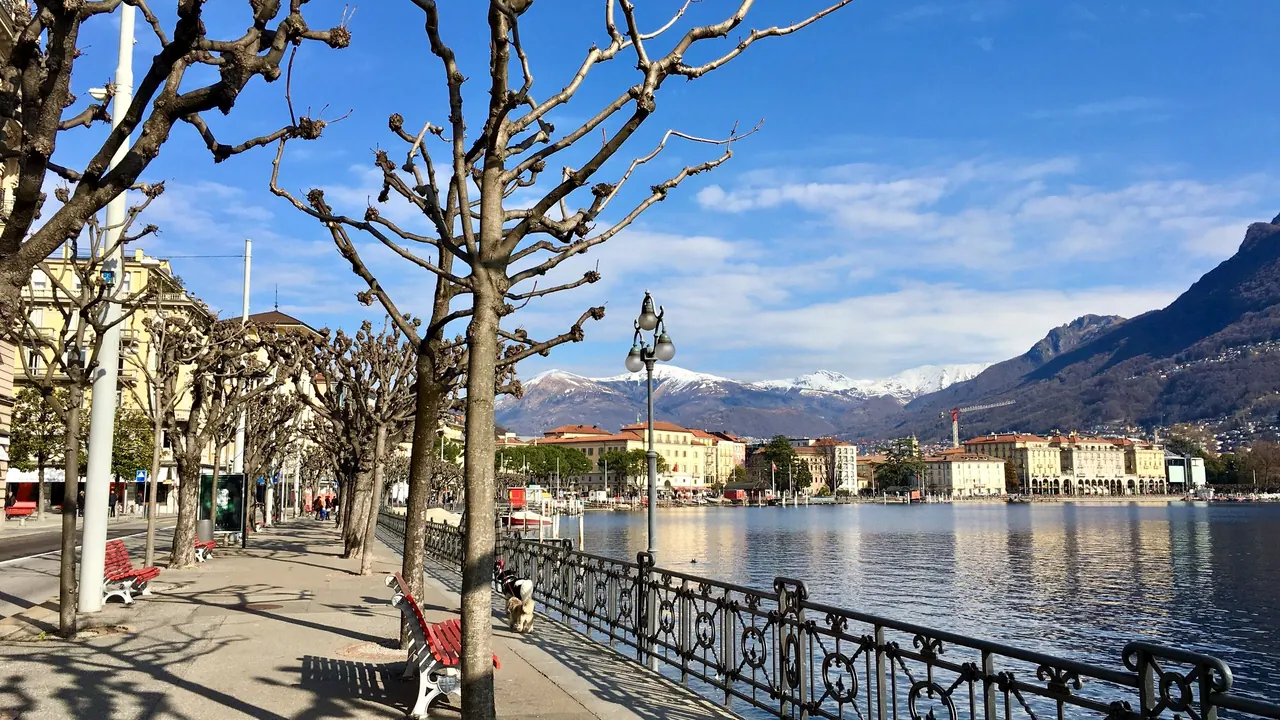
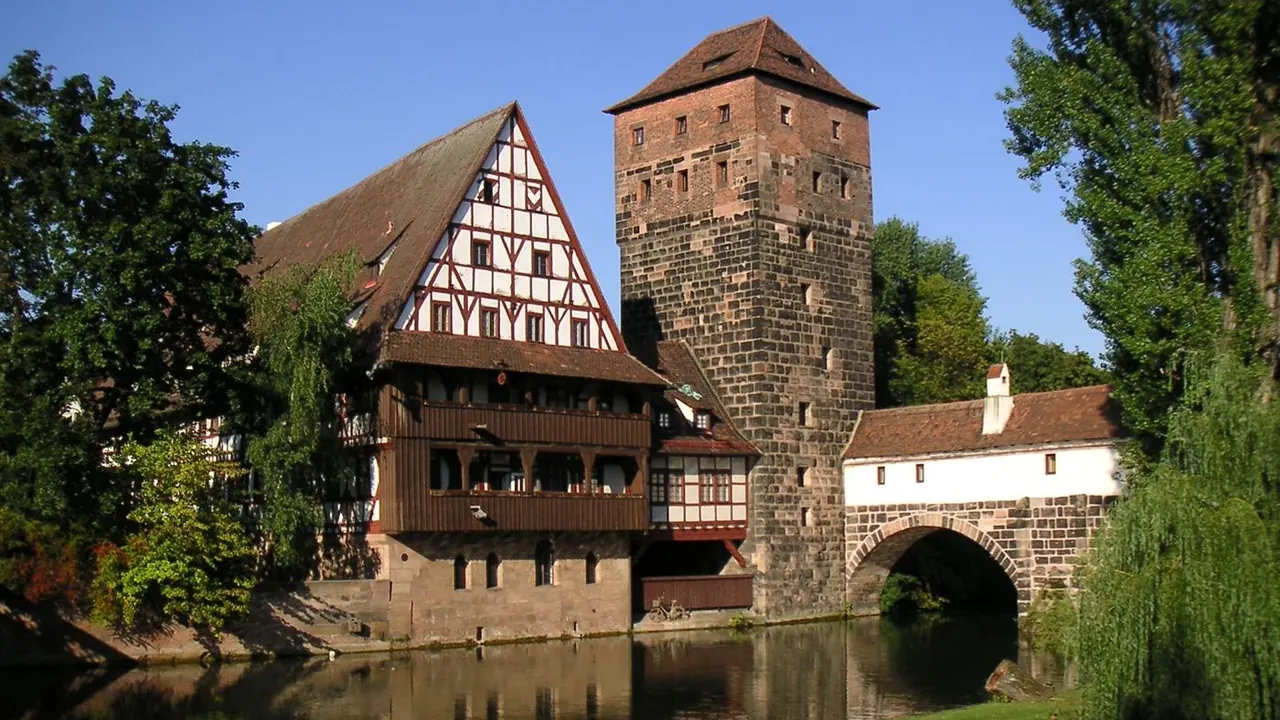
Photos: Lugano by Thomas Woodtli from Zürich, Switzerland, CC BY-SA 2.0, cropped; Nuremberg by Horst Gutmann, CC BY 2.0, cropped.
Lugano or Nuremberg?
Our verdict in twelve categories, each scored against the same fixed benchmark cities, and the climate month by month, so you can choose for your trip.
Choose Lugano for
- beaches
- nature and the outdoors
- day trips
Lugano suits a slower trip built around landscape. You get a lake to swim and paddle on, funiculars up Monte Brè and San Salvatore, and paths through chestnut woods, with Milan and Como close enough for a day out. It is the better choice for travellers who care more about scenery and calm than a long sightseeing list, and who can live with Swiss prices.
Choose Nuremberg for
- prices
- culture and sights
- nightlife
If you want more to see in the city itself, Nuremberg is the stronger base. The walled old town, the Kaiserburg, the Germanisches Nationalmuseum and the Nazi-era sites fill several days. Evenings in beer taverns and Gostenhof bars run later, and a stay costs a good deal less.
Scoreboard
Twelve categories on one fixed scale from 0 to 100. The shaded stretch is the gap between the two.
Your match
Pick a travel style or drag the sliders, and both match scores follow your weighting.
Wins on beaches and nature and the outdoors with your weighting.
Wins on prices and culture and sights with your weighting.
What matters to you?
Category by category
What the scores mean for a trip.
Beaches & swimming
Lugano at least has swimming on the doorstep. The lido at the mouth of the Cassarate and the bathing spots towards Castagnola and Paradiso have lawns, decks and ladders into a lake that reaches about 23°C in high summer. Villages you reach by boat have their own small lake baths.
Nuremberg has nothing like this in town, only outdoor pools and leisure baths. The Brombachsee and the other Franconian lakes have small sandy strips, but they are about an hour away, so a swim there is a day out rather than an afternoon. Neither city will satisfy anyone looking for sand and surf.
Food & drink
Nuremberg has the more distinctive food, and it is easier to eat well there on a casual visit. Finger-sized bratwurst grilled over beechwood, Schäufele with dumplings and Lebkuchen are on every corner, and Franconia's many small breweries make the taverns and beer gardens worth visiting for their own sake.
Lugano's strength is the grotto, with polenta, braised meats and Ticino Merlot at granite tables under chestnut trees, and its pastry shops are good. Beyond that the choice is narrow and costly, with little street food or international cooking. Many visitors save their best meals for a trip over the Italian border.
Culture & sights
This is where Nuremberg pulls well ahead. Its walled medieval old town holds the Kaiserburg, St Sebaldus and St Lorenz, and Dürer's house. The Germanisches Nationalmuseum alone can fill a day, and the Rally Grounds and Courtroom 600 add a sobering second layer of history.
Lugano's arcaded old town around Piazza della Riforma is pleasant to explore. Add San Lorenzo cathedral, Luini's Passion fresco and the art collection at LAC, and you have covered the main sights in a day. The Hesse museum in Montagnola makes a worthwhile extra.
Nightlife
Neither city is a reason to travel for nightlife, but Nuremberg gives the better evening. In summer students fill the squares and riverbanks. The small bars and alternative venues of Gostenhof stay busy late, and students from Erlangen add to the weekend crowd.
In Lugano an evening means an aperitivo by the lake and a long dinner among a well-dressed local crowd, and most nights are over before midnight. Young locals go to Milan when they want more.
Nature & outdoors
Lugano's setting is its main draw and far more dramatic. Funiculars climb Monte Brè and San Salvatore from the edge of town, and a rack railway serves Monte Generoso, with views across to the Alps. The green water of the Verzasca and Maggia valleys is about an hour away, and the lakeside walk to Gandria needs no planning at all.
Nuremberg's outdoors is gentler. The Reichswald pine forest at the city edge is good for walking and cycling, and Franconian Switzerland, an hour away, has limestone towers, caves and well-known climbing. It is good country for walkers and cyclists, but there are no mountains.
Day trips
Both are excellent bases, and the difference is in the kind of trip. From Lugano you cross a border. You can see Milan's cathedral and The Last Supper, Lake Como, the castles of Bellinzona and the island gardens of Lake Maggiore, or take a boat to Morcote, so the days mix big Italian cities with lake scenery.
Nuremberg offers a run of historic German towns by train: Bamberg, Regensburg, Würzburg's Residence, the walled towns of the Romantic Road and Wagner's Bayreuth, with Munich about an hour away. It suits travellers who enjoy collecting old towns more than changing landscapes.
Good for families
Nuremberg has more that is built for children. The Toy Museum, the railway museum with its full-size locomotives, a large zoo with dolphins and manatees and the play park in Zirndorf cover older children and rainy days as well. In Advent there is also a children's market with carousels.
Lugano relies on the lake and the mountains: boat trips, slides at the lidos, funicular rides and the miniature Swiss landmarks at Melide. That is ideal for younger children on fine days. The steep streets are hard work with a pushchair, though, and there is no zoo or big museum.
Getting around
Both are easy without a car, in different ways. Lugano's centre and lakeside promenade are walkable, but the town is steep. The funicular down from the station, the hillside buses, the lake boats and the mountain railways do much of the work.
Nuremberg is flatter and more urban. Almost everything is inside walls about 1.5km across, and one ticket covers the U-Bahn, trams and S-Bahn out to the zoo, the Rally Grounds and Fürth. Only the cobbled climb to the castle takes effort.
Shopping & style
Neither is a shopping destination, and each offers something quite different. Lugano's Via Nassa is about luxury, with Swiss watchmakers, jewellers and Italian fashion under the porticoes, and there is a designer outlet towards Mendrisio. For anything broader, shoppers go to Milan.
Nuremberg's main streets are mostly chains and department stores, but its souvenirs have more character: Lebkuchen in tins, wooden toys and crafts from the Handwerkerhof. In Advent, the Christkindlesmarkt on the Hauptmarkt turns shopping into a reason to come.
Affordability
The gap here is wide. Nuremberg is mid-priced, with cheap local beer, filling tavern meals, inexpensive transport and modest entry charges. Only trade-fair weeks and the Advent season push hotel rates up.
Lugano is expensive in almost everything, from lakeside hotels to boat trips and mountain railways. Grotti, set lunches and the regional transport that comes with hotel stays soften the cost a little, but there is no cheap way to stay.
Live music & performing arts
Nuremberg has the fuller programme. The Staatstheater, in its Art Nouveau opera house, stages opera, ballet and drama through the season, and two orchestras play at the Meistersingerhalle. In summer the free Bardentreffen brings folk and world music to the squares, and a big rock festival takes over the Zeppelinfeld.
Lugano puts almost everything into LAC, where the Orchestra della Svizzera italiana plays in a hall with fine acoustics and most of the theatre is in Italian. Estival Jazz on Piazza della Riforma is a summer highlight, but opera lovers go to La Scala.
Wellness & relaxation
Neither city has a bathing tradition of its own, so the difference is in the kind of rest. In Lugano you relax through the pace of the place: afternoons at the lido, benches in Parco Ciani, long grotto lunches and the spas of the big hotels, plus a large pool and sauna complex near Rivera.
Nuremberg is the place for German sauna culture. There is a thermal spa with sauna gardens in Fürth, a short U-Bahn ride away, and saline pools to float in at Bad Windsheim. Expect the saunas to be nude and mixed.
When should you go?
Pick your month. The climate figures are measured averages, not a forecast.
Lugano in July
Nuremberg in July
Daytime high, °C
Rainfall in the month, mm
Temperature and rainfall are climate normals, averaged over the years shown. Lugano: 1991-2020 normals, Lugano (1.2 km from centre). Nuremberg: 1991-2020 normals, Nuernberg (5.5 km from centre).
Lugano is the warmer of the two all year, and its summer is the one for swimming. From June to early September highs reach about 27°C and the lake is warm enough for the lidos. The catch is rain, which falls heavily from April to November and peaks at about 178mm in May. Lugano gets more sunshine than Nuremberg in most months and far more in winter. Spring and autumn are the best times for the hill paths, and winter is mild enough for walking the old town.
Nuremberg is colder and drier. Winter highs of about 4°C and very little sun, only around 44 hours in December, make the dark months better for museums and taverns than for strolling. May to September is the time for the old town and the beer gardens, with summer highs near 25°C and modest rain. April and October are cool but good for walking.
Which traveller are you?
On an outdoors trip, Lugano is the clear pick. Days can begin on mountain paths reached without a car, the ridge from Monte Lema to Monte Tamaro makes a classic day hike, and the lake is there for paddling. Nuremberg's country is gentler.
For a culture and arts trip, Nuremberg rewards a longer stay: a day of medieval history, a day inside one great museum, a day facing the Nazi era, and an evening at the opera. Lugano can be seen much sooner.
On a tight budget, Nuremberg lets you live as the locals do, with tavern dinners and beer-garden afternoons that never feel like a splurge. In Lugano a careful budget shapes every day, and most of the free pleasures are walks.
Before you go
| Measure | Lugano | Nuremberg |
|---|---|---|
| Official language | French, German, Italian, Romansh | German |
| Currency | Swiss Franc (CHF) | Euro (EUR) |
| Sockets | CJ230 V, 50 Hz | CF230 V, 50 Hz |
| Driving side | Right | Right |
| Time zone | UTC+1, UTC+2 in summer | UTC+1, UTC+2 in summer |
| Emergency number | 112 | 112 |
| Elevation | 283 m | 209 m |
| Main airport | Milan Malpensa International Airport (MXP)46 km from centre208 non-stop destinations | Nuremberg Airport (NUE)5 km from centre56 non-stop destinations |
| Public holidays this year | 15 days | 12 days |
By the numbers
| Measure | Lugano | Nuremberg |
|---|---|---|
| City population | 63,495 | 531,159 |
| People per km² | 837 | 2,848 |
| Museums within 10 km | 17 | 50 |
| UNESCO World Heritage sites within 50 km | 5 | 1 |
Where else could you go?
Every comparison below shares a destination with this one, so you can follow Lugano or Nuremberg somewhere new.