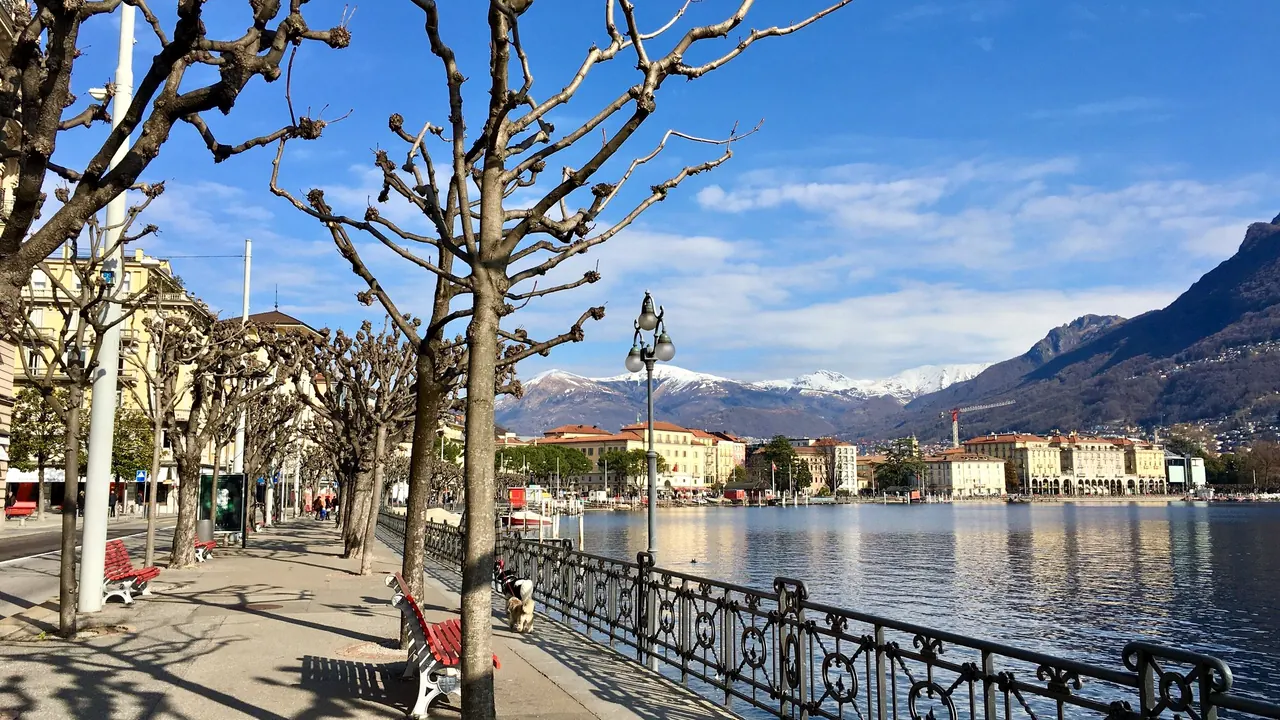
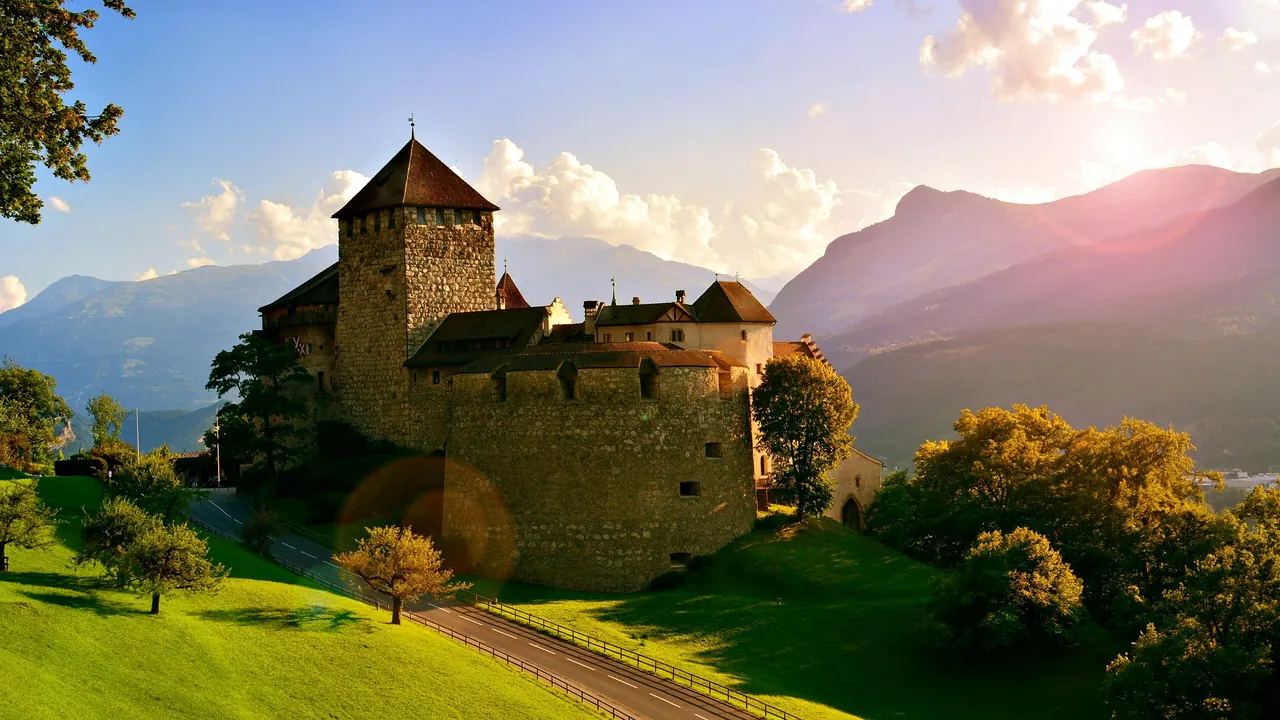
Photos: Lugano by Thomas Woodtli from Zürich, Switzerland, CC BY-SA 2.0, cropped; Vaduz by Justin LaBerge, CC BY 2.0, cropped.
Lugano or Vaduz?
Our verdict in twelve categories, each scored against the same fixed benchmark cities, and the climate month by month, so you can choose for your trip.
Choose Lugano for
- shopping
- beaches
- families
Lugano suits a traveller who wants a lake vacation with an Italian flavour. You can swim from the lidos, eat long lunches in grotti under chestnut trees, ride the funiculars up Monte Brè and San Salvatore, and reach Milan, Como and Bellinzona easily by train. It has more to eat, buy and do in the evenings, and it is easier for families without a car.
Choose Vaduz for
- nature and the outdoors
Vaduz is for people who want the mountains above all and are happy with a very quiet town below them. Trails start at the edge of the Städtle, and Malbun and the Rätikon peaks are half an hour up the road. In winter there is skiing, which Lugano cannot offer. Expect early nights, a short list of sights led by the Kunstmuseum, and a car to see the most of the region.
Scoreboard
Twelve categories on one fixed scale from 0 to 100. The shaded stretch is the gap between the two.
Your match
Pick a travel style or drag the sliders, and both match scores follow your weighting.
Wins on shopping and beaches with your weighting.
Wins on nature and the outdoors with your weighting.
What matters to you?
Category by category
What the scores mean for a trip.
Beaches & swimming
Neither town has a coast, but Lugano spends its summers in the lake. The city lido at the mouth of the Cassarate, the decks towards Castagnola and Paradiso, and the small village baths you reach by boat make swimming an easy part of any hot day.
Vaduz has no water of its own to swim in, because the Rhine is not a river for bathing. You use the open-air pools in town or drive to the Walensee or Lake Constance, which turns a swim into a half-day outing.
Food & drink
Lugano eats better and with more character. Its grotti, built against cool rock cellars in the hills and lakeside villages, serve polenta, risotto and braised meats with Ticino Merlot, and the old town adds pastry shops, arcaded cafés and a weekly market. The choice is still narrow, and many visitors cross into Italy for their best meals.
Vaduz offers less. There are hotel dining rooms, a few restaurants on the Städtle and inns in the hills serving Käsknöpfle and rösti, solid rather than exciting. Its strong point is the prince's wine estate below the castle, whose Pinot Noir is worth seeking out.
Culture & sights
You can see the sights of either town in a day, but Lugano's day is fuller. Its arcaded Lombard old town around Piazza della Riforma is pleasant to wander, and Luini's Passion fresco in Santa Maria degli Angioli is a real treasure. The art collection is split between LAC and Palazzo Reali, and the Hesse museum is up in Montagnola.
Vaduz has a shorter list, but its two neighbouring cubes, the Kunstmuseum and the Hilti Art Foundation, hold strong modern art. Add the National Museum, the stamp museum and the walk up to the castle, which you can only see from the outside.
Nightlife
Neither is a place for a big night out, but Lugano at least has an evening routine. People take an aperitivo on the lakefront or under the arcades and then have a long dinner. There are a few cocktail bars and one or two clubs, and the promenade stays lively on summer weekends.
Vaduz is quieter still. A couple of wine bars and hotel lounges on the Städtle see out the evening, and young locals go to Feldkirch or Zurich for more, much as Lugano's go to Milan.
Nature & outdoors
Both are excellent bases for the outdoors, but the landscapes differ. Lugano is lakes and wooded mountains: funiculars up Monte Brè and San Salvatore, the shore path to Gandria, the rack railway on Monte Generoso and the ridge walk from Lema to Tamaro. The Verzasca and Maggia valleys are about an hour away, and you can hire kayaks on the lake.
Vaduz takes you closer to the high mountains. Trails climb from town through vineyards and beech forest, the Rätikon peaks above Malbun have exposed routes such as the Fürstensteig, and winter brings skiing. The flat path along the Rhine dam is good for cycling, though in late autumn fog can sit in the valley.
Day trips
Lugano has the better day trips, and they cover two countries. Milan's cathedral and The Last Supper are just over an hour away by train and Como is half an hour. Bellinzona's castles, Lake Maggiore and the Borromean Islands are also close, and Morcote is a boat ride away.
Vaduz has a good list of its own. Feldkirch is twenty minutes away, and the St Gallen abbey library, Appenzell, Chur and Lindau on Lake Constance are all within about an hour. They take more effort to reach, though, because rail trips start with a bus to a station over the border.
Good for families
Lugano gives children more to do, almost all of it thanks to the lake. There are boat trips to the villages, slides at the lidos, funiculars, the Generoso rack railway, playgrounds in Parco Ciani and the Swiss landmarks in miniature at Melide. The steep streets are hard work with a pushchair.
Vaduz is just as safe, and its flat centre is easier with small children. But there is little aimed at them beyond the summer pools, gentle walks above Triesenberg and Malbun's beginner slopes, so it suits older children who like hiking.
Getting around
Lugano is easier to manage without a car. You can walk the centre along the lakefront, and a short funicular links the station to the old town. Boats, buses, mountain railways and the Swiss main line cover the rest, and the slope is the only real effort.
Vaduz is even simpler on foot, since everything lies along one flat pedestrian street. Beyond it you rely on a tidy bus network that reaches every village and climbs to Malbun, but the town has no railway of its own, so many visitors hire a car.
Shopping & style
Lugano has a proper shopping street in Via Nassa, with watchmakers, jewellers and Italian fashion houses under the porticoes, and delicatessens and wine shops in the lanes nearby. There is also a designer outlet near Mendrisio. Most of it is aimed at expensive tastes, and Milan has far more choice.
Vaduz has only a handful of shops on the Städtle. Liechtenstein stamps and a bottle of local wine are the souvenirs worth taking home.
Affordability
Both charge Swiss prices for rooms, meals and wine, and neither is a place for a cheap stay. Lugano is slightly easier on the wallet: grotti and set lunches are fairly reasonable, hotel stays usually include regional transport, and cheaper Italian towns are an easy day out.
Vaduz has few hotels and almost nothing at the budget end, though buses and museums cost little. The usual way to save is to stay across the border in Austria.
Live music & performing arts
Lugano has a real concert hall at LAC, home to the Orchestra della Svizzera italiana, and a theatre season of drama and dance, mostly in Italian. In summer, Estival Jazz brings free concerts to Piazza della Riforma.
Liechtenstein's offer is smaller. The national theatre is in neighbouring Schaan, the symphony orchestra plays a short season and Vaduz holds a classical festival in summer. You will find something to see during a week's stay, but far less choice than in Lugano.
Wellness & relaxation
Neither town has a bathing tradition of its own, and both help you rest through calm rather than treatments. Lugano's calm is warm and lakeside: coffee under the arcades, an afternoon on a lido or in Parco Ciani, a long lunch in a grotto. Hotel spas and a large pool and sauna complex near Rivera add the rest.
Vaduz is cooler and more Alpine, with quiet streets and mountain views, and it has real thermal water close by. At Bad Ragaz, about twenty-five minutes away, people have bathed in the spring water from the Tamina gorge for centuries.
When should you go?
Pick your month. The climate figures are measured averages, not a forecast.
Lugano in July
Vaduz in July
Daytime high, °C
Rainfall in the month, mm
Where the figures come from
Vaduz's temperatures are measured 51 km from the centre, at Sigmarszell-Zeisertsweiler.
Vaduz has no rain gauge within 25 km of the centre, so its rainfall comes from a gridded climate dataset read at the destination rather than from a gauge further away.
Temperature and rainfall are climate normals, averaged over the years shown. Lugano: 1991-2020 normals, Lugano (1.2 km from centre). Vaduz: 1991-2020 normals, Sigmarszell-Zeisertsweiler (51.3 km from centre).
Lugano is the warmer of the two, and summer is its season. Highs reach 27°C in July and August, its sunniest months, and from June to early September the lake is warm enough for the lidos, though the heat can feel humid. The catch is rain. From April to November it is frequent and heavy, peaking at about 178mm in May. Spring and autumn are the best times for hiking and walking the town, between the showers. Winter is drier and cool, and much sunnier than in Vaduz.
Vaduz is a few degrees cooler all year and reaches about 24°C in high summer, so July and August are pleasant for walking in the valley and the hills. Its rain is lighter than Lugano's. It peaks in midsummer but is spread fairly evenly from May to August, so you should expect some wet days at any time in that stretch. Winters are colder, with highs near 4°C and very little sun in December and January, but that is the season for the slopes at Malbun.
Which traveller are you?
For a shopping trip, Lugano is the clear pick. Via Nassa has watchmakers and Italian fashion houses, the old-town lanes add delicatessens, and there is a designer outlet near Mendrisio. Milan is an hour away. Vaduz has only a handful of shops along the Städtle.
On a beach and sun trip, Lugano wins again, though neither town has sand. Its lidos at the mouth of the Cassarate and along the shore let you step straight into a warm lake. From Vaduz, a swim means the municipal pools or a drive to the Walensee.
Skiers should choose Vaduz. Malbun, half an hour up the road, is a small, friendly ski area for beginners and families, and the bigger Swiss slopes of Flumserberg and Pizol are within an hour. Lugano's mountains are for walking, and the high Alps are further off.
Before you go
| Measure | Lugano | Vaduz |
|---|---|---|
| Official language | French, German, Italian, Romansh | German |
| Currency | Swiss Franc (CHF) | Swiss Franc (CHF) |
| Sockets | CJ230 V, 50 Hz | CJ230 V, 50 Hz |
| Driving side | Right | Right |
| Time zone | UTC+1, UTC+2 in summer | UTC+1, UTC+2 in summer |
| Emergency number | 112 | 112 |
| Elevation | 283 m | 455 m |
| Main airport | Milan Malpensa International Airport (MXP)46 km from centre209 non-stop destinations | Zürich Airport (ZRH)81 km from centre226 non-stop destinations |
| Public holidays this year | 15 days | 21 days |
By the numbers
| Measure | Lugano | Vaduz |
|---|---|---|
| Population | 63,495 | 5,668 |
| People per km² | 837 | 328 |
| Museums within 10 km | 17 | 7 |
| UNESCO World Heritage sites within 50 km | 5 | 3 |
Where else could you go?
Every comparison below shares a destination with this one, so you can follow Lugano or Vaduz somewhere new.