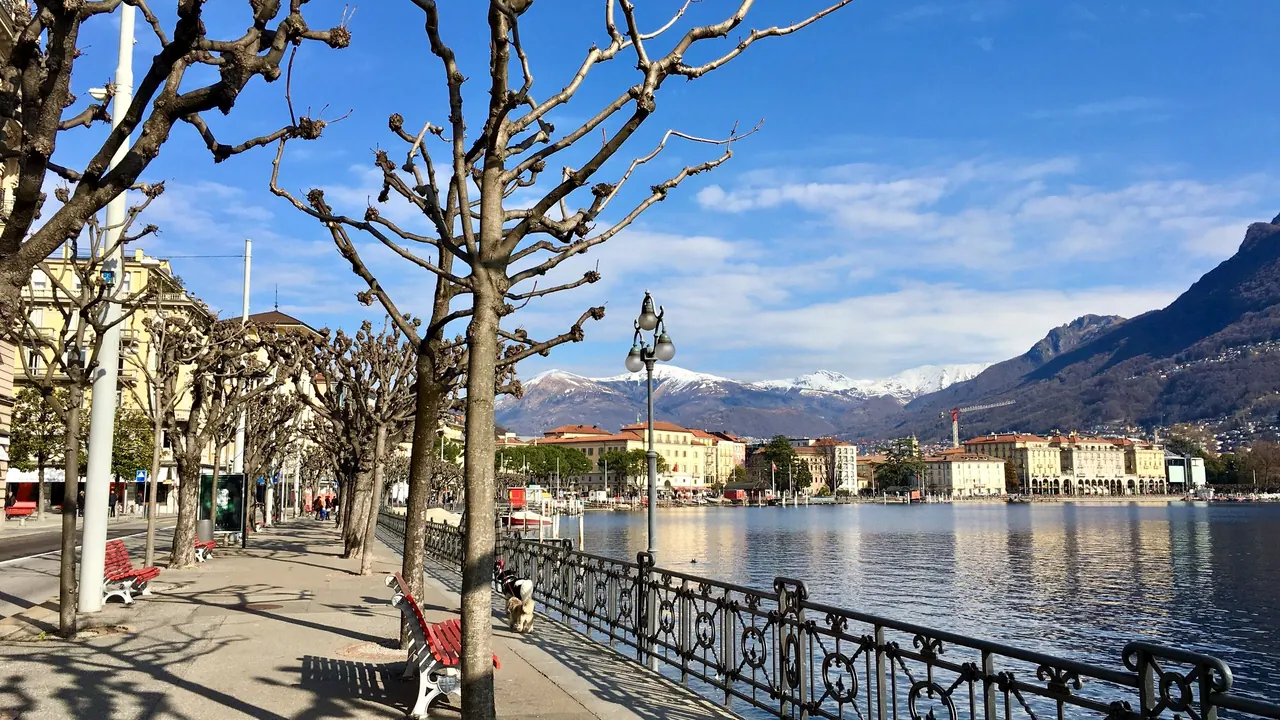
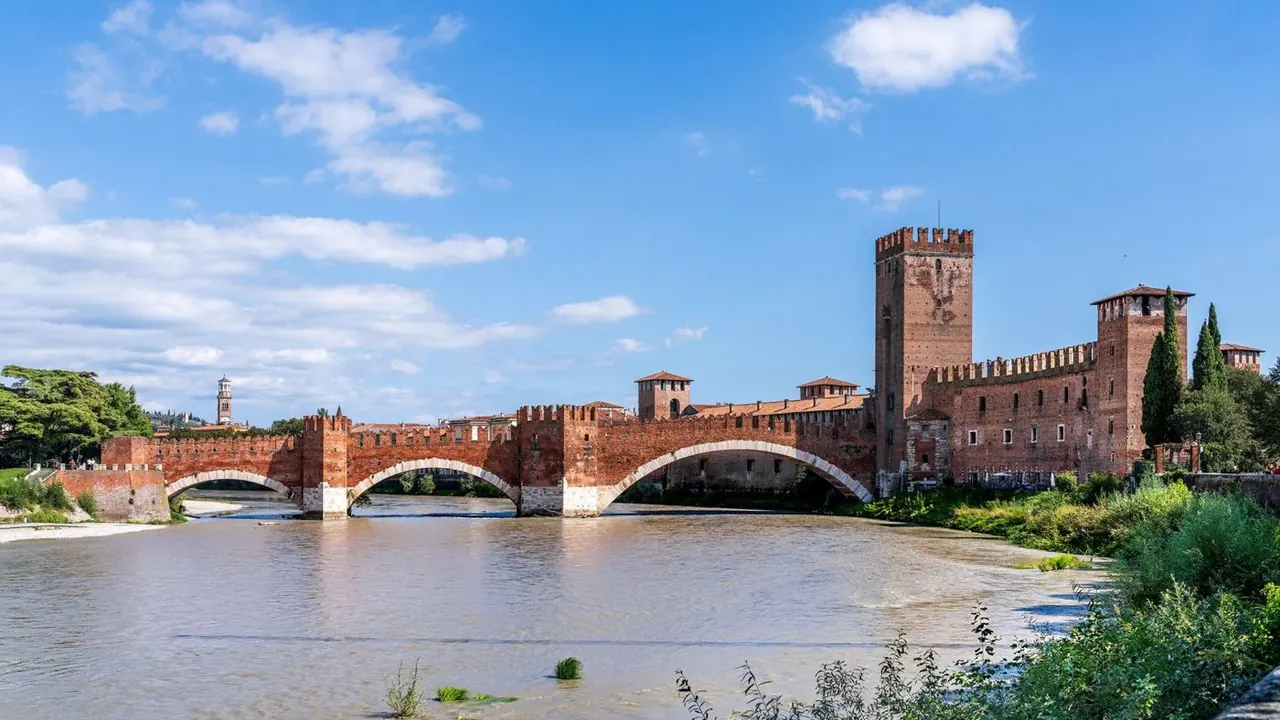
Photos: Lugano by Thomas Woodtli from Zürich, Switzerland, CC BY-SA 2.0, cropped; Verona by NorbertNagel, CC BY-SA 4.0, cropped.
Lugano or Verona?
Our verdict in twelve categories, each scored against the same fixed benchmark cities, and the climate month by month, so you can choose for your trip.
Choose Lugano for
- nature and the outdoors
- getting around
- beaches
Lugano is the choice when the landscape matters more than the monuments. Steep wooded mountains drop into the lake, funiculars climb straight from the edge of town, and boats run to stone villages along the shore. It suits walkers, couples and anyone after a calm, orderly lake stay who doesn't mind Swiss prices. The town's own sights take about a day, and evenings end early.
Choose Verona for
- culture and sights
- prices
- live music and the arts
Verona gives far more to see and eat for the money. The Roman Arena, San Zeno and Castelvecchio fill two or three days. Summer evenings bring opera under the stars, and Valpolicella and Amarone are made just outside town. Venice, Padua and Lake Garda are easy rail trips away, which makes it the better base for travellers who want history, wine and a full programme of days out.
Scoreboard
Twelve categories on one fixed scale from 0 to 100. The shaded stretch is the gap between the two.
Your match
Pick a travel style or drag the sliders, and both match scores follow your weighting.
Wins on nature and the outdoors and getting around with your weighting.
Wins on culture and sights and prices with your weighting.
What matters to you?
Category by category
What the scores mean for a trip.
Beaches & swimming
Neither city has a coast, and both offer lake swimming from about June to September. In Lugano the lake is right in town: you can swim at the city lido where the Cassarate meets the lake, or from the decks and ladders towards Castagnola and Paradiso, without any travel.
From Verona you go out to Lake Garda, about half an hour away. Its southern shore has lidos, lawns, small pebble beaches and Sirmione's flat limestone shelves. That makes a better day at the water, but it is still a day trip rather than something you do on a whim.
Food & drink
Verona eats noticeably better. Its osterie around Piazza delle Erbe and in Veronetta serve risotto made with Amarone, bigoli with duck, and boiled meats with peppery pearà sauce. Valpolicella and Soave are made a short drive away, and a glass at a counter with a snack is part of every evening.
Lugano's strength is the grotto: a rustic tavern built against cool rock cellars, serving polenta and braised meats at granite tables with Ticino Merlot. Beyond that the range is narrow and expensive, and many visitors cross into Italy for a proper meal.
Culture & sights
Here the gap is wide. Verona's UNESCO-listed centre layers Roman, medieval and Renaissance buildings inside a loop of the Adige. The Arena dominates Piazza Bra, the Roman theatre climbs the far bank, and San Zeno and Castelvecchio would be worth a trip on their own.
Lugano has an attractive arcaded old town around Piazza della Riforma, Luini's Passion fresco in Santa Maria degli Angioli, and art at LAC and Palazzo Reali. It is pleasant, but a day covers it, whereas Verona needs two or three.
Nightlife
Both cities spend their evenings over an aperitivo and dinner, but Verona keeps going longer. Across the Ponte Pietra, Veronetta's student wine bars and pubs stay busy later, especially in term time, and in summer the crowd leaving the opera fills the centre again near midnight.
Lugano is quieter and more expensive. After a drink on the lakefront or under the arcades and a few lounge bars, most of the town is asleep before midnight, and young locals head to Milan.
Nature & outdoors
Lugano is the stronger choice for the outdoors, because the mountains start at the edge of town. Funiculars run up Monte Brè and San Salvatore, a rack railway climbs Monte Generoso, and the lakeside path to Gandria takes only a morning. The Verzasca and Maggia valleys, with their green water, are about an hour away.
Verona's countryside is gentler. You can walk or cycle through the Valpolicella vineyards and follow the Adige cycle route north. Monte Baldo, the windsurfing waters of northern Garda and the Lessinia plateau are an hour or so away, so you have to travel for the bigger landscapes.
Day trips
Both are excellent bases for day trips, but Verona has the deeper list. Venice is just over an hour by train, Vicenza under half an hour, and Padua and Mantua are closer still than Venice. The Garda towns and the Valpolicella and Soave wine country are on the doorstep.
From Lugano you can visit two countries. Milan is about an hour away, Como half an hour, and you can see the castles of Bellinzona or go on to Lake Maggiore and the Borromean Islands. The scenery is finer, but there are fewer great art cities within reach.
Good for families
Verona has bigger attractions for children, though they are outside the city. Gardaland and the drive-through safari at Parco Natura Viva are each about half an hour away, and the flat, mostly traffic-free centre is easy with a pushchair. The catch is that most of these outings need a car.
Lugano is better for younger children and outdoor days. They can ride the boats, funiculars and the Generoso rack railway, swim at the lidos and play in Parco Ciani, and the park of Swiss landmarks in miniature at Melide is close by. The steep streets are hard work with a pushchair, though.
Getting around
Lugano is the easier place to get around without a car. Boats, funiculars and rack railways reach the lake villages and the summits, a short funicular links the hilltop station to the old town, and hotel stays usually include free regional transport. The slopes are the only real effort.
Verona's centre is flat and compact, so you will mostly walk. But the station is twenty minutes' walk away, there is no tram or metro, and the Valpolicella villages and Lessinia have so few buses that a car helps.
Shopping & style
Verona has a slight edge, mostly thanks to what you can take home. Via Mazzini has Italian fashion labels, but the best buys are Amarone, Garda olive oil and the star-shaped pandoro.
Lugano's Via Nassa is more exclusive, with Swiss watchmakers and jewellers under the porticoes, and there is a large designer outlet near Mendrisio. In both cities, serious shoppers end up in Milan.
Affordability
Verona costs much less day to day, and the gap shows most in what you spend once you have arrived. In Lugano even a simple grotto meal is charged at Swiss rates, and the lake boats and mountain railways, the main reasons to go, cost extra every day. There is no cheaper part of town either, so your room is expensive wherever you sleep.
In Verona, meals and drinks cost what they do elsewhere in Italy, and you walk almost everywhere. The real expense is your room. It is dear for a city this size and costs even more on Arena opera nights and during the trade fairs, but moving out of the historic centre does bring it down, which Lugano doesn't let you do.
Live music & performing arts
Opera in the Arena gives Verona the lead. From June to early September, grand productions of Verdi and Puccini play to thousands on the Roman stone tiers. The Roman theatre adds a summer festival of Shakespeare, dance and jazz, and the Teatro Filarmonico runs a season through the cooler months.
Lugano's cultural life is centred on LAC, where the Orchestra della Svizzera italiana plays in a hall with fine acoustics. Its summer highlight is Estival Jazz, a run of free open-air concerts in Piazza della Riforma.
Wellness & relaxation
Both cities are good places to slow down, but in different ways. Verona has thermal water within reach: the spa pools at Sirmione facing the lake, a spring-fed thermal lake near Lazise, and the old springs at Caldiero.
Lugano has no springs. Relaxation there means lazy hours at a lido, benches among the palms of Parco Ciani and long grotto lunches, with hotel spas and a pool complex near Rivera if you want more.
When should you go?
Pick your month. The climate figures are measured averages, not a forecast.
Lugano in July
Verona in July
Daytime high, °C
Rainfall in the month, mm
Temperature and rainfall are climate normals, averaged over the years shown. Lugano: 1991-2020 normals, Lugano (1.2 km from centre). Verona: 1991-2020 normals, Verona / Villafranca (11.6 km from centre).
The two cities follow much the same calendar of warmth. Both have cold winters and comfortable springs, and summers are warm enough to swim from June to early September. Verona runs hotter: July and August reach about 30°C on the plain, which makes midday sightseeing hard work. Lugano peaks nearer 27°C by the lake. In Verona, May, June and September are the best months for walking the streets.
Rain is where they really part. From April to November Lugano is wet, with heavy rain most months and as much as 178mm in May. Verona stays much drier, never much above 85mm in a month, and it gets more summer sun, with around 310 hours in July. For Lugano, the drier winter months and the bright weeks of high summer are the safest bets for clear mountain views.
Which traveller are you?
On a culture and arts trip, choose Verona. Its Roman Arena, Romanesque basilica and Scarpa-designed museum fill several days, and summer opera in the amphitheatre is a reason in itself to go. Lugano's old town and lakeside arts centre take only about a day.
For an outdoors trip, Lugano is the clear pick. Funiculars climb Monte Brè and San Salvatore straight from town, the Gandria lakeside path and the Lema to Tamaro ridge are close by, and the Verzasca valley is about an hour away.
On a trip on a tight budget, Verona is far easier on the wallet. You can eat cheaply in Veronetta's student osterie and at wine counters, and the walkable centre costs nothing to get around. In Lugano there is no cheap way to stay, and even boat trips and mountain railways add up.
Before you go
| Measure | Lugano | Verona |
|---|---|---|
| Official language | French, German, Italian, Romansh | Italian |
| Currency | Swiss Franc (CHF) | Euro (EUR) |
| Sockets | CJ230 V, 50 Hz | CFL230 V, 50 Hz |
| Driving side | Right | Right |
| Time zone | UTC+1, UTC+2 in summer | UTC+1, UTC+2 in summer |
| Emergency number | 112 | 112 |
| Elevation | 283 m | 59 m |
| Main airport | Milan Malpensa International Airport (MXP)46 km from centre208 non-stop destinations | Verona Villafranca Valerio Catullo Airport (VRN)10 km from centre96 non-stop destinations |
| Public holidays this year | 15 days | 13 days |
By the numbers
| Measure | Lugano | Verona |
|---|---|---|
| City population | 63,495 | 255,588 |
| People per km² | 837 | 1,285 |
| Museums within 10 km | 17 | 18 |
| UNESCO World Heritage sites within 50 km | 5 | 5 |
Where else could you go?
Every comparison below shares a destination with this one, so you can follow Lugano or Verona somewhere new.