Malaysia
Sabah
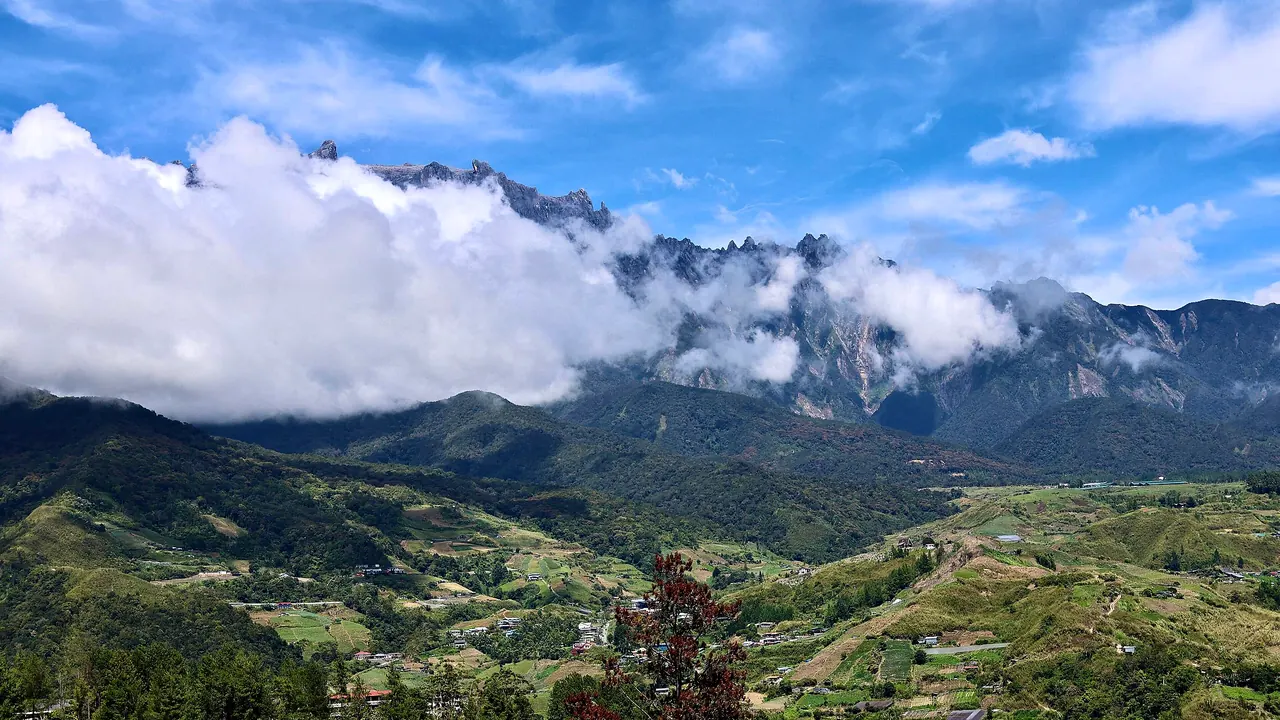
The Kundasang valley below Mount Kinabalu
- Nature & outdoors89
- Beaches72
- Affordability66
Photo: Pangalau, CC BY-SA 4.0, cropped
Match
46
Every category weighted equally
- Beach & sun53
- Culture & arts37
- Food & nightlife39
- Family trip53
- Outdoors54
- Relax & unwind52
- Shopping & style41
- On a budget48
Sabah in twelve categories
Our verdict on each, scored 0 to 100 against the same fixed benchmark cities, so a score means the same thing on every page.
Beaches & swimming. Scores 72 out of 100.
Food & drink. Scores 58 out of 100.
Culture & sights. Scores 30 out of 100.
Nightlife. Scores 28 out of 100.
Nature & outdoors. Scores 89 out of 100.
Day trips. Scores 30 out of 100.
Good for families. Scores 58 out of 100.
Getting around. Scores 30 out of 100.
Shopping & style. Scores 33 out of 100.
Affordability. Scores 66 out of 100.
Live music & performing arts. Scores 12 out of 100.
Wellness & relaxation. Scores 45 out of 100.
Sabah category by category
Beaches & swimming
72The sea around Sabah is warm all year, around 29°C, and clear over the reefs. From Kota Kinabalu, the islands of Tunku Abdul Rahman Park lie fifteen or twenty minutes off the waterfront by boat. Manukan, Sapi and Mamutik have short arcs of white sand and good snorkelling a few strokes from shore, but they fill with day-trippers by late morning. Tanjung Aru, on the city's edge, is better for sunsets than for swimming.
The best beaches mean a longer journey. Off Semporna in the far east, small resort islands such as Mabul and Pom Pom sit in turquoise shallows, though most visitors come for the diving and stay on stilted resorts rather than long sands. The Mantanani islands and the empty bays around Kudat in the north feel remote. The west coast is calmest from about March to October, while the northeast monsoon brings rougher seas there in winter.
Food & drink
58Eating in Sabah centres on Kota Kinabalu. In the evening the waterfront night market lines up grills of fish, squid and chicken wings beside stalls of local fruit, and live-seafood halls let you choose your crab or grouper from the tank. Breakfast is a bowl of tuaran mee or sang nyuk mee in a Chinese coffee shop, or ngiu chap, a beef noodle soup the city treats as its own, with Sabah tea or locally grown Tenom coffee alongside.
The indigenous Kadazan-Dusun kitchen adds hinava, raw fish cured in lime with ginger and chilli, and rice wine called tapai, best met during the harvest festival or in village homestays. Sandakan and Tawau have strong Chinese and seafood traditions of their own. Fine dining is limited and mostly in resort hotels, so this is good everyday eating rather than a serious food destination.
Culture & sights
30Sabah is visited for its forests and reefs, not its monuments. Kota Kinabalu was largely rebuilt after the Second World War, so its sights are few: the Sabah Museum with its ethnographic galleries and reconstructed traditional houses, the floating City Mosque, and the Atkinson Clock Tower, one of the few colonial survivors. Sandakan has more history, including a hillside heritage trail, the colonial-era home of the writer Agnes Keith and the Sandakan Memorial Park, a moving site where the prisoner-of-war camp of the death marches stood.
The living culture is the more interesting part. Around Kudat, Rungus longhouses keep their beadwork and gong traditions, and Bajau water villages stand on stilts along the east coast. These reward a curious visitor, but a short list of museums is all a sightseer will find.
Nightlife
28Nights out in Sabah mean Kota Kinabalu's waterfront, where a row of bars faces the sunset over the islands, with live cover bands and a few clubs nearby that stay open late on weekends. It is relaxed, local and small. Elsewhere evenings end early: dive islands and jungle lodges run on early starts, and in the smaller towns a late dinner at the night market is as much as there is.
Nature & outdoors
89Sabah's landscape is wild Borneo at its best, but it comes in separate pieces. Mount Kinabalu rises to 4,095m about two hours from Kota Kinabalu, in a park of cloud forest and pitcher plants, with a two-day climb to a granite summit for sunrise and gentler trails around park headquarters. On the east side, the lower Kinabatangan river is lined with forest where boat trips at dawn and dusk find proboscis monkeys, hornbills and crocodiles, and often wild orangutans and pygmy elephants. Danum Valley and Tabin protect ancient lowland rainforest with canopy walkways and night walks, and Sepilok cares for orphaned orangutans near Sandakan.
Underwater, Sipadan off Semporna is one of the great dive sites anywhere: a wall dropping into deep water, with turtles, barracuda and reef sharks, and muck diving at nearby Mabul. The catch is distance. The mountain, the river and the reefs are in different corners of the state, joined by a long road over the Crocker Range or a domestic flight, so each needs its own base and a few days. A visitor with a week chooses two of them; seeing all of it well takes a longer trip that moves around.
Day trips
30Most outings in Sabah head into forest, mountain or sea rather than to other towns. From Kota Kinabalu, the Sunday market at Kota Belud draws hill farmers and Bajau horsemen, the Rungus longhouses near Kudat make a long day out, and the colonial-era North Borneo heritage train runs south through rice fields and stilt villages to Papar. Inland, Tenom offers coffee and a large agricultural park. The duty-free island of Labuan is reachable by ferry, but it is a long day. There is no string of historic towns to tour, and a visitor interested in places rather than landscapes will run out of ideas fast.
Good for families
58Sabah suits families with children old enough to enjoy wildlife. Watching young orangutans at Sepilok, spotting proboscis monkeys from a river boat and snorkelling in the calm shallows of the islands off Kota Kinabalu are memorable at any age. Large beach resorts north of the city have pools, kids' clubs and their own patches of forest. Malaysian culture is warm towards children, and the Lok Kawi Wildlife Park near the city adds an easy half-day.
The effort is in the distances. Road transfers between regions are long and winding, flights add cost, and the humid heat tires small children. The Kinabalu climb and the remote jungle lodges suit teenagers more than toddlers. There are no theme parks or big aquariums, so the trip works best built around one or two bases.
Getting around
30Kota Kinabalu's compact waterfront centre is easy on foot, and ride-hailing apps cover the city cheaply, with boats running from the jetty to the park islands. Beyond the city it gets harder. Public transport is limited to minibuses and long-distance coaches, and the main areas are far apart: the road from Kota Kinabalu over the Crocker Range to Sandakan takes most of a day, so many visitors fly to Sandakan, Lahad Datu or Tawau. Jungle lodges and dive islands usually arrange transfers as part of a stay. A hire car works on the main roads, but mountain stretches are slow and the east needs a plan.
Shopping & style
33Shopping in Sabah is about markets and crafts. In Kota Kinabalu, the handicraft market by the waterfront sells pearls, woven baskets and souvenirs, and the Sunday market on Gaya Street stretches for blocks with plants, snacks, rattan and bric-a-brac. The more distinctive buys are Rungus beadwork from Kudat, Bajau textiles and Sabah tea and coffee. The city's malls cover everyday needs and international brands, but there is no luxury or design shopping to speak of.
Affordability
66Day to day, Sabah is cheap. Guesthouses and mid-range hotels in Kota Kinabalu cost little, market meals and coffee-shop noodles are very inexpensive, and ride-hailing makes taxis a minor cost. The bill comes from the experiences. Dive resorts near Sipadan, the guided Kinabalu climb with its mountain hut, river lodges on the Kinabatangan and rainforest lodges in Danum Valley are sold as packages that cost far more, and domestic flights between regions add up. A city-and-islands stay is a bargain, while a full wildlife and diving itinerary is mid-range or above.
Live music & performing arts
12There is little formal performance in Sabah. Visitors mostly meet the sumazau and other traditional dances at cultural villages, resort dinners and the state museum, accompanied by gongs and bamboo instruments. The richest time is the Kaamatan harvest festival in May, when Kadazan-Dusun communities hold dances, music and the Unduk Ngadau pageant. Otherwise there is no regular programme of concerts, theatre or opera to plan an evening around.
Wellness & relaxation
45Wellness in Sabah means resort spas and a slow pace, not a bathing tradition. The large beach resorts north of Kota Kinabalu and on the islands offer massage and treatments in garden settings, and an island or rainforest lodge stay, with no cars and early nights, is restful in itself. The one real bathing spot is Poring, on the edge of Kinabalu Park, where open-air tubs fed by sulphur springs, first built during the Japanese occupation, are a welcome soak after the climb. Kota Kinabalu also has plenty of affordable reflexology and massage parlours. A visitor looking mainly for spa culture will find comfort here, but not a reason to come.
Where to stay in Sabah
Kota Kinabalu is the natural first base, and for many visitors the only one. The compact waterfront centre puts the night market, the seafood halls and the sunset bars within walking distance, guesthouses cost little, and boats to the park islands leave from the jetty. It suits food lovers, travellers on a budget and anyone wanting a modest night out. Families after pools and kids' clubs do better at the large beach resorts north of the city, which still keep the islands and Lok Kawi within easy reach.
Walkers should spend a night or two at Kinabalu Park, about two hours inland, where cooler air and trails around park headquarters make a change from the coast, with the hot tubs at Poring nearby. In the east, Sandakan is the base for Sepilok and the town's history, and a lodge on the Kinabatangan river is the place to sleep for wildlife boat trips at dawn and dusk. Divers stay in Semporna or on the stilted resorts of Mabul, quiet places with early nights built around Sipadan.
These corners are far apart, so each base needs a few days and usually a domestic flight. A first visit of a week pairs Kota Kinabalu and the mountain with one eastern base. A second trip can give the river and the reefs their own time.
When should you go?
Pick a month to see what it is like. The climate figures are measured averages, not a forecast.
Sabah in July
Daytime high, °C
Rainfall in the month, mm
The whole year
Shaded against this destination’s own year: the deepest cell is its best month for that figure and the palest its weakest.
Temperature and rainfall are climate normals, averaged over the years shown. Sabah: 1991-2020 (sunshine 1981-2010) normals, Kota Kinabalu (5.6 km from centre).
Before you go
| Measure | Sabah |
|---|---|
| Official language | Malay |
| Currency | Malaysian Ringgit (MYR) |
| Sockets | G240 V, 50 Hz |
| Driving side | Left |
| Time zone | UTC+8 |
| Emergency number | 999 |
| Main airport | Kota Kinabalu International Airport (BKI)37 non-stop destinations |
By the numbers
| Measure | Sabah |
|---|---|
| Population | 3,418,785 |
| Swim season, months above 21 °C | 12 months |
Compare Sabah with
Every comparison with a written verdict behind it.