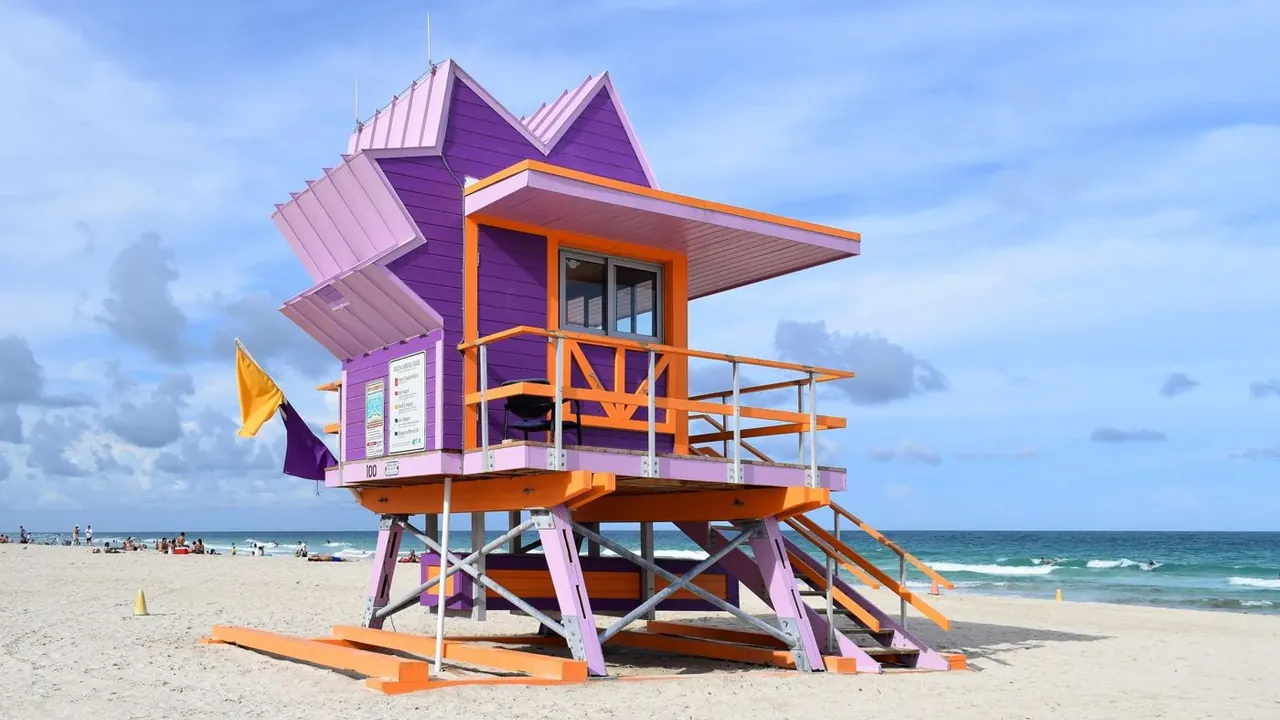
Photos: Miami by Rob Olivera, CC BY 2.0, cropped.
Marco Island or Miami?
Our verdict in twelve categories, each scored against the same fixed benchmark cities, and the climate month by month, so you can choose for your trip.
Choose Marco Island for
- nature and the outdoors
- wellness
Marco Island suits a slow beach week. You get a calm Gulf crescent for wading and shelling, mangrove channels for kayaking and fishing right off the island, and evenings that end after sunset drinks. It is for travellers who want quiet water and wildlife close by, and who don't mind driving to Naples for a smarter dinner or a shop.
Choose Miami for
- nightlife
- culture and sights
- shopping
Choose Miami if the beach is only half the plan. Alongside its long Atlantic strip it has Cuban and Latin American food, the Art Deco streets of South Beach, serious luxury shopping and a club scene that runs until dawn, and the Everglades are still within an hour. The price is noise, traffic and a much bigger place to find your way around.
Scoreboard
Twelve categories on one fixed scale from 0 to 100. The shaded stretch is the gap between the two.
Your match
Pick a travel style or drag the sliders, and both match scores follow your weighting.
Wins on nature and the outdoors and wellness with your weighting.
Wins on nightlife and culture and sights with your weighting.
What matters to you?
Category by category
What the scores mean for a trip.
Beaches & swimming
Both have long stretches of fine pale sand and gentle water, so the difference is in character. Marco Island's Gulf crescent is lined with resorts and condos but stays quiet. The water is shallow enough to wade out to the Tigertail sandbar, low tide is good for shelling, and the sun sets over the sea. For a beach with no buildings at all, Keewaydin Island is a short boat ride away.
Miami Beach is busier and more urban. It runs from the Art Deco front and crowds of South Beach to the calmer family shore at North Beach, with quieter, shallower water on Key Biscayne and a broader, less groomed stretch at Haulover. In the warmer months sargassum seaweed can wash in.
Food & drink
Miami is by far the stronger place to eat. Cuban food is at its core, from ventanita coffee on Calle Ocho to lechon and croquetas, and alongside it are Venezuelan, Peruvian, Haitian and Nicaraguan cooking and a tier of chef-led restaurants in Brickell and the Design District.
Marco Island does one thing well: Gulf seafood with a view of the water, at its most relaxed in the dockside fish shacks of Goodland. Both serve grouper and stone crab in winter, but beyond that the island's choice is narrow, and a special dinner means a drive to Naples.
Culture & sights
Miami has far more to see. The Art Deco Historic District is a real architectural sight and fills a morning on foot, and Vizcaya's Italianate villa and bayside gardens are a second essential visit. Wynwood's murals, the Perez Art Museum and the Cuban exile history of Little Havana make up the rest of a few good days.
Marco Island was built as a resort, mostly from the 1960s on. Its one real stop is the historical museum, which tells the story of the Calusa people and the carved wooden figures found on the island in the 1890s. Beyond that there are only canals, condominiums and the fishing village of Goodland.
Nightlife
This is the widest gap between the two. Miami goes out late: there are big South Beach clubs with international DJs, Park West sessions that last until dawn, warehouse bars in Wynwood, rooftop bars in Brickell and salsa nights on Calle Ocho.
On Marco Island an evening means sunset drinks on a deck and then dinner, perhaps followed by a drink in one of a few quiet resort or marina bars. The liveliest it gets is on winter afternoons at the Goodland dock bars. There are no clubs, and the island goes quiet early.
Nature & outdoors
Marco Island has the edge for time outdoors. It sits at the top of the Ten Thousand Islands, so mangrove kayaking, dolphin trips, manatees and first-rate inshore fishing for snook and tarpon all start close to your hotel. The Rookery Bay reserve, Big Cypress and the Fakahatchee Strand are all within an hour.
Miami also reaches the Everglades, with the Anhinga Trail and Shark Valley less than an hour away, and it has something the Gulf side lacks: snorkelling on coral reefs in Biscayne National Park and off Key Largo. Both landscapes are entirely flat, and in both the humid summer makes being outdoors hard going.
Day trips
Neither is strong for trips to other towns, and both lists are pleasant rather than memorable. From Marco Island the main outing is Naples, half an hour away, followed by the old trading post at Chokoloskee and the Edison and Ford Winter Estates in Fort Myers. Miami's options are Fort Lauderdale, the Gilded Age mansions of Palm Beach and the seafood towns of the Upper Keys, while Key West is too far to see properly in a day there and back.
Good for families
Miami has more for children to do. There are Zoo Miami, the planetarium and aquarium at the Frost Science Museum, Jungle Island and the Venetian Pool in Coral Gables, plus quieter family beaches on Key Biscayne and at North Beach. The downside is long drives between them and a South Beach party scene that most parents would rather avoid.
Marco Island is simpler and calmer, with shallow water, soft sand, the Tigertail lagoon and children's programmes at the resorts. Anything built for children, such as a zoo or a children's museum, means a half-hour drive to Naples.
Getting around
You need a car for most things in either place, but Miami at least gives you some choice. South Beach is easy on foot, the free Metromover links downtown and Brickell, Metrorail runs from the airport, and ride-hailing covers Wynwood and Little Havana. On Marco Island you can cycle the flat roads in the cooler months, but the only public transport is a limited bus to Naples, so plan on hiring a car from the moment you arrive.
Shopping & style
Miami is a real shopping destination. It has fashion-house flagships in the Design District, the exclusive open-air mall at Bal Harbour, the vast Aventura Mall and outlet malls on the western edge. Marco Island's few plazas sell resort wear, shells and coastal décor, and visitors after boutiques drive to Fifth Avenue South in Naples. Neither place has much in the way of markets or local crafts.
Affordability
Both are expensive, especially in the winter season. Miami gives you a little more room to save: the Cuban lunch counters and bakeries are cheap, the beaches and the Metromover are free, and rooms in the mainland neighbourhoods cost less, though club drinks and resort fees bite hard.
Marco Island has little cheap food, and a hire car is unavoidable. The best ways to save there are a weekly condo rental with a kitchen or a summer stay, when room rates fall sharply.
Live music & performing arts
Miami has a proper arts calendar. Florida Grand Opera and touring Broadway shows play the Adrienne Arsht Center, Miami City Ballet is a company of real standing, the New World Symphony plays in its Frank Gehry hall, and son and salsa bands play in Little Havana. Marco Island has a small community theatre and musicians in the resort bars in winter, and the nearest orchestra is the Naples philharmonic, half an hour's drive away. In both places the season is mostly the winter months.
Wellness & relaxation
Both rely on resort spas with pools and sea views, so the difference is the setting around them. On Marco Island the quiet does much of the work, because the whole island moves at an unhurried pace, though it has no bathing tradition of its own.
Miami is noisier, and there are traffic and late nights to escape, but it has one thing the island lacks: a long-established Russian and Turkish bath house in Miami Beach with steam rooms and cold plunges, and there is sunrise yoga on the sand. For calm, stay on Key Biscayne or near Surfside.
When should you go?
Pick your month. The climate figures are measured averages, not a forecast.
Marco Island in July
Miami in July
Daytime high, °C
Rainfall in the month, mm
Where the figures come from
Marco Island has no rain gauge within 25 km of the centre, so its rainfall comes from a gridded climate dataset read at the destination rather than from a gauge further away.
Temperature and rainfall are climate normals, averaged over the years shown. Marco Island: 2012-2025 (rainfall 1991-2020) normals, Marco Island / Old Marco Junction (7.5 km from centre). Miami: 1991-2020 (sunshine 1981-2010) normals, Miami International Airport (10 km from centre).
Both are warm all year and follow the same pattern: dry, pleasant winters and hot, stormy summers, with highs of 32°C to 33°C from June to September. For walking, paddling and time outdoors, December to April is the best period in either place. The difference is in the water. Marco Island's Gulf cools to about 21°C in January and February, which some swimmers find brisk, and its afternoons are a little cooler too. Miami's Atlantic stays near 25°C through the winter, so a midwinter swim is easier there.
The wet seasons differ in length. On Marco Island the rain arrives with a jump in June, at around 232mm, and has eased again by November. Miami turns wet earlier, in May, and stays wet through October. Miami's sunshine is at its strongest in late spring and remains generous all year.
Which traveller are you?
For a food and nightlife trip, Marco Island offers little more than a seafood dinner by the water and a quiet drink afterwards. Miami eats and goes out like a Latin American capital, with good meals at every price and evenings that carry on until dawn.
On an outdoors trip, Marco Island is the better base, because the wild water begins almost at the hotel dock and a day on a kayak or a fishing boat needs no driving at all. From Miami the Everglades are a proper day out, and each trip starts with city traffic.
For a shopping trip, Marco Island is a poor fit, since buying anything beyond beach gear means a drive to Naples. Miami is somewhere shoppers travel to on purpose, from luxury labels to discount outlets, and a few days of shopping there is a whole itinerary in itself.
Before you go
| Measure | Marco Island | Miami |
|---|---|---|
| Currency | US Dollar (USD) | US Dollar (USD) |
| Sockets | AB120 V, 60 Hz | AB120 V, 60 Hz |
| Driving side | Right | Right |
| Time zone | UTC-5, UTC-4 in summer | UTC-5, UTC-4 in summer |
| Emergency number | 911 | 911 |
| Elevation | 0 m | 2 m |
| Main airport | Southwest Florida International Airport (RSW)66 km from centre79 non-stop destinations | Miami International Airport (MIA)7 km from centre198 non-stop destinations |
| Public holidays this year | 11 days | 11 days |
By the numbers
| Measure | Marco Island | Miami |
|---|---|---|
| Population | 15,760 | 442,241 |
| People per km² | 267 | 3,046 |
| Museums within 10 km | 1 | 17 |
| UNESCO World Heritage sites within 50 km | 0 | 0 |
| Swim season, months above 21 °C | 10 months | 12 months |
Where else could you go?
Every comparison below shares a destination with this one, so you can follow Marco Island or Miami somewhere new.
- Miami Beachvs Miami
- Naples, Floridavs Marco Island
- Fort Lauderdalevs Miami
- Sanibelvs Marco Island
- Boca Ratonvs Miami
- Fort Myersvs Marco Island